
Strategy
Tags

Strategy
Tags


Intro
InterFace 88 was designed, developed, and launched in March 1988, on the back of the prototype Outdoor Art Drive-In 86, as an experimental public art strategy.
The project claimed space across the city of Brisbane for creative action and the exploration of connective building blocks.
The objective being to link the physical to the digital and the local to the global in search of an interconnected world – pre www


InterFace 88 gestured and spoke to the multi-dimensionality of the future by the infusion of elements/building blocks with creative action/reaction, information, communication, engagement, questions, conversations, visibility, connectivity, rhythm, and flow.


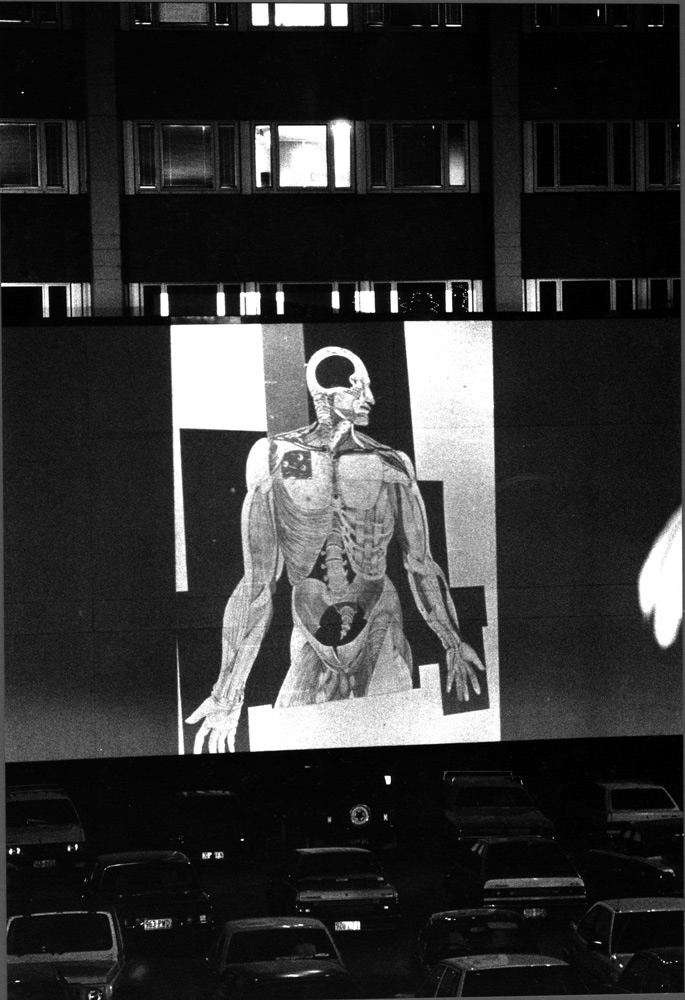
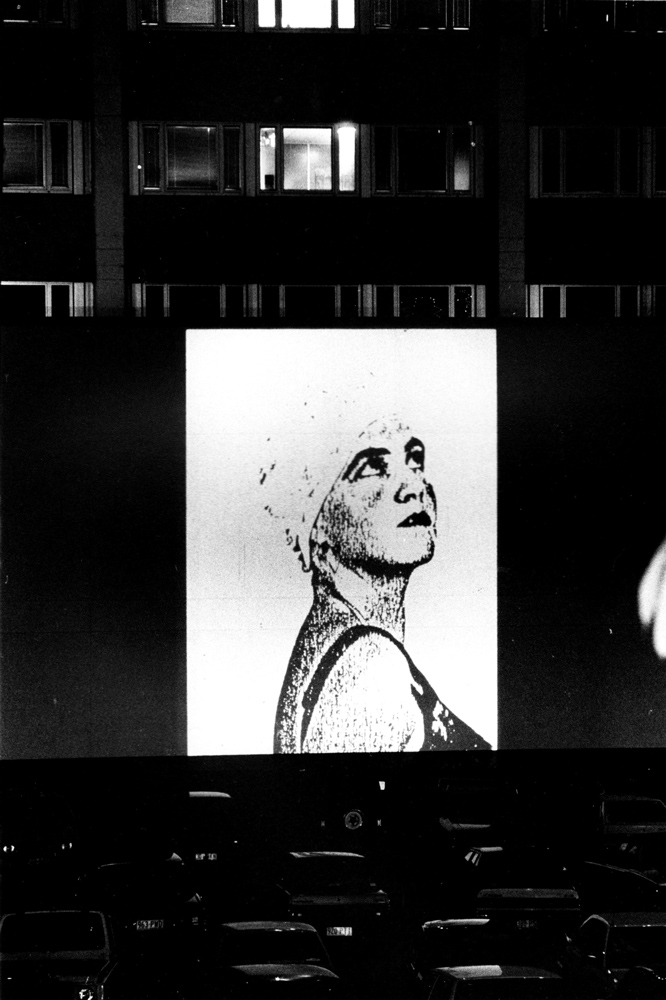
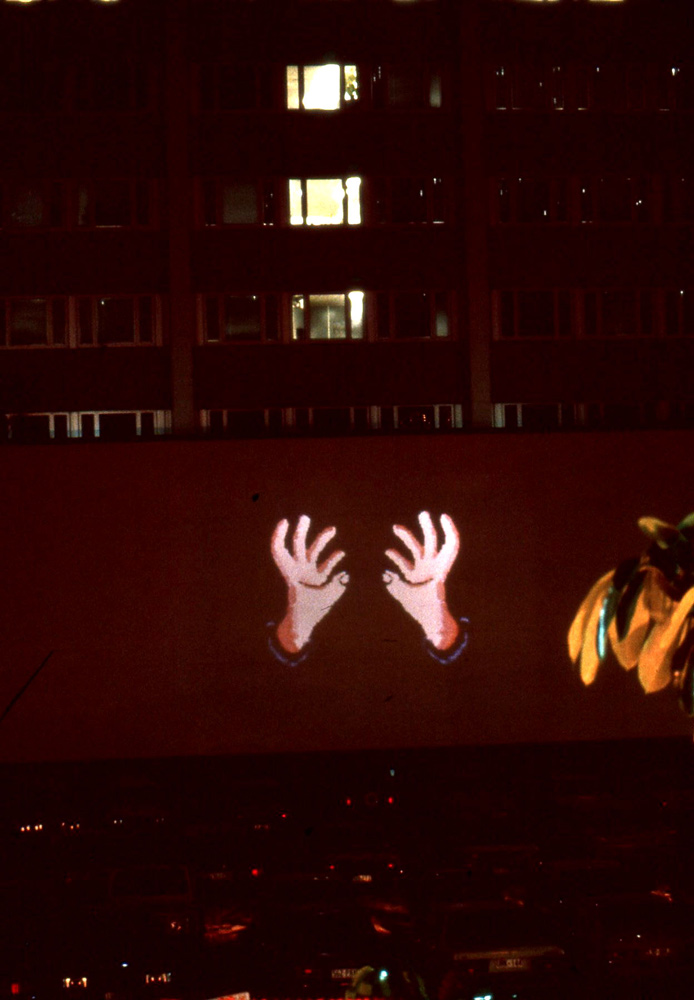
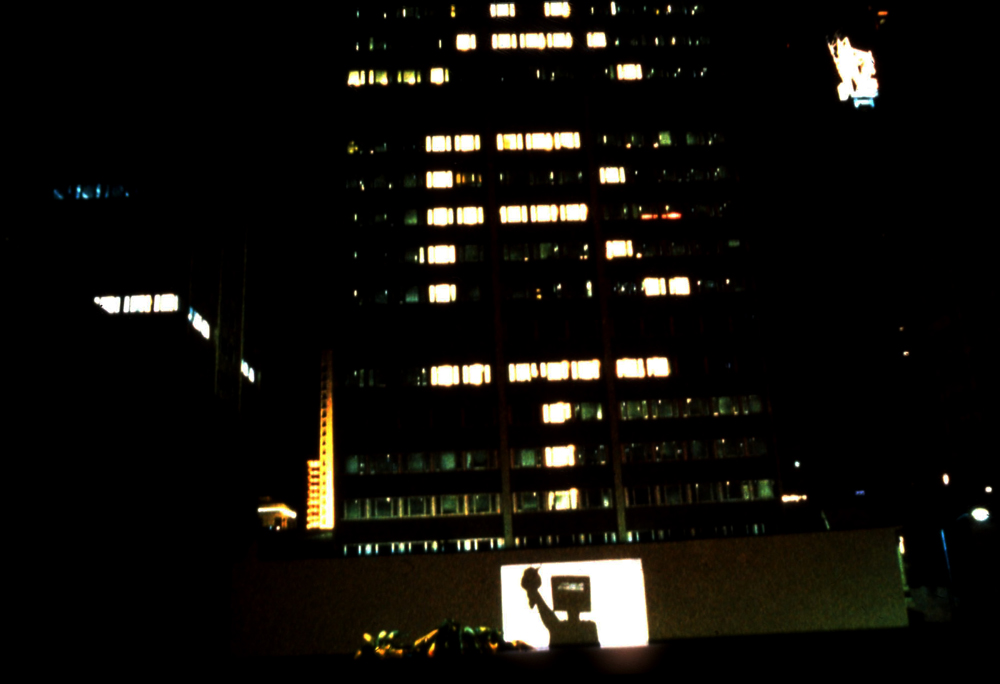
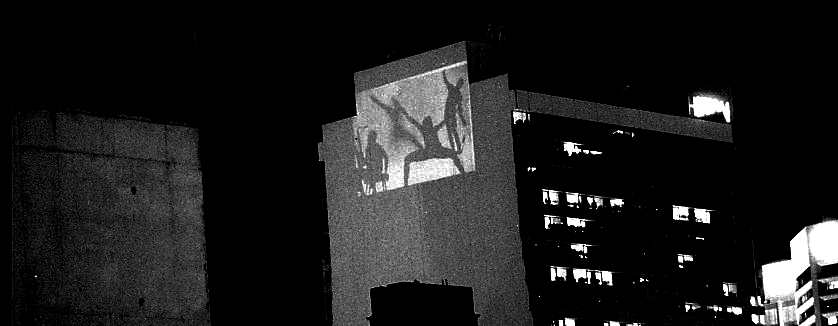
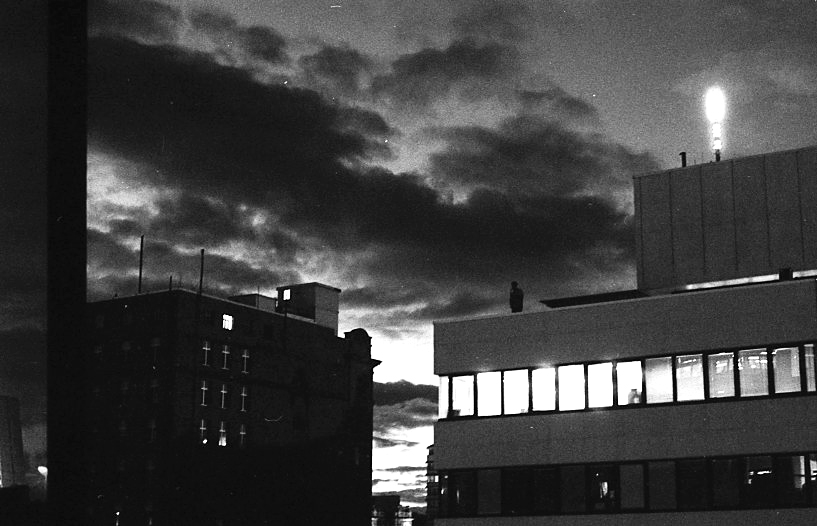
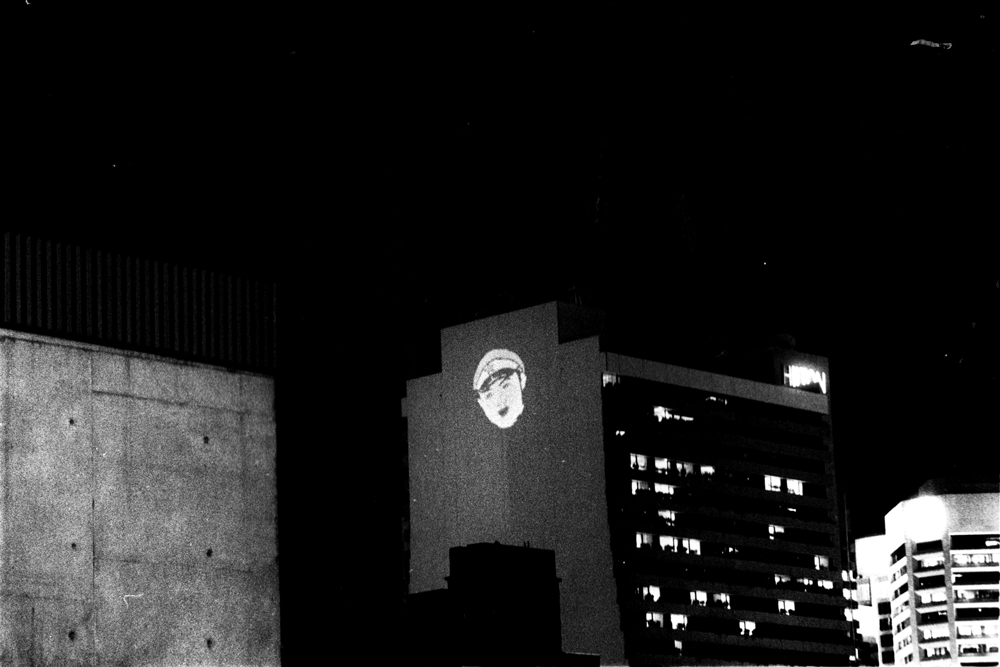
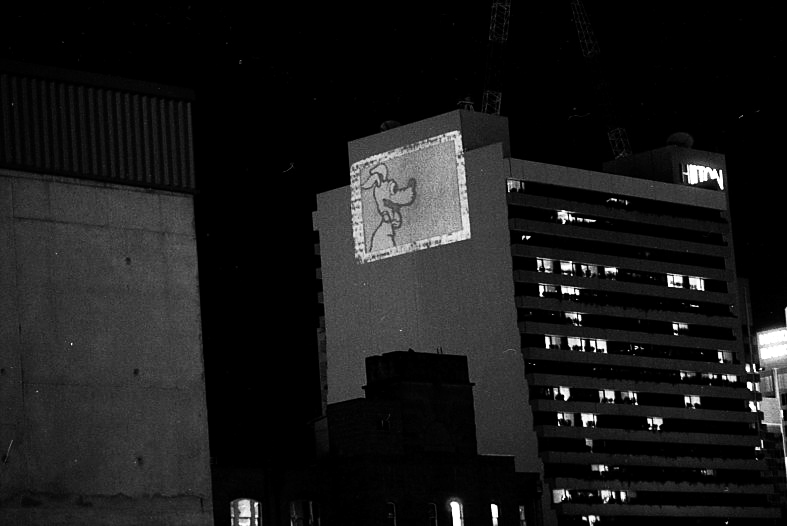
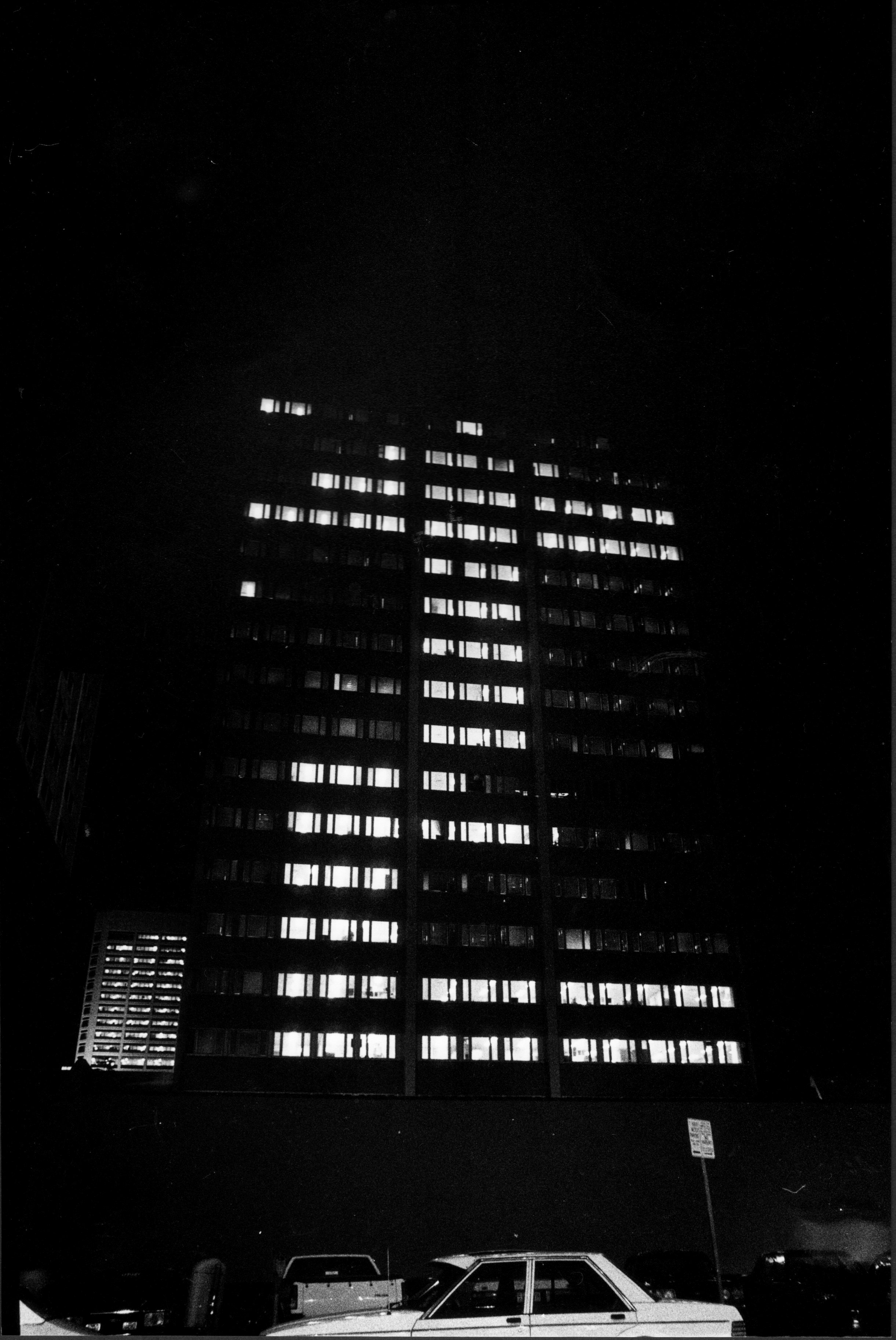
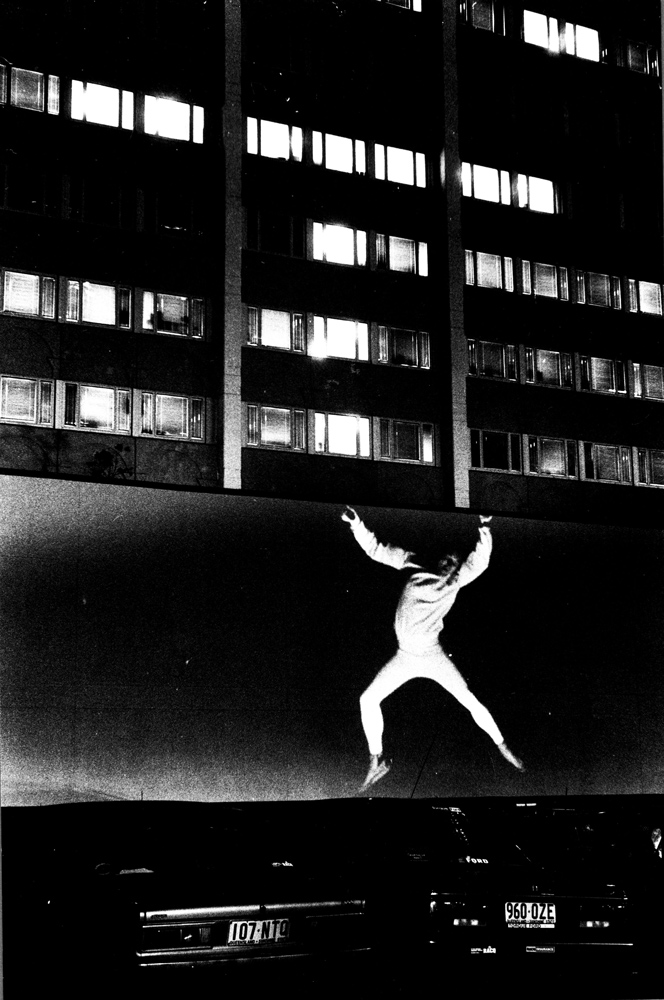
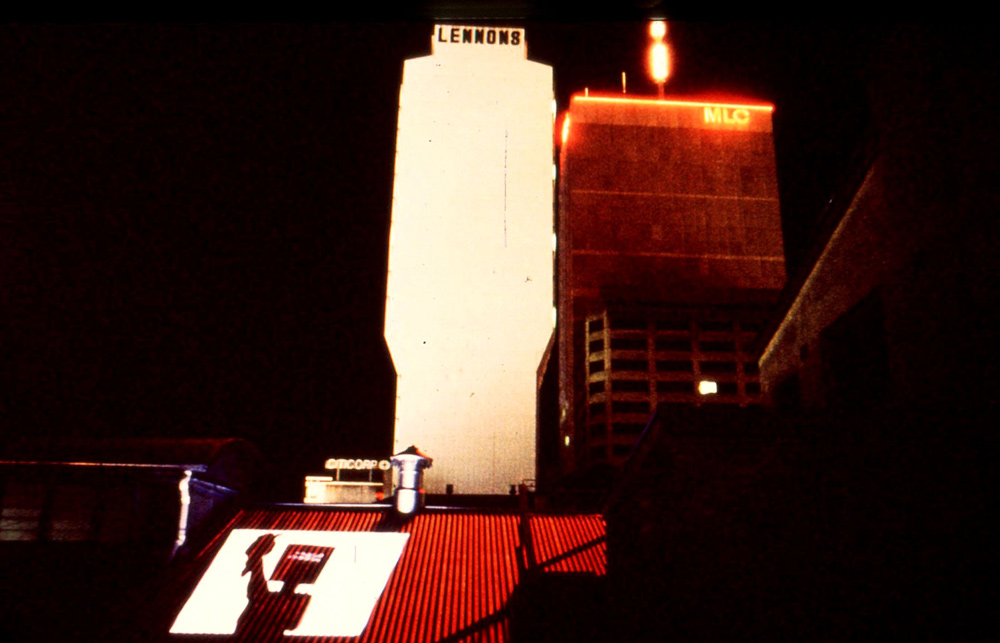
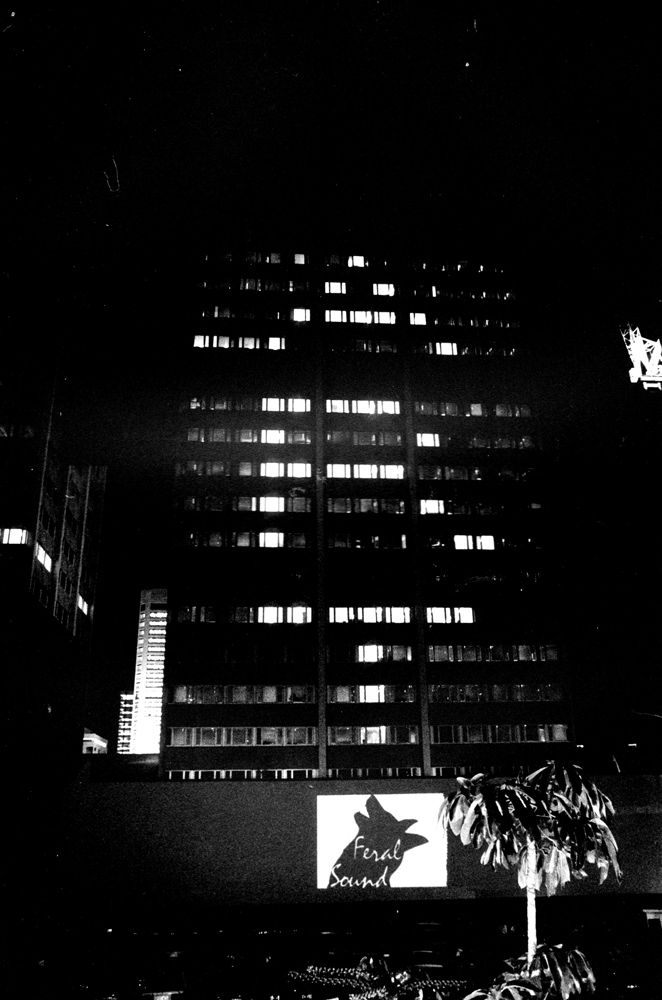
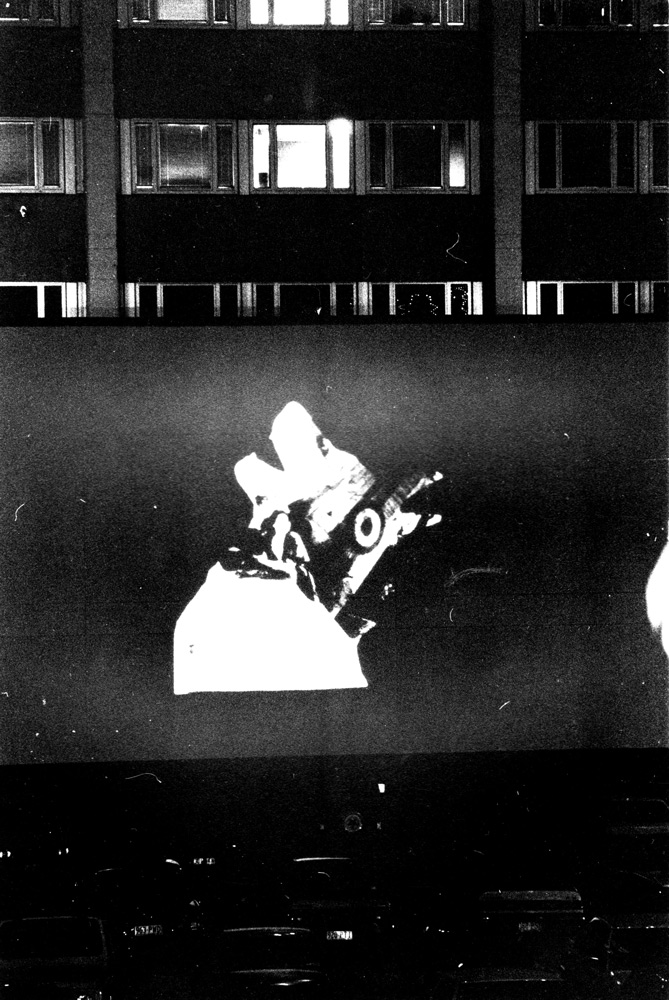
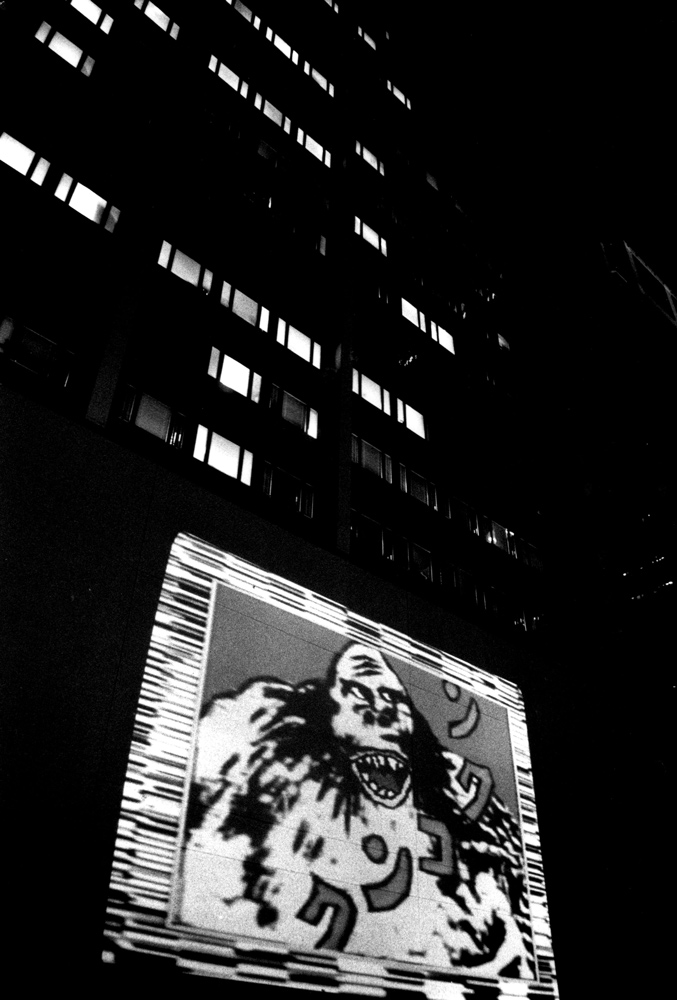
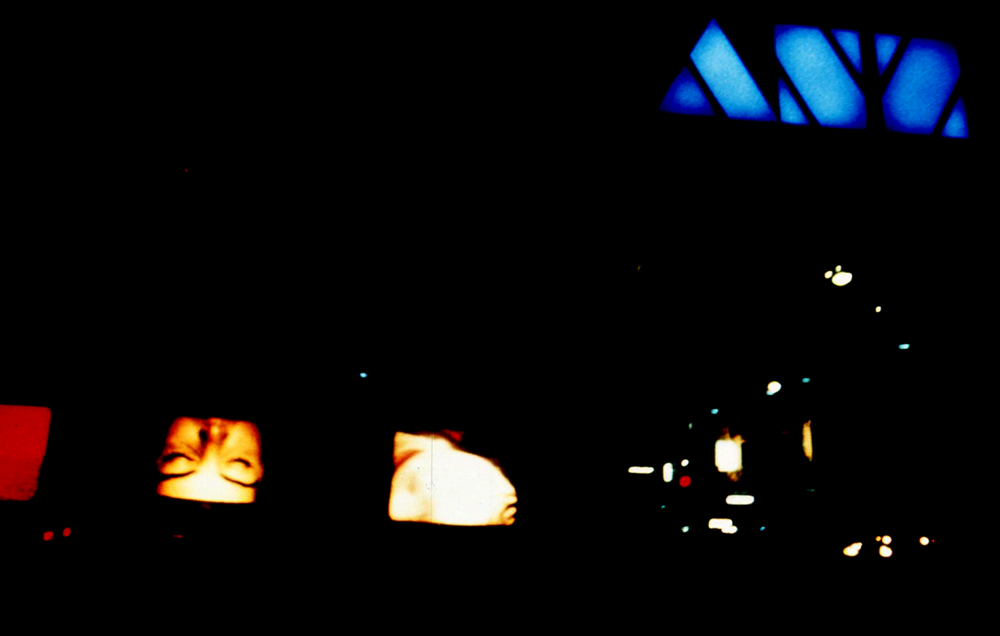
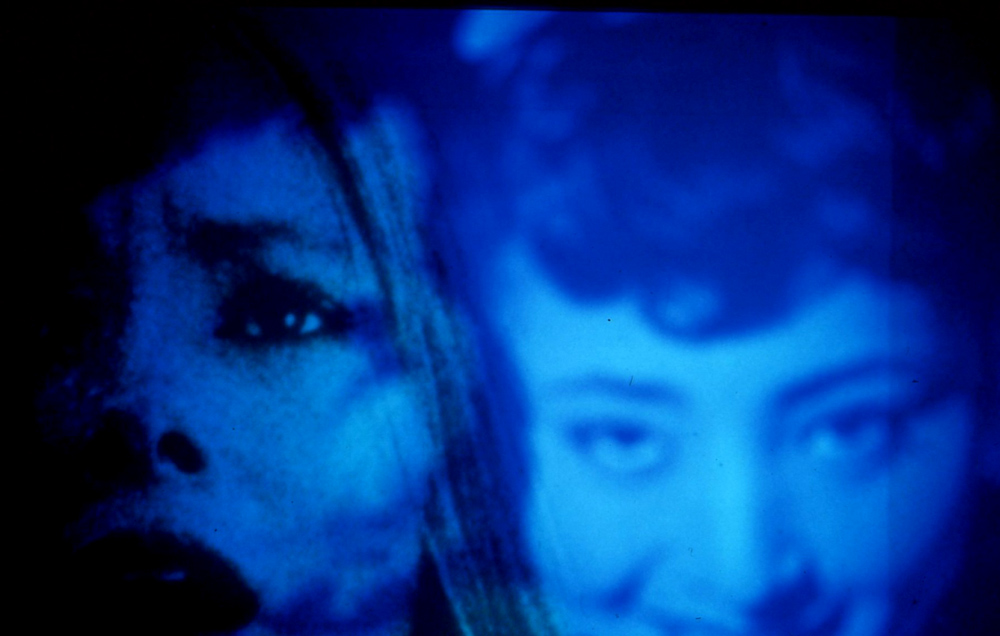
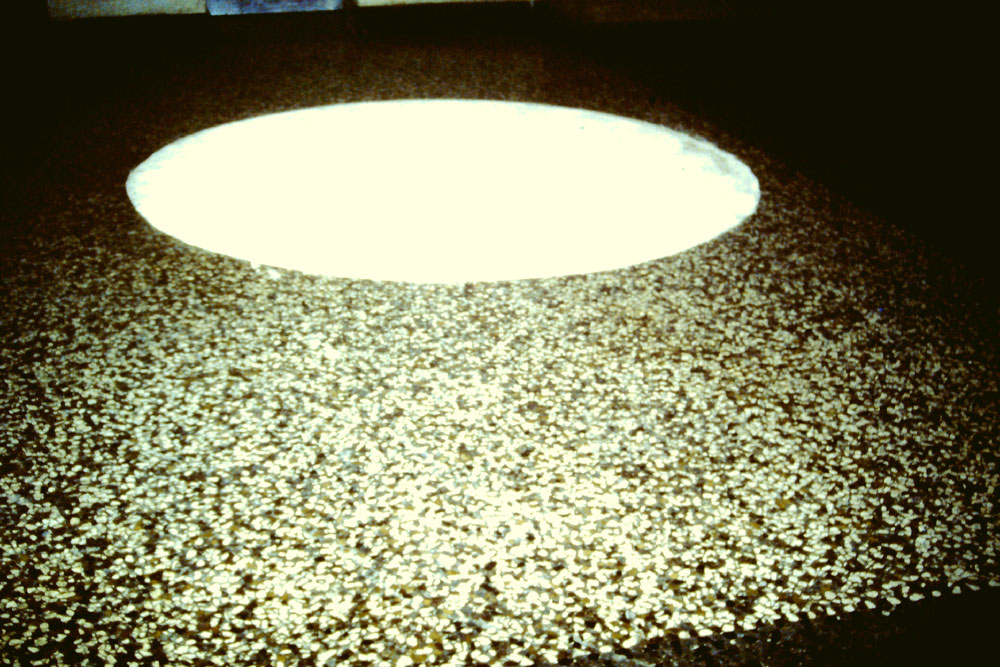
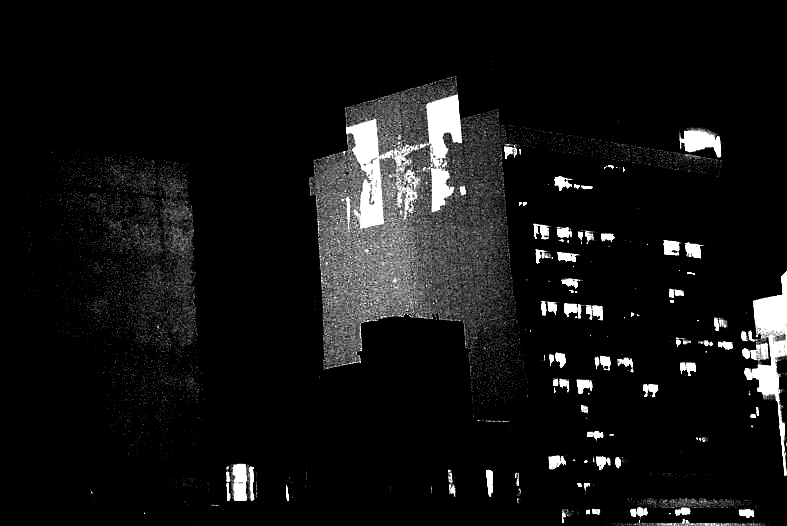
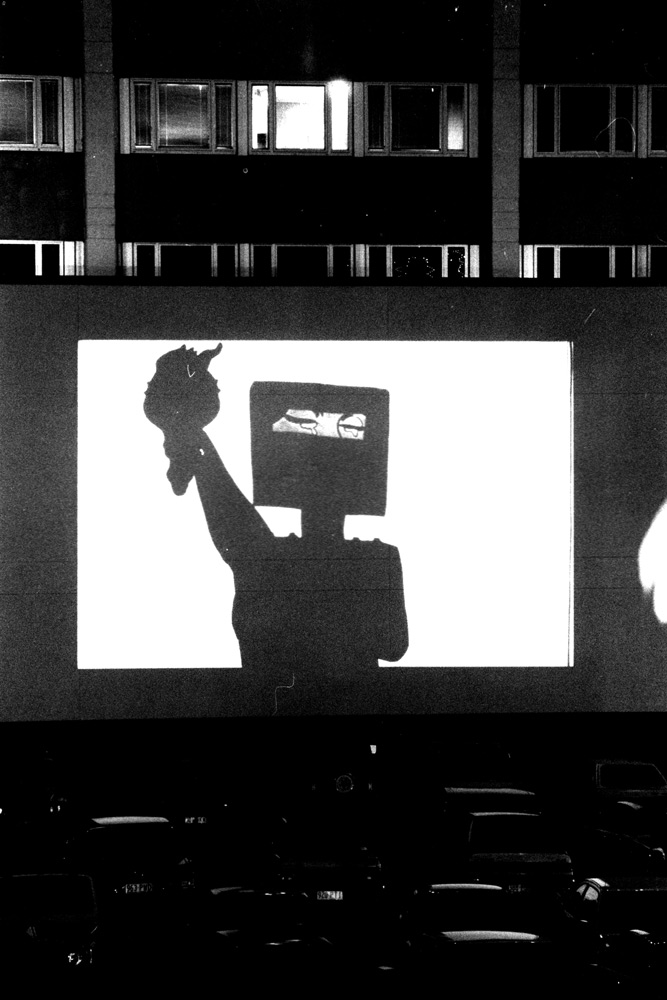
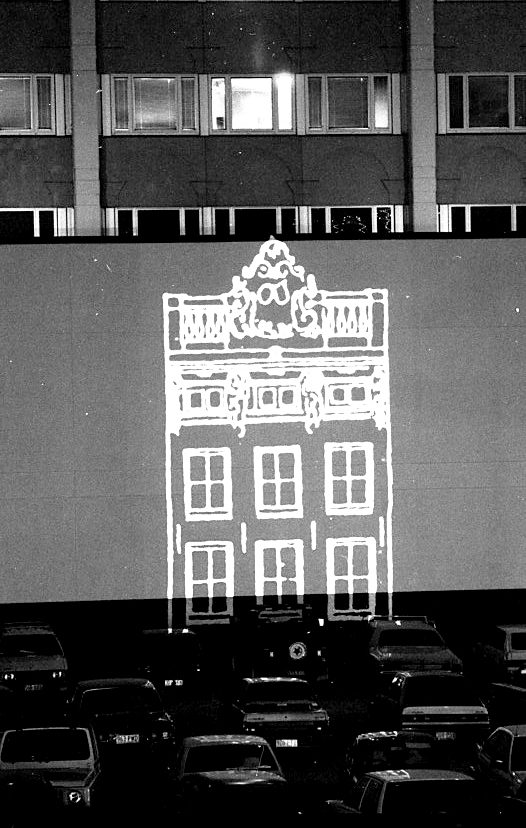
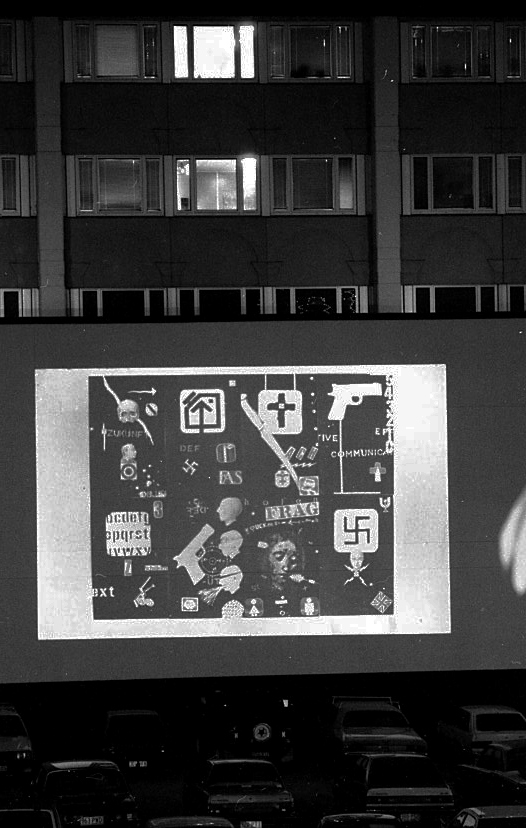
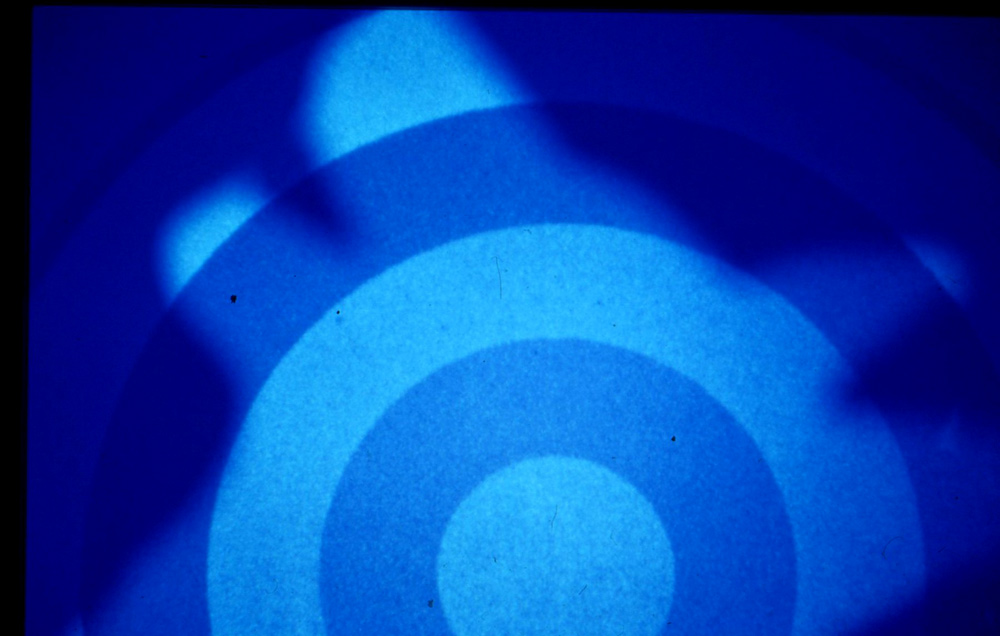
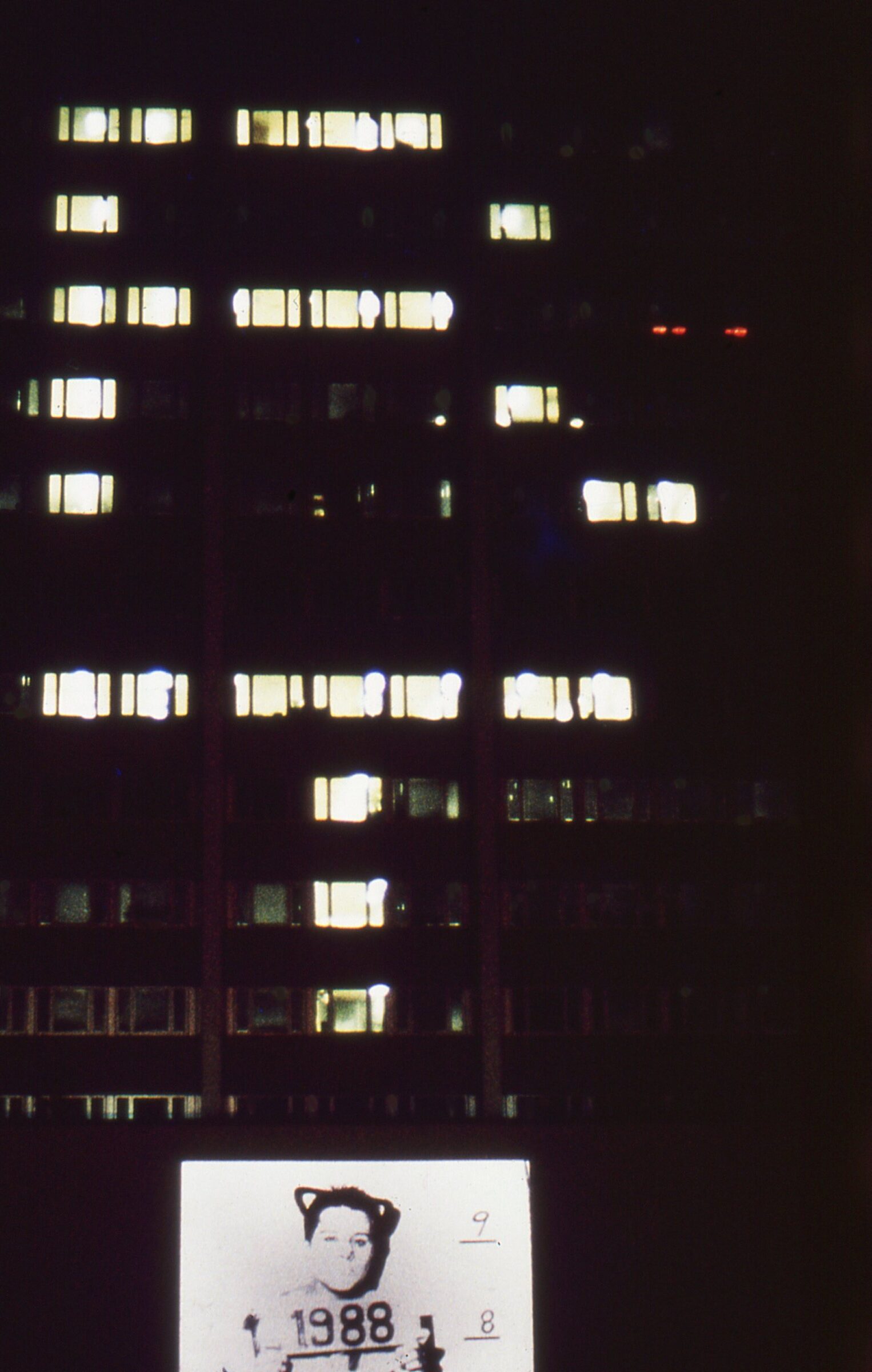
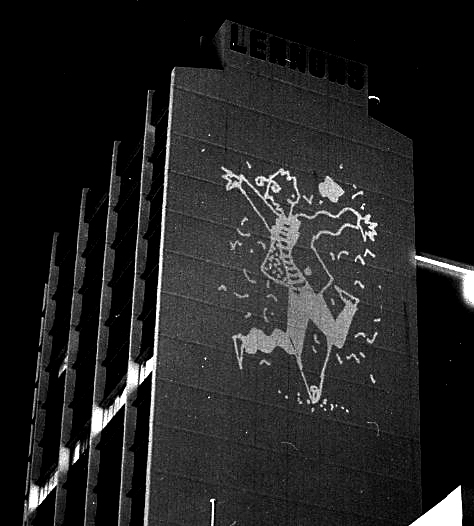
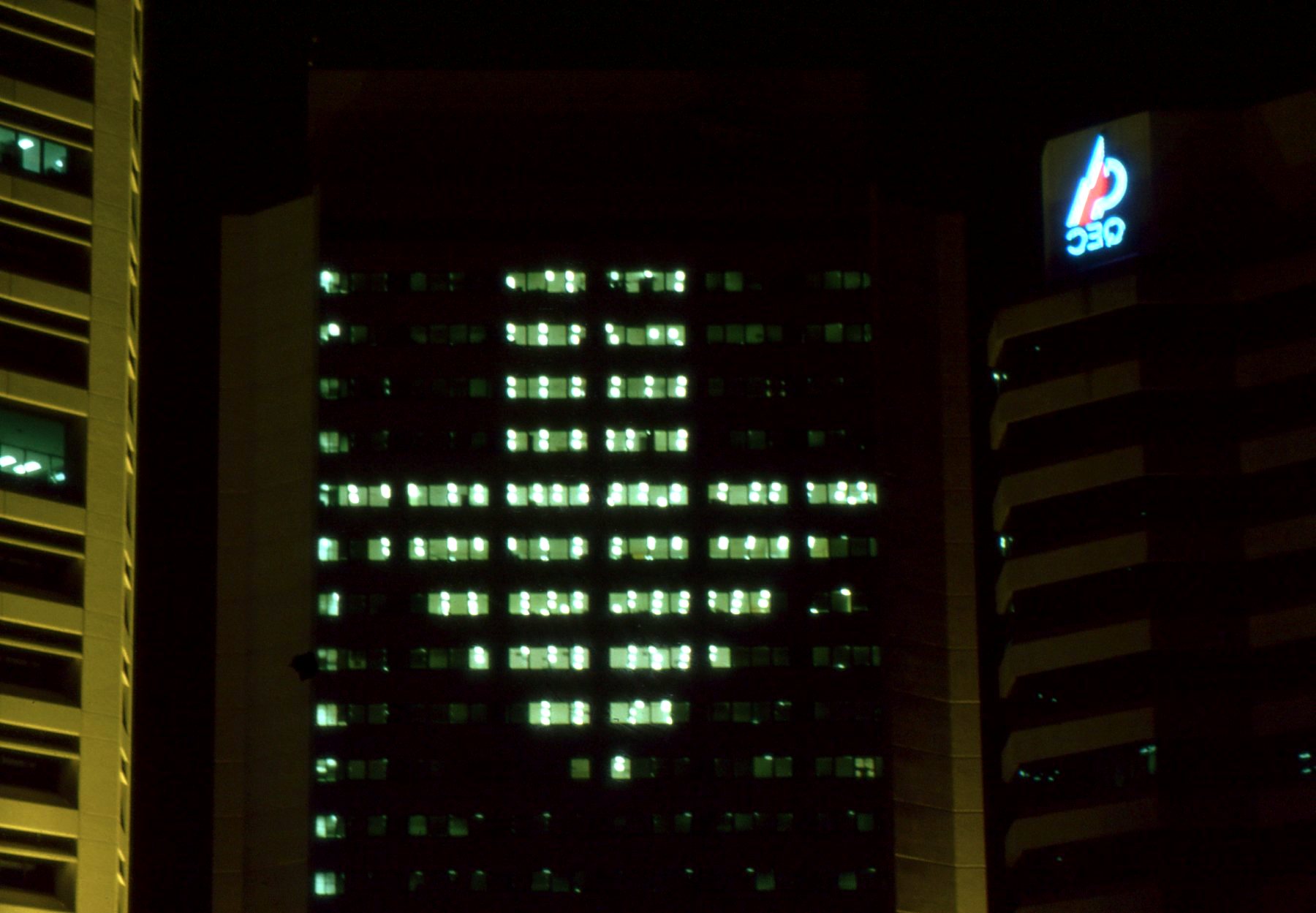
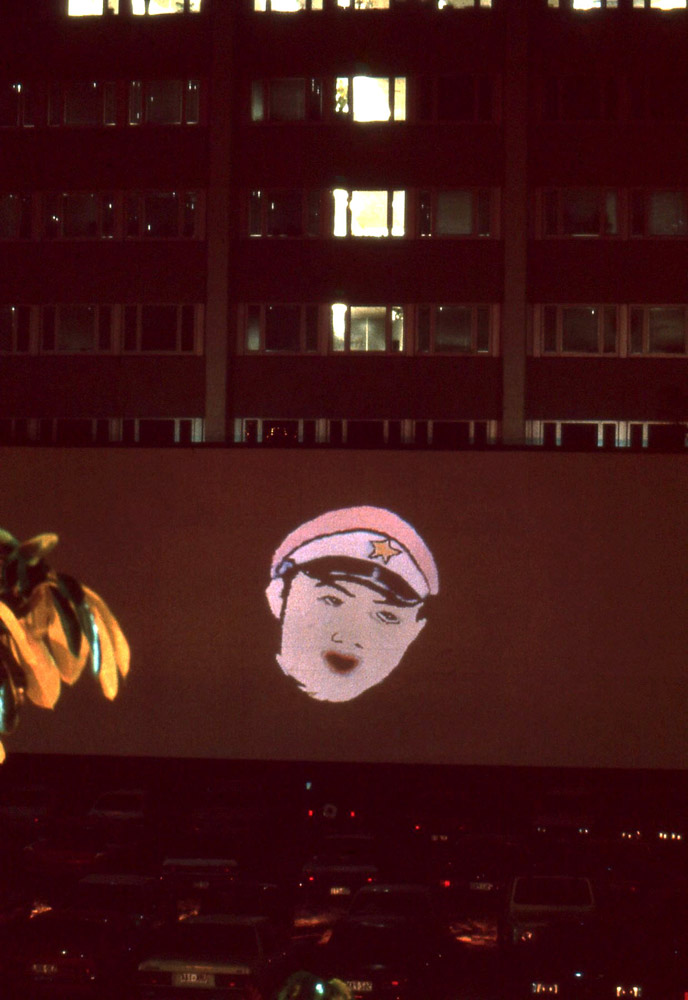
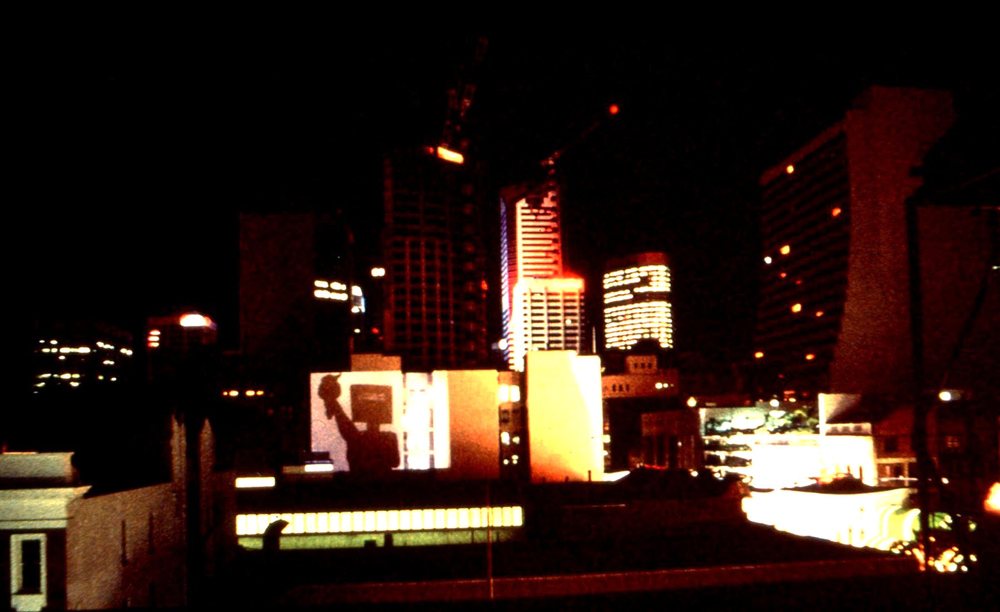
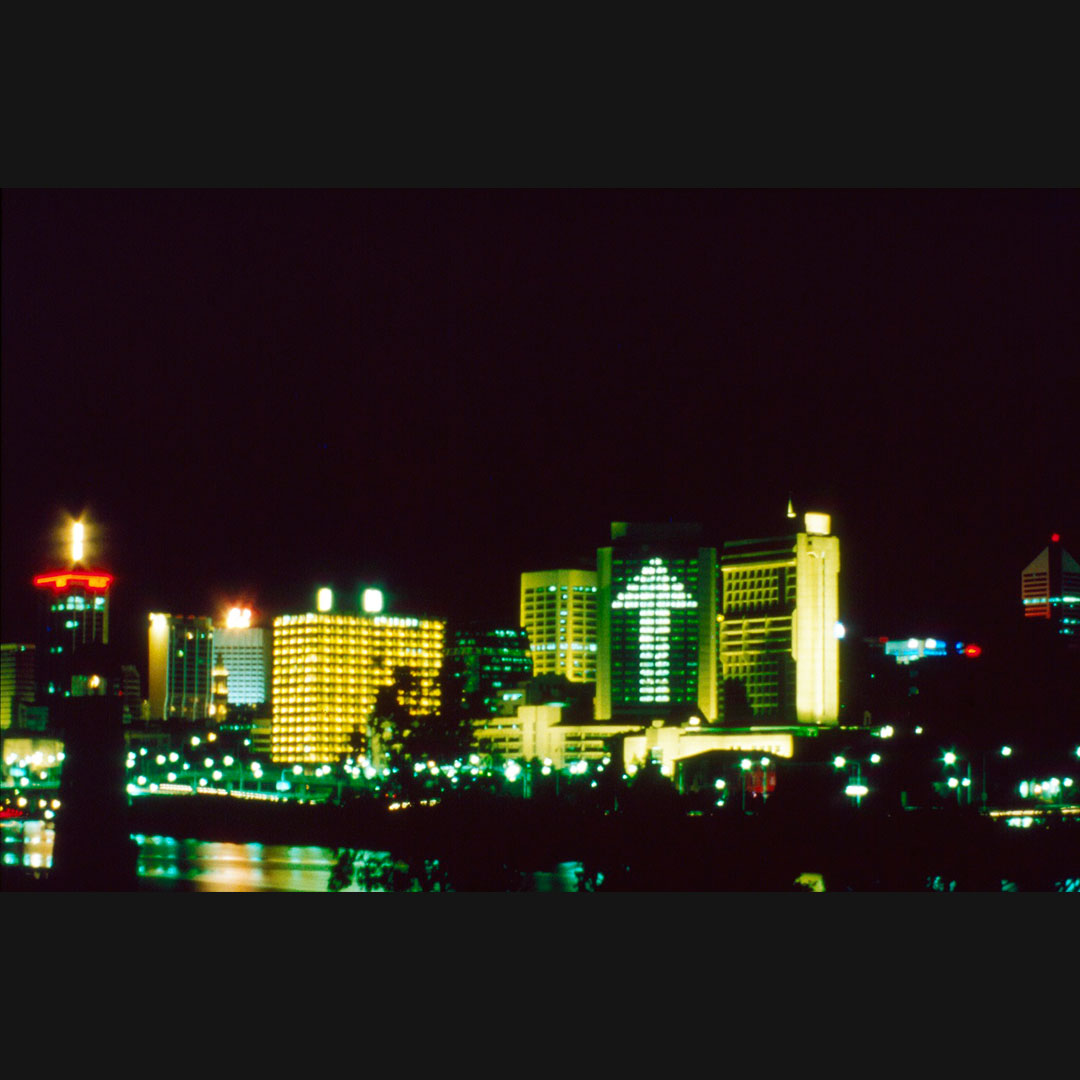
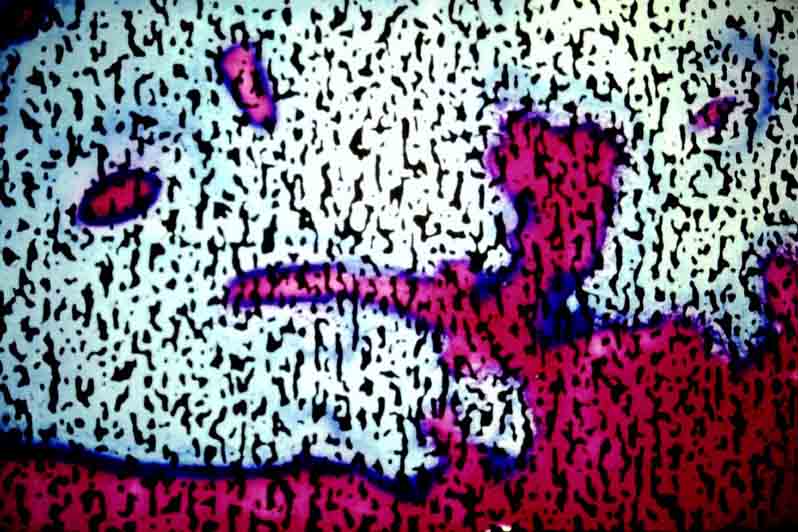
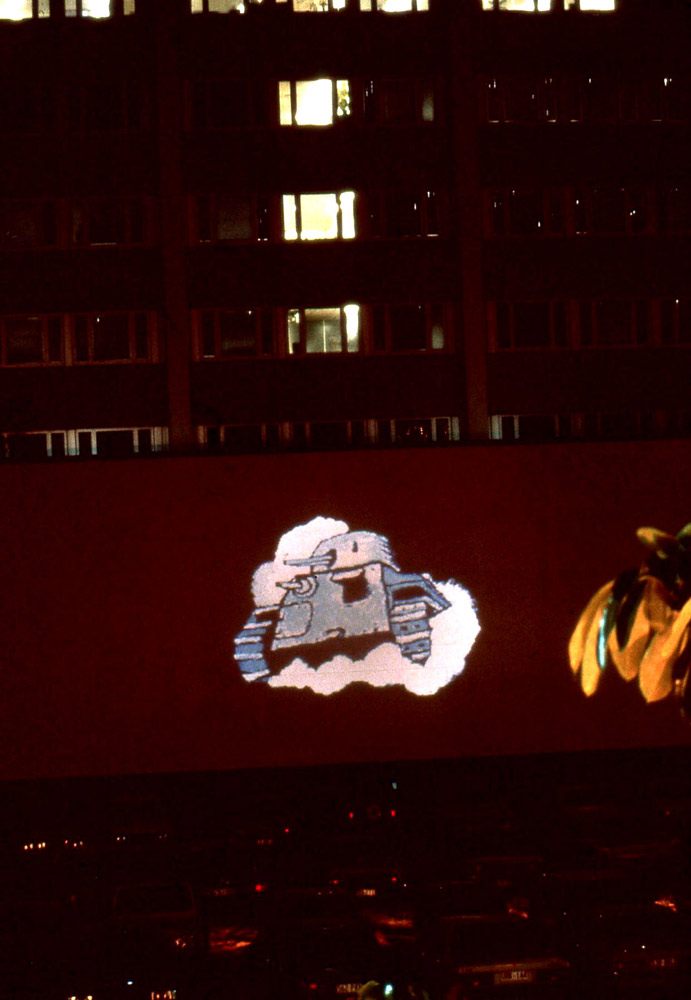
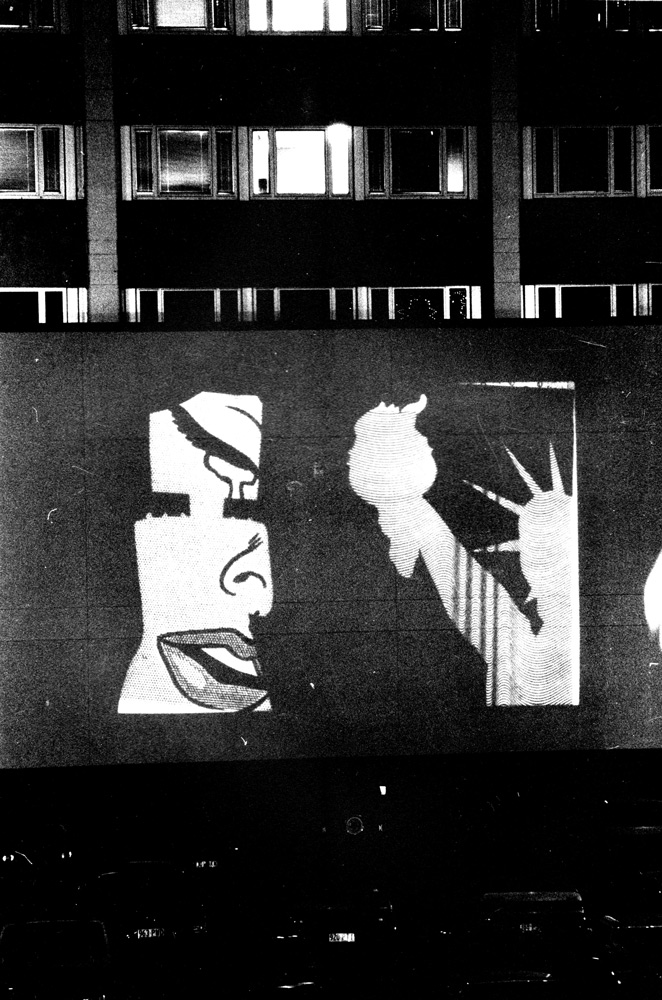
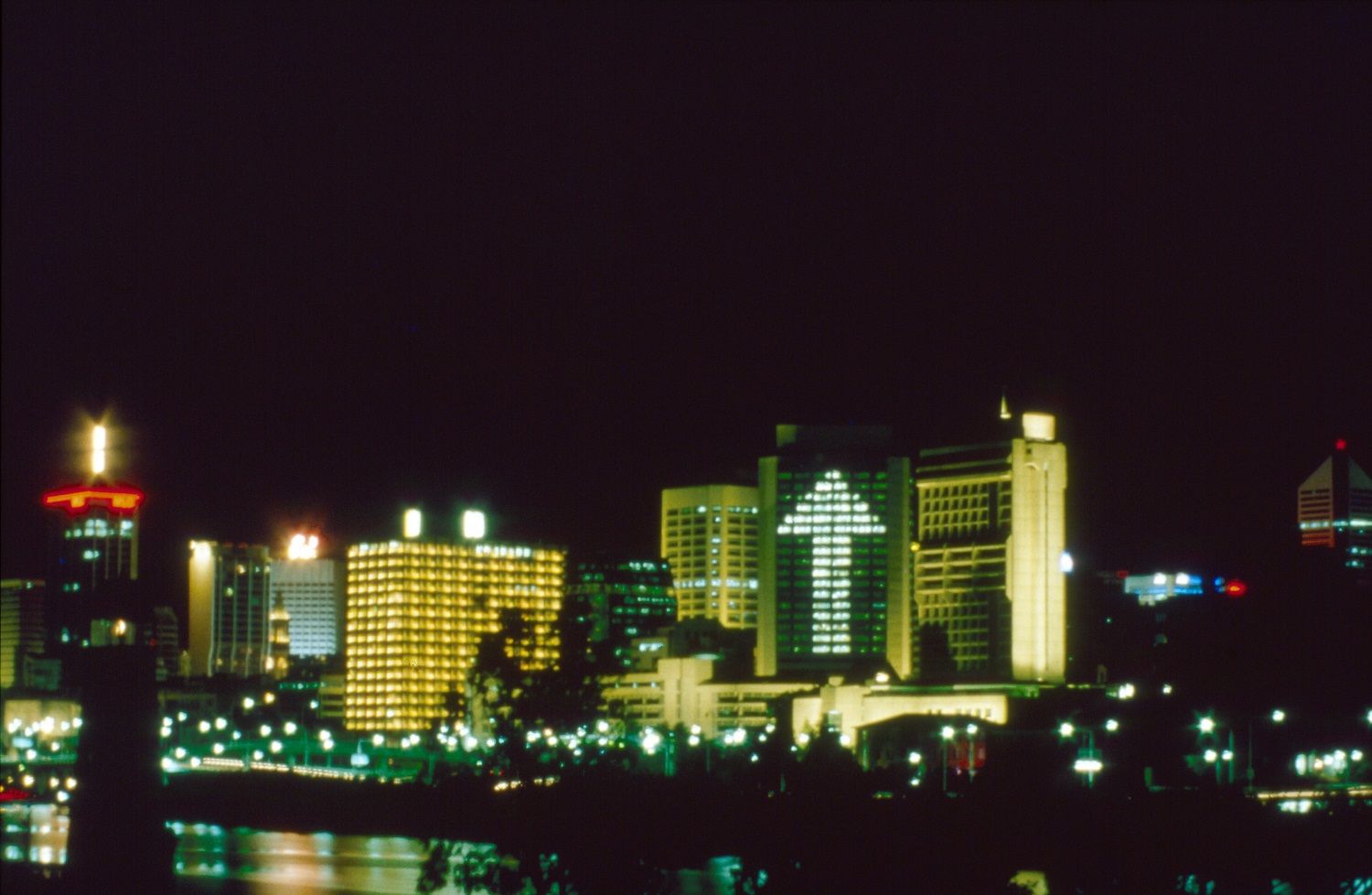
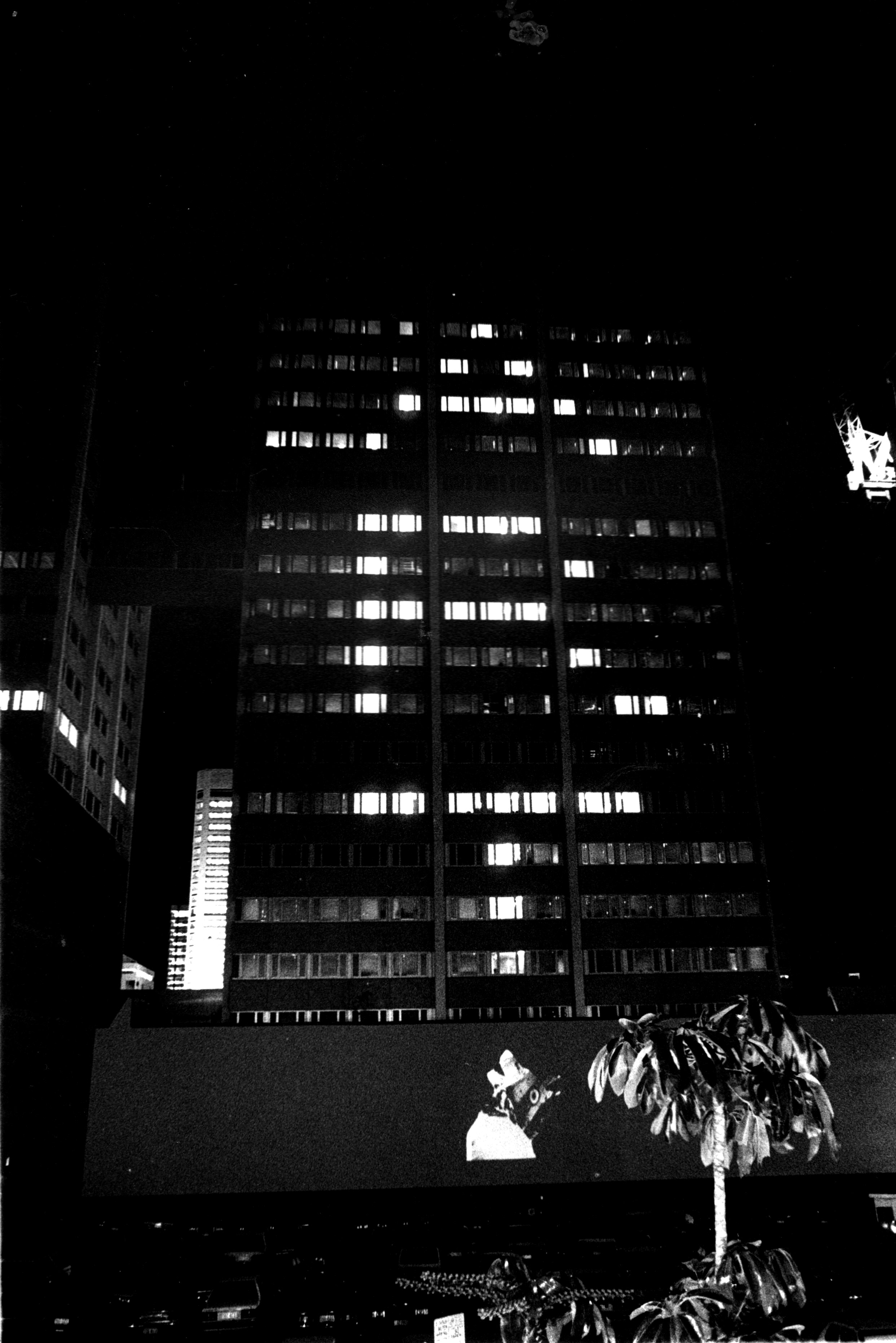
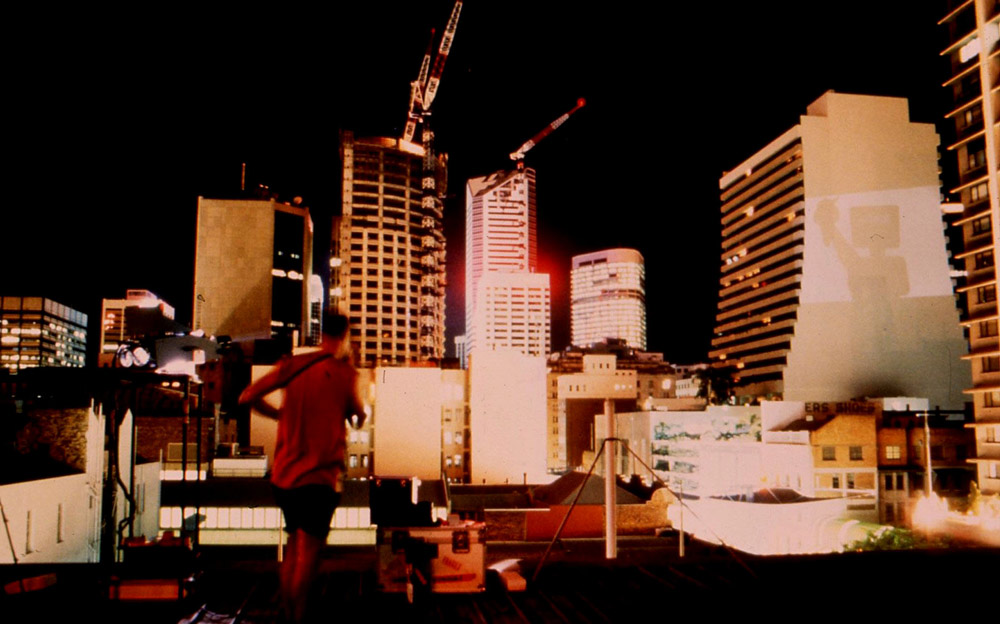
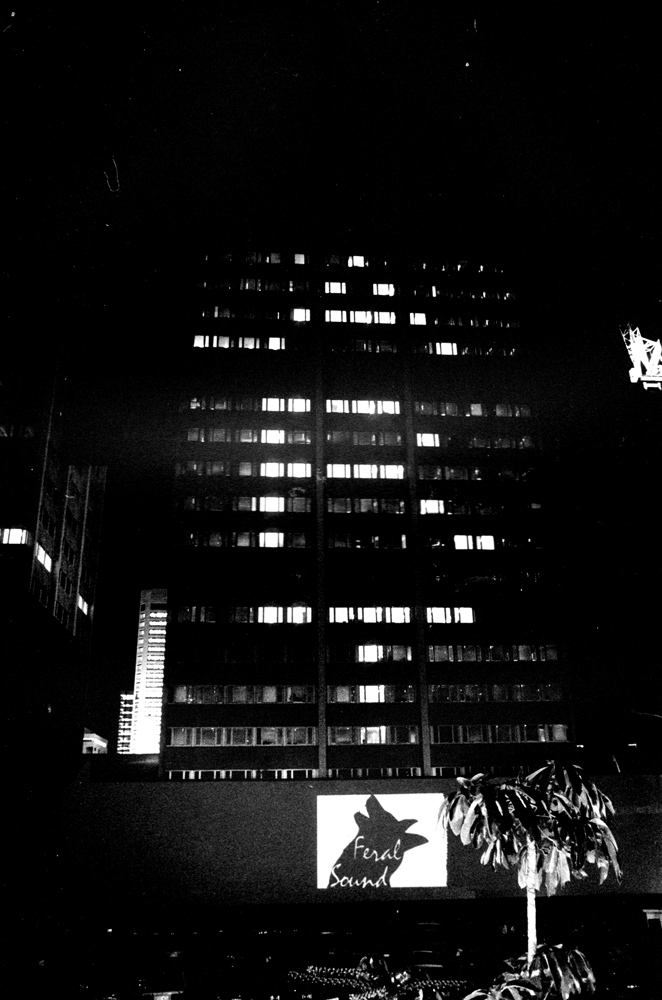
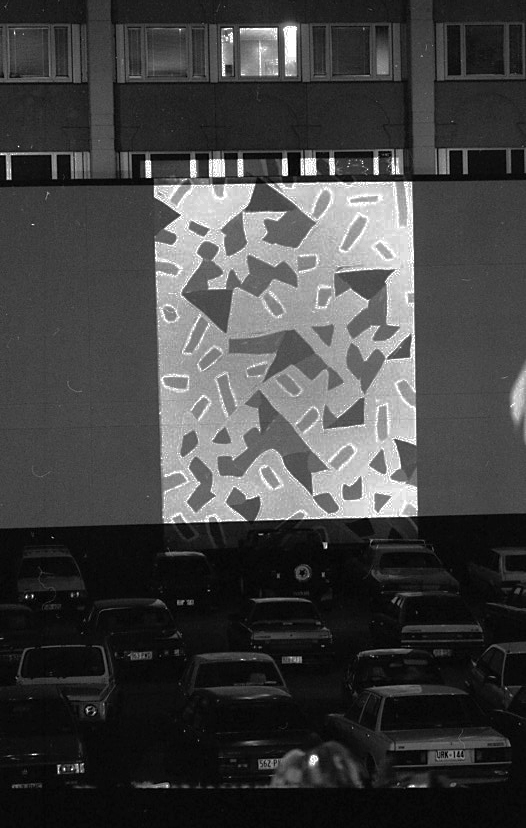
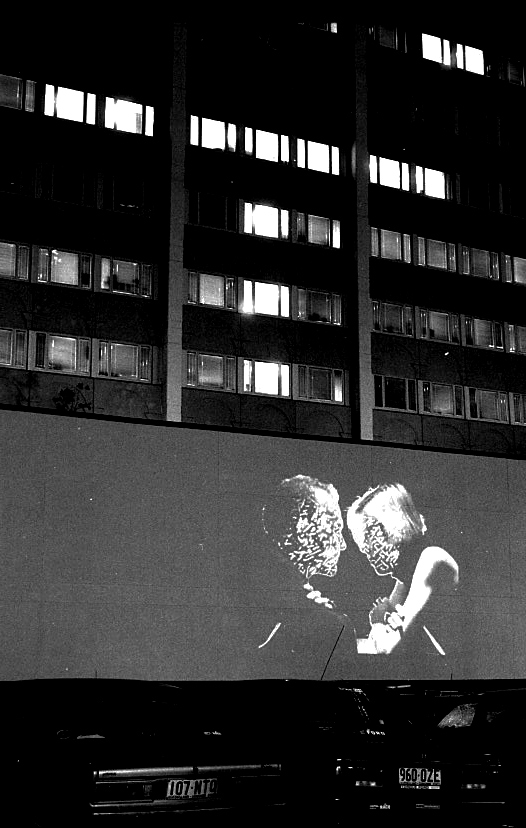
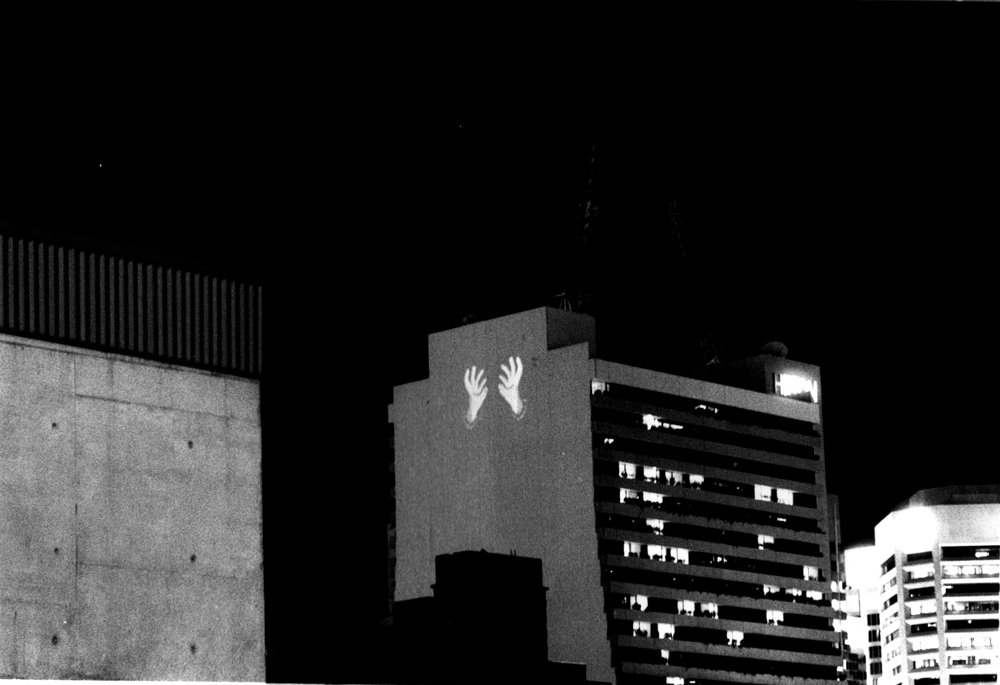
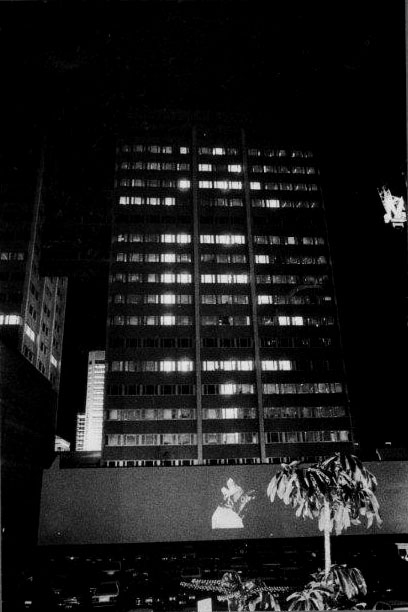
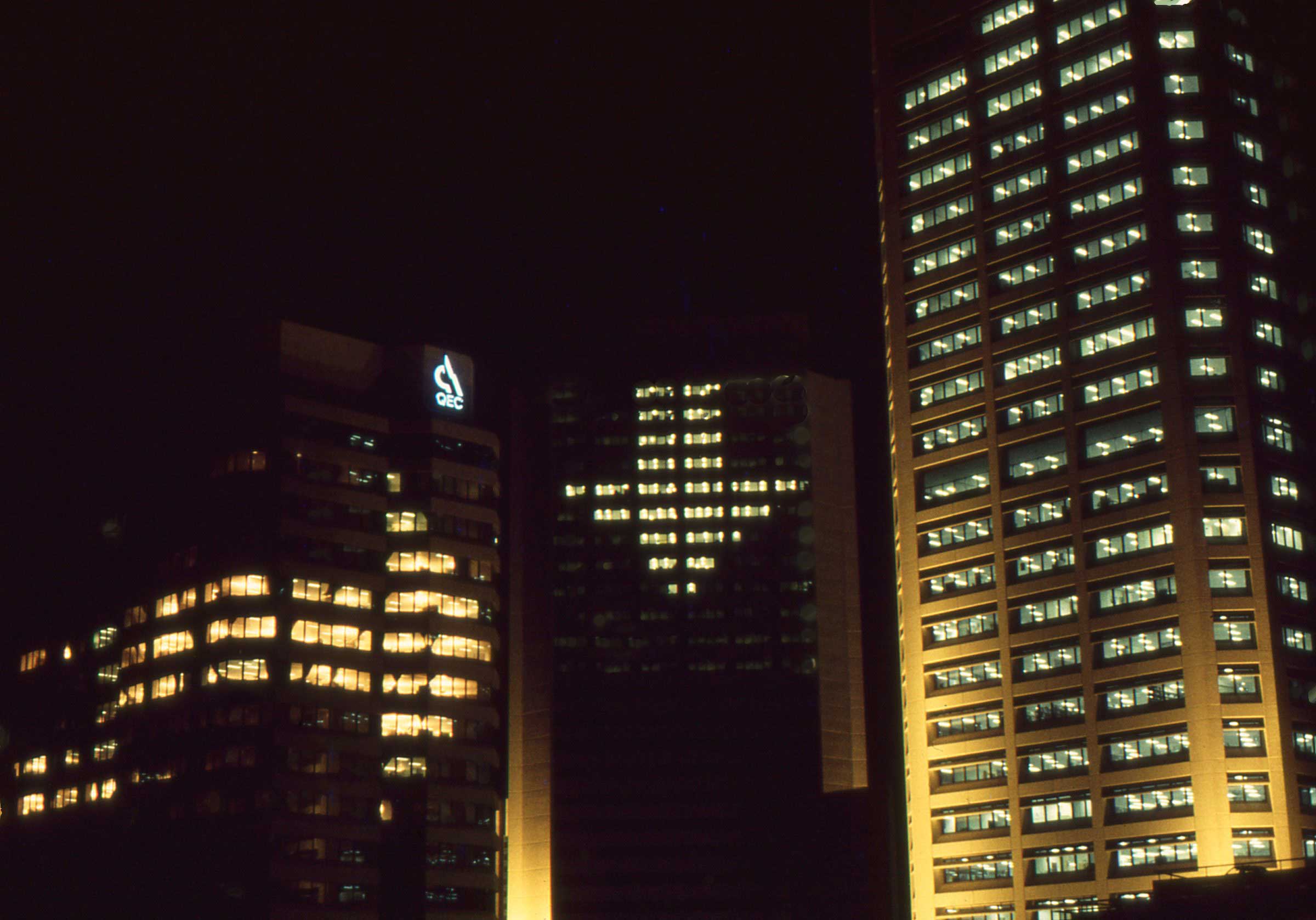
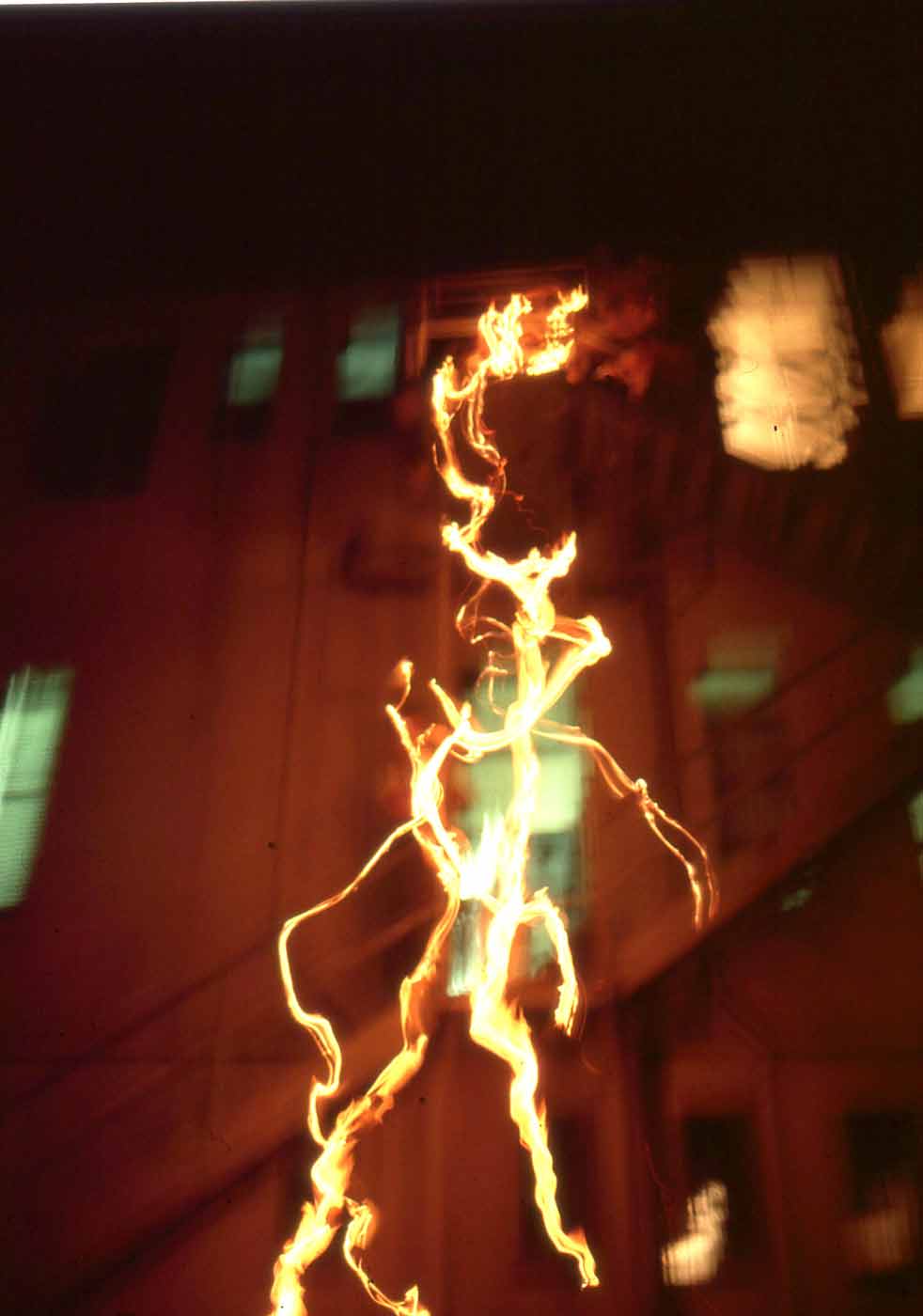
High-rise buildings were used for the light displays, projections and musical interludes.
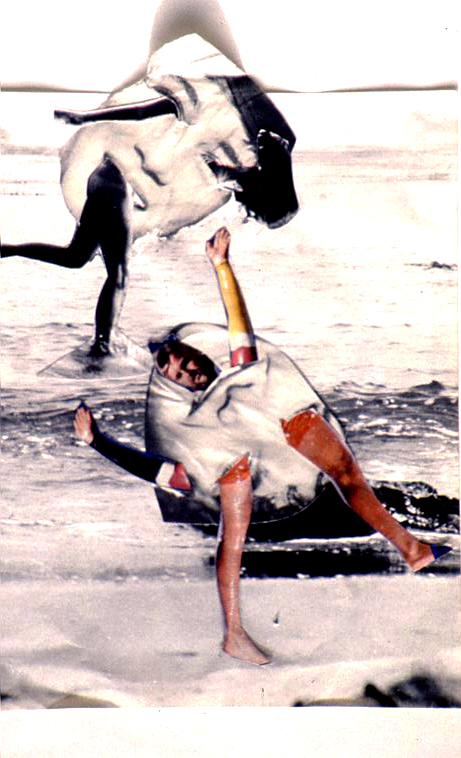
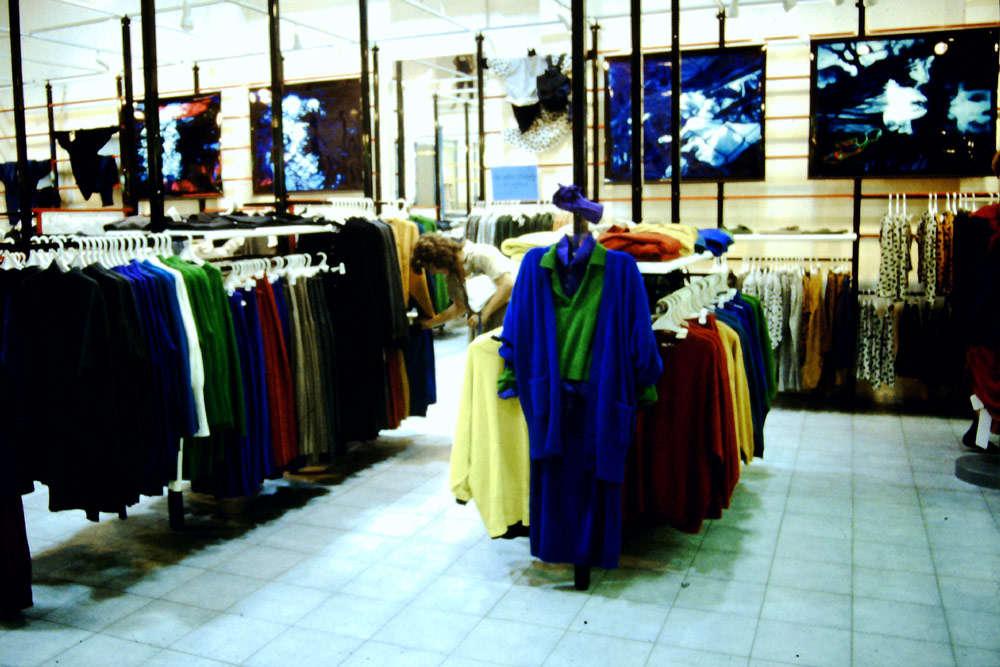
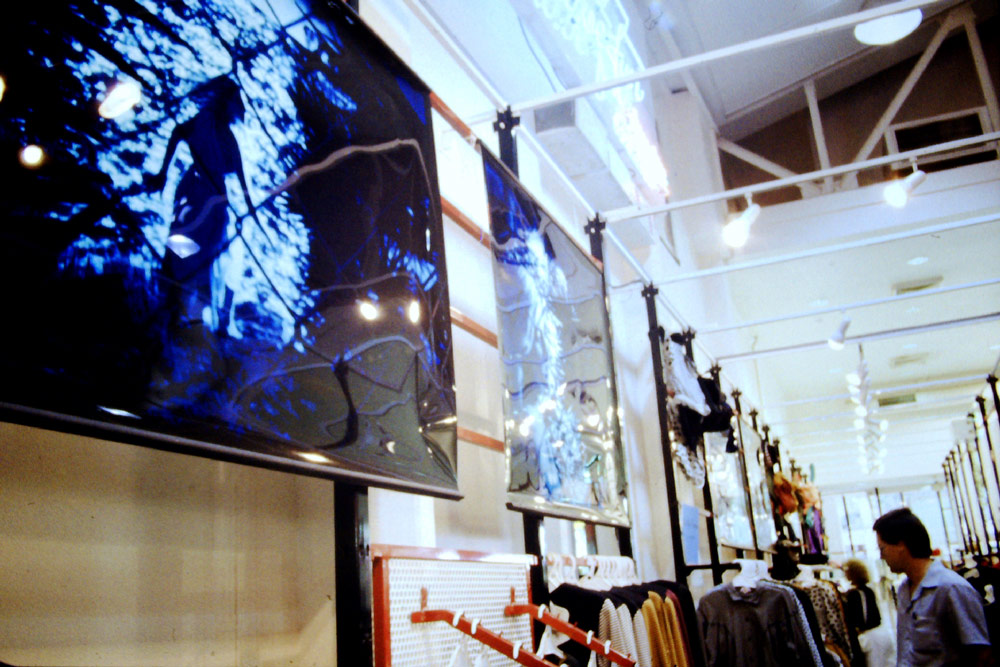
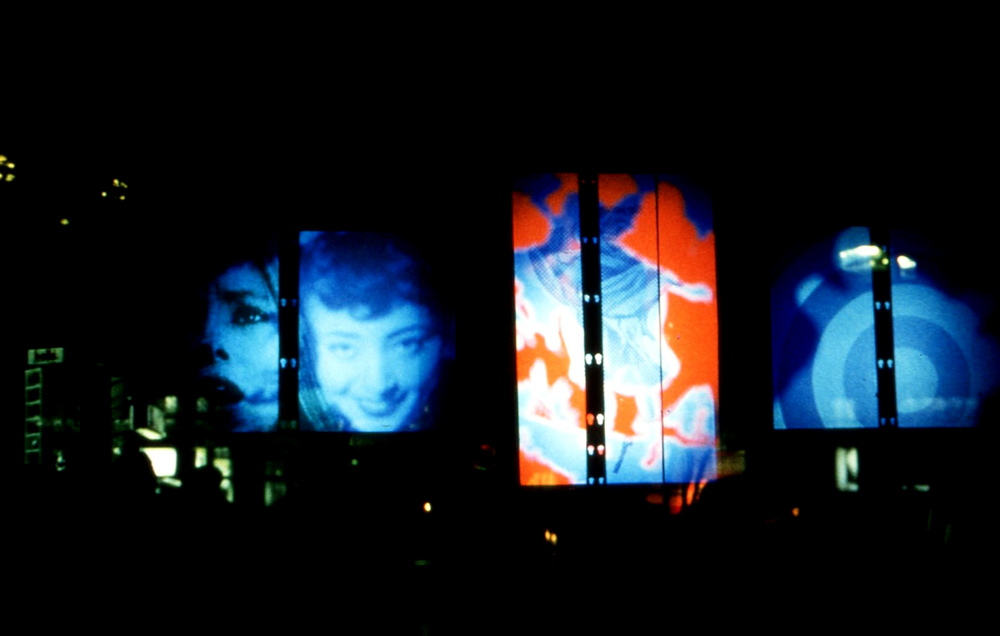
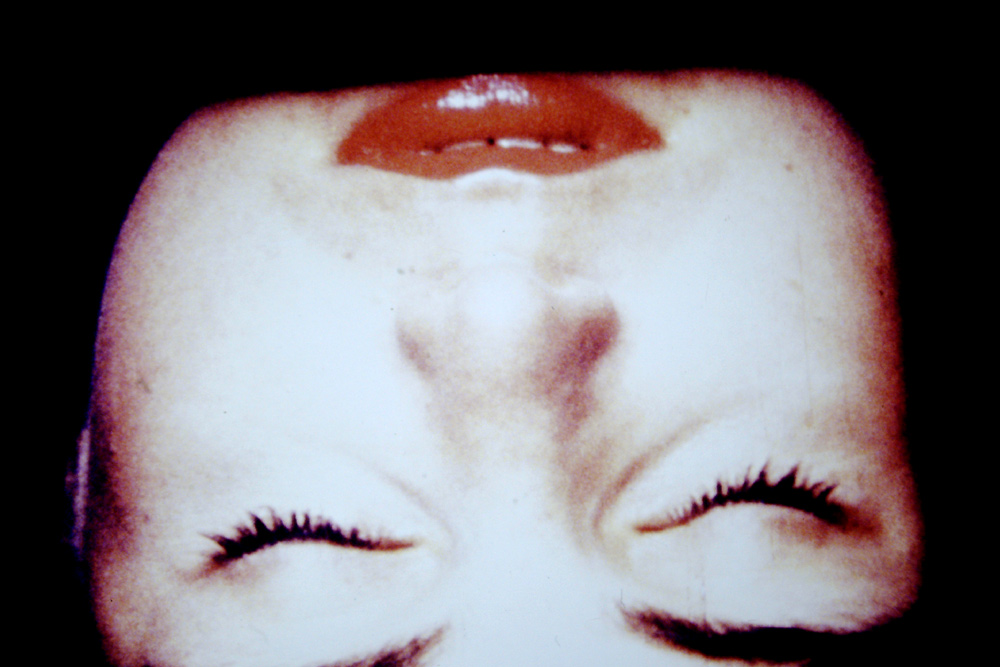
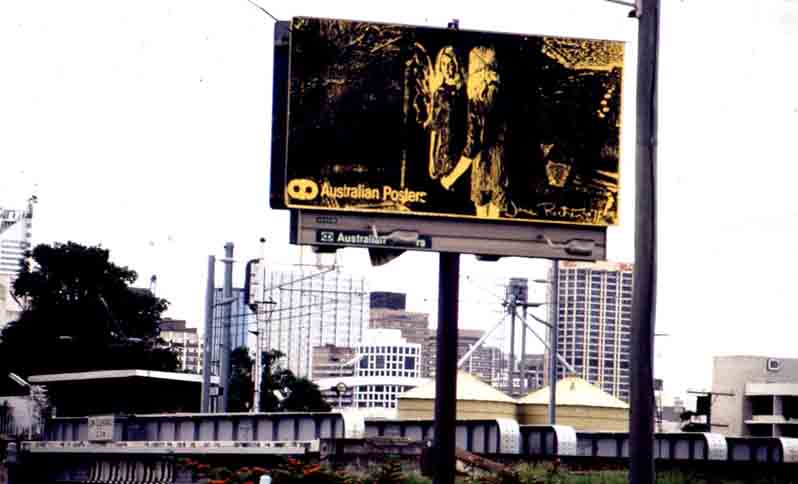
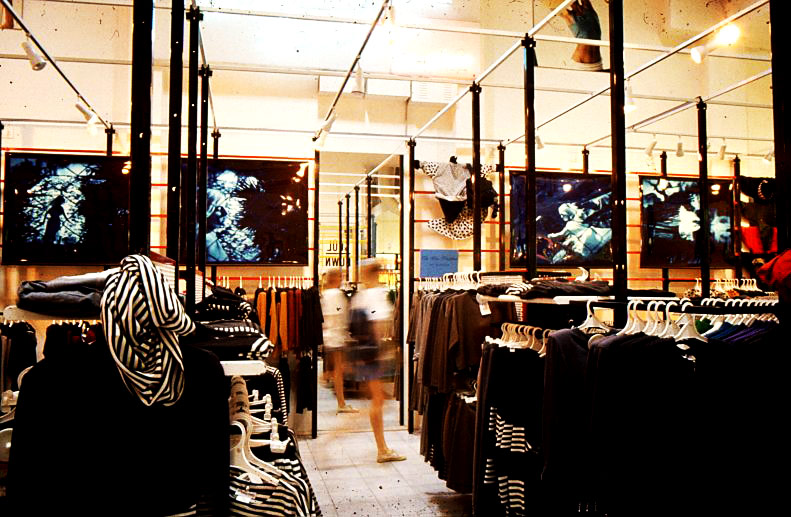
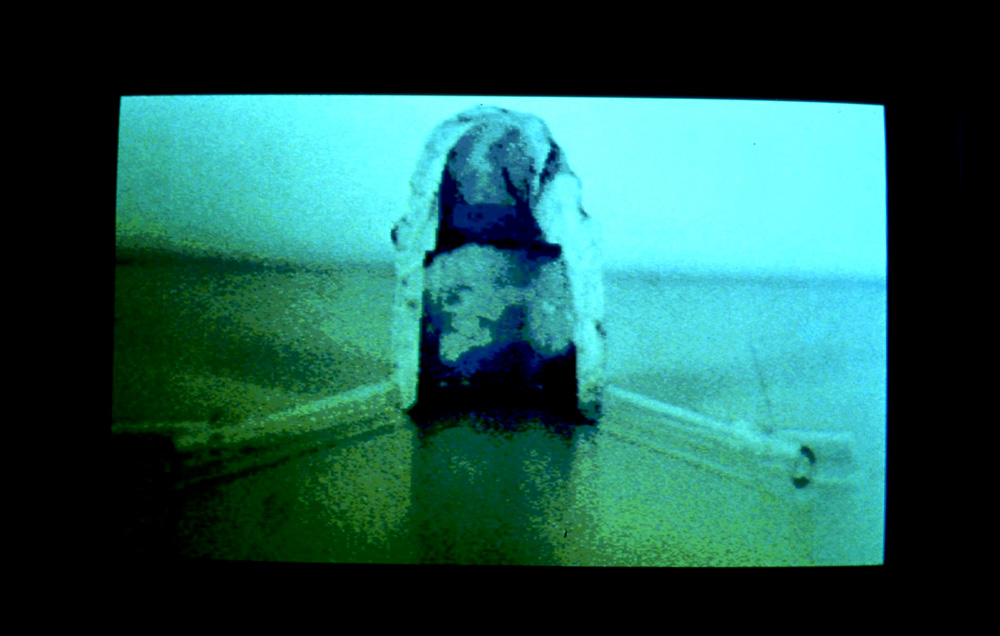
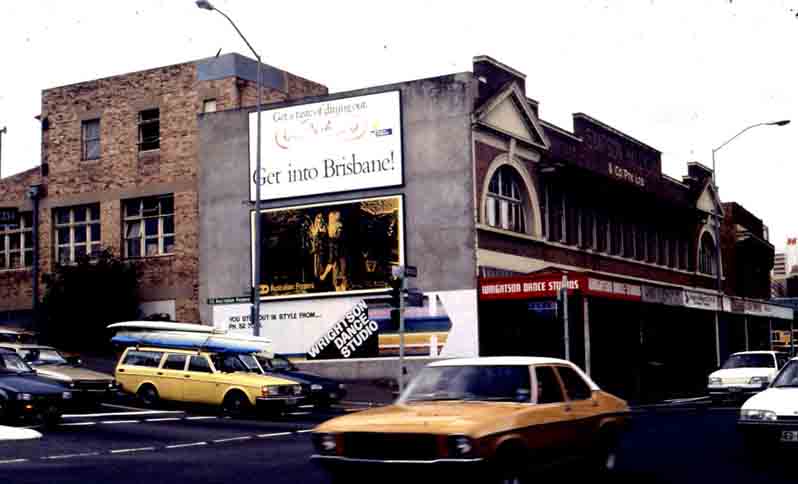
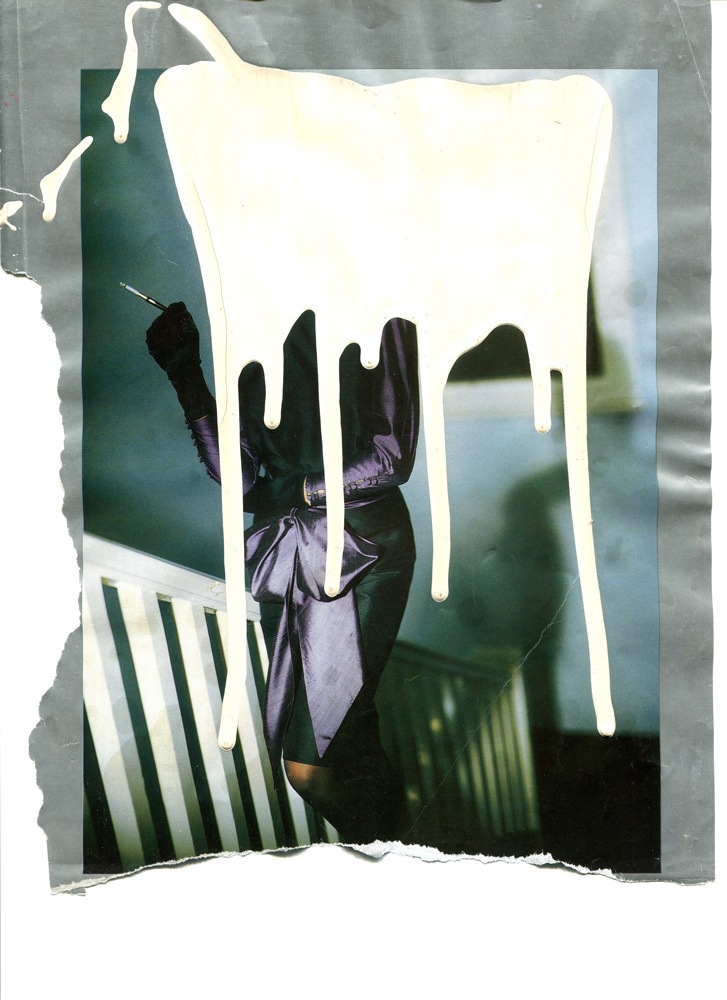
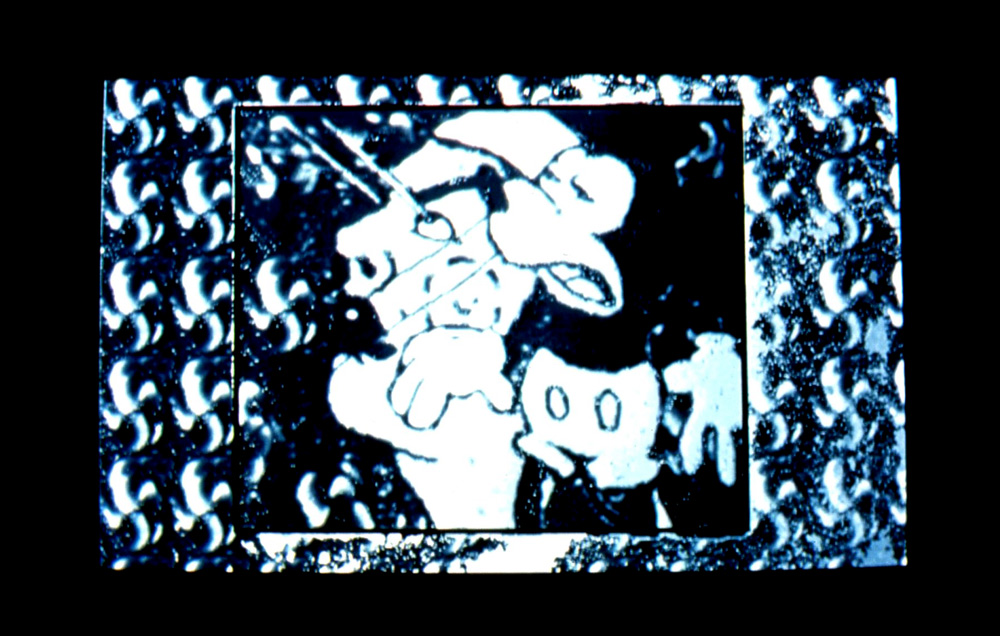
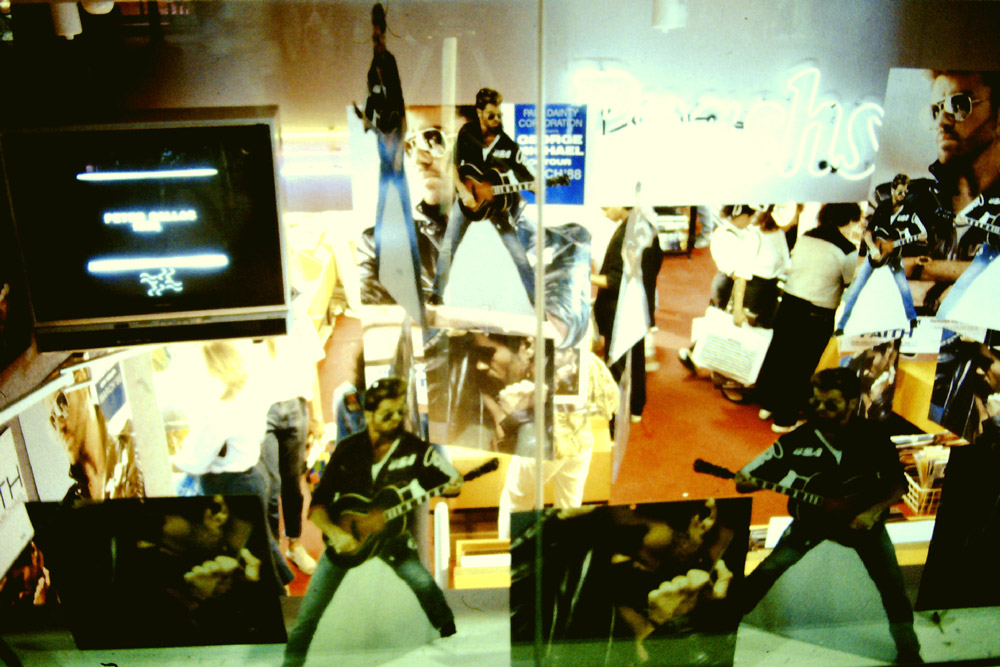
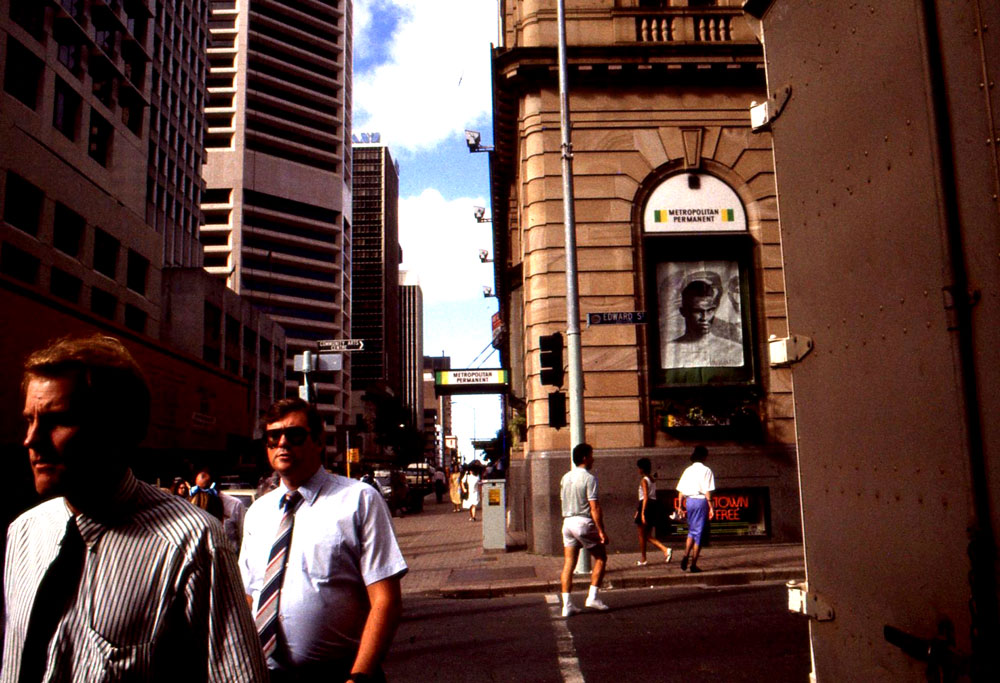
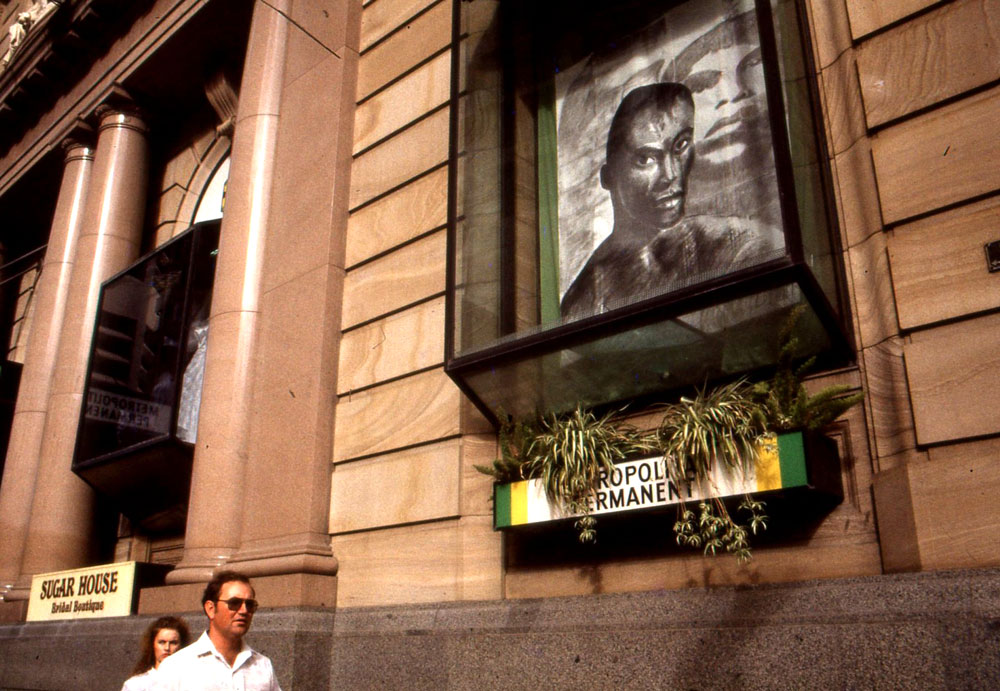
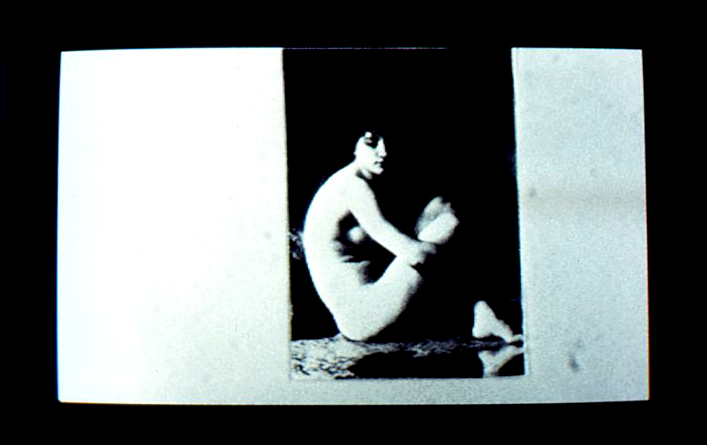
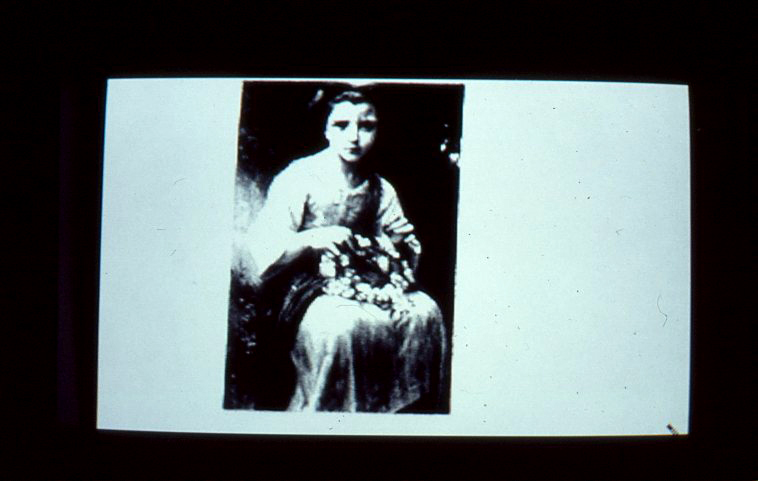
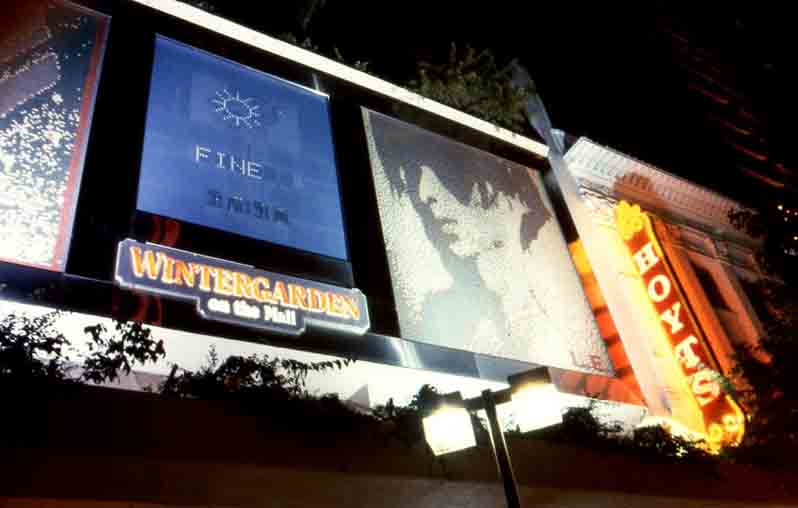
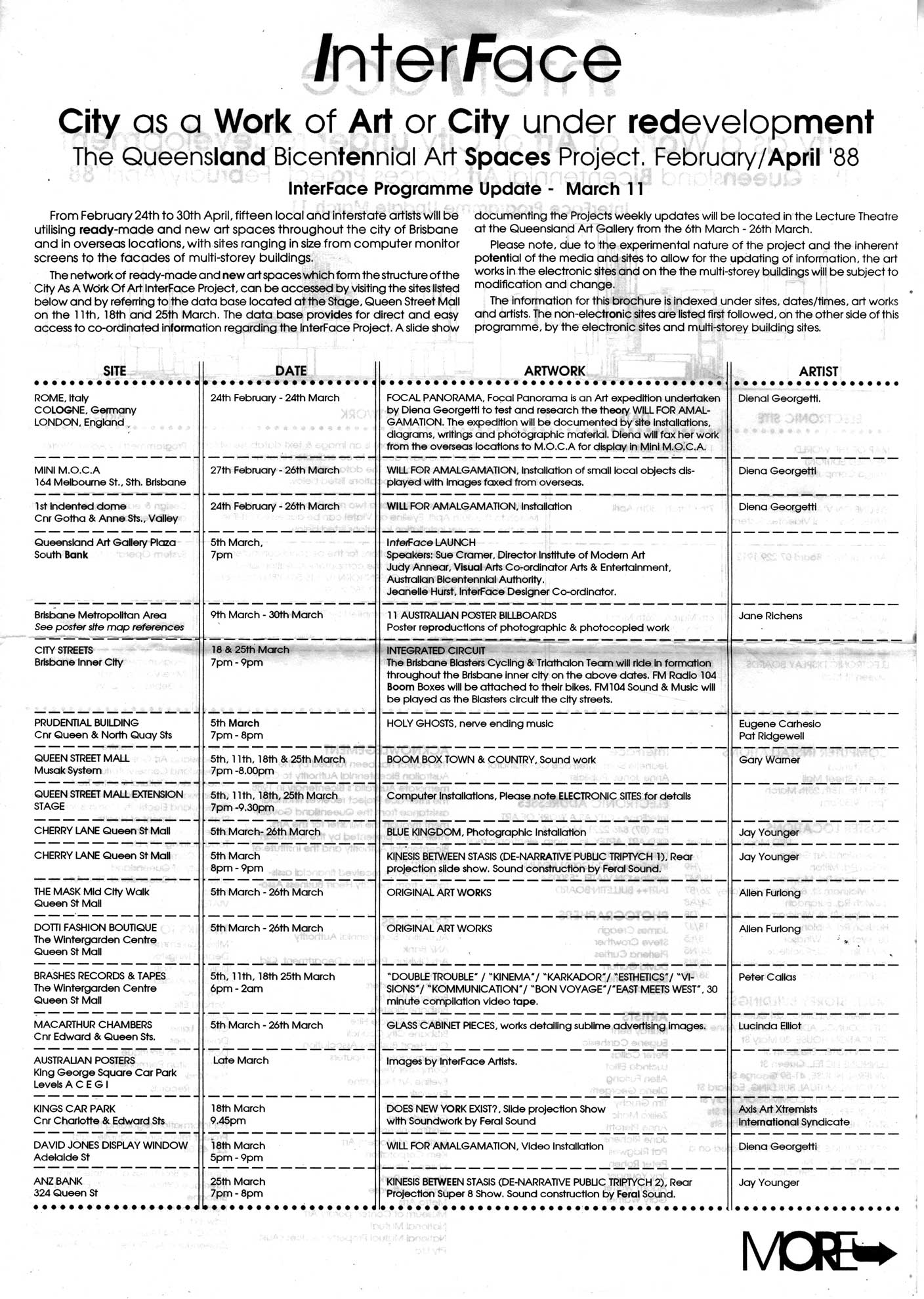
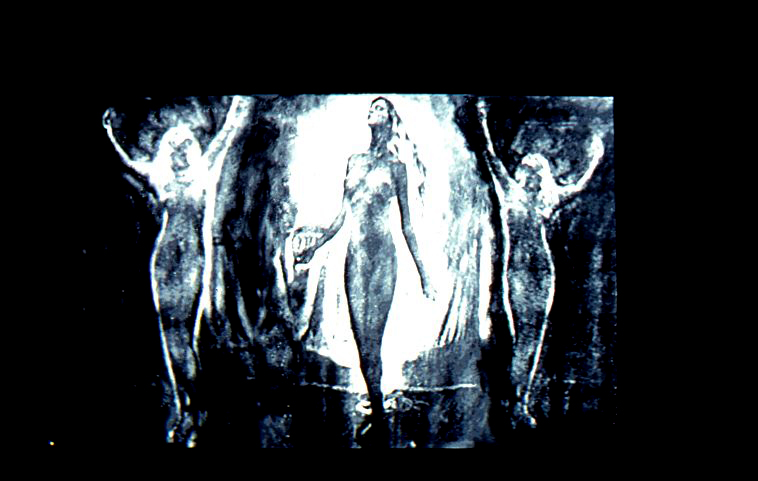
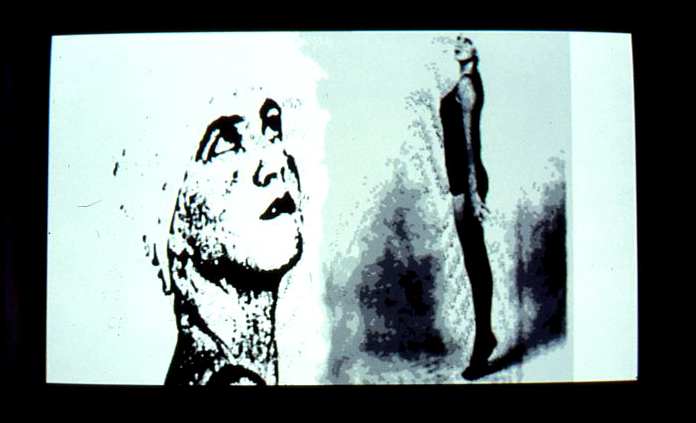
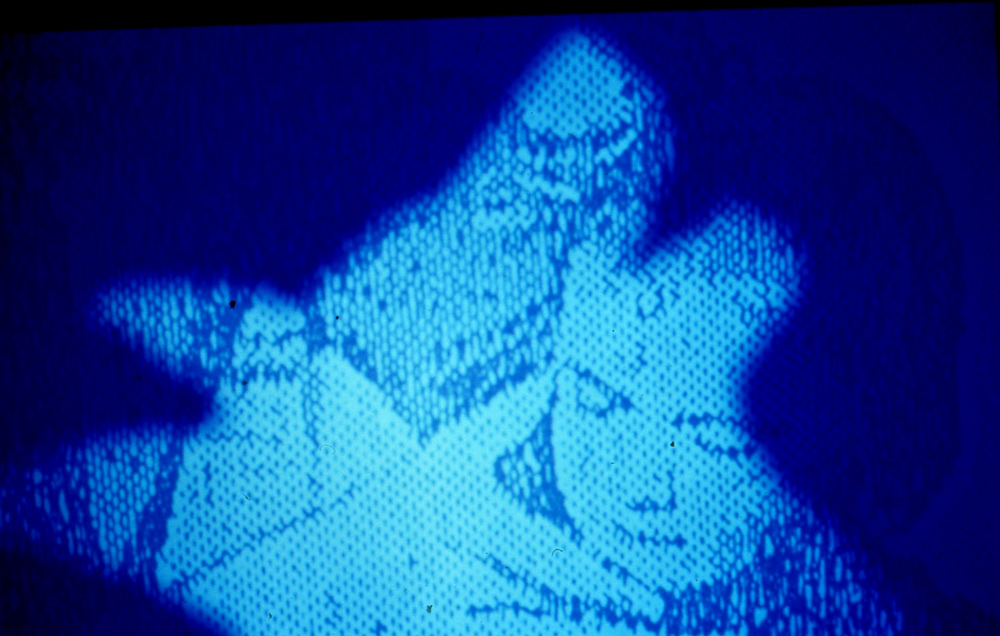
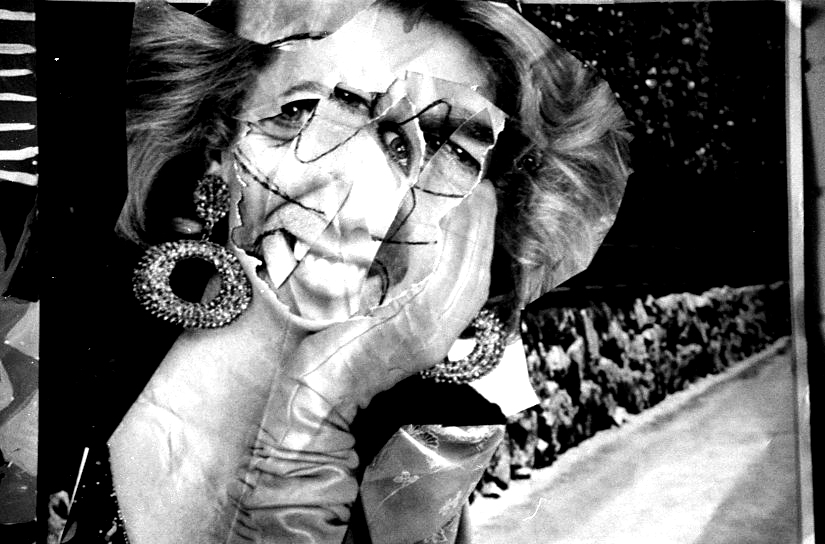
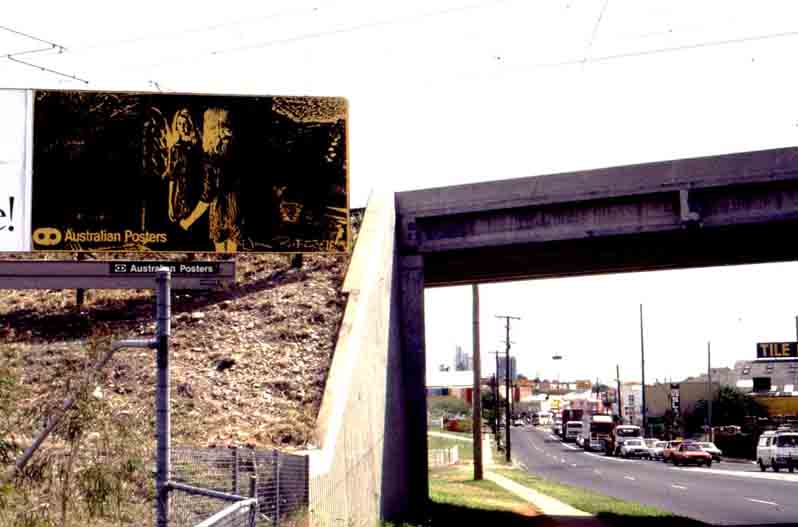
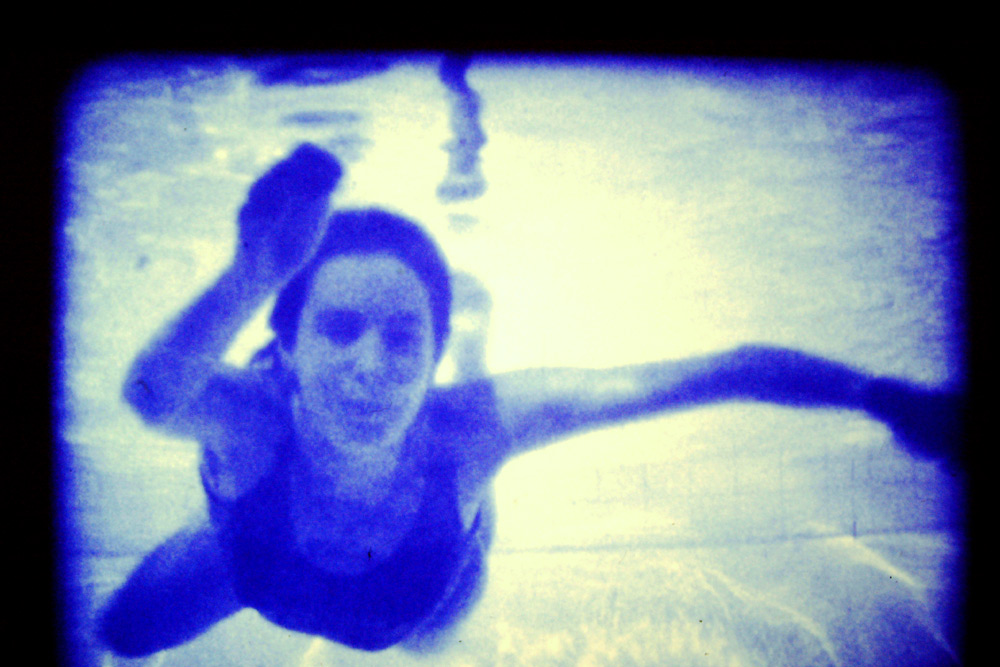
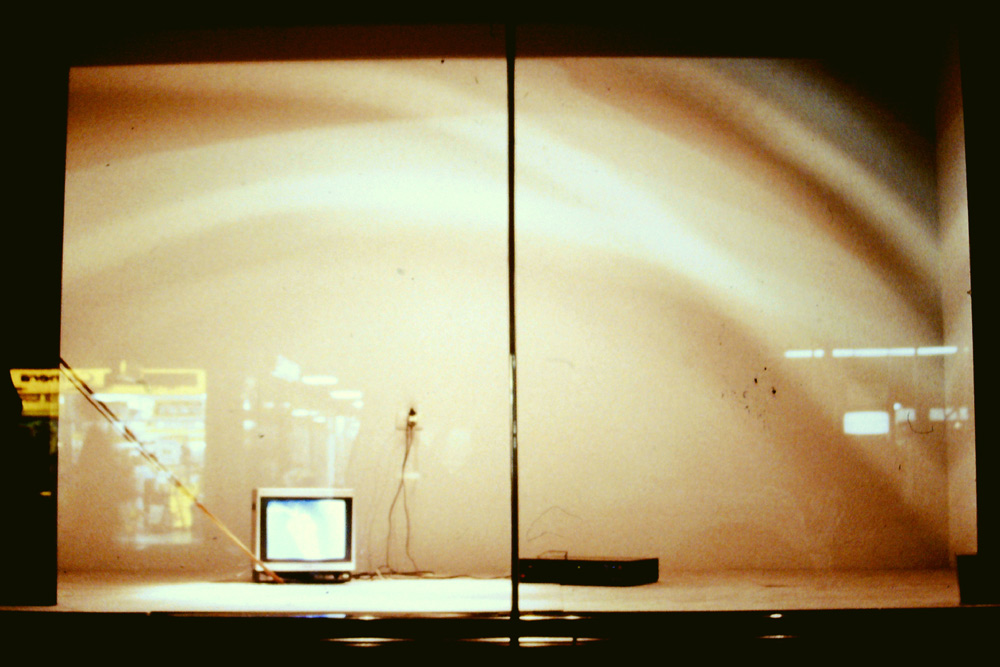
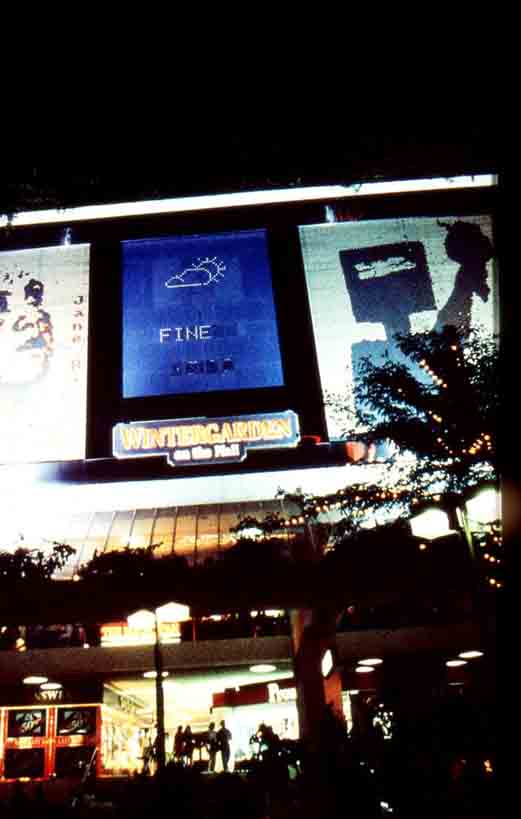
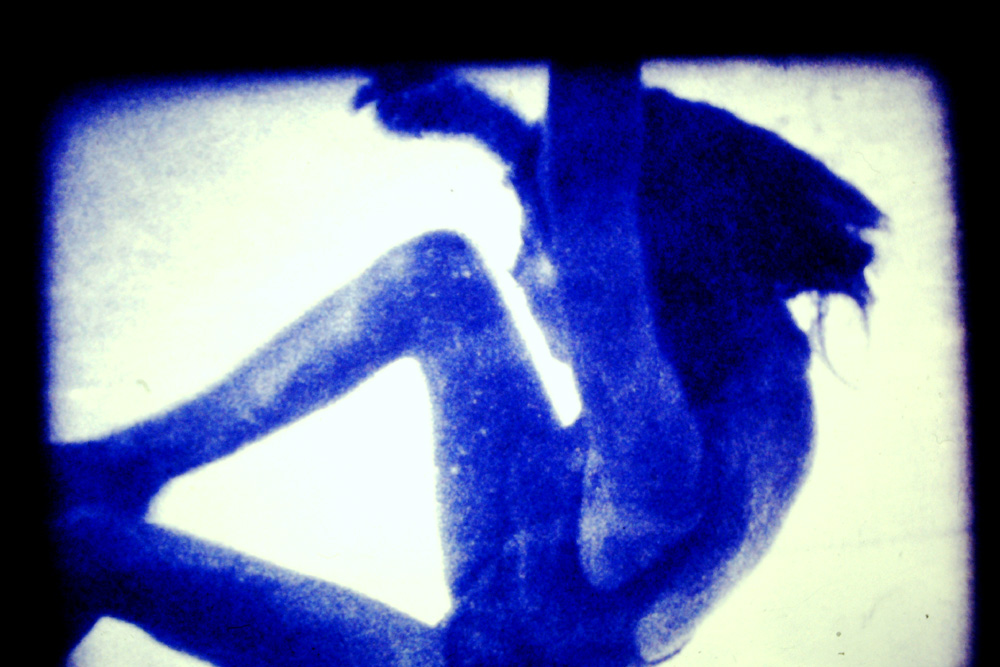
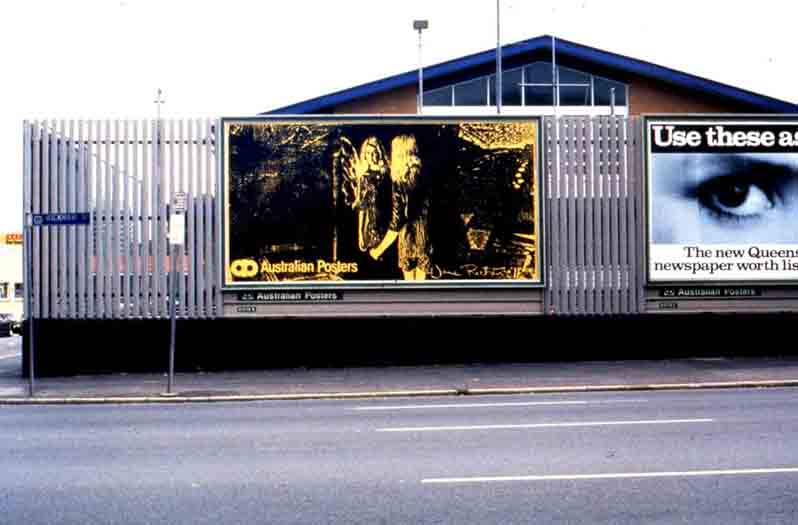
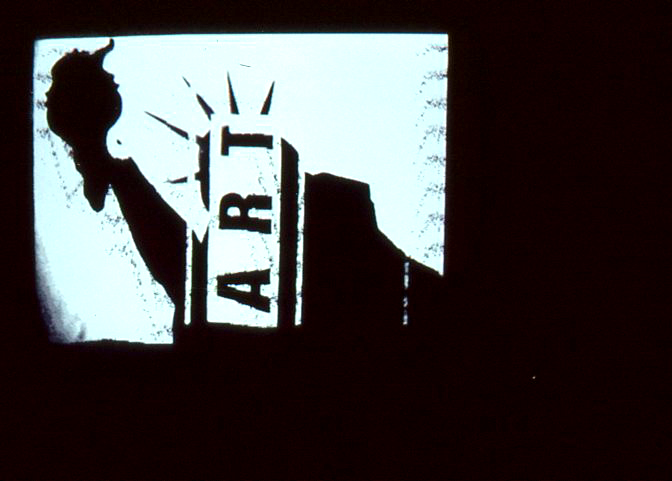
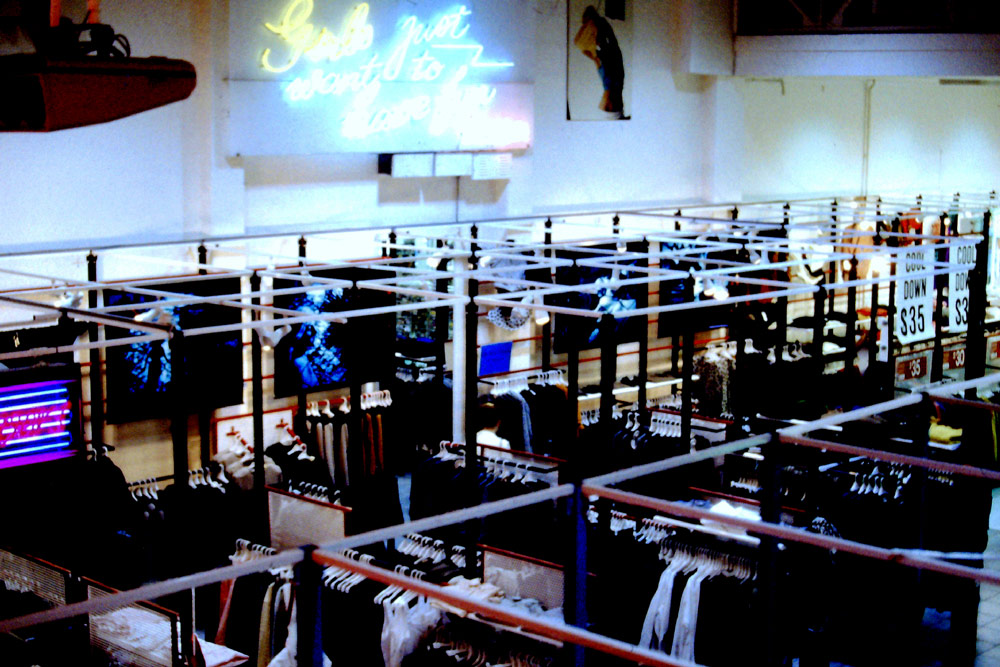
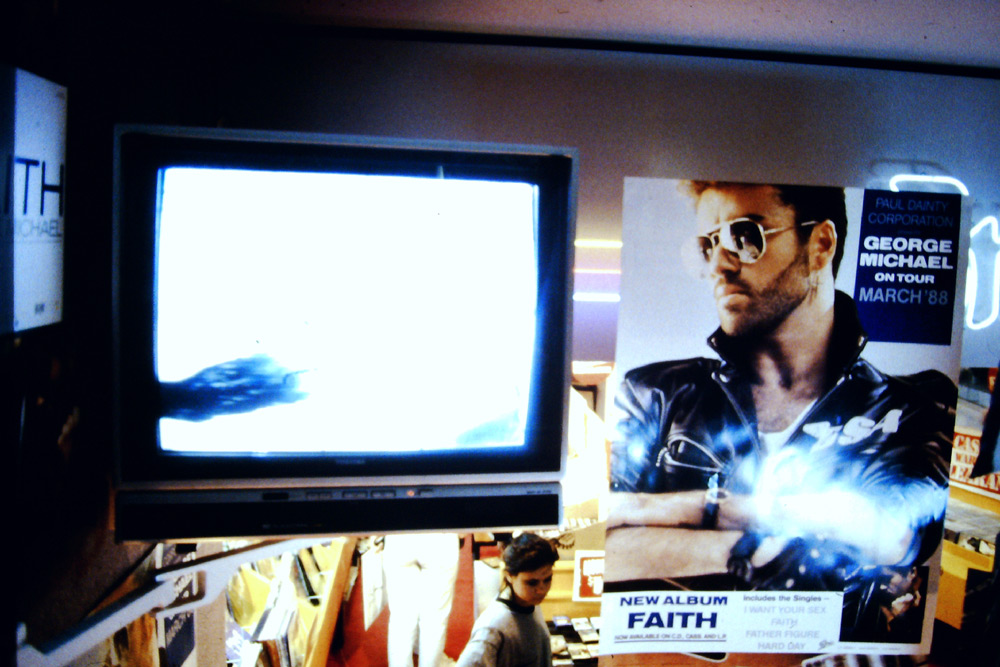
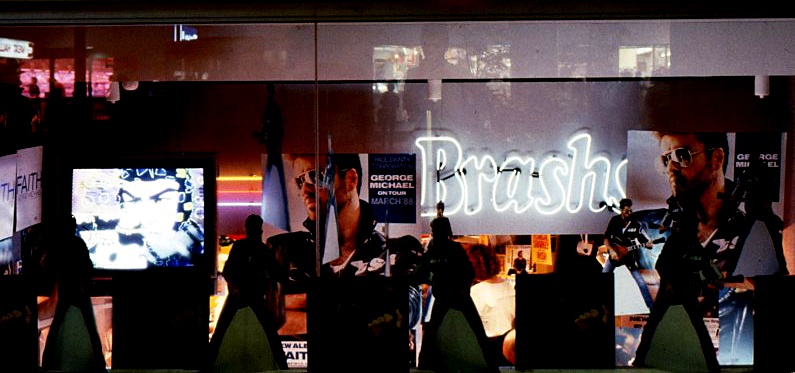
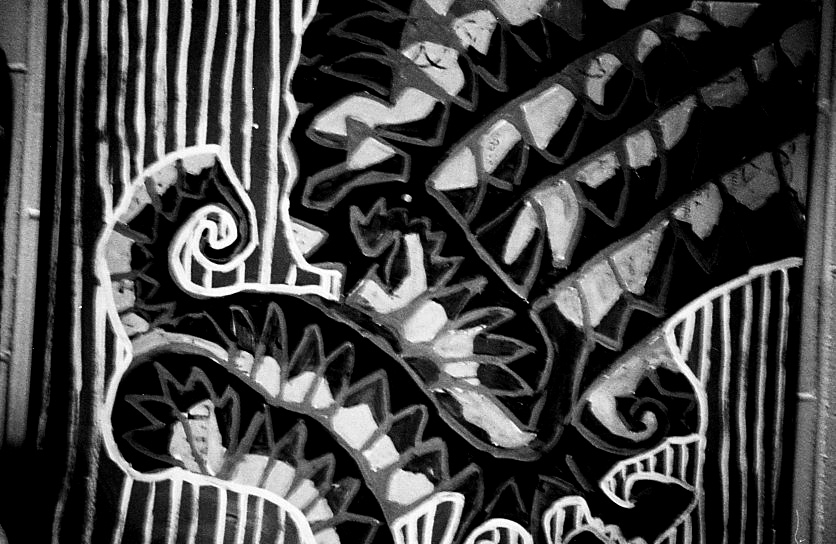
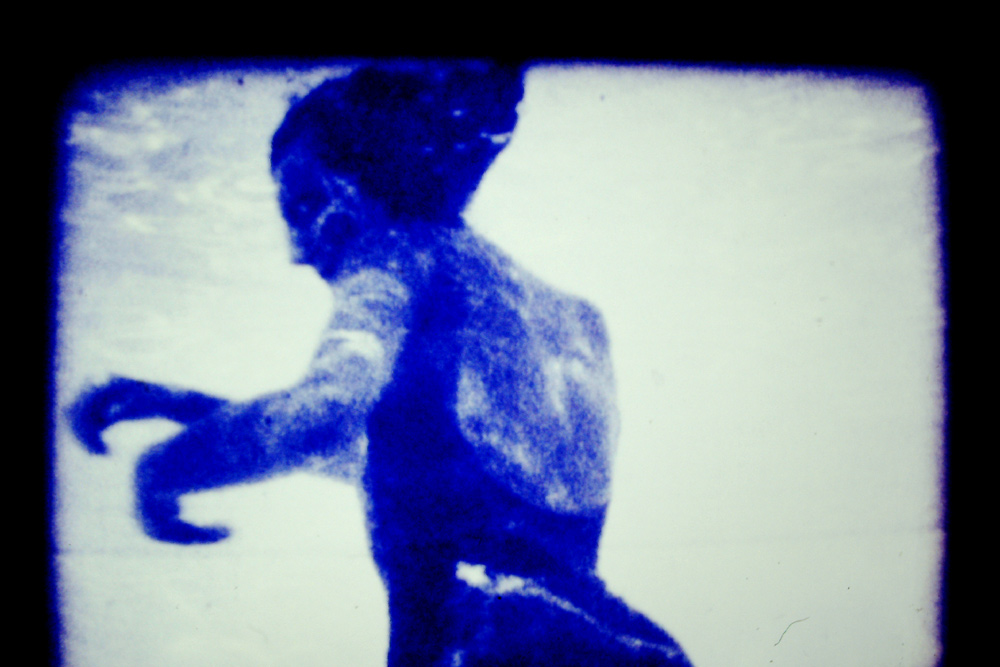
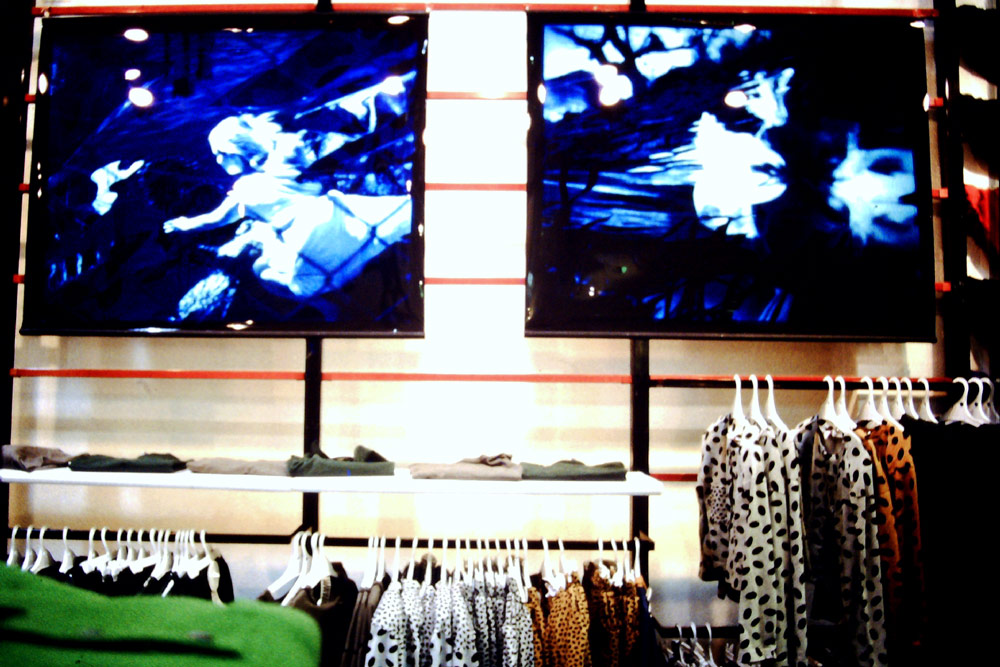
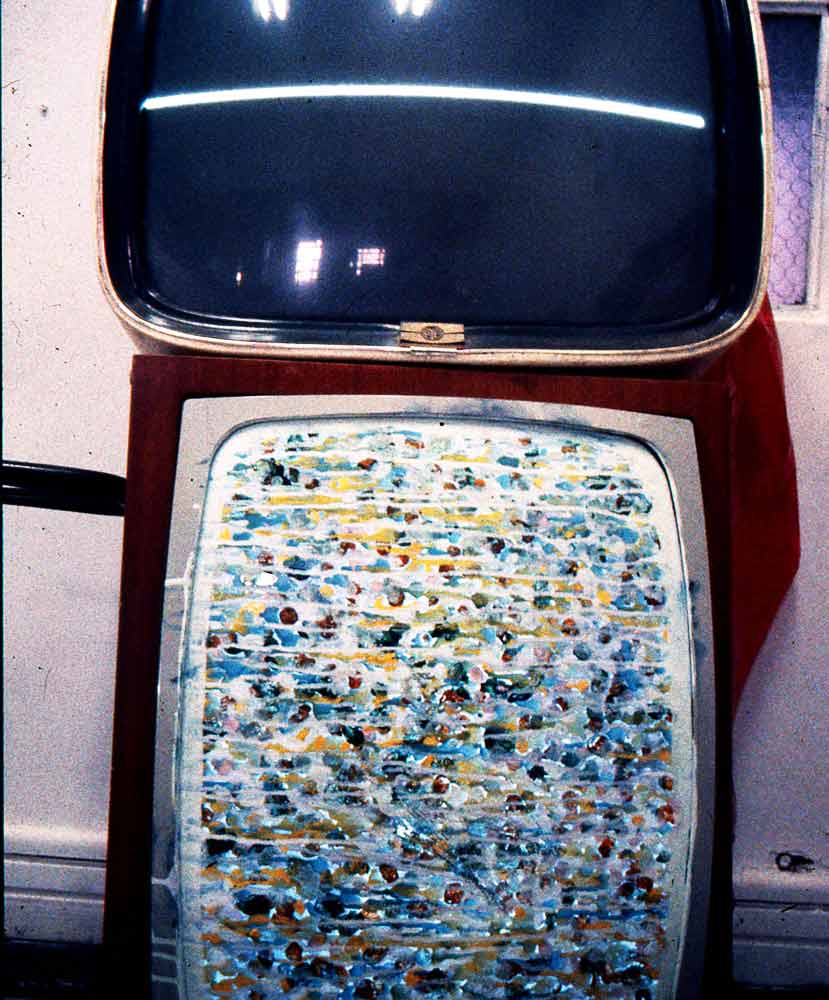
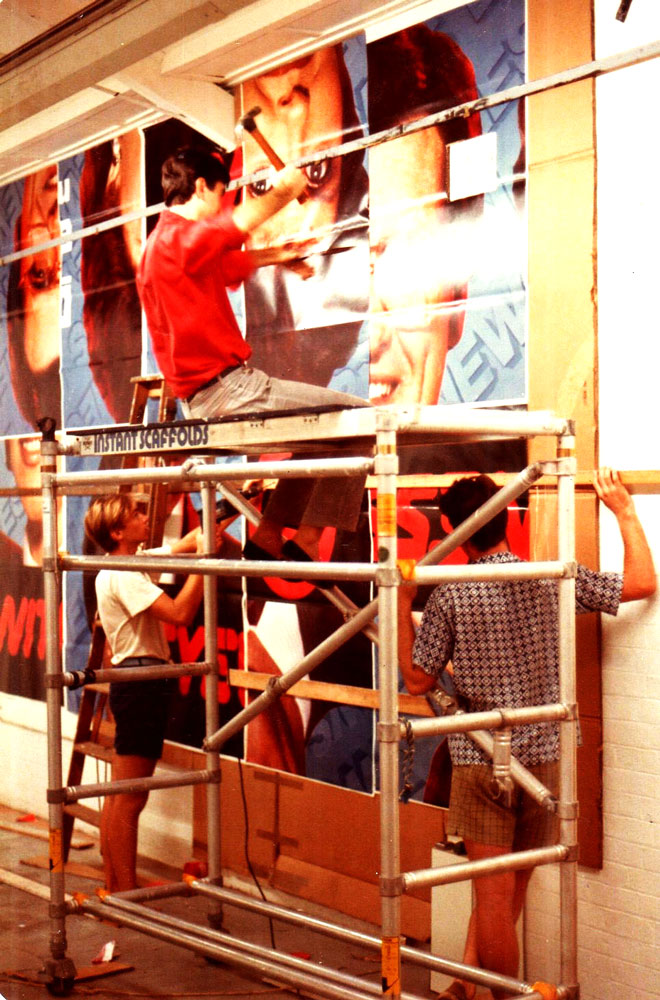
Billboards, Electronic Display Boards, Commercial buildings, Retail stores, Hoyts Cinema, the Queensland Art Gallery and the Queen St Mall were sites for still images, sound and video works.


The InterFace 88 Project was designed and developed over a fifteen (15) month period utilising a domino build approach to secure strategic relationships, sites and funding.
Metro Arts provided a dedicated workspace. The Institute of Modern Art auspiced the project, providing leverage for funding from the Bicentennial Arts Authority, City Heart Business Association, and the Qld Government through the Minister for the Arts.
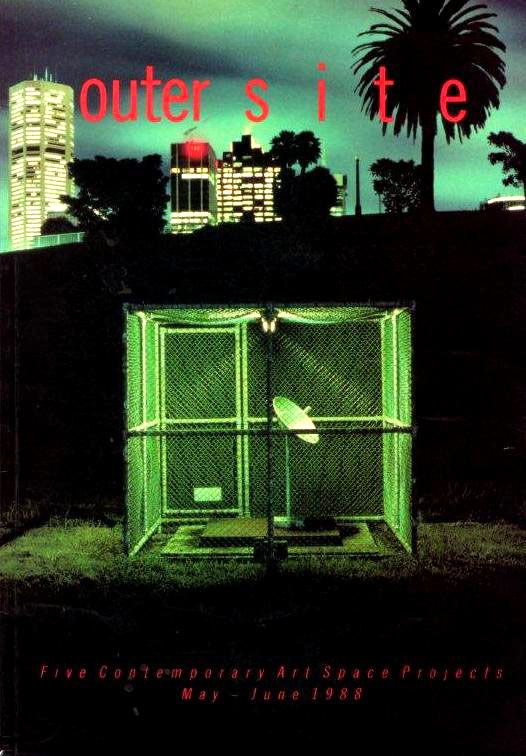
InterFace was funded as one of 5 Bicentennial Art Spaces Projects across Australia and documented in the Bicentennial-funded OuterSite publication.


InterFace was presented at FISEA, the First International Symposium on Electronic Art in Utrecht, Holland, in 88 and the NCGA Arts 89 Conference at San Jose University, California, USA.
InterFace 88 was designed, developed and coordinated by Jeanelle Hurst.
InterFace 88 was designed, developed, and launched on the back of the prototype Outdoor Art Drive-In 86, as an experimental public art strategy, in March 1988.
The project claimed space across the city of Brisbane for creative action and the exploration of connective building blocks.
The objective being to link the physical to the digital and the local to the global in search of an interconnected world – pre www
InterFace 88 gestured and spoke to the multi-dimensionality of the future through the infusion of elements/building blocks, with creative action/reaction, information, communication, engagement, questions, conversations, visibility, connectivity, rhythm, and flow.
High-rise buildings were used for the light displays, projections, and musical interludes.
Billboards, Electronic Display Boards, Commercial buildings, Retail stores, Hoyts Cinema, the Queensland Art Gallery, and the Queen St Mall were sites for still images, sound, and video works.
The InterFace 88 Project was designed and developed over a fifteen (15) month period utilising a domino build approach to secure strategic relationships, sites and funding.
Metro Arts provided a dedicated workspace. The Institute of Modern Art auspiced the project, providing leverage for funding from the Bicentennial Arts Authority, City Heart Business Association, and the Qld Government through the Minister for the Arts.
InterFace was funded as one of 5 Bicentennial Art Spaces Projects across Australia and documented in the Bicentennial-funded OuterSite publication.

The InterFace project was presented at FISEA, the First International Symposium on Electronic Art in Utrecht, Holland, in 88 and the NCGA Arts 89 Conference at San Jose University, California, USA.
InterFace 88 was designed, developed and coordinated by Jeanelle Hurst.

Overview…
For those who have only lived in our interconnected world, it’s virtually impossible to imagine life without a hip-pocket mobile and the world at your fingertips.
At the time of the Outdoor Art Drive-in 86 and the InterFace Project 88, there was no www, no mobile data, and no mobile phone to connect with anything, anyone, or anywhere… You had a telephone book, landline phone, street directory, public telephone box and mailbox … end of story.
Terms like telecommunications and connectivity were part of the lexicon of art practice and experience for only a handful of artists across the globe.
Six months after the InterFace 88 project, I travelled with a contingent of artists, organised by ANAT (The Australian Network for Art and Technology), to Utrecht, the Netherlands. I presented the InterFace Project on the Panel titled Networking in the Arts at FISEA (the First International Symposium on Electronic Art).
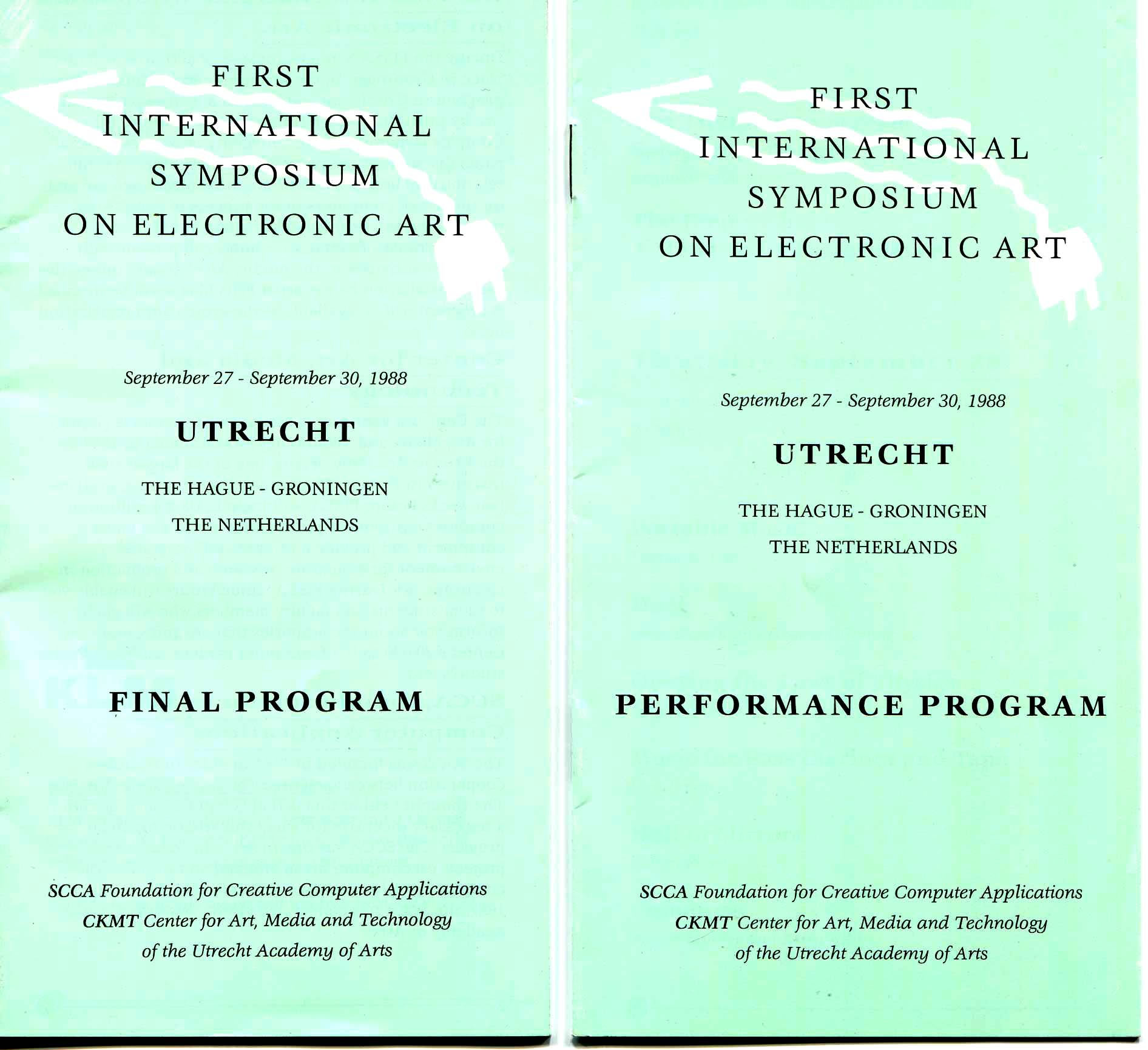
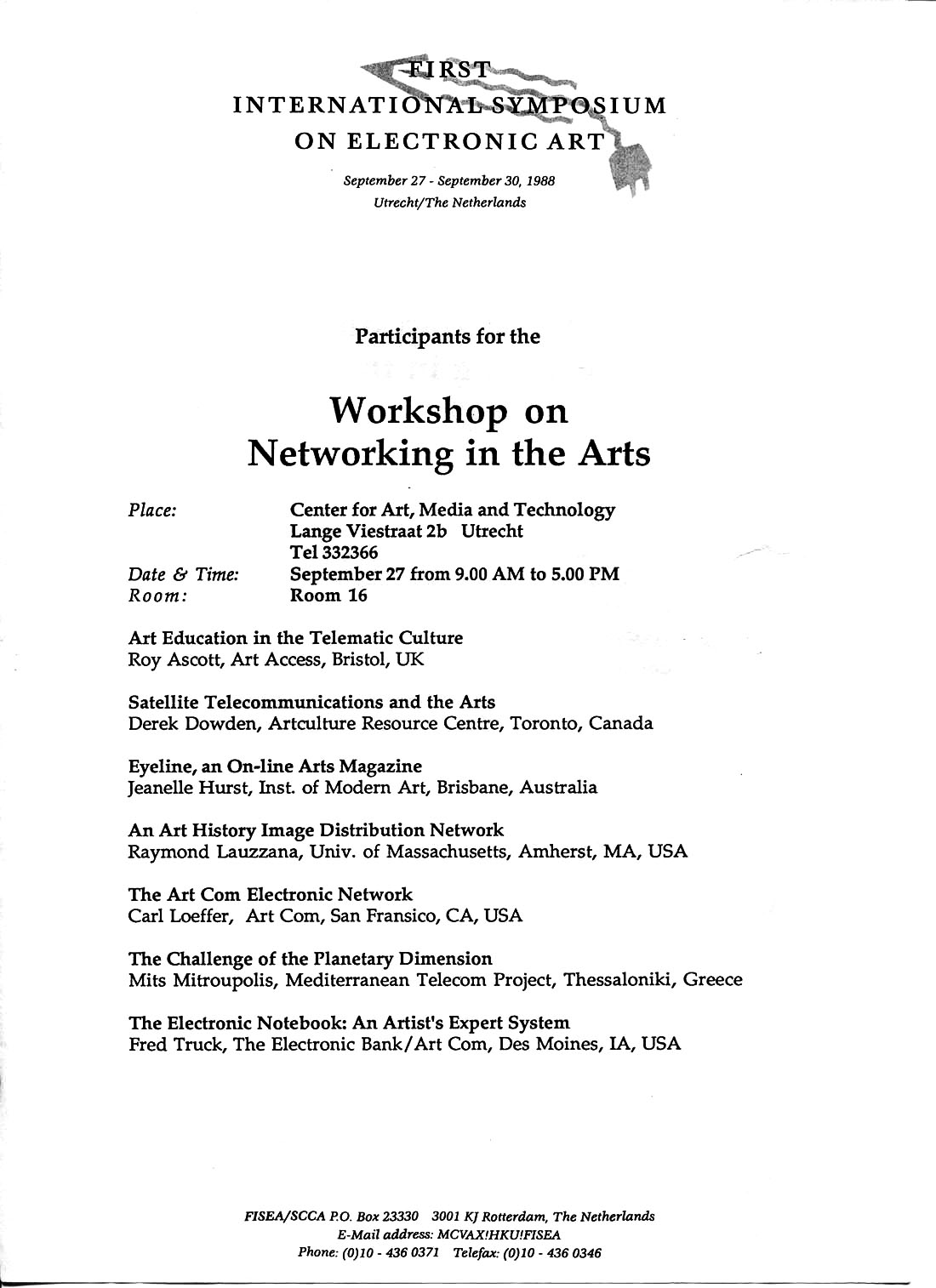
It was good to meet with artists who shared common interests in research and experimentation, but I realised my approach and orientation differed from theirs… I was eager to search for a project like mine out there… somewhere.
Departing FISEA, I travelled to the UK to attend a small conference on what I hoped would be a discussion about public art and tech. It wasn’t.
I then flew to New York, where I ran the streets in search of artist spaces and artists who may have been working in the area of public art and telecommunications. I was met with blank and disinterested stares.
From New York, I bused up to Massachusetts, having been invited by Ray Lauzzana (FISEA) to present the InterFace Project to his students at the University of Massachusetts.
On the return journey, I raced through the MIT labs, slides in hand, looking for people who might have been working in the intersection of telecommunications and art. No luck.


And no way to conduct a survey… but in those days, if you wanted something done… You hit the road to do it…
I returned to Australia experiencing – something I was accustomed to as a woman – deafening silence and vacant stares when speaking on the subject of telecommunications, connectivity, and public art.

In early 89, Carl Loeffler (Art Com Electronic Network based in San Francisco), whom I had met at FISEA , invited me to speak at the NCGA Arts 89 Conference at San Jose University, California, USA, on the panel he had convened, titled The Shaping of Tele-Culture.
Panel description:
“Tele-culture is an electronic universe in which mass information, personal communication, and forms of expression and investigation can be accessed, shared and interacted with on a local and global basis.
Going on-line can change one’s personal life, establish alternatives to the workplace, or can be employed to facilitate soci0-political strategies. It’s potential is seemingly limitless, and importantly telecomputing is here today – fact not fiction.
The panel features leading international pioneers in the field of on-line telecommunications. Their concerns range creating a virtual community to establishing a politic for the Pacific Rim; or from scientific investigation to creative expression. The commonality among all of them is the vision which they bring and their users bring to telecomputing… a communication medium where information and meaning is shaped by the participants.”
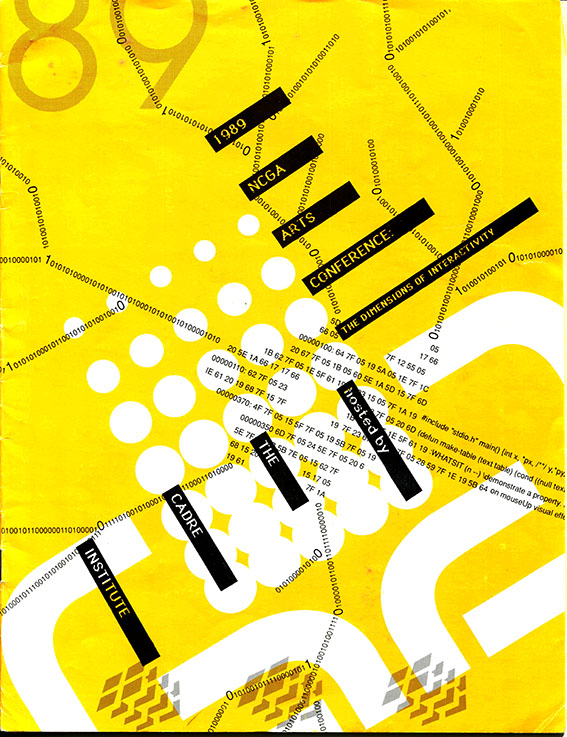
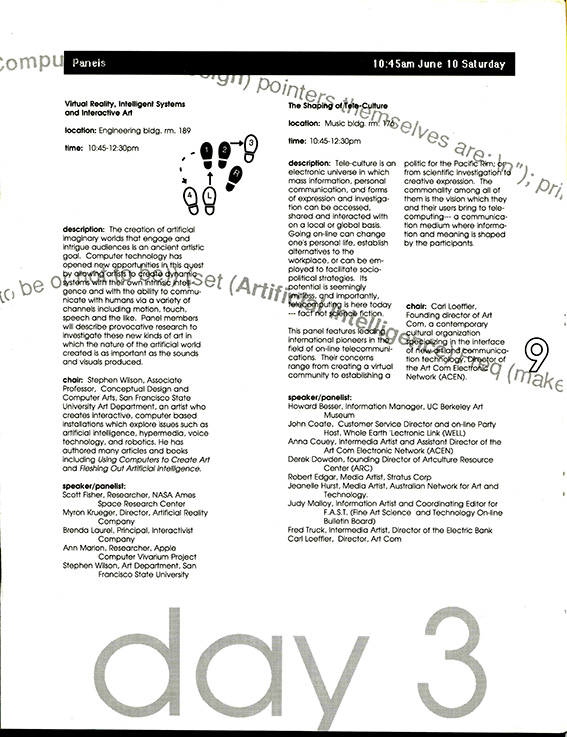
I returned to Australia knowing the value of my project and believing that it would hold its shelf life into the future.
Timeline highlighting Web evolution for reference:
-
1989: Tim Berners-Lee wrote the first proposal for what would become the World Wide Web.
-
1990: The first web browser and web server software were developed and demonstrated.
-
1991: The project was made available to the public on the Internet.
-
1992: First image uploaded to the Web
-
1993: CERN made the World Wide Web software free for anyone to use, a crucial step that allowed it to flourish rapidly. This was also when the first user-friendly browser, Mosaic, was released, which helped make the web accessible to a much wider audience.
Building blocks…

Digital Mapping – Map of the World (revised edition)…
Digital Mapping – Map of the World (revised edition)…
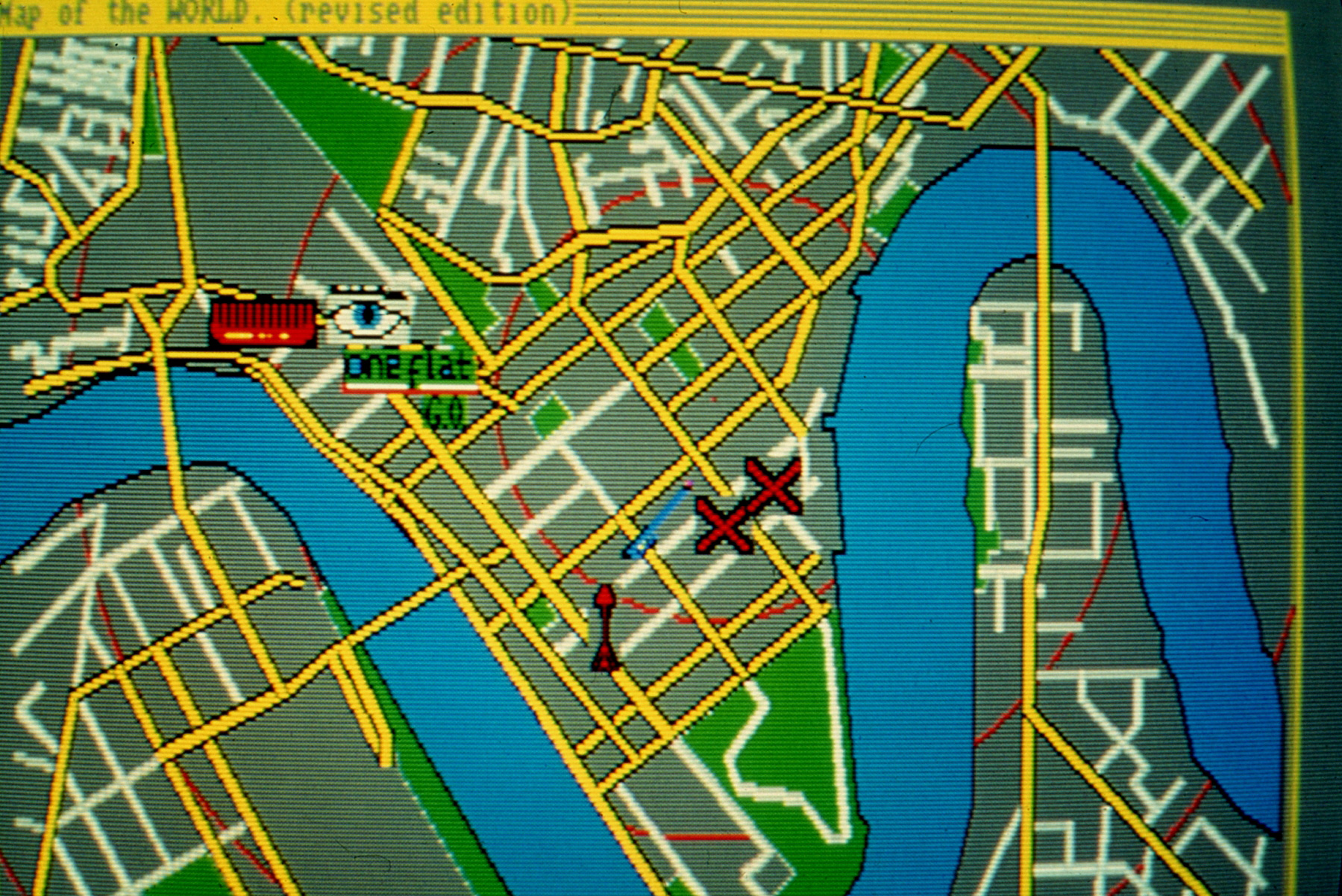
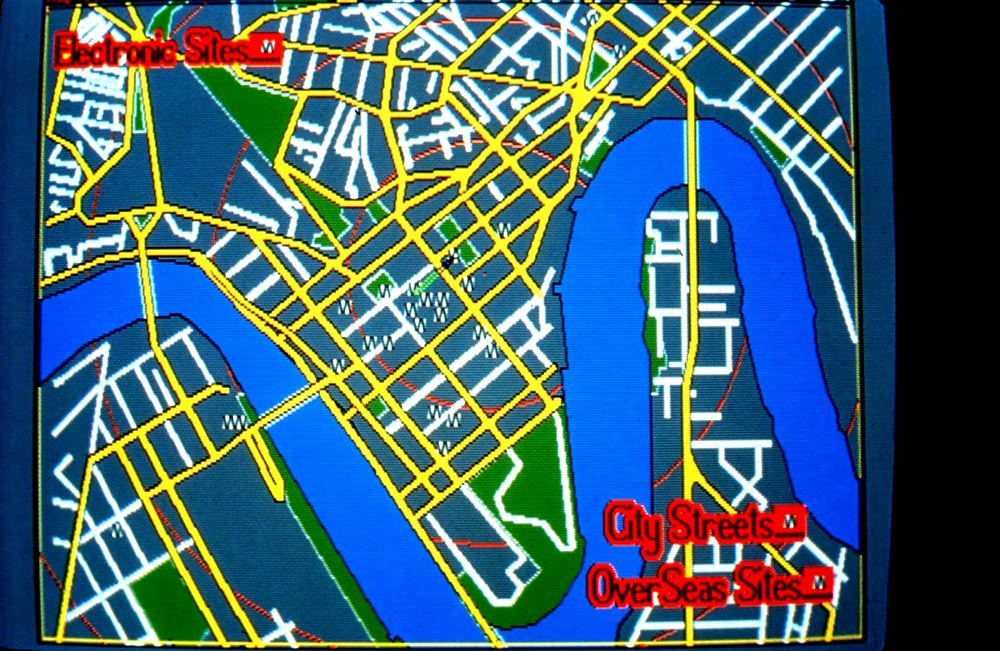
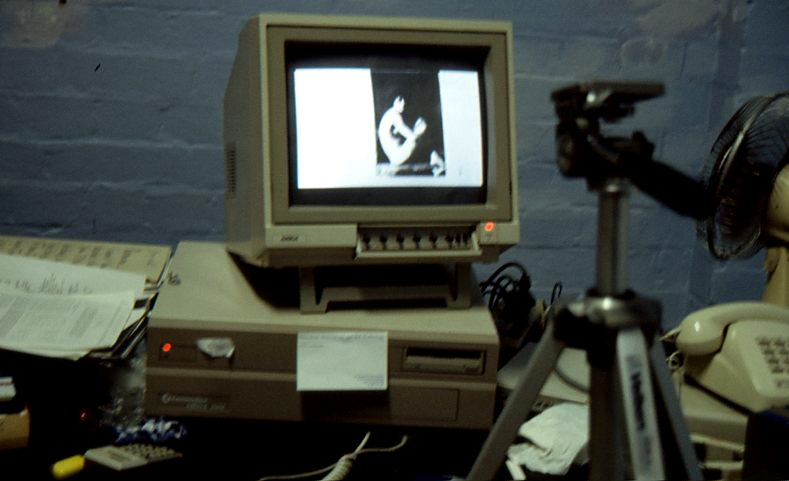
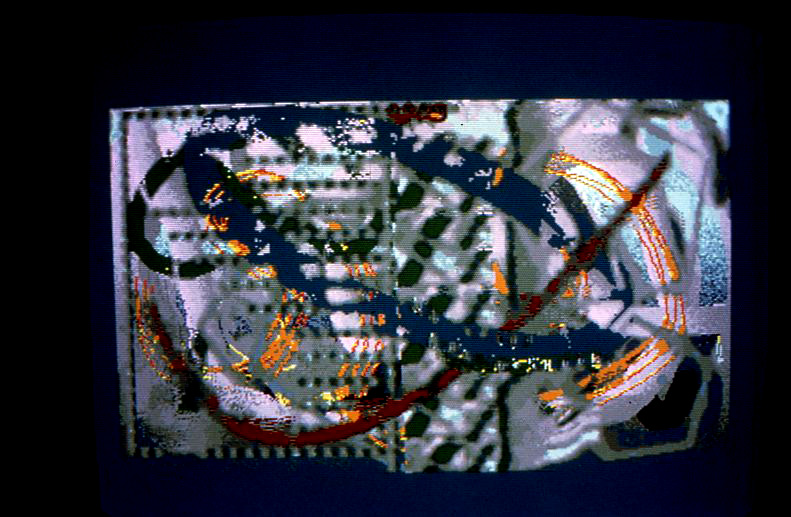
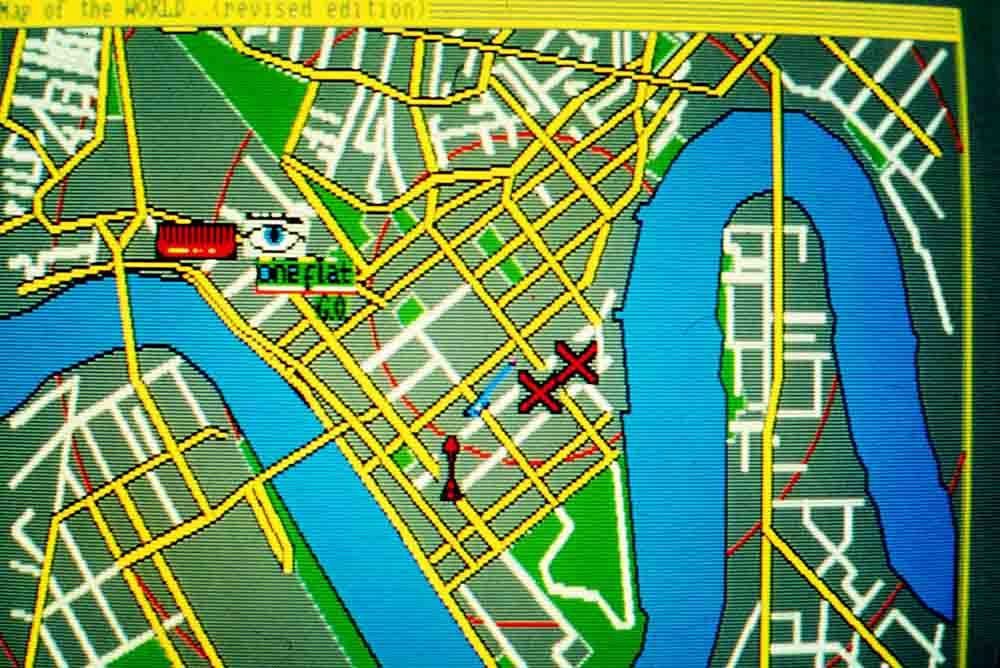
In 1984, Adam Wolter, artist/computer programmer, designed the Map of the World (revised edition) digital map in response to my objective to map the creative actions/reactions across the city of Brisbane from 1982 – 1984.
We needed an overview/aerial view to map the range, scale and locations of artspaces and art actions with the ability to pull focus in on the detail.
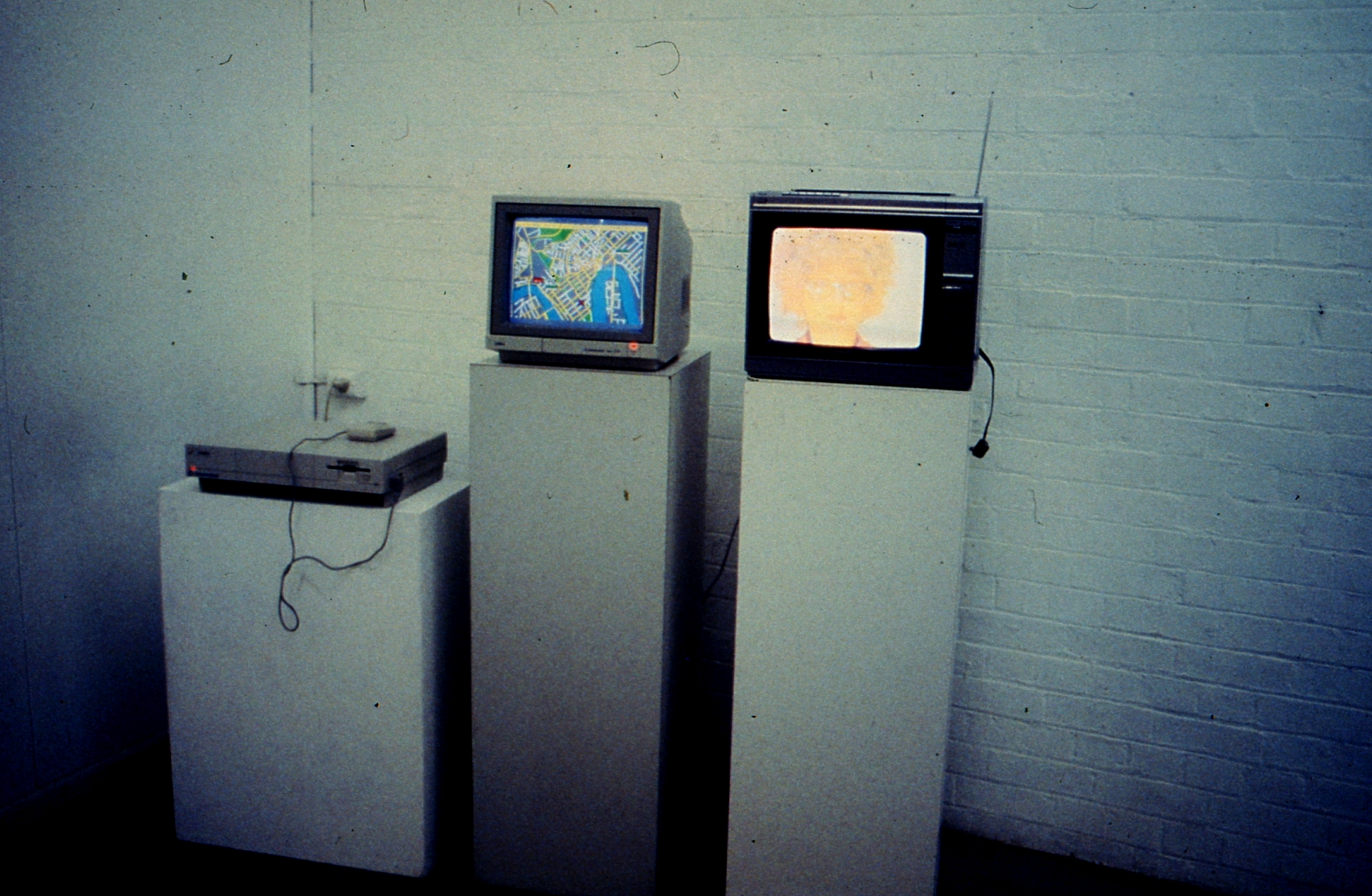
The Map of the World (revised edition) digital map was first shown in the Futures Stock Compatibles Installation (Artists Adam Wolter and Jeanelle Hurst) at the Know Your Product exhibition at the IMA in September 1986.
Icons on the map indicated the location of artist spaces across the Brisbane CBD.
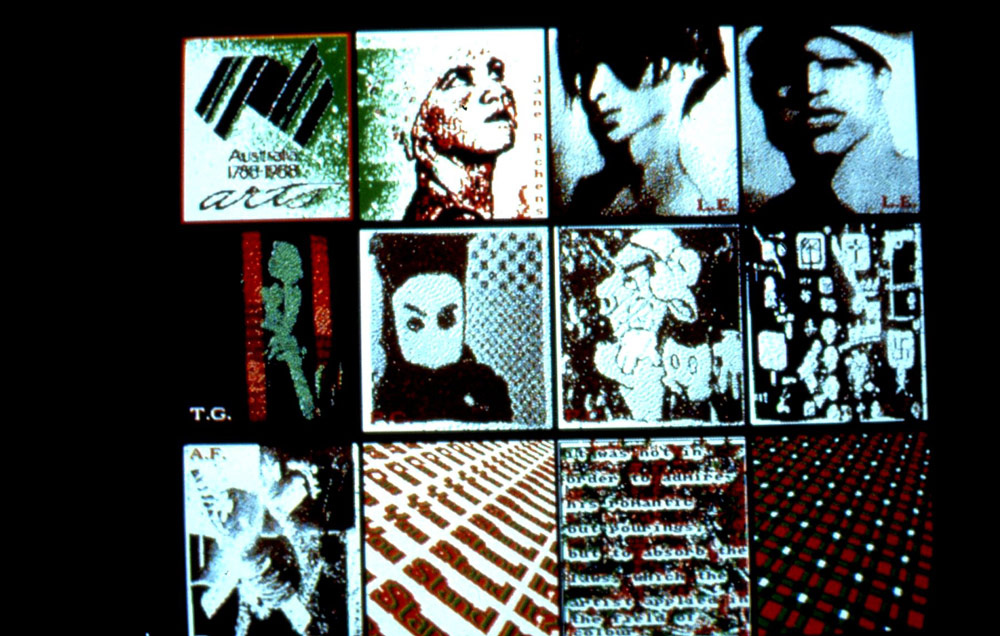
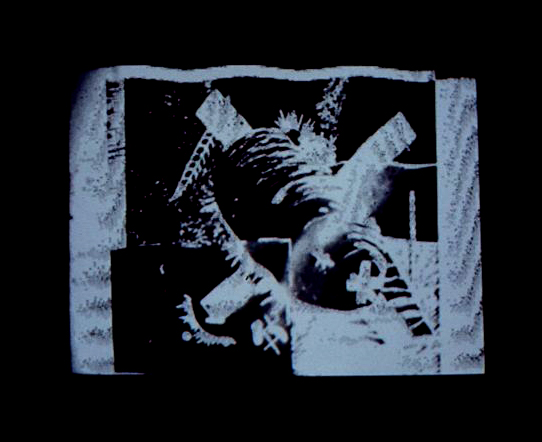
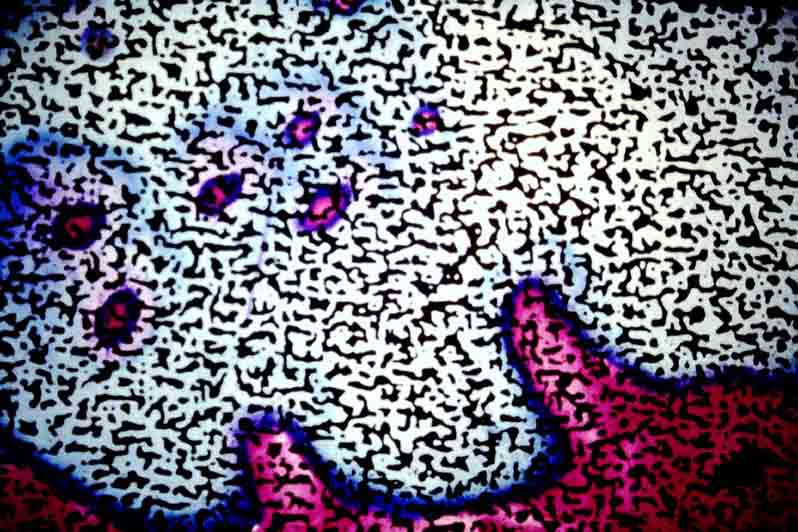
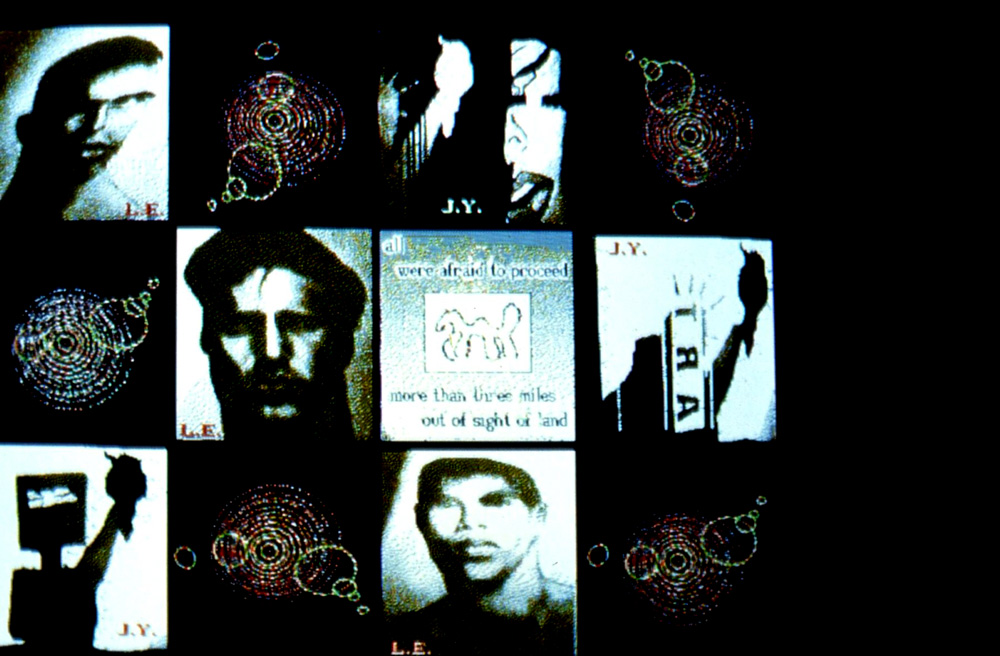
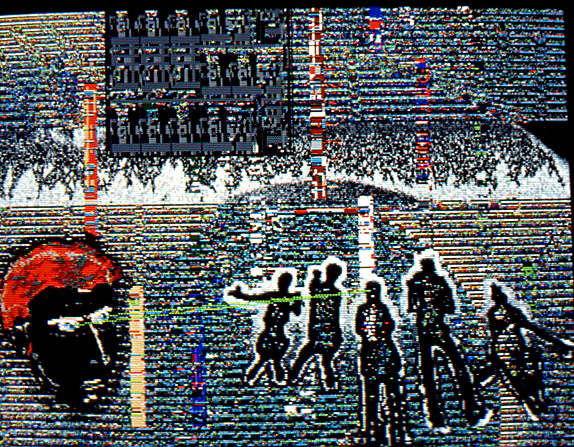
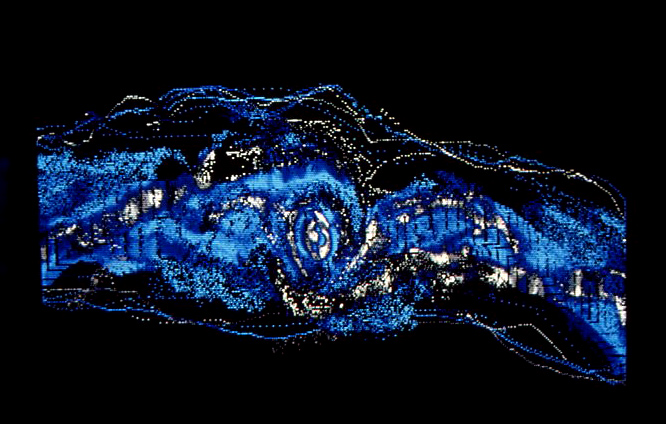
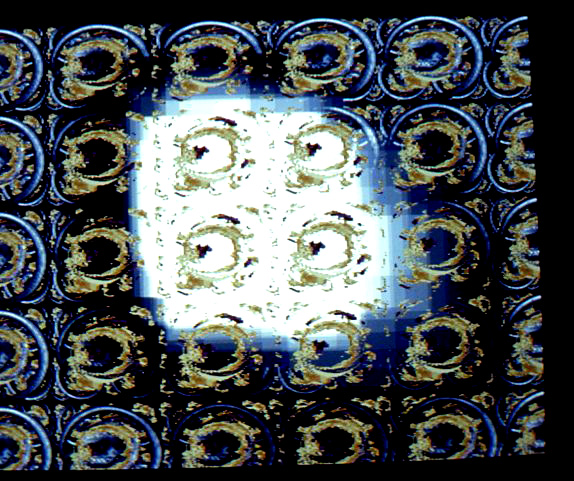
In the lead-up to InterFace 88, the map was upgraded, and images of InterFace artist artworks, along with Adam Wolter’s digital artworks, were processed as digital files for access via the artwork location icons.
Map of the World (revised edition) digital map had an offline presence only as the first image wasn’t uploaded to the internet until 1992, and the internet we know today didn’t start its online evolution until 1993.
Digital maps didn’t take form on the internet until Yahoo Maps appeared in 1998, followed by Google Maps in 2005.
Map of the World (revised edition) stood as a mockup for a future ‘online’ interactive digital map.
In 1984, Adam Wolter, artist/computer programmer, designed the Map of the World (revised edition) digital map in response to my objective to map the creative activations/reactions across the city of Brisbane from 1982 – 1984.
We needed an overview/aerial view to map the range, scale and locations of artspaces and art actions with the ability to pull focus in on the detail.
The Map of the World (revised edition) digital map was first shown in the Futures Stock Compatibles Installation (Artists Adam Wolter and Jeanelle Hurst) at the Know Your Product exhibition at the IMA in September 1986.
Icons on the map indicated the location of artist spaces across the Brisbane CBD.
In the lead-up to InterFace 88, the map was upgraded, and images of InterFace artist artworks, along with Adam Wolter’s digital artworks, were processed as digital files for access via the artwork location icons.
Map of the World (revised edition) digital map had an offline presence only as the first image wasn’t uploaded to the internet until 1992, and the internet we know today didn’t start its online evolution until 1993.
Digital maps didn’t take form on the internet until Yahoo Maps appeared in 1998, followed by Google Maps in 2005.
Map of the World (revised edition) stood as a mockup for a future ‘online’ interactive digital map.
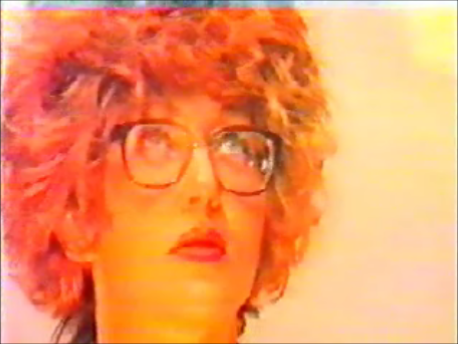
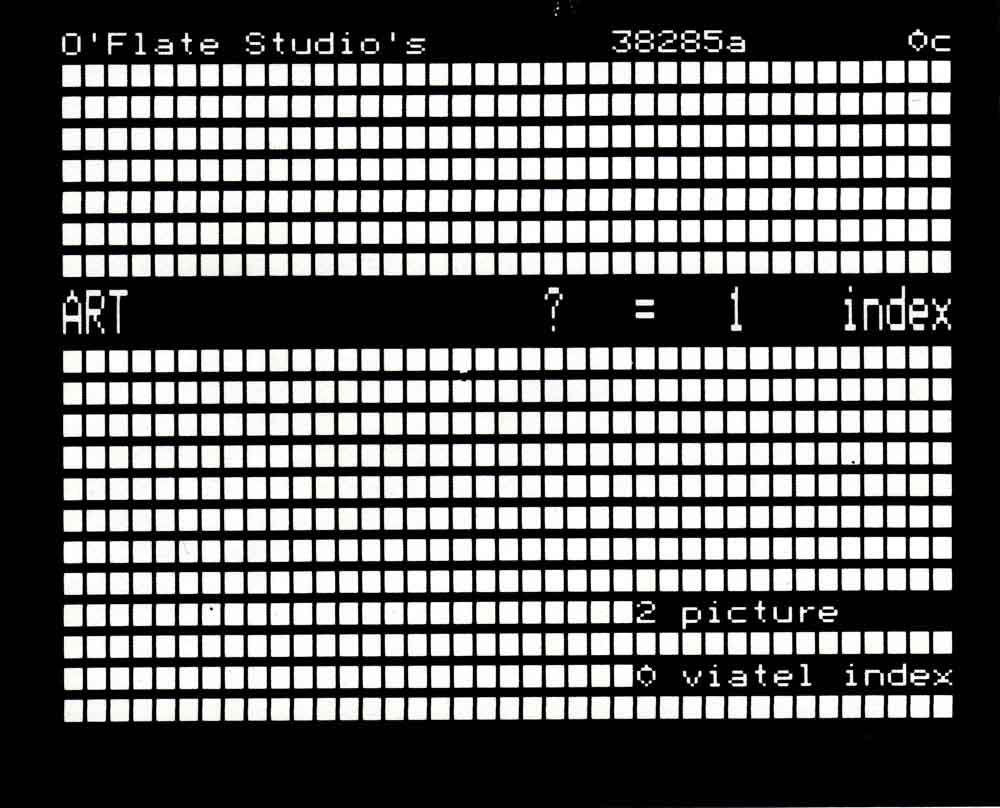
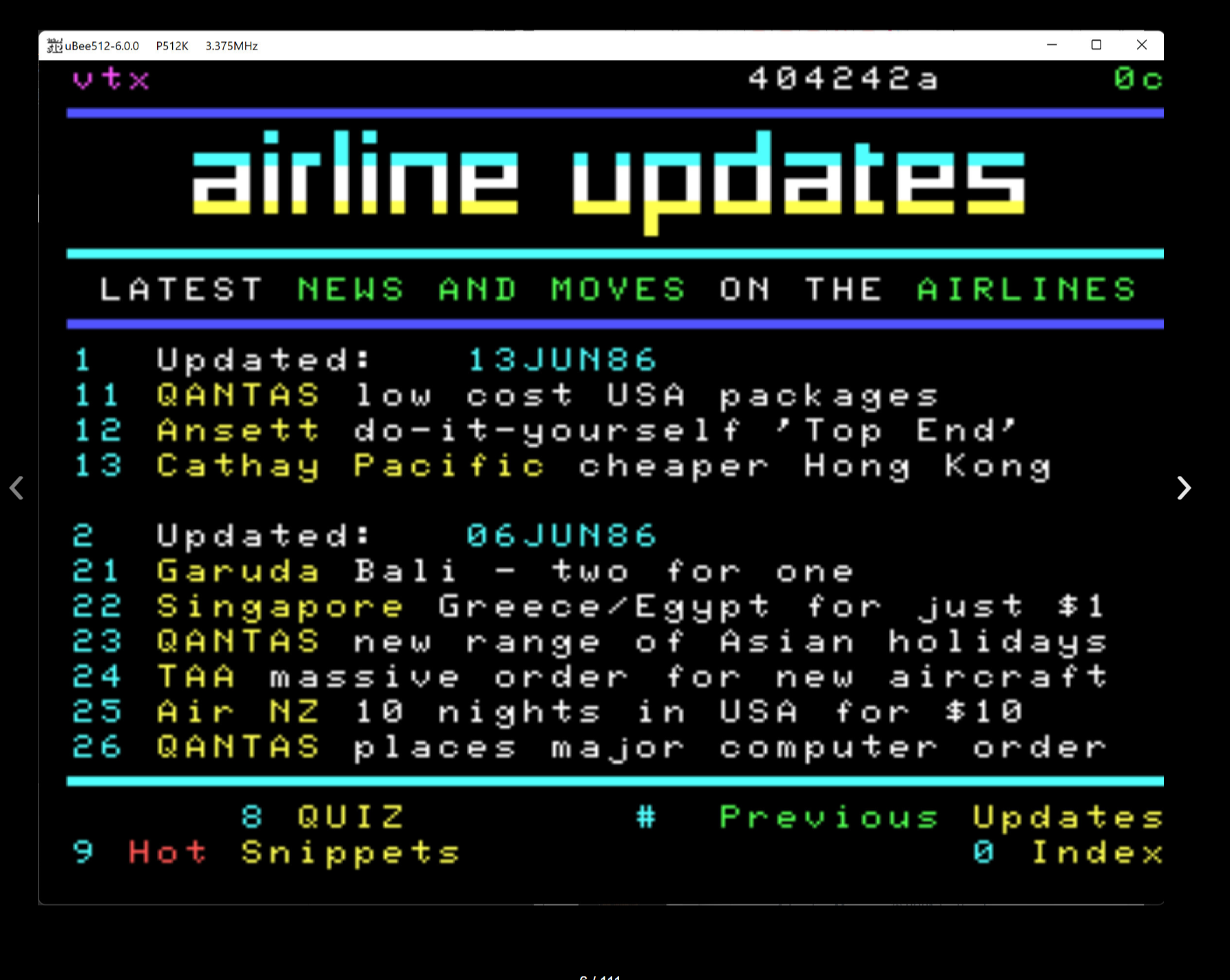
O’Flate Studios and Eyeline on Viatel
Telecom Australia’s Viatel Videotex Service…

In 1985, I started researching telecommunications networks, believing that connectivity between the local and the global would level the playing field for women and regional centres.
There were two options for connectivity at that time: Bulletin Boards and Videotex Services.
I chose videotex because of the hyperlinks, graphic potential and 3d quality of the structure of information and connectivity.
Videotex allowed designers and service providers to work from a structured central information base. Menus and hyperlinks allowed users to interact with the site and retrieve information.
I secured sponsorship from Telecom Australia for the first Viatel site – O’flate Studios in early 1986, and road tested connectivity across Australia throughout the O’flate National Art Safari.
On returning to Brisbane, I started designing and planning the alignment of a physical site—Easy Park Car Park on the corner of Charlotte and Edward Streets —with the online Viatel site for the Outdoor Art Drive-In.
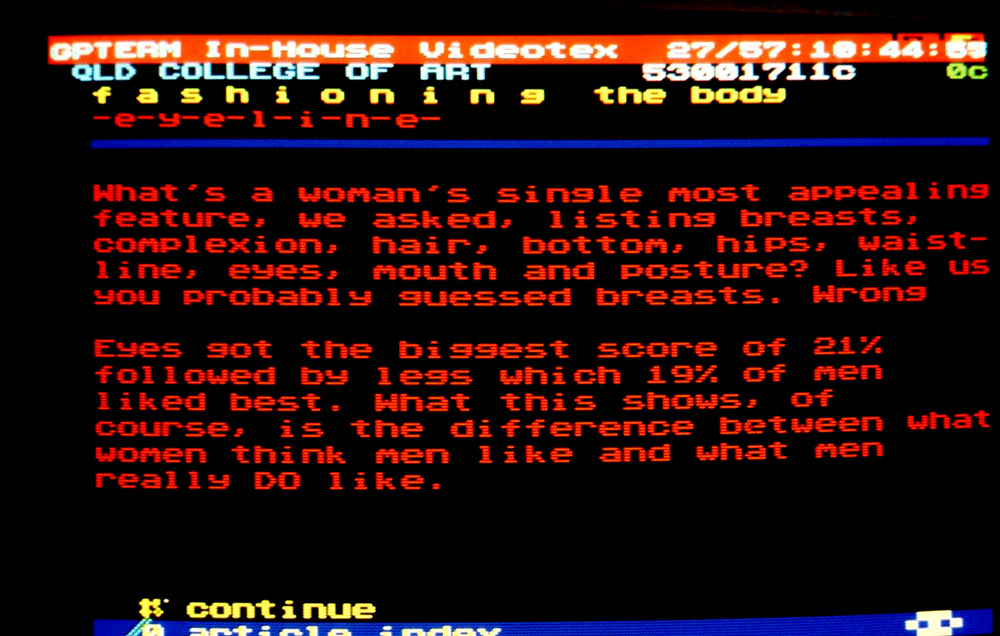
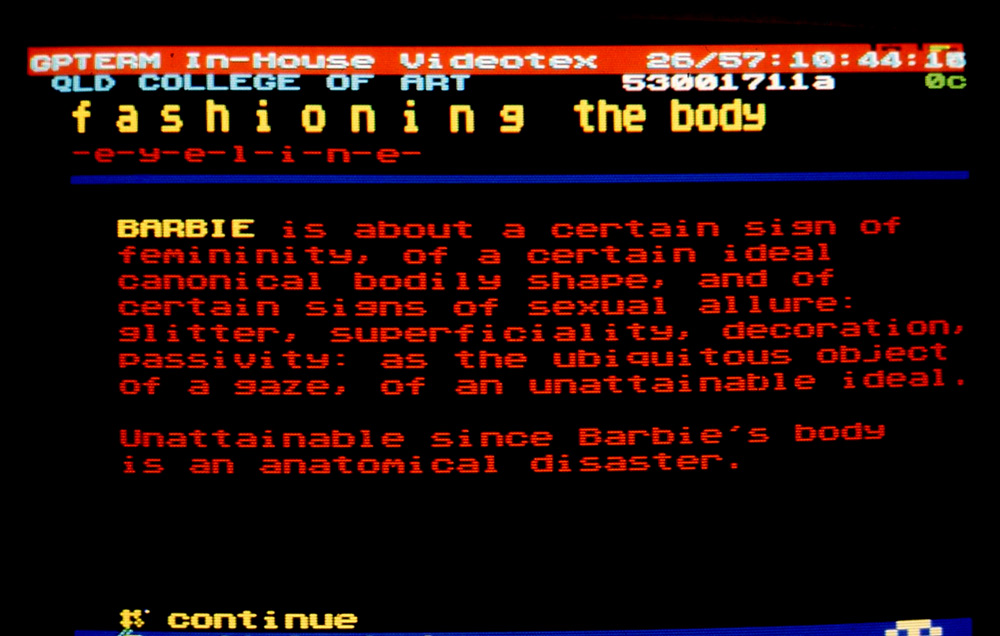
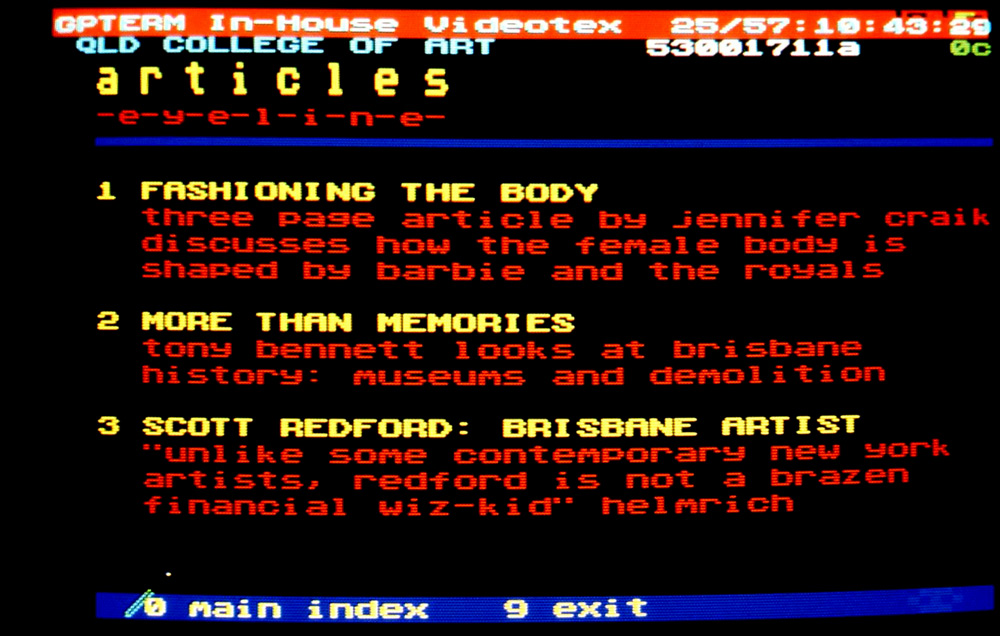
In the lead up to the InterFace project, the Graphic Design Department of the Queensland College of Art, QCA, were running a digital component introducing Telecom Australia’s Videotex Service.
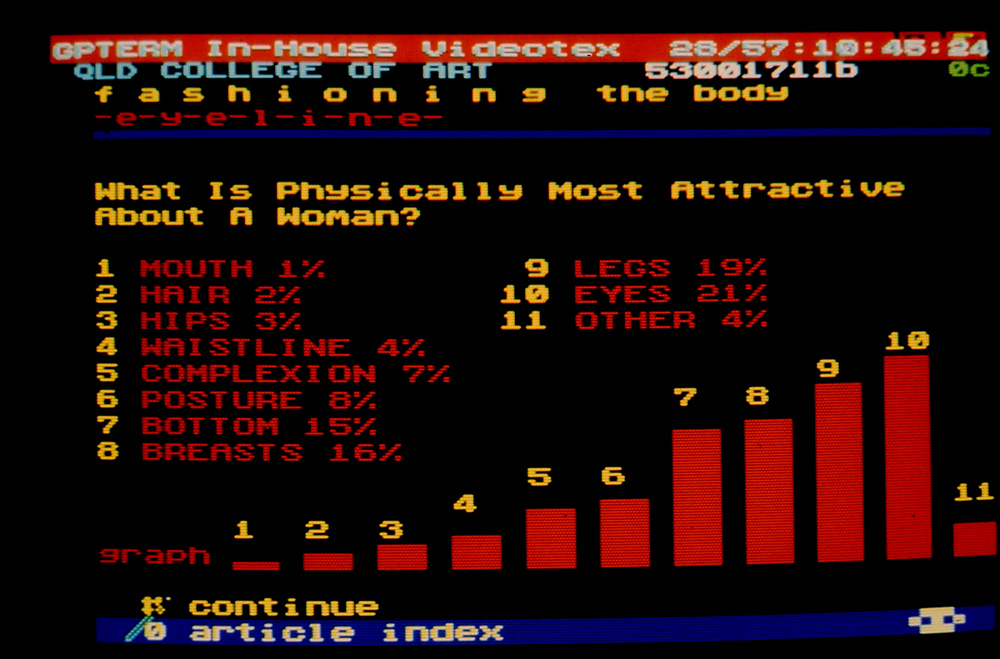
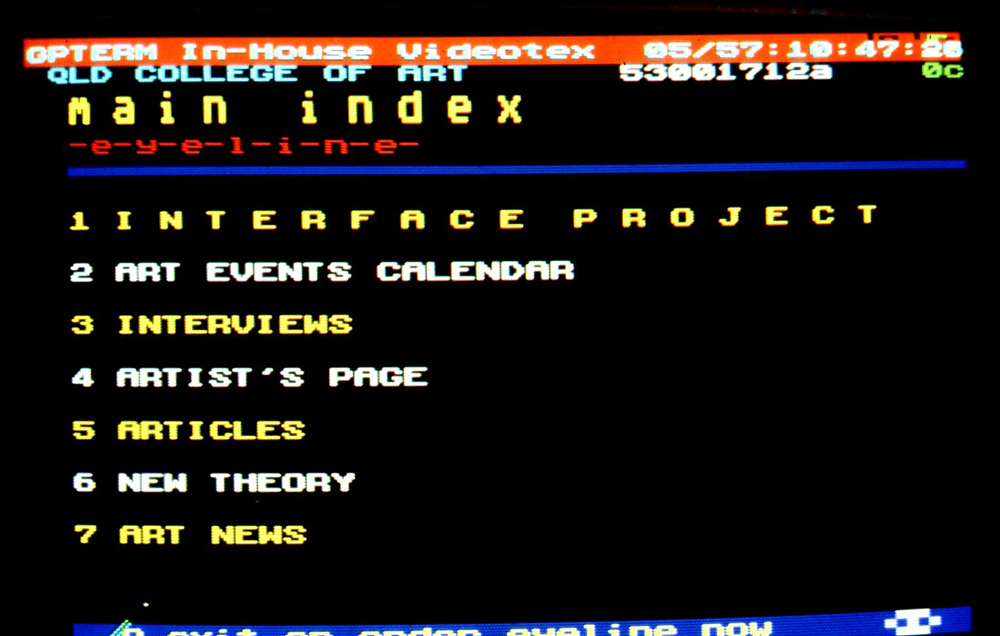
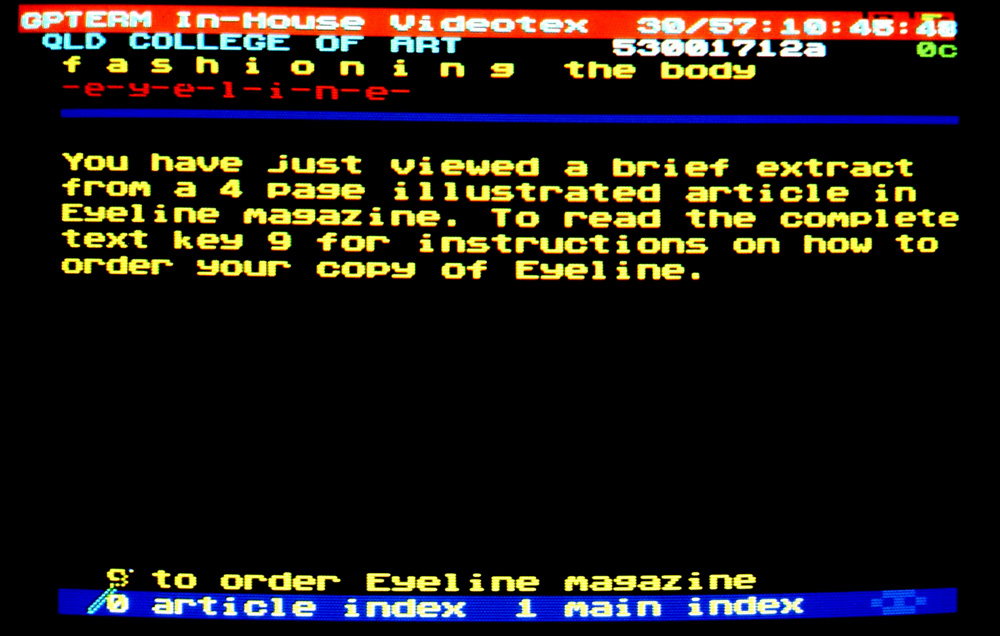
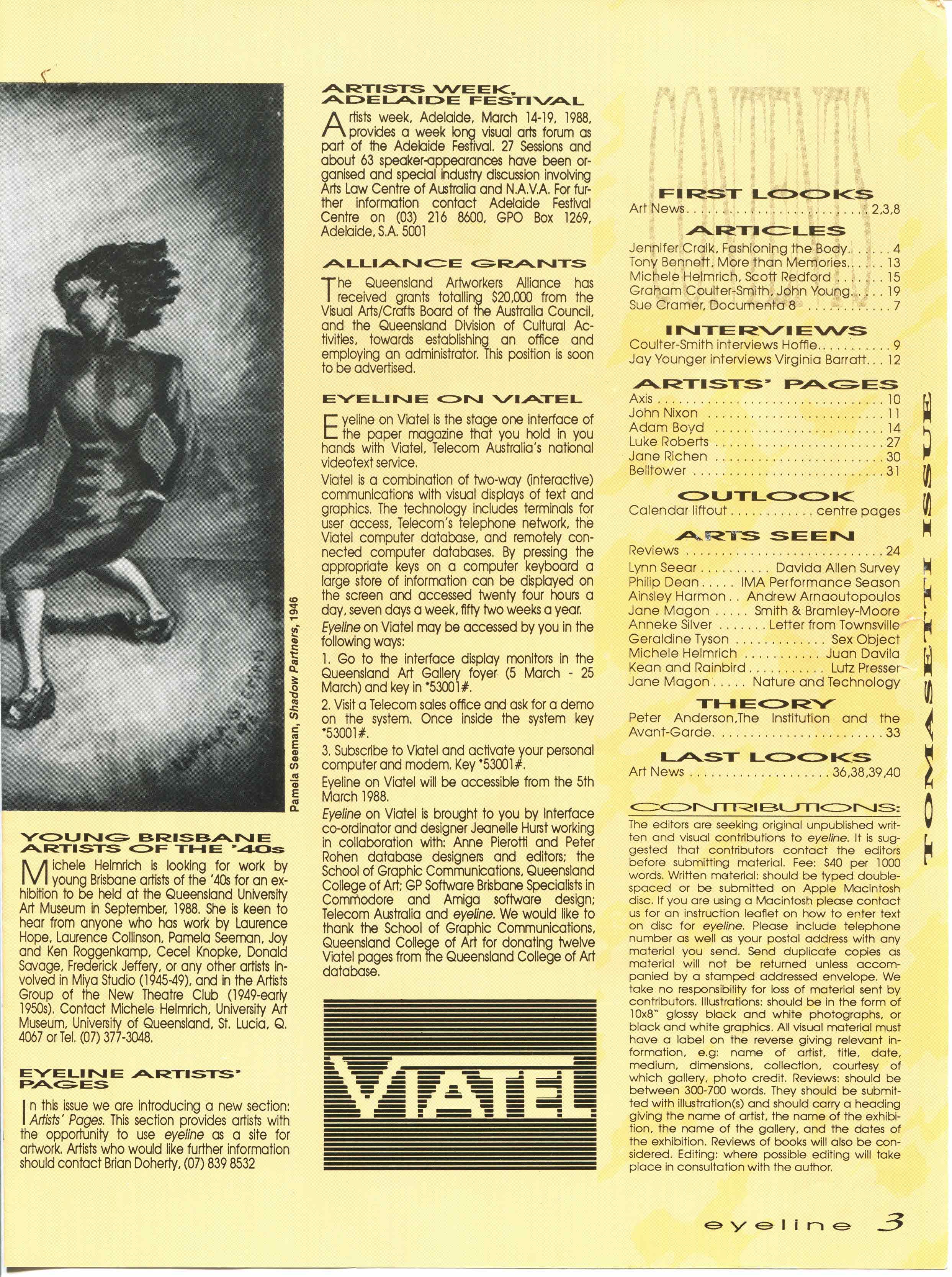
I approached Eyeline Art Magazine and the Graphic Design Department with a view to an InterFace collaboration to convert the physical Eyeline magazine to a digital format.
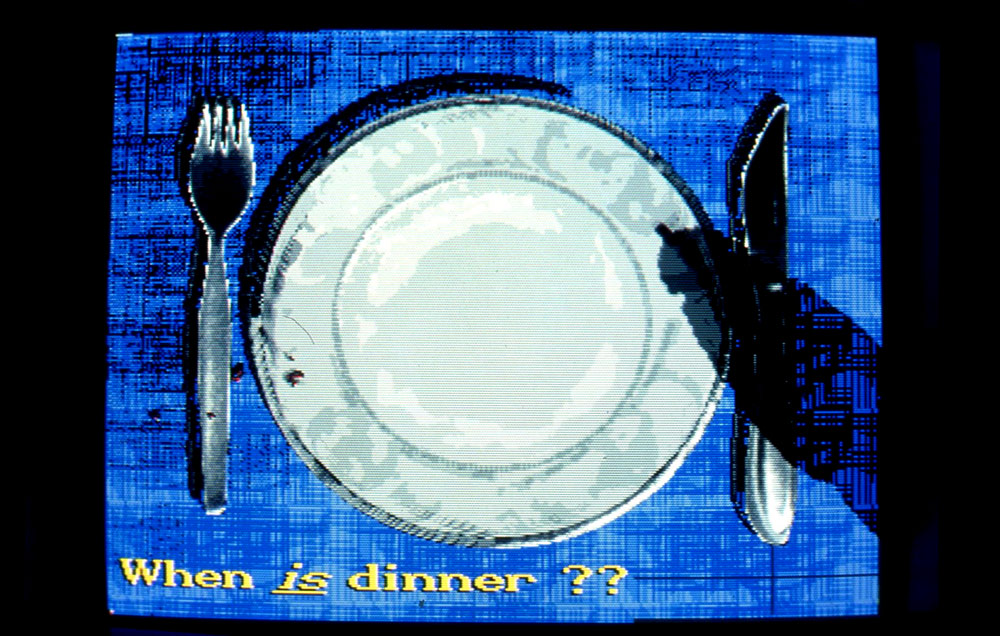
Both parties agreed, and students Anne Pierotti and Peter Rohan designed and produced Eyeline on Viatel. Eyeline on Viatel remained online for two months from March to April 1988, courtesy of sponsorship from Telecom Australia.
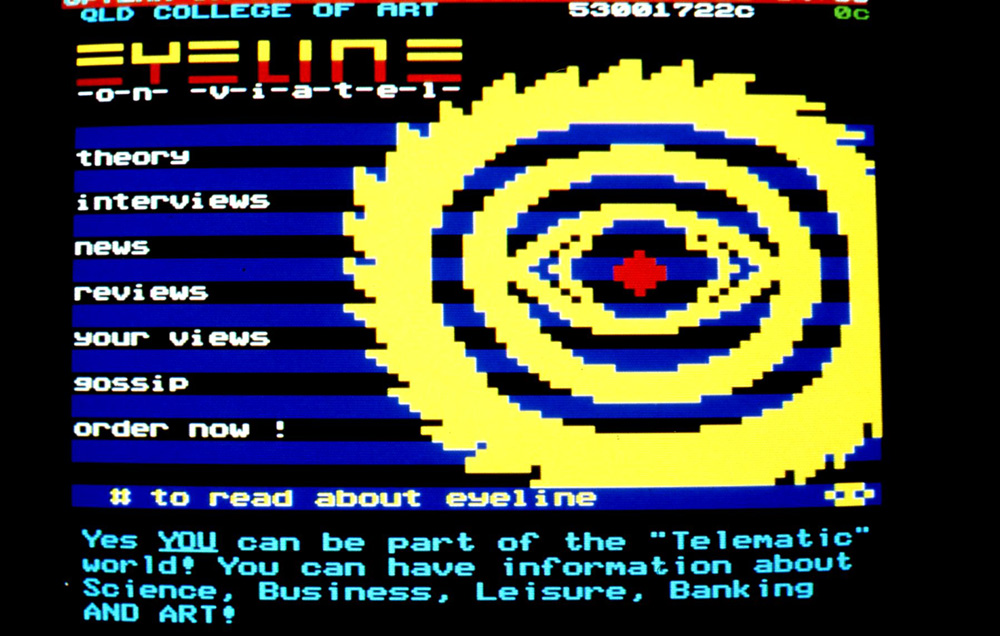
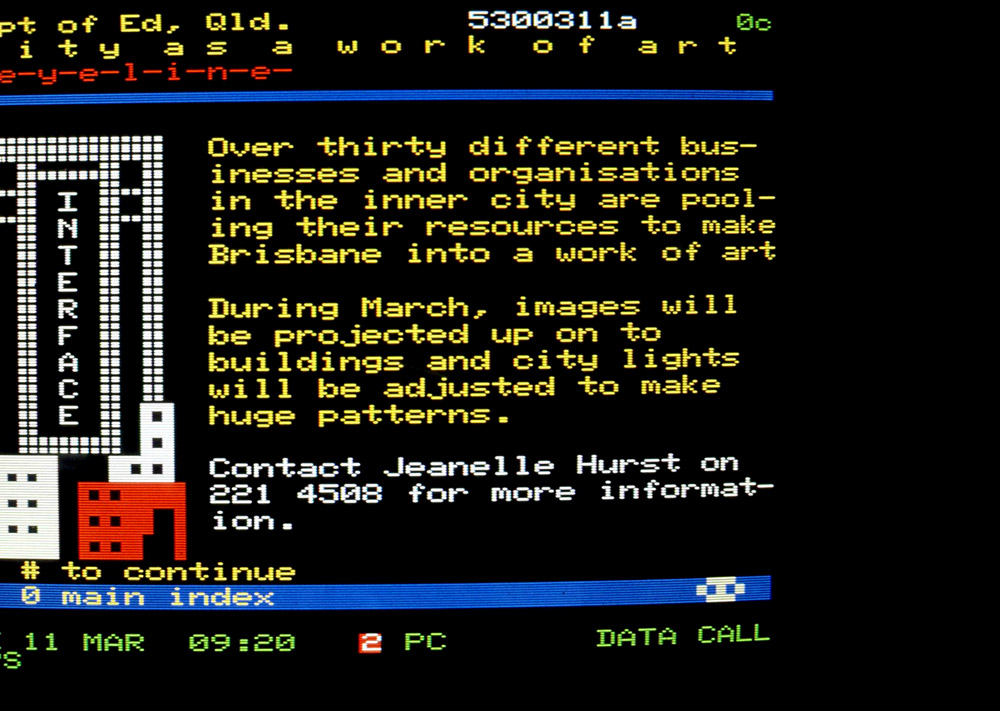
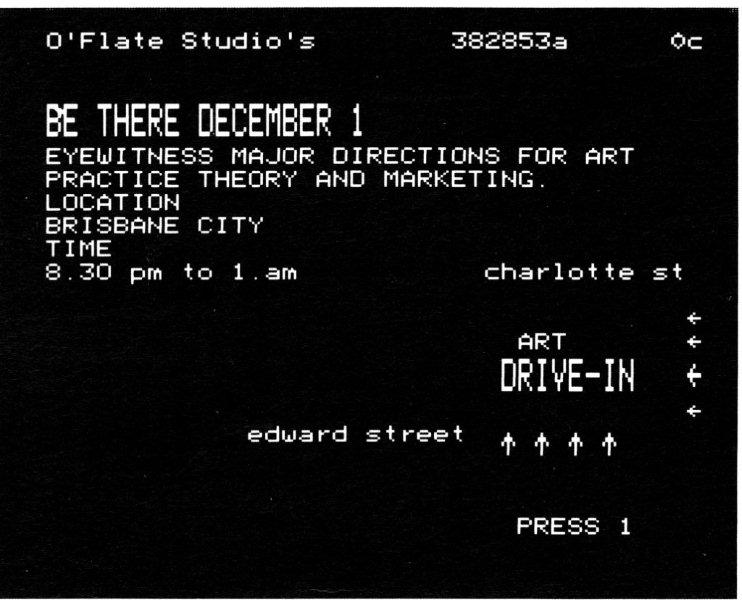
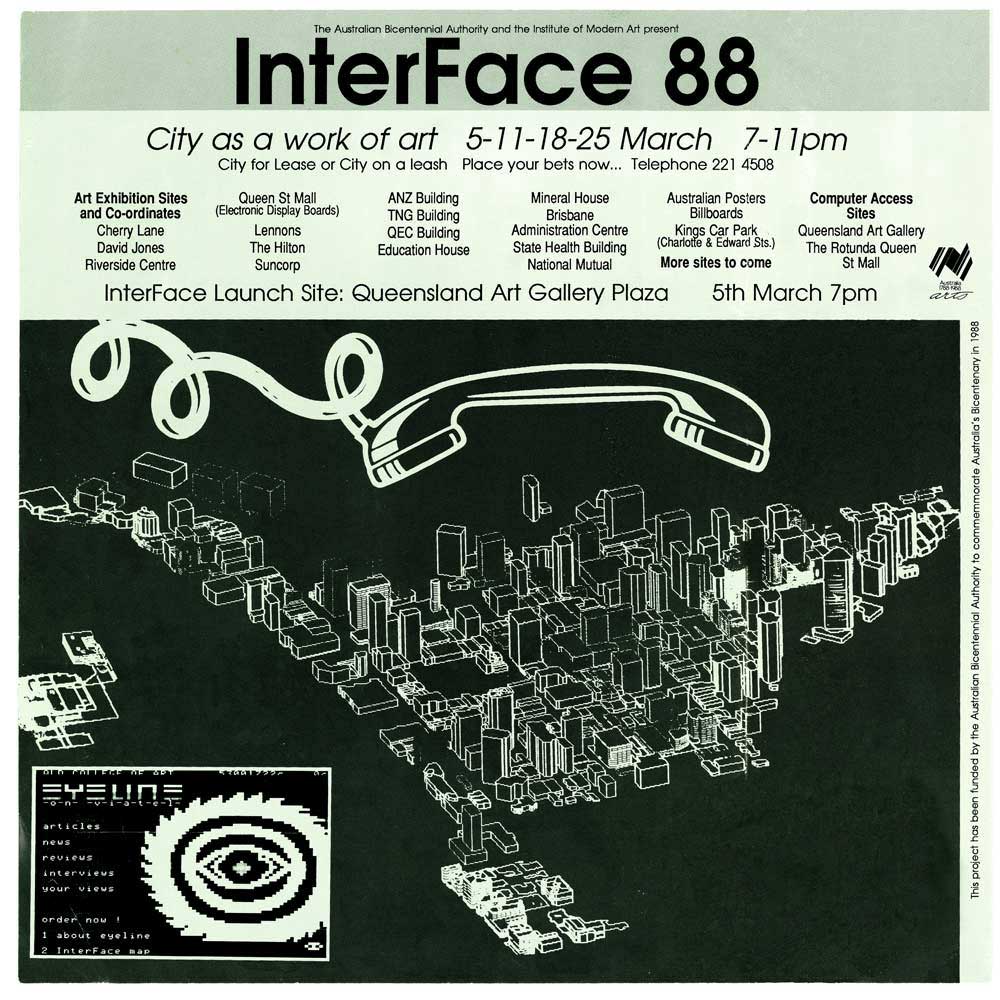
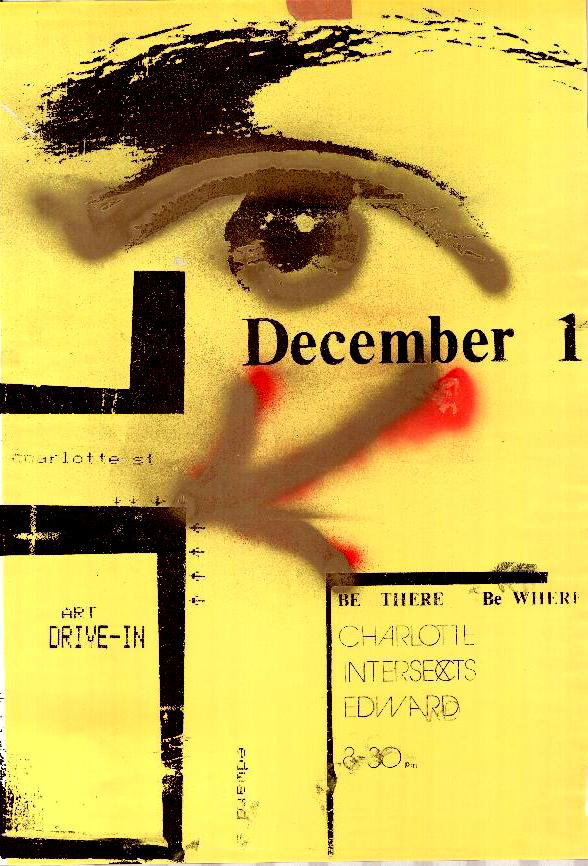
Eyeline on Viatel is now on display in the Cyber Cafe @ National Communications Museum in Melbourne, Victoria, Australia.
The emulation below was recovered as part of Melanie Swalwell’s “Creative Micro-computing in Australia, 1976-1992” ARC Future Fellowship.
Many thanks to Melanie Swalwell, Cynde Moya and the team at the Digital Heritage Lab at Swinburne University of Technology for producing the Eyeline on Viatel emulation.
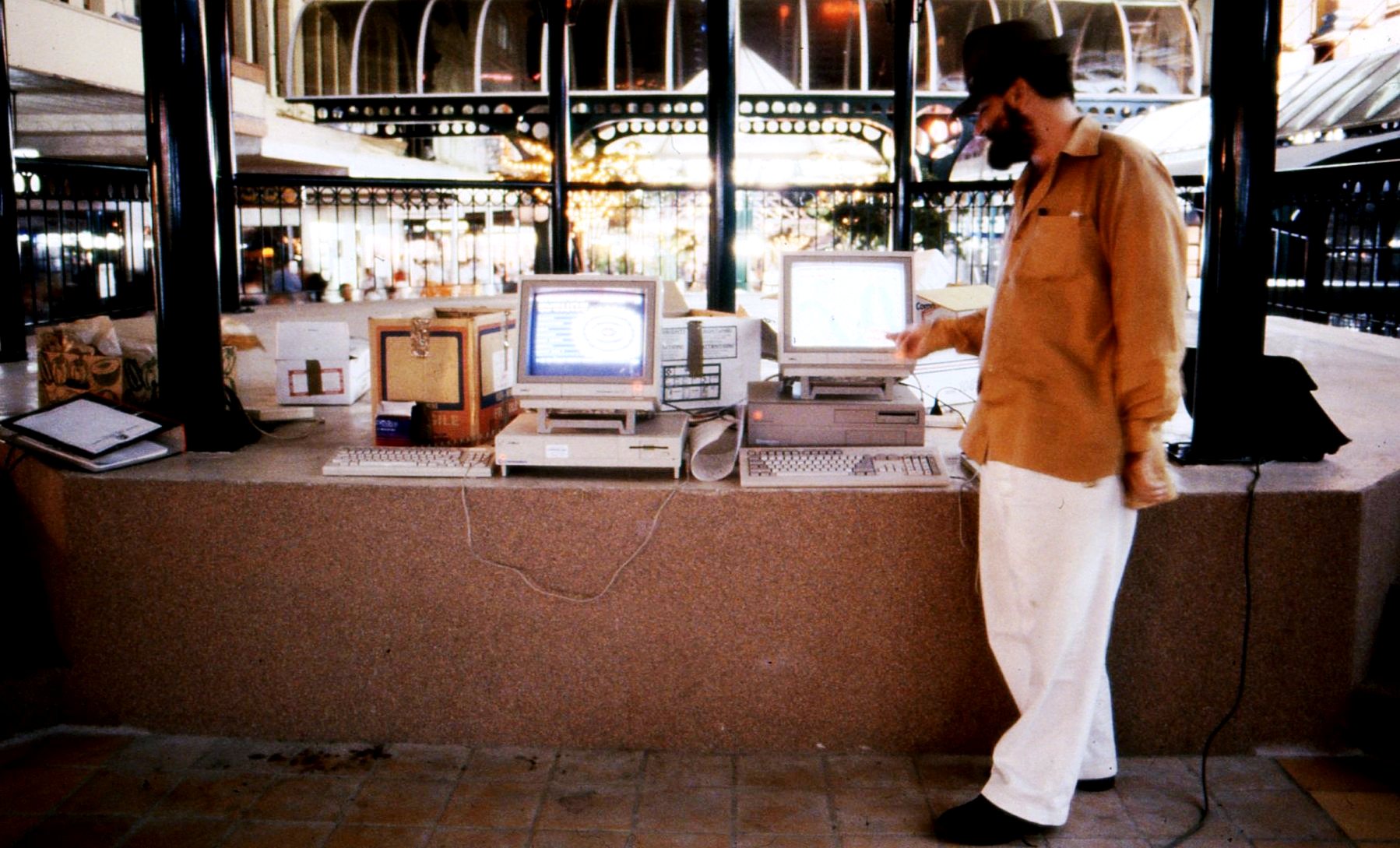
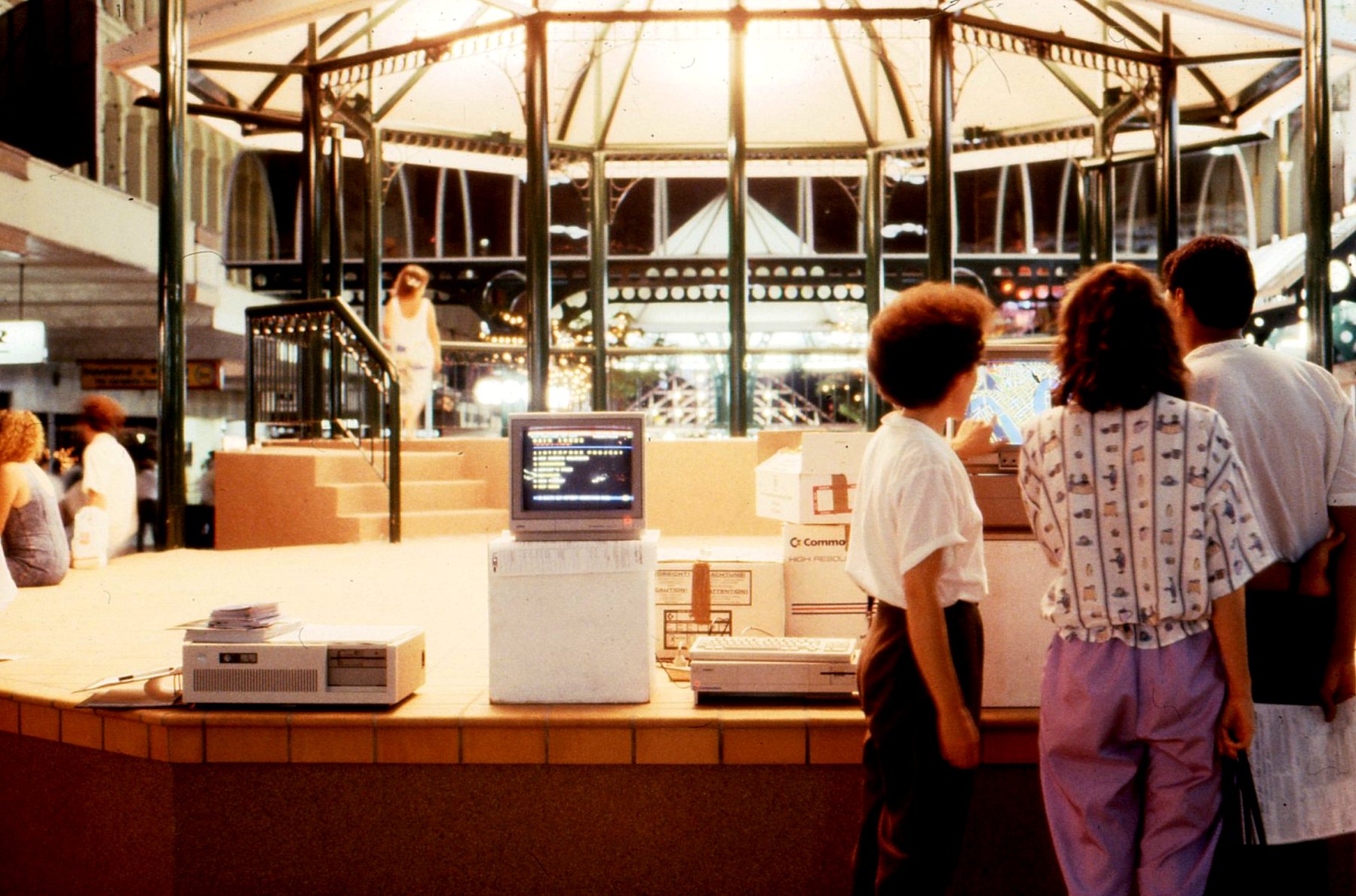
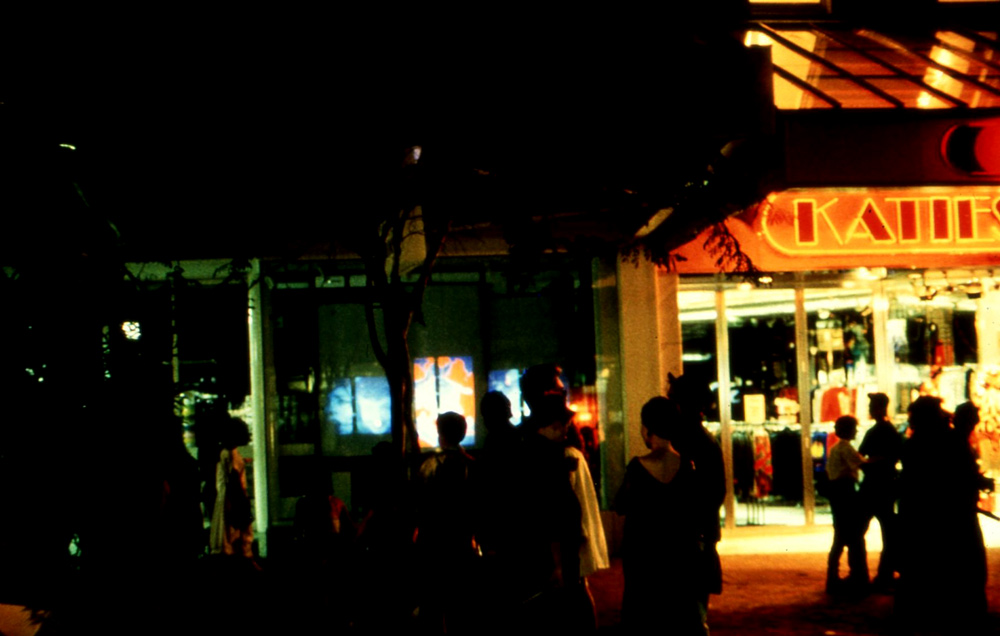
The Map of the World (revised edition) digital map and Eyeline on Viatel, Telecom Australia’s Videotex Service, were on display in the Queen St Mall for 4 nights during the InterFace Project. Adam Wolter and I manned the displays, keen to discuss the digital sites as key components of the InterFace 88 Project.
The sites… the actions and reactions…
The InterFace 88 Project scaled up the Outdoor Art Drive-In template with sites across the inner city of Brisbane.
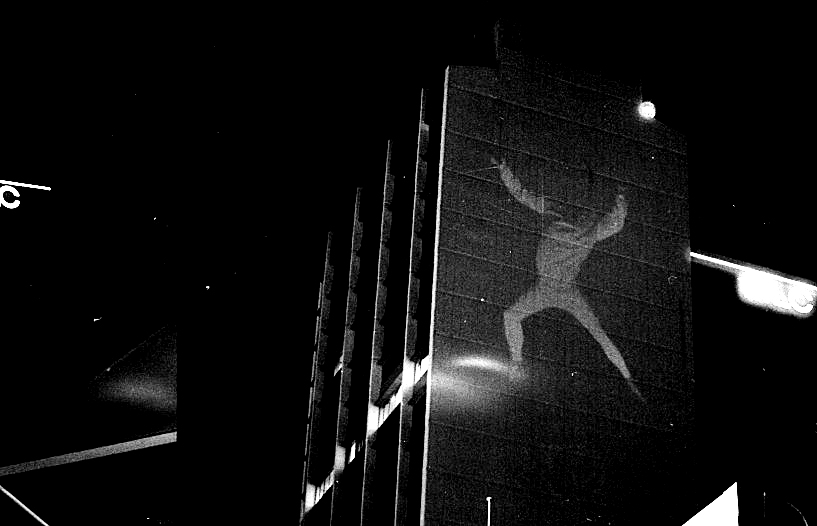
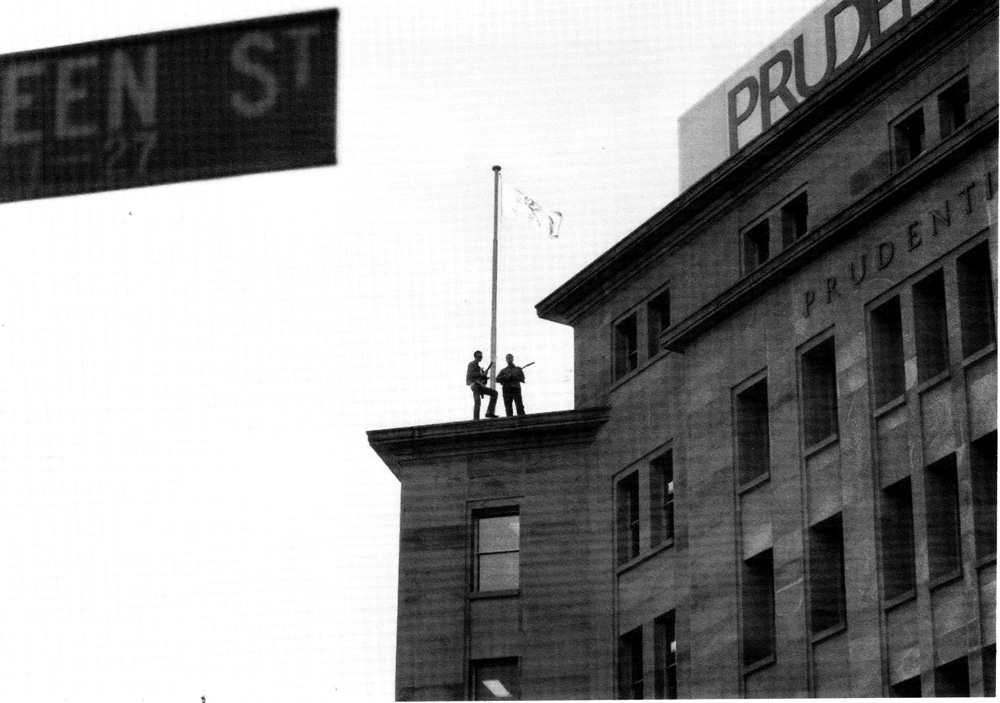
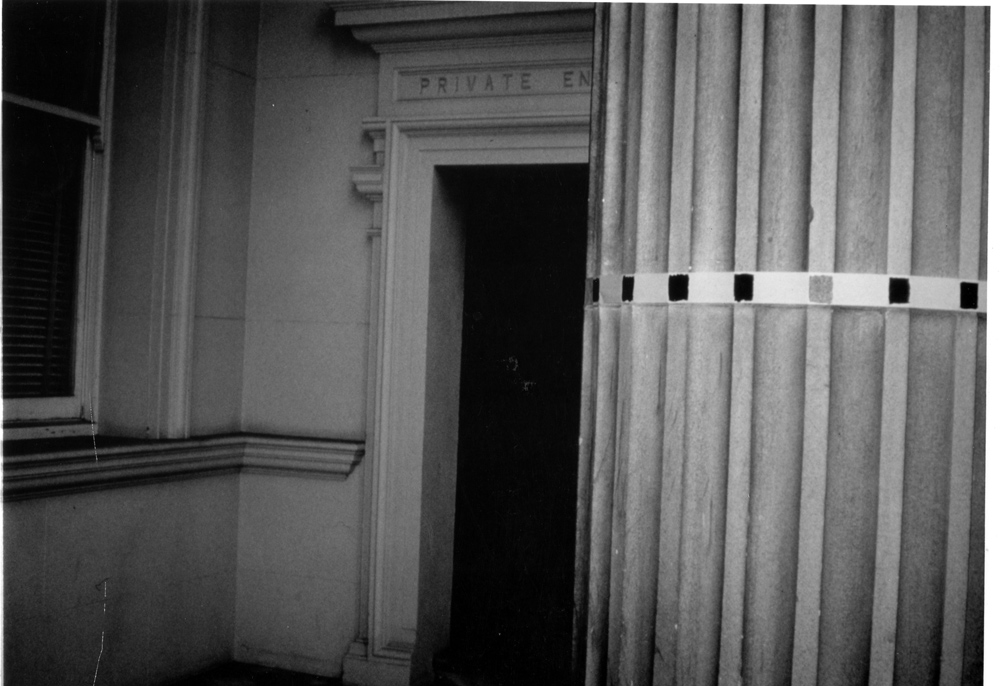
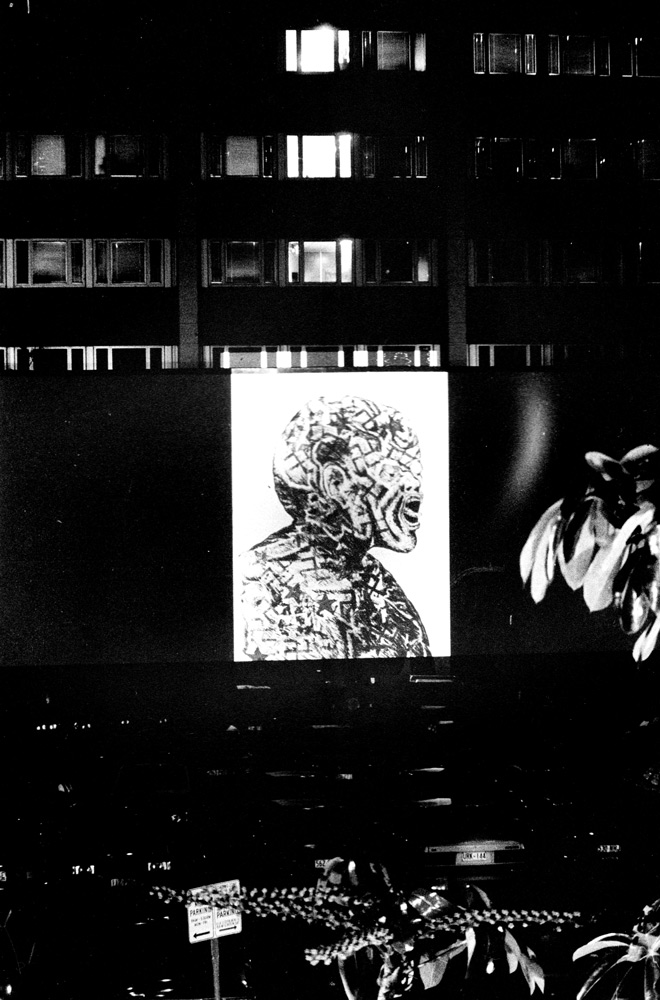
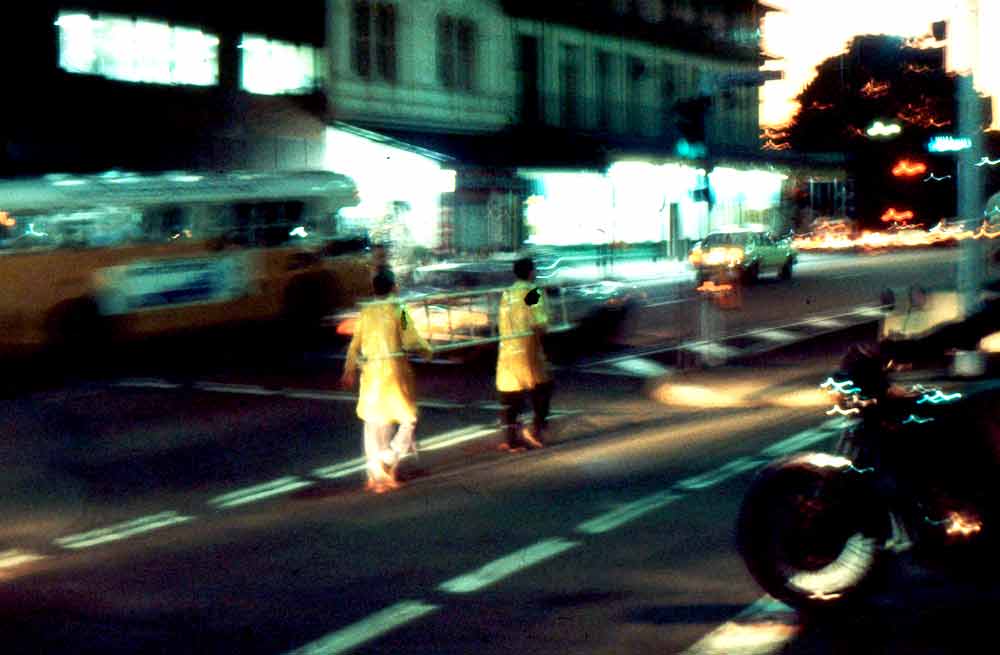
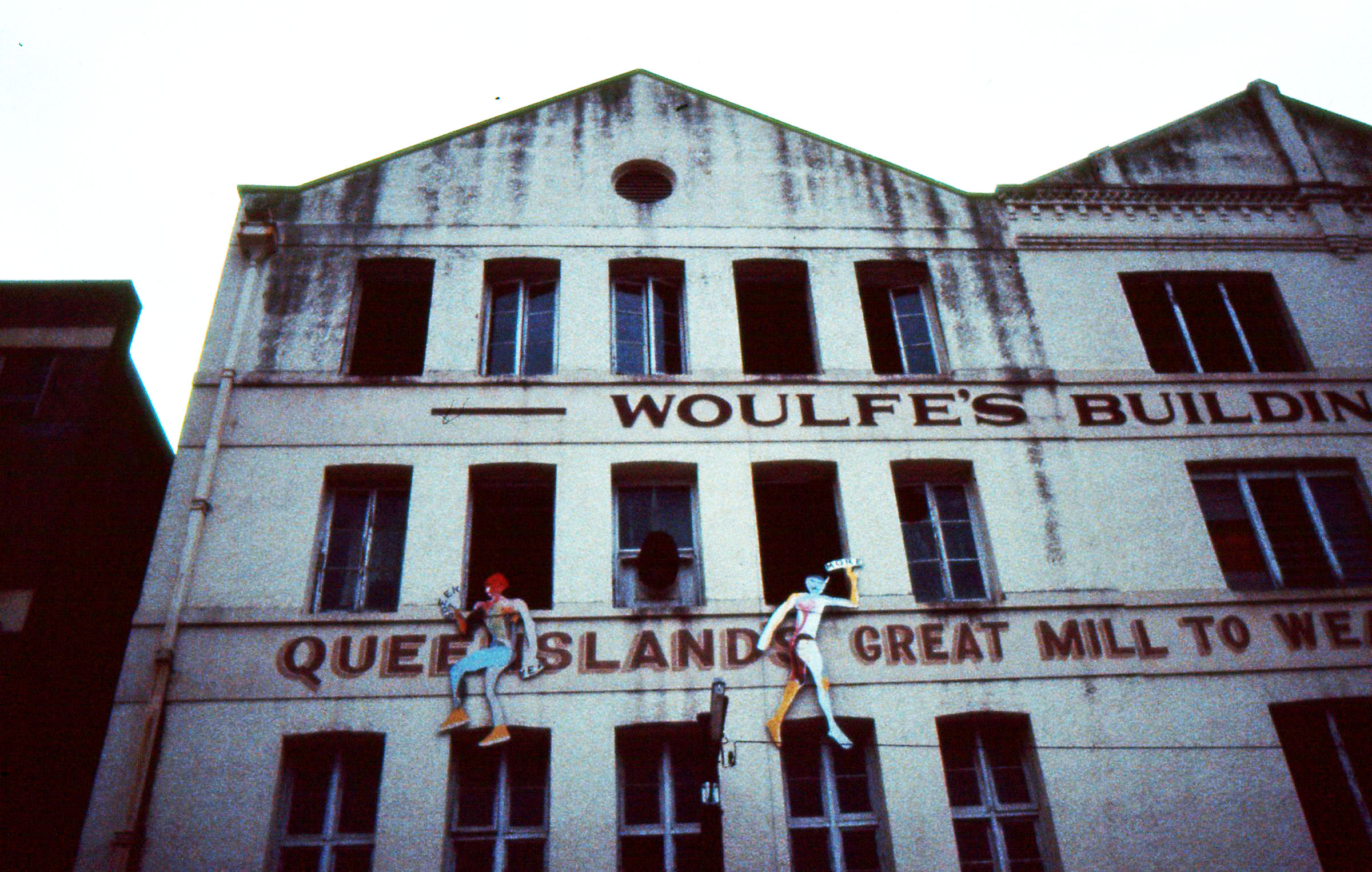
High-rise buildings were used for the light displays, projections and musical interludes. Billboards, Electronic Display Boards, Commercial buildings, Retail stores, Hoyts Cinema, the Queensland Art Gallery and the Queen St Mall were sites for still images, sound and video works.
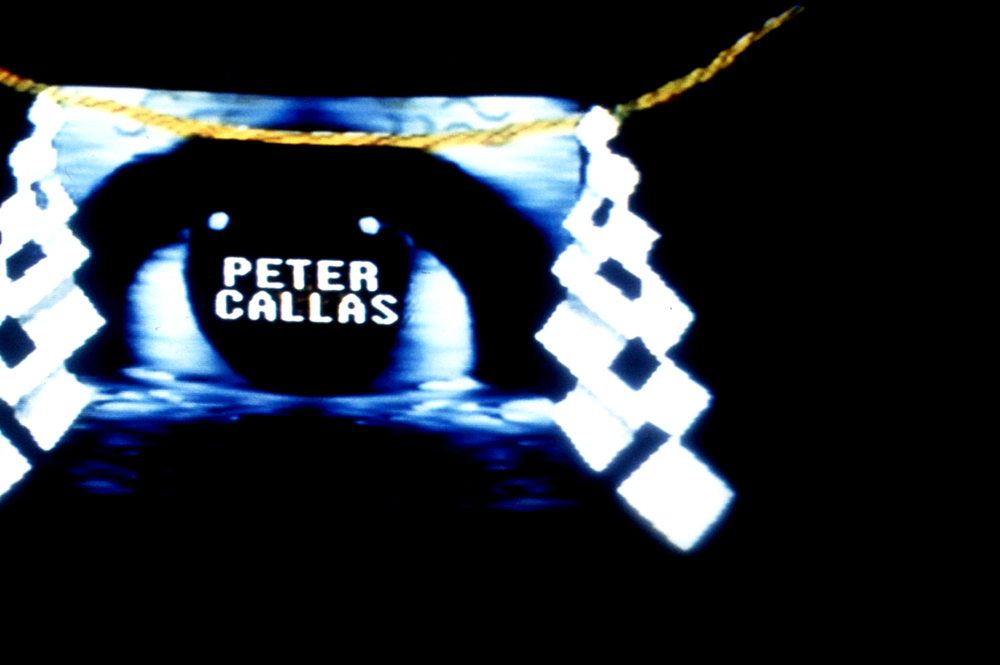
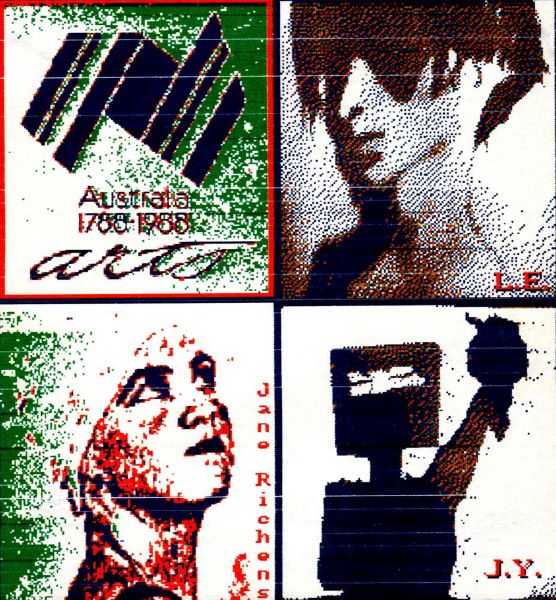
Participating artists were: Adam Wolter, Jane Richens, Tim Gruchy, Jay Younger, Gary Warner, Peter Callas, Lucinda Elliot, Allen Furlong, Diena Georgetti, Eugene Carchesio, Pat Ridgwell, Axis Art Xtremists (Jay Younger, Paul Andrews, Lehan Ramsay), Murray Bent, Zeliko Maric, Adam Boyd and Jeanelle Hurst.
Photographers were: James Creagh, Steve Crowther, David Gorton, Babette Griep and Jack Pratt.
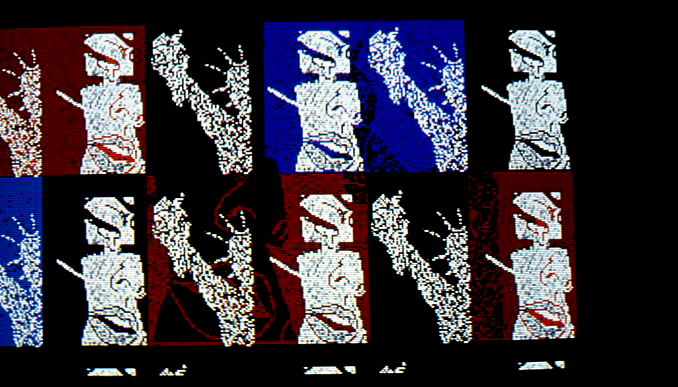
Adam Wolter worked with Mike Van Emmerik and Debra Livingston to transcribe images to the Electronic Display boards in the Queen St Mall.
Anne Pierotti and Peter Rohan transcribed Eyeline on Viatel, Telecom Australia’s Videotex Service.
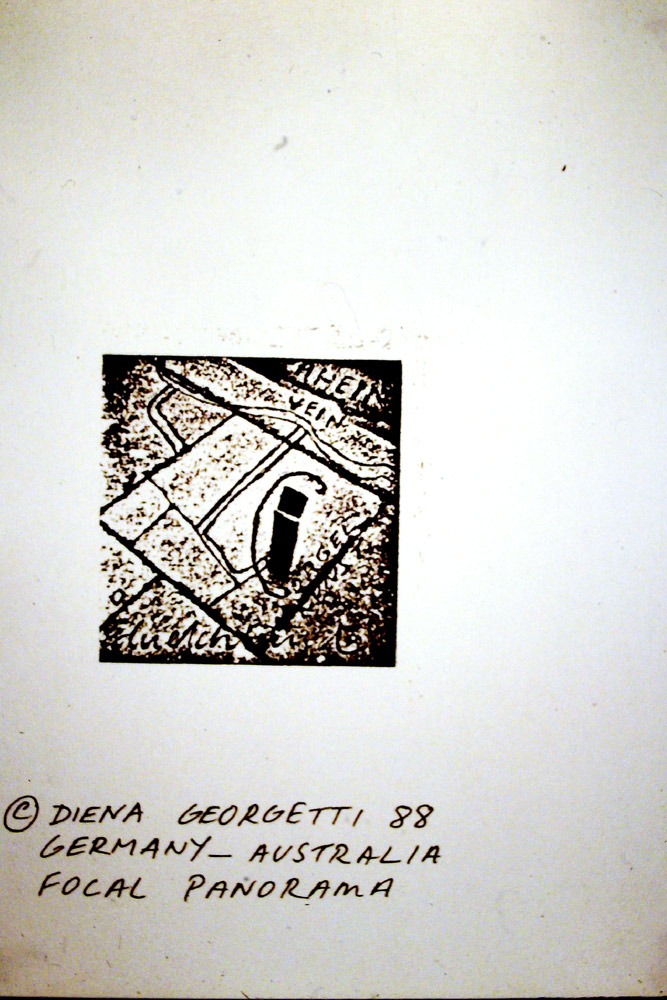
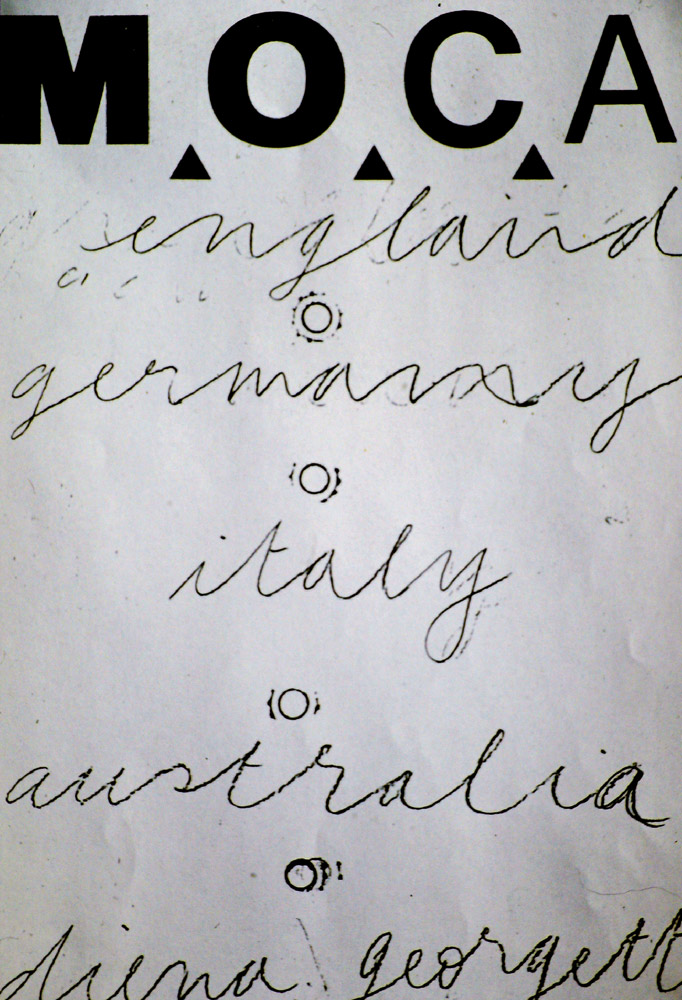
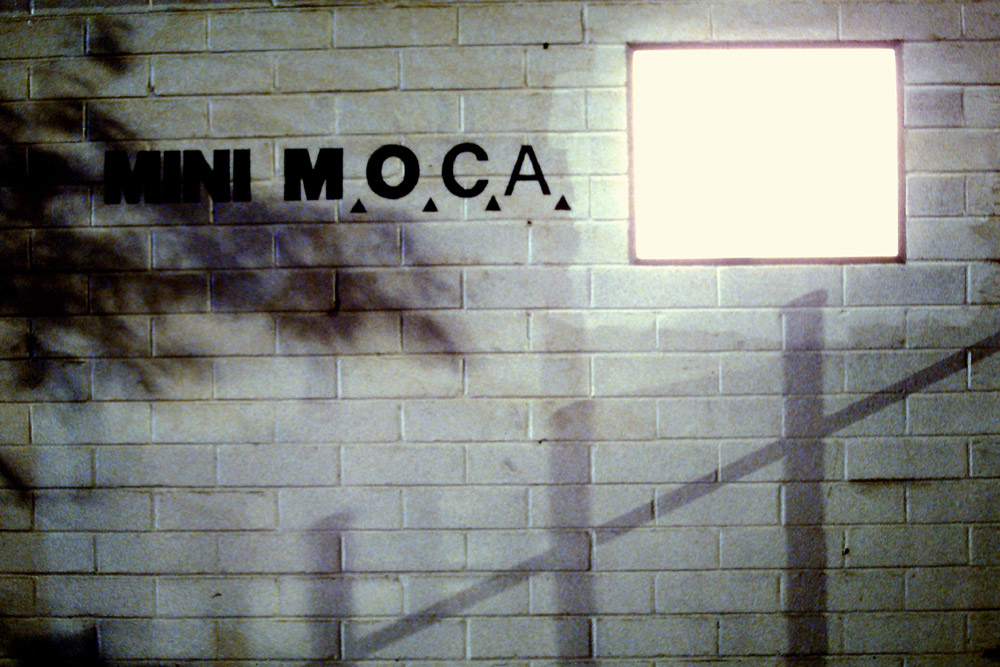
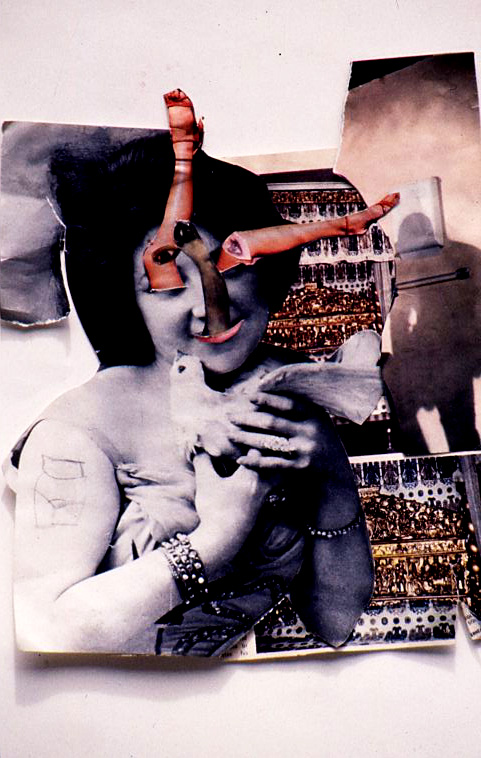
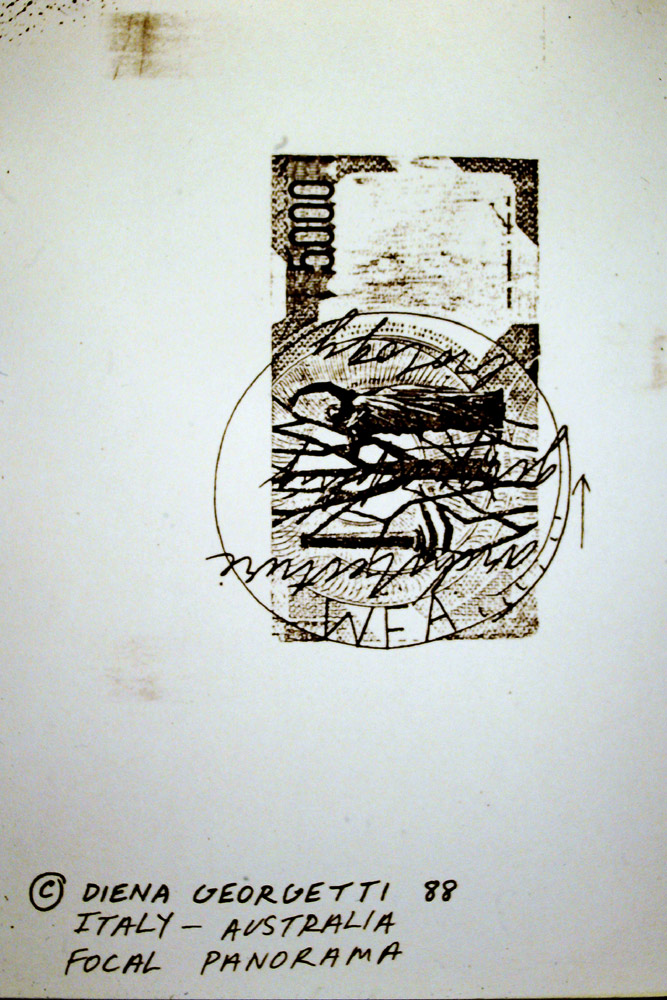
Brisbane artist, Diena Georgetti, who was travelling through Europe, faxed images of site-specific installations which were displayed in a small gallery site embedded in an external wall at the Museum of Contemporary Art (MOCA) in South Brisbane.
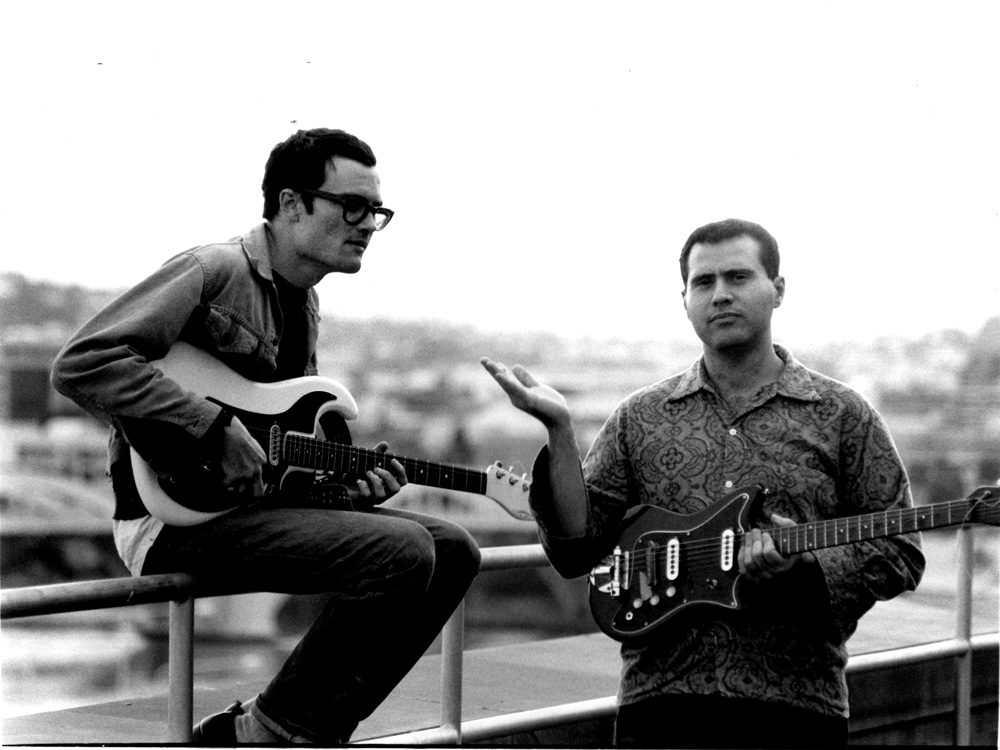
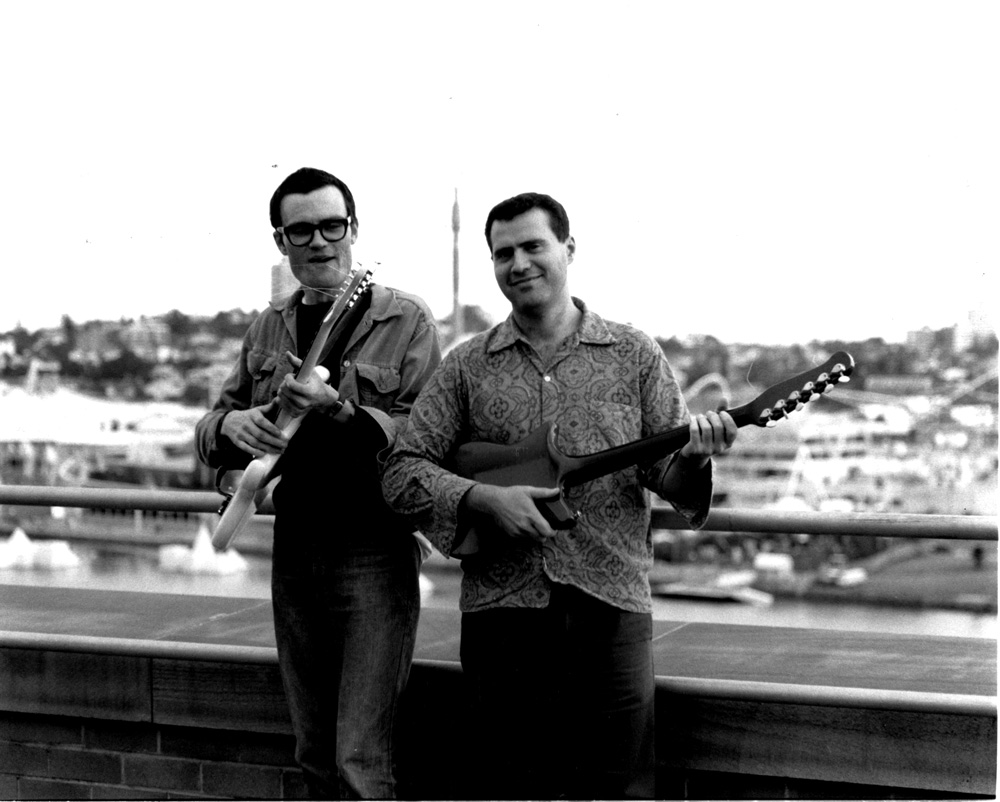
I had wanted to add sound and music to the mix, so I secured a rooftop for musicians Eugene Carchesio and Pat Ridgewell to play live. I also lured Muzak systems in the Queens Street Mall to play original sound works.
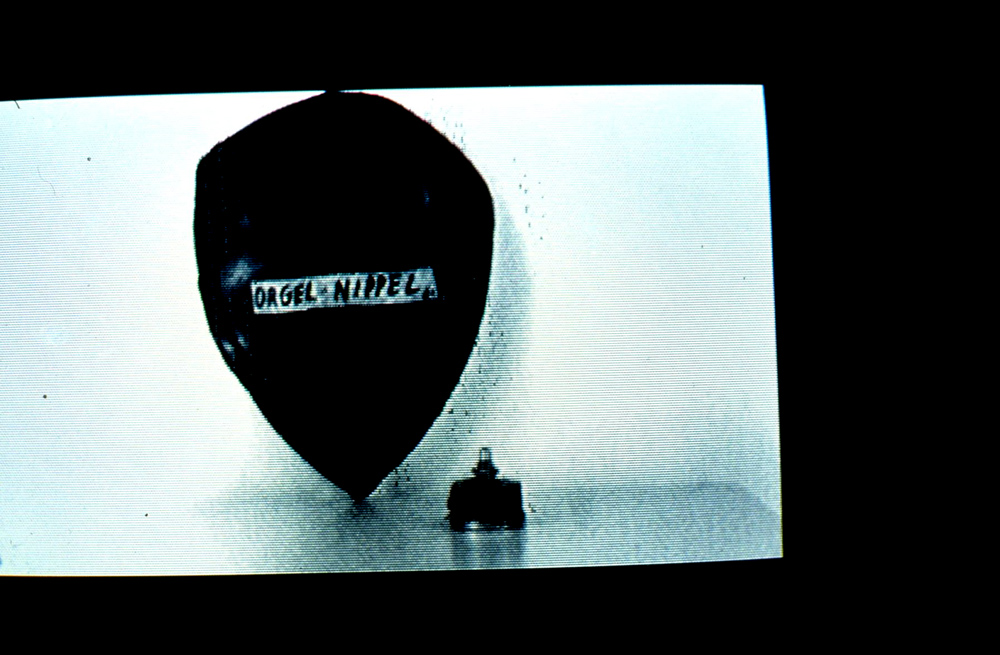
Gary Warner’s Boom Box Town & Country anti-consumerism sound work was shut down almost immediately by the Muzak System operator in the Queen St Mall. Minutes later, the plug was literally pulled on his curated New Media Art video work displayed on the 3 x 3 bank of monitors in the foyer of the Hoyts Regent Theatre Picture Palace.
I think this was a clear case of cultural dissonance, as Crocodile Dundee II, Good Morning Vietnam, Coming to America, and Three Men and a Baby were Hoyt’s cultural staples.
I also tried unsuccessfully to organise a cycling club to attach boom boxes to their bikes and carry music from the community radio station through the inner-city streets.
Responses to InterFace at that time were disorienting. A few days before the project kicked off, a contingent of locals led by artist Pat Hoffie launched a photocopy flyer, broadside labelling InterFace as TwoFaced because I had chased and accepted Bicentennial funding.
The Bicentennial funding issue had caused a rift across the Australian arts community. But, as an experimental female artist and single parent, I knew my minority grouping status well enough to know that no one was going to cut me slack, and my journey was my own.
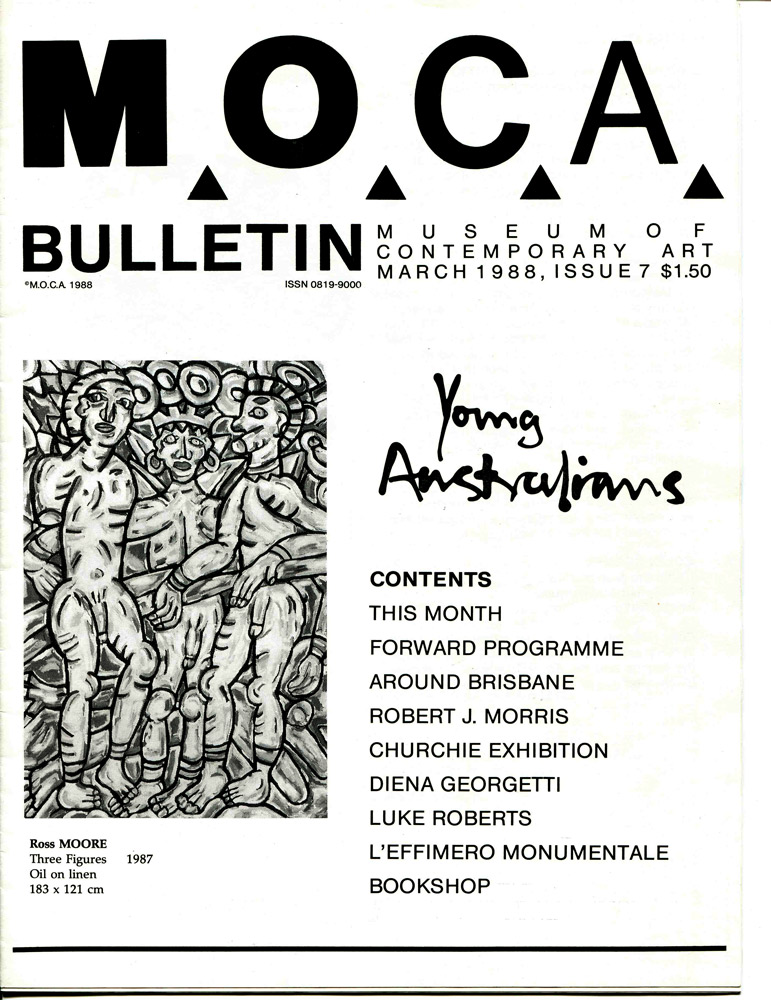
The few reviews by arts writers at that time inevitably appraised the project through the scope and lens of the Expo 88 spectacle. This was unfortunate because InterFace was about experimentation, exploration, and construction, not spectacle, and the InterFace budget was a drop in the ocean compared to Expo 88 spending.
However, the association with Bicentennial and Expo 88 national fervour had, without doubt, made it easier to open doors…
The logistics for the InterFace project were crushing; there were no bump-in/bump-out crews. Tim Gruchy and I were lugging the dead weight Zenon arc projector in and out of high-rise buildings and up stairs onto rooftops. Creating the arrows on high-rise buildings meant running floor by floor, leaping over obstacles and climbing over locked cubicles to open and close blinds. Artists had to install their work, carrying equipment in and out of commercial buildings, retail stores and the Queen St Mall.
As artists, we were our own dogs’ bodies, but also comrades and collaborators claiming space for creative practice at a time in Qld’s cultural journey that was explorative, generative, and productive.
The claiming, opening, and sharing of spaces by artists characterised the 1980s cultural practice in Queensland.
But the era can be defined by artist-run spaces culture-plating creative collaboration, experimentation and open-ended engagement by allowing artists to revel in the excitement and joy of exploring ideas and concepts and making shit happen.
I read the InterFace criticisms but didn’t heed them, as my objective was to stay in my lane and on track. I had sourced and distributed a small budget over a large terrain. The artists had been paid something as against nothing, and the objective to explore public art, telecommunications and connectivity had been achieved.
That was enough.
- All categories
- 1988 Billboards
- 1988 Electronic Display Boards
- 1988 Eyeline on Viatel-Videotex
- 1988 High-rise Projections
- 1988 High-rise Wallpaper
- 1988 Map of the World-Digital Map
- Artist Adam Wolter
- Artist Allen Furlong
- Artist Diena Georgetti
- Artist Jane Richens
- Artist Jay Younger
- Artist Jeanelle Hurst
- Artist Lucinda Elliott
- Artist Peter Callas
- Artist Tim Gruchy
- Artist Zeliko Maric
- InterFace 88
- InterFace Promotions
- Musicians Eugene Carchesio - Pat Ridgewell
Background
action / reaction…
InterFace 88’s origins rest in the invasion of personal and public space in the 70s and echo in the catchcries to ‘claim your territory’, ‘stand your ground’, and ‘as a woman I have as much right to be here as anyone else’.
As a woman, I wanted a level playing field. As an artist, I wanted space that was equitable, accessible, visible, interactive, interconnected and multifaceted. As an experimental artist, I wanted a space that was both local and global.
Conceptually, InterFace evolved through the freewheeling, open-ended workouts of action/reaction strategies in and out of artist-run spaces across the city of Brisbane in the early 80s.
The action/reaction strategies across surfaces across the city of Brisbane allowed me to imagine and visualise the potential for fluidity and flow within the cityscape.
The InterFace concept was consolidated in pursuit of the thrill of investigation and experimentation.
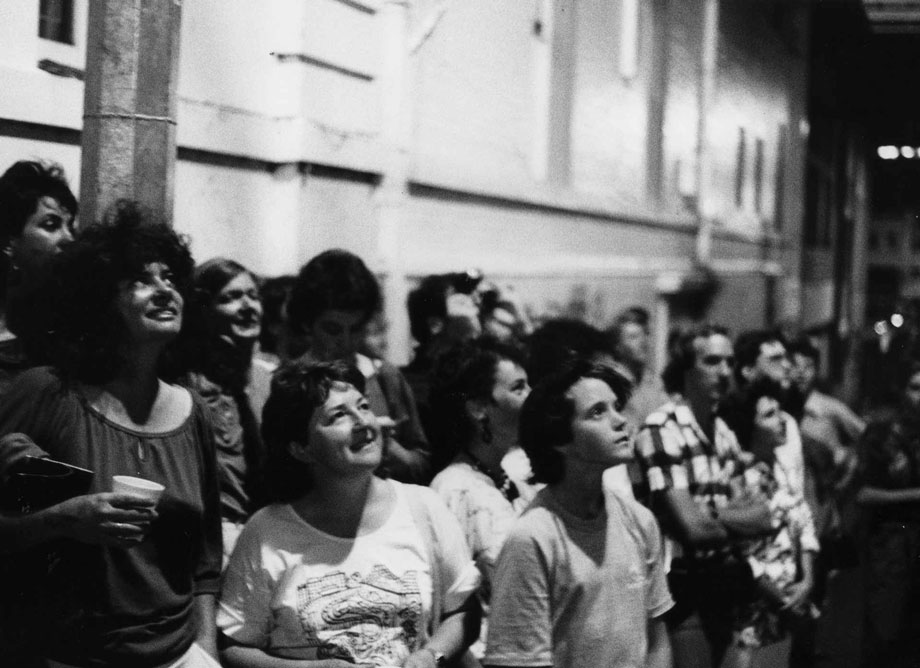
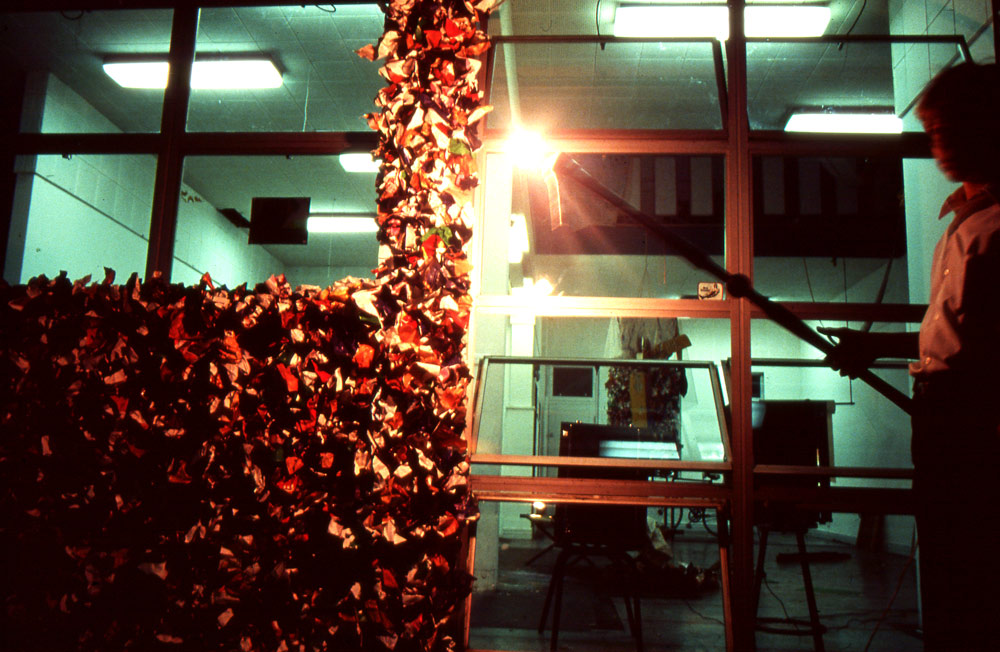
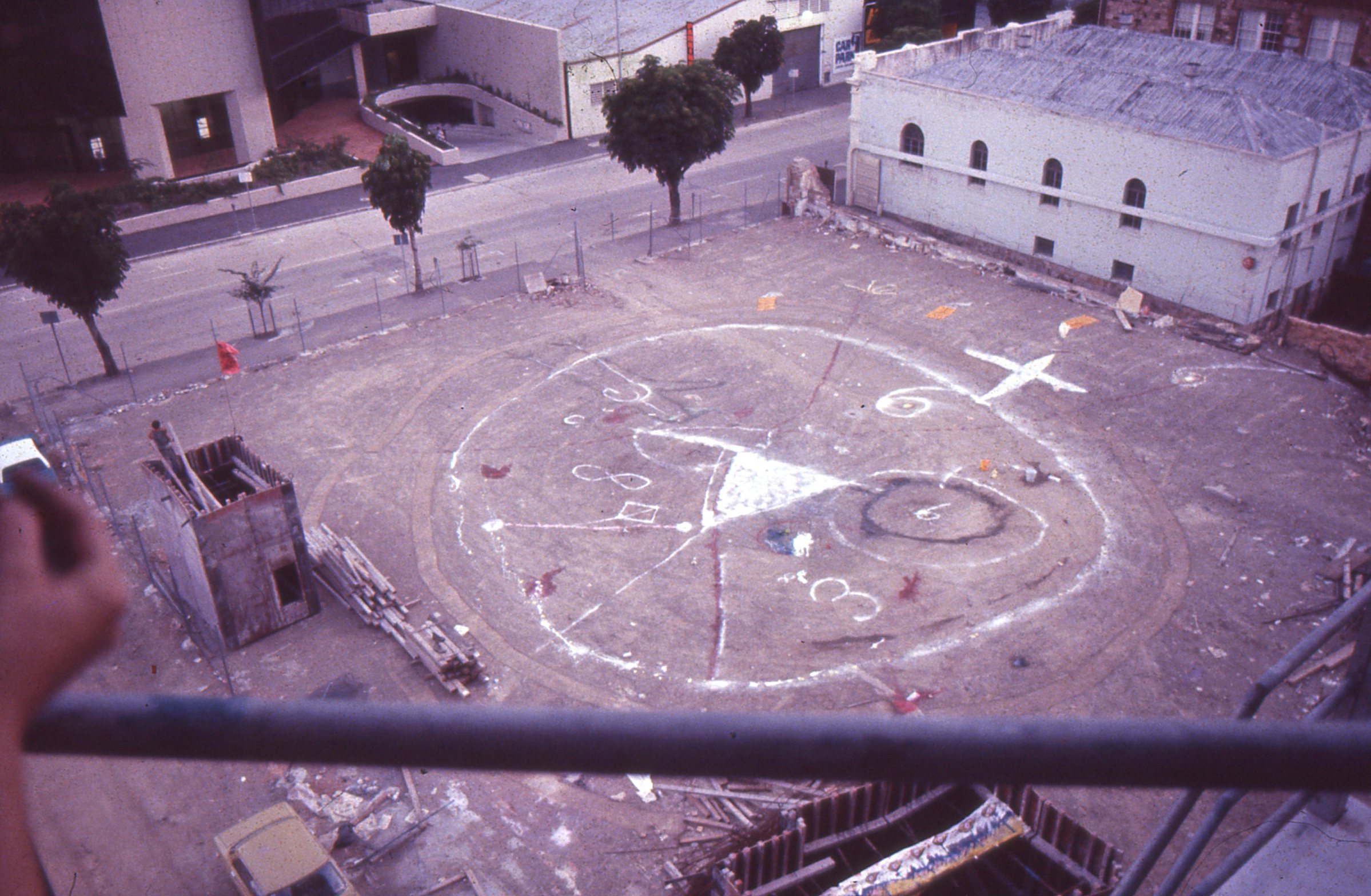
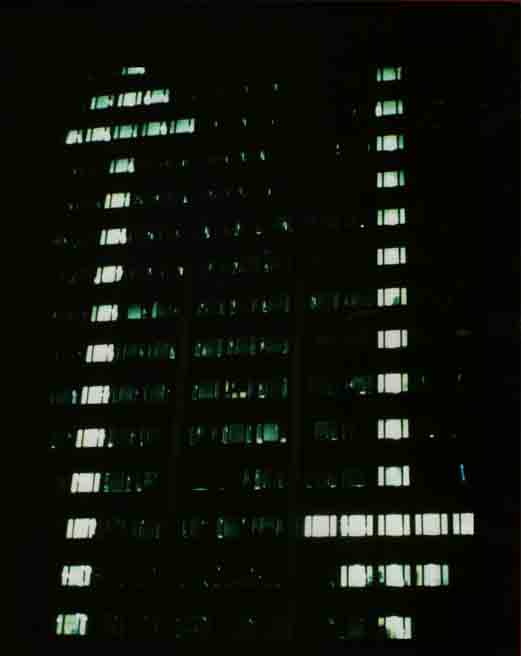
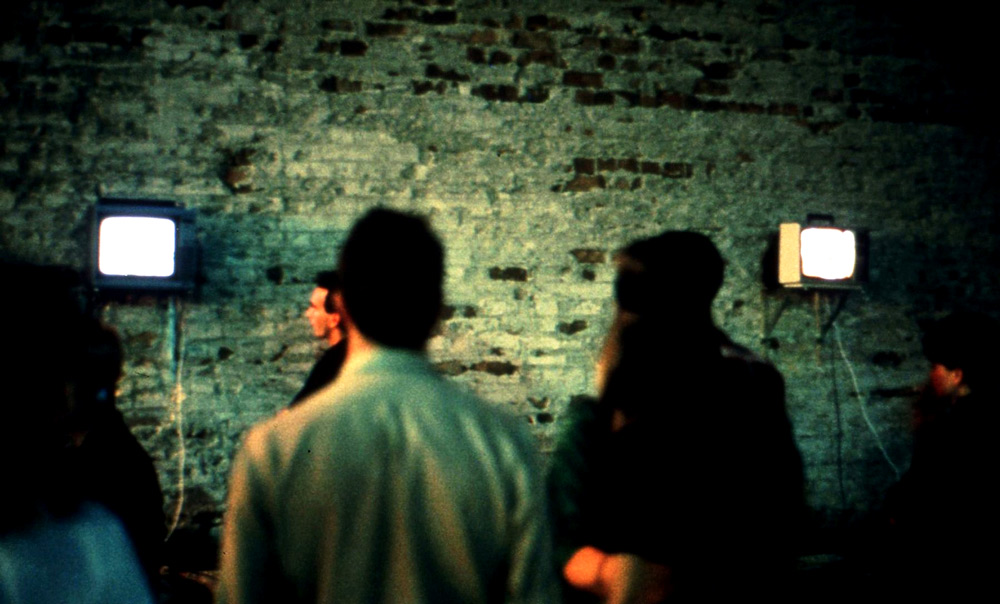
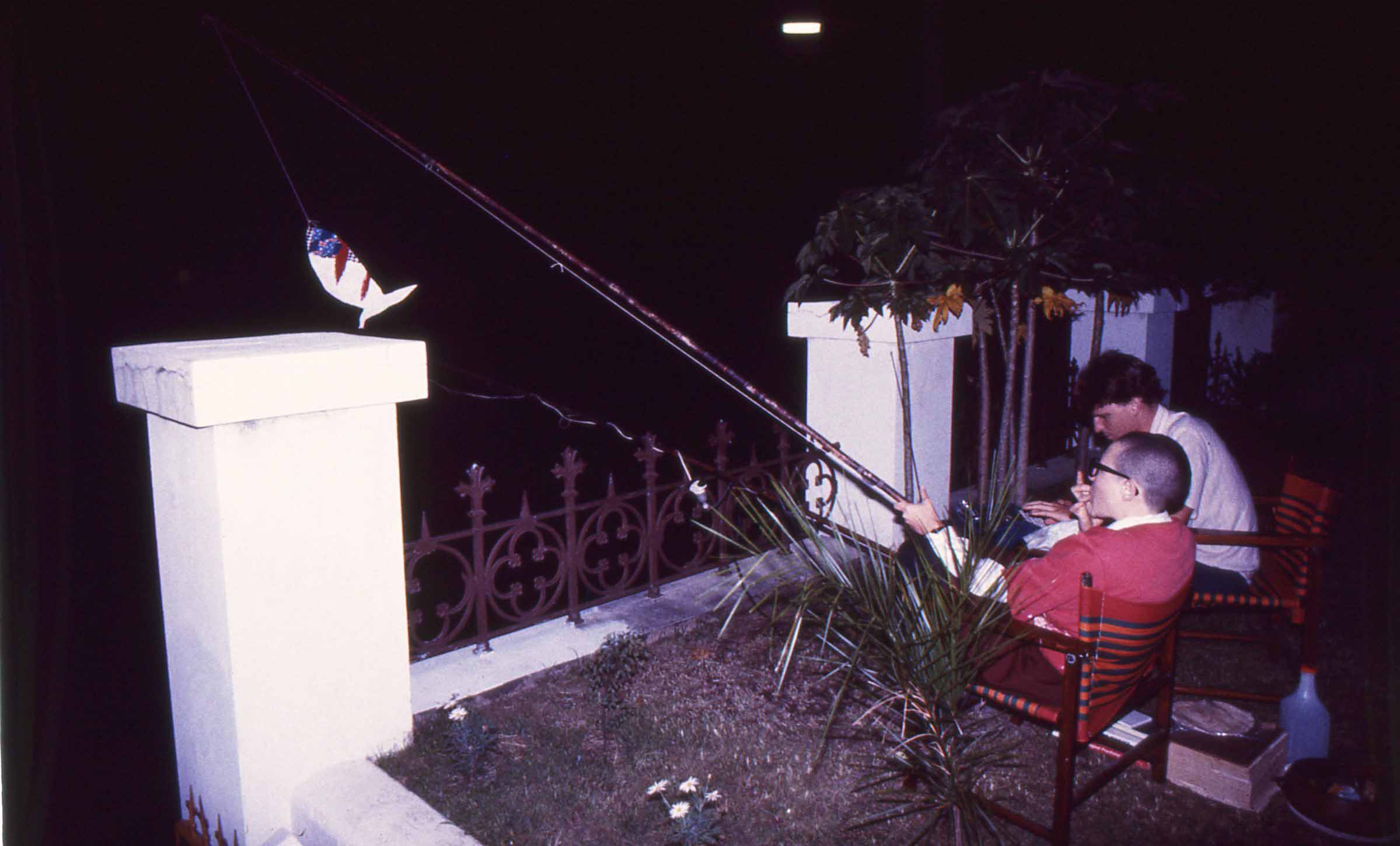
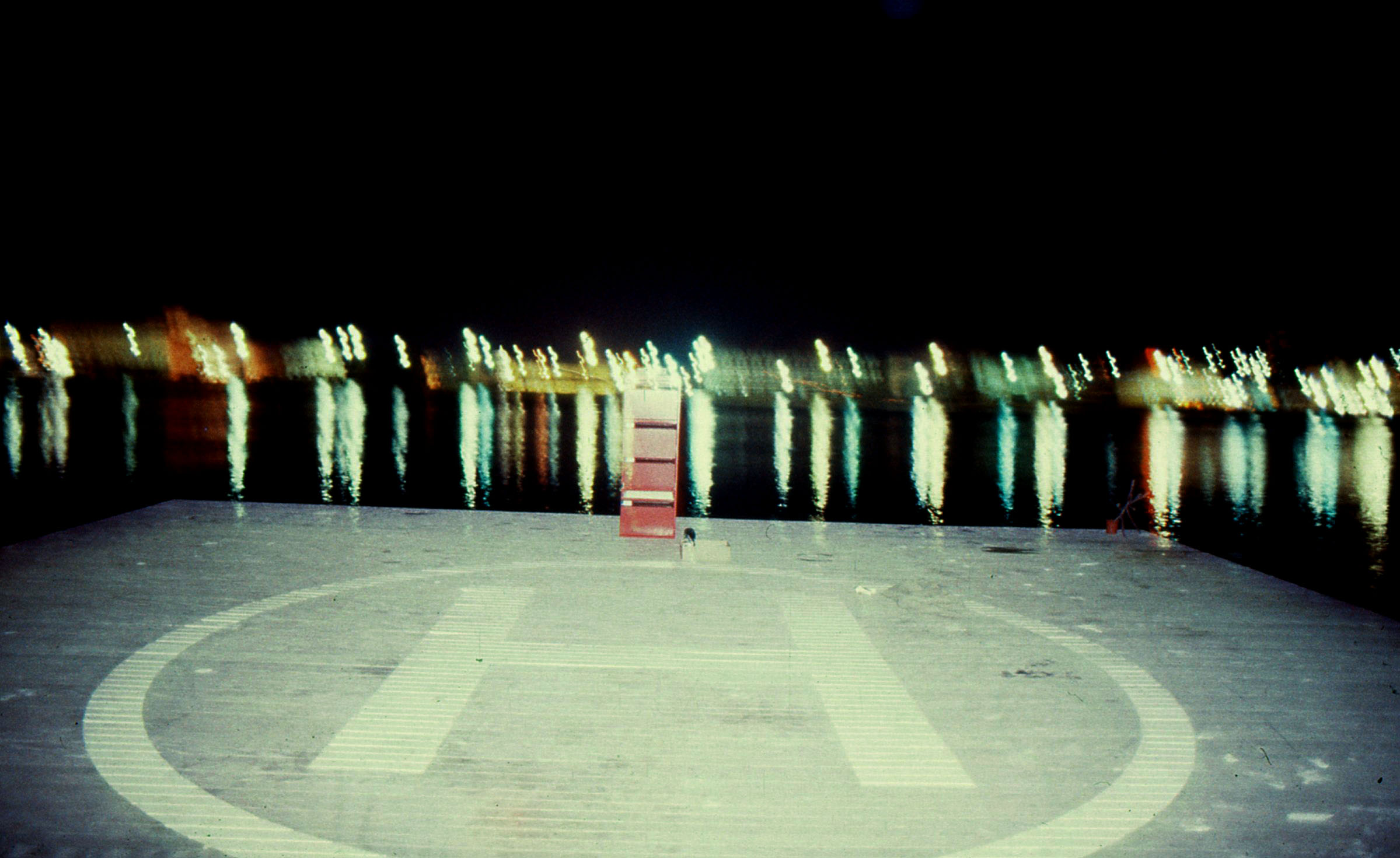
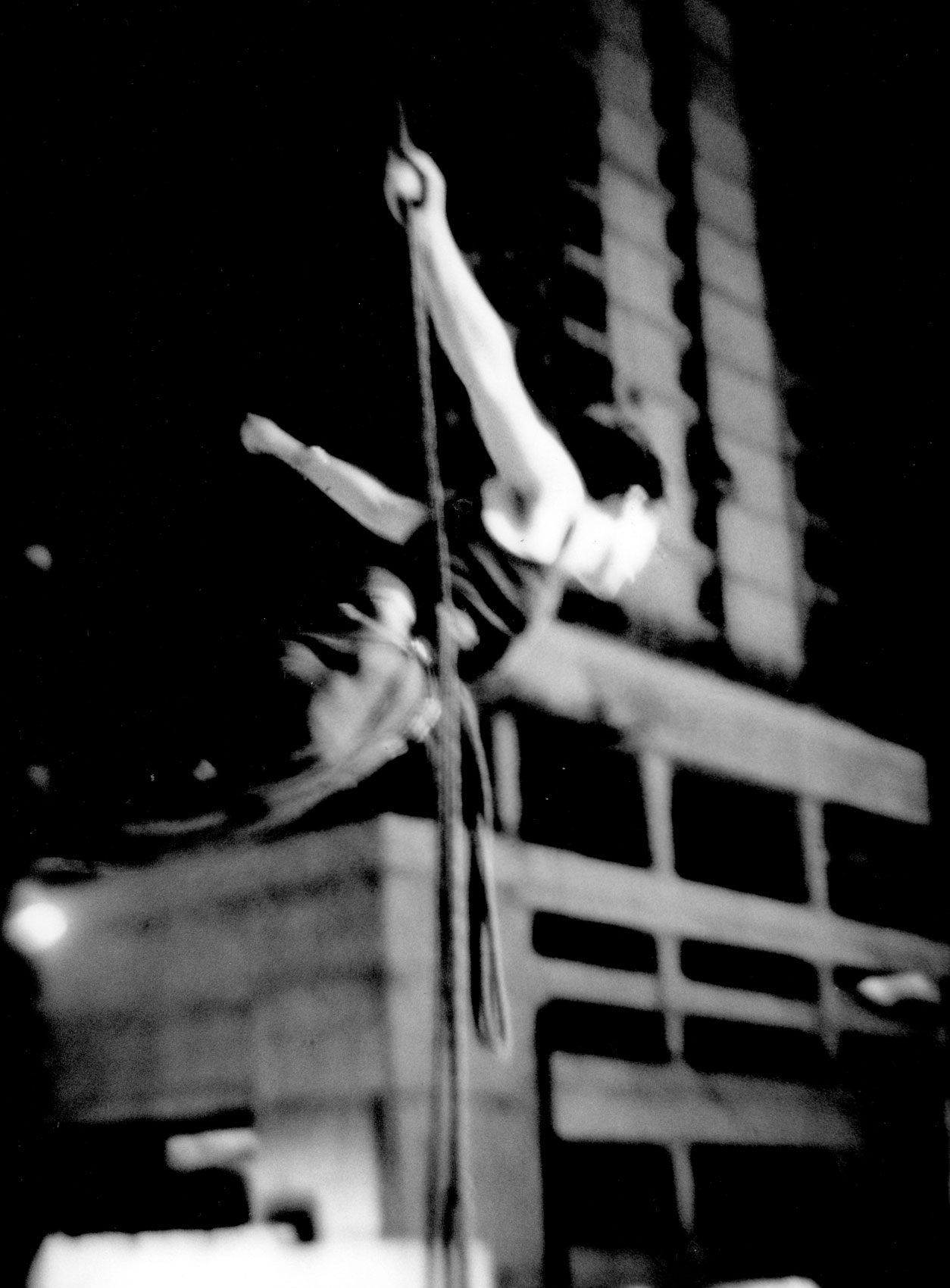
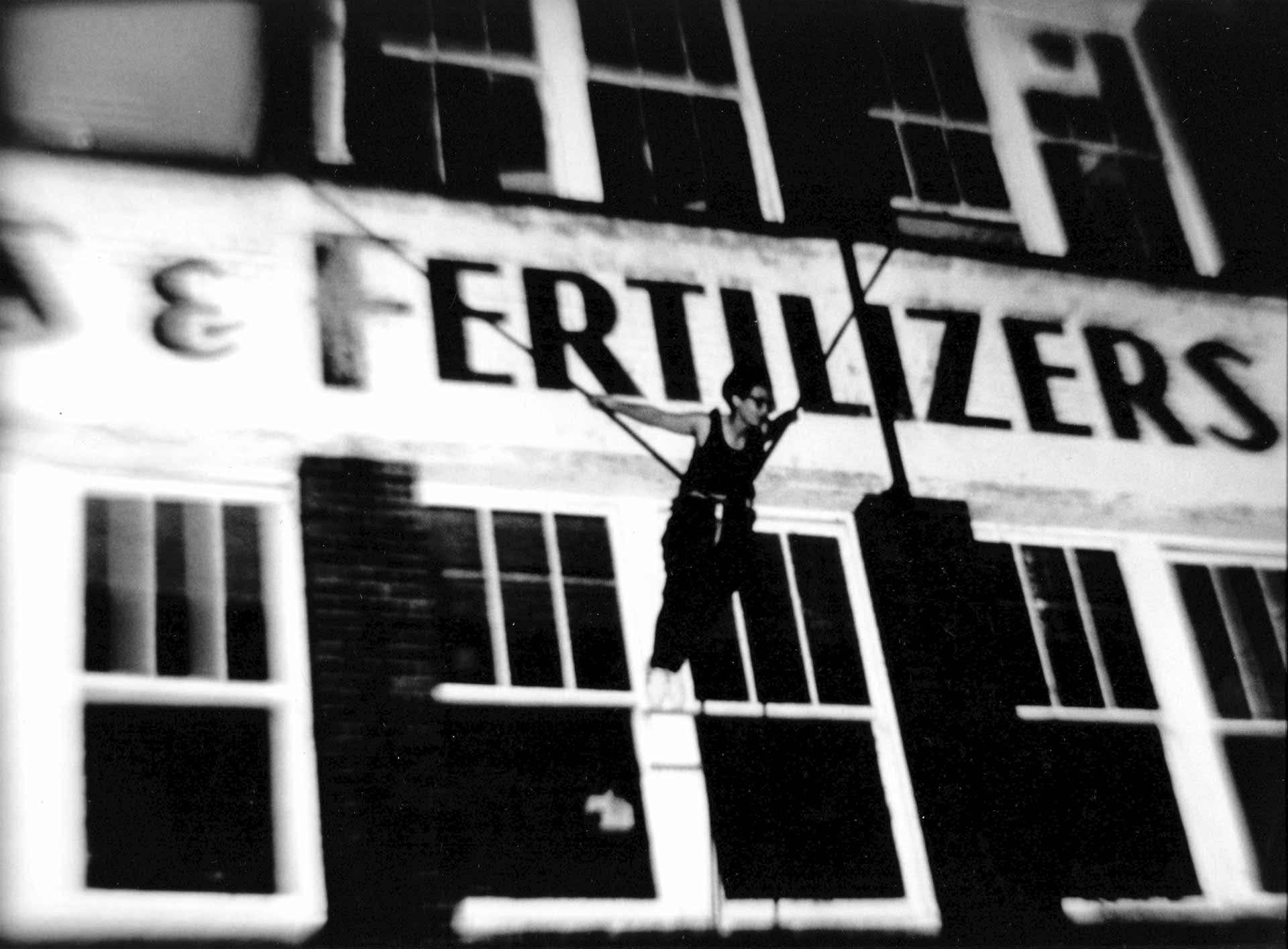
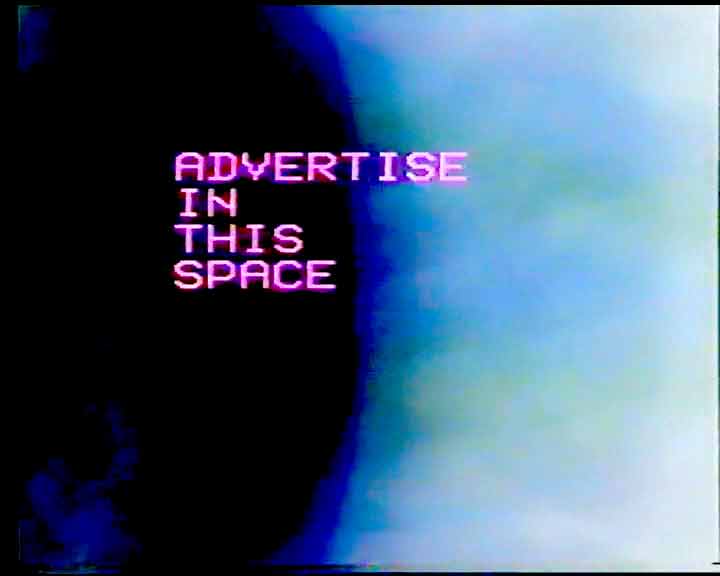
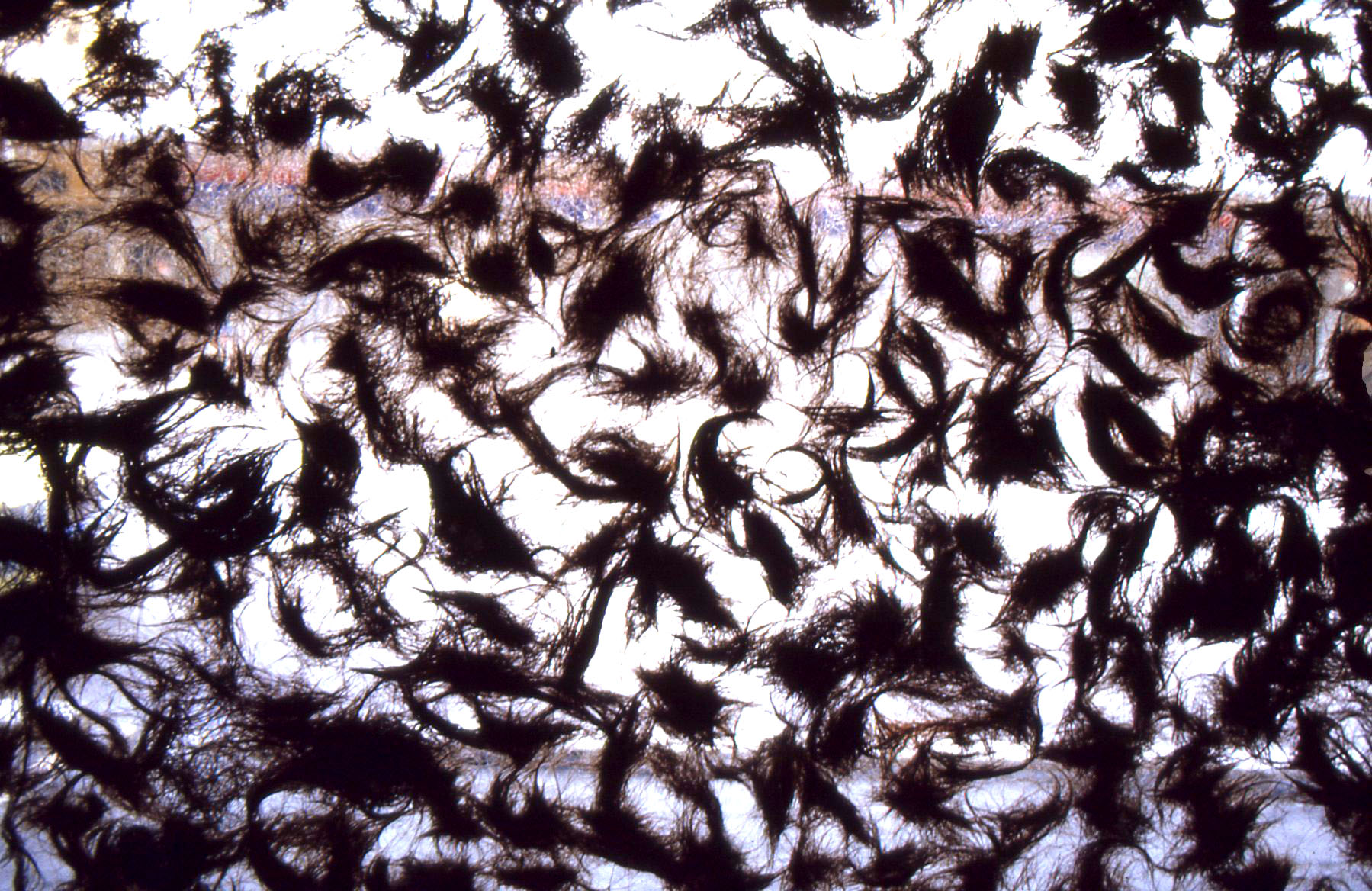
In the 70s, the city had represented a dangerous and combative terrain, but as I roamed it through the early 80s, I started to see it as an immersive experience of elements, elevations, structures, surfaces, perspectives, colours, textures, movement, rhythm, form, and flow.
I had wondered how indigenous artworks appeared to reveal a satellite view of the world with a visual narrative mapping of the country. How was it possible to have elevated viewpoints and perspectives without technology?
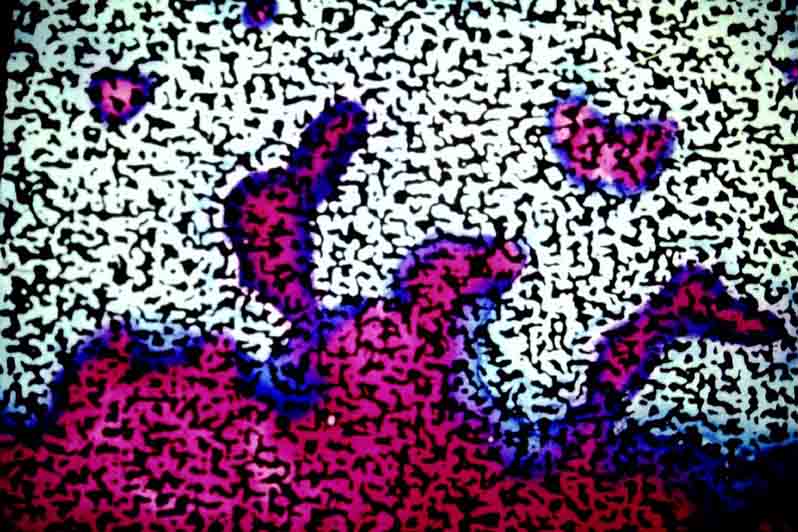
Halftone billboard posters illustrated how fragments of colour could become distinct images from a distance, and I started to see the city as a composition of stationary and moving fragments.
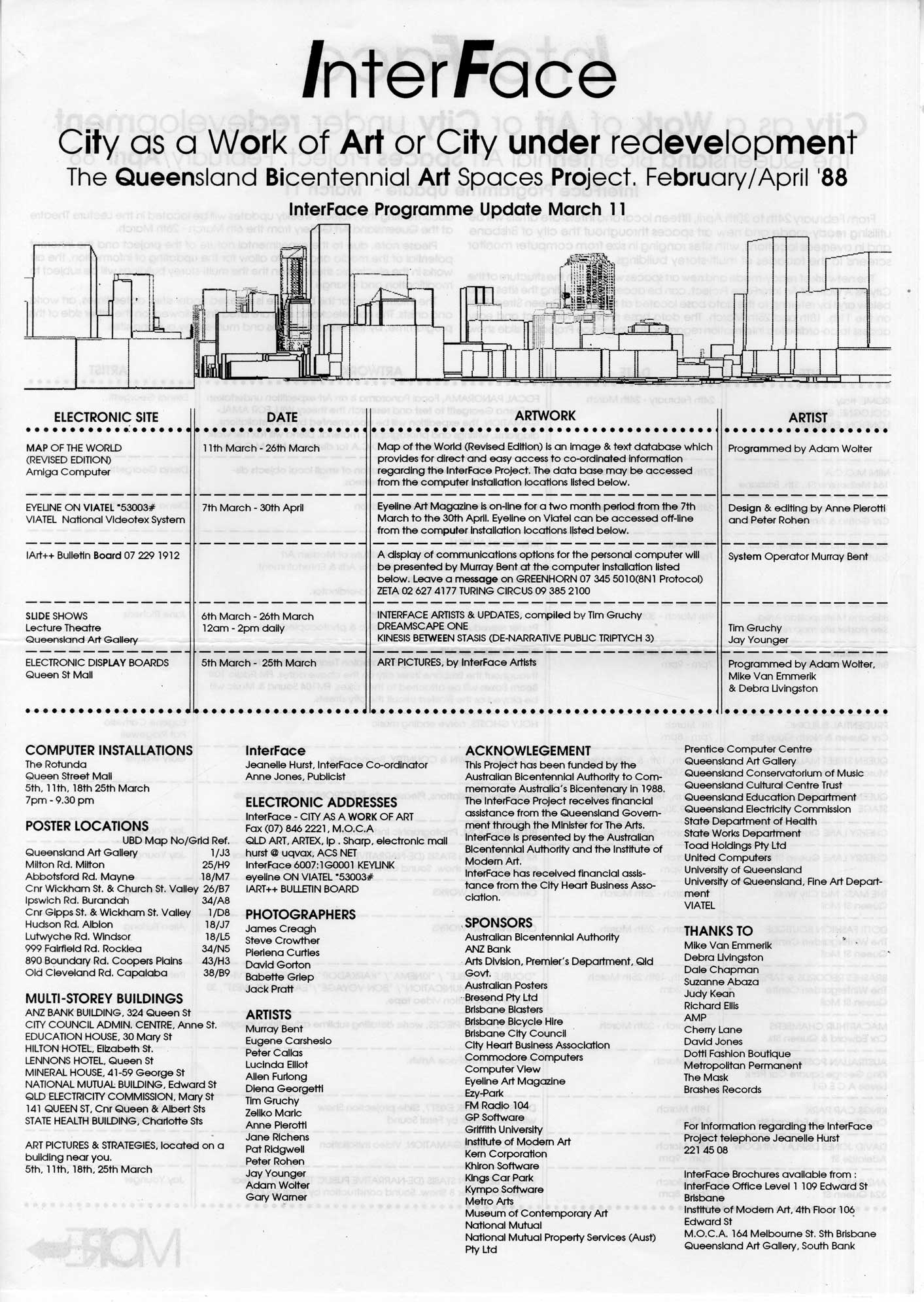
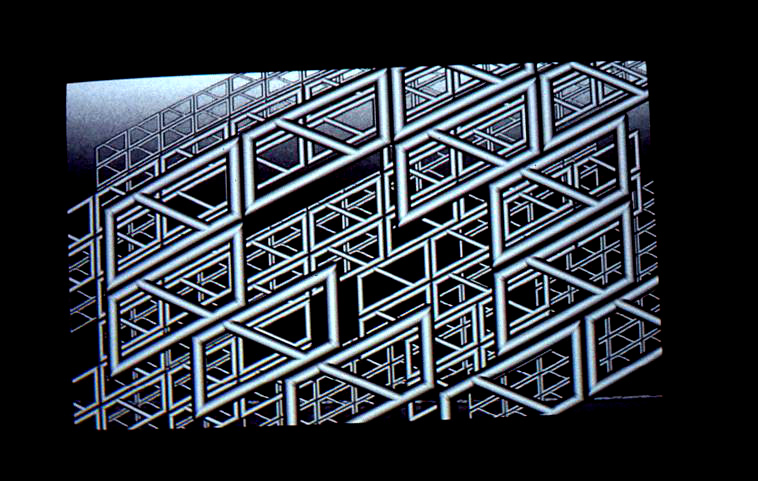
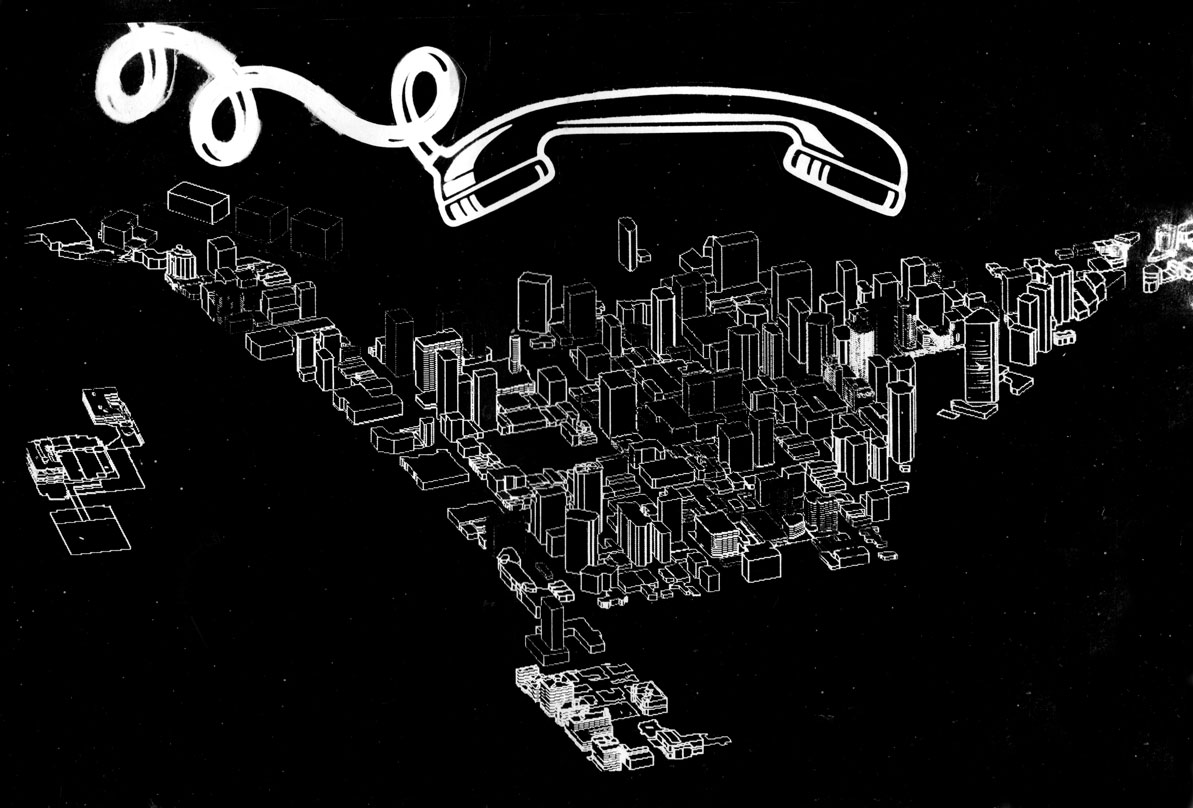
In late 1987, I found a company that had started wireframing Brisbane City using what was probably AutoCAD 3D. They gave me a printout of that early 3D modelling, which I used in the InterFace 88 promotion to illustrate moving through and around the cityscape.
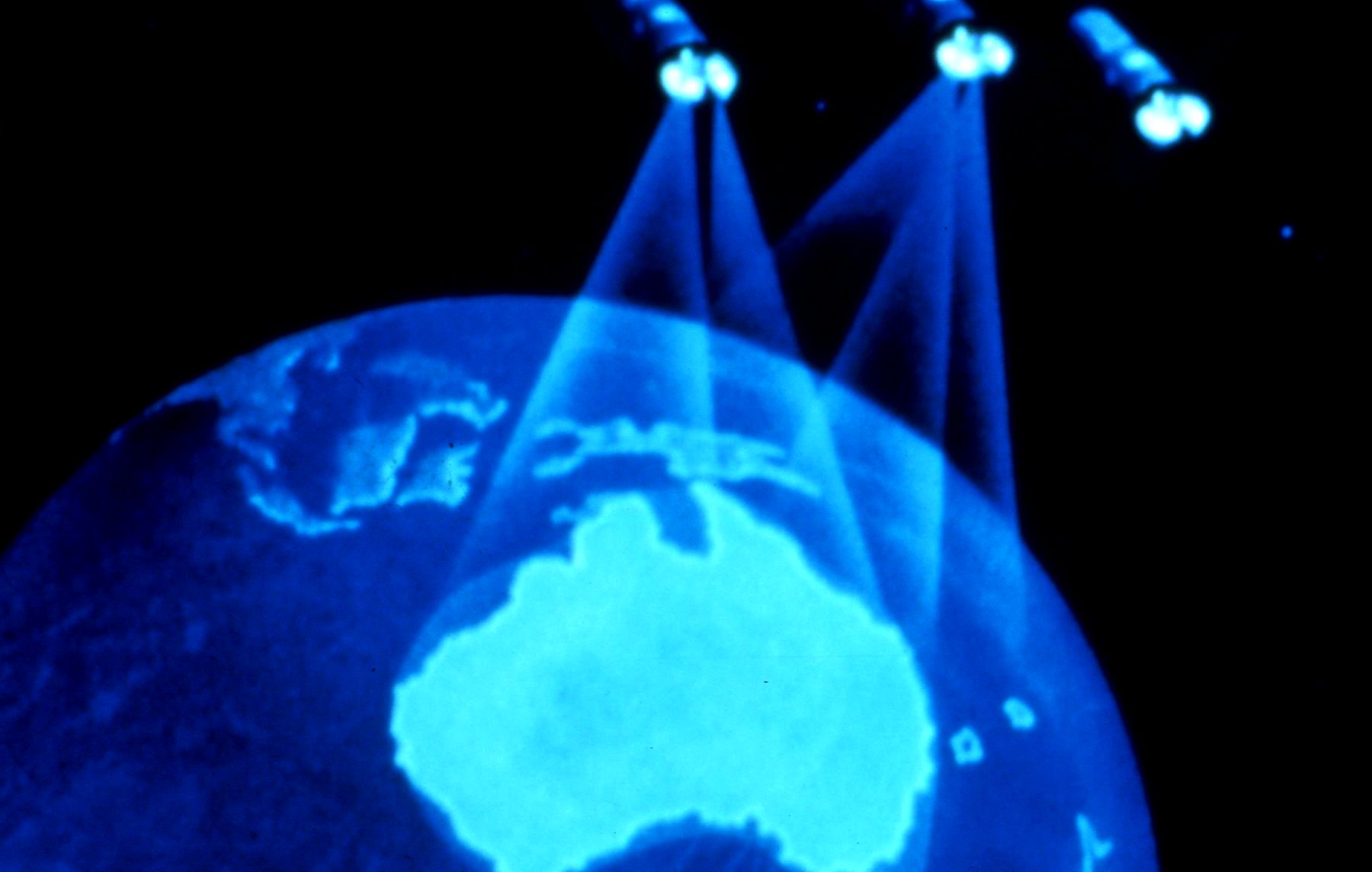
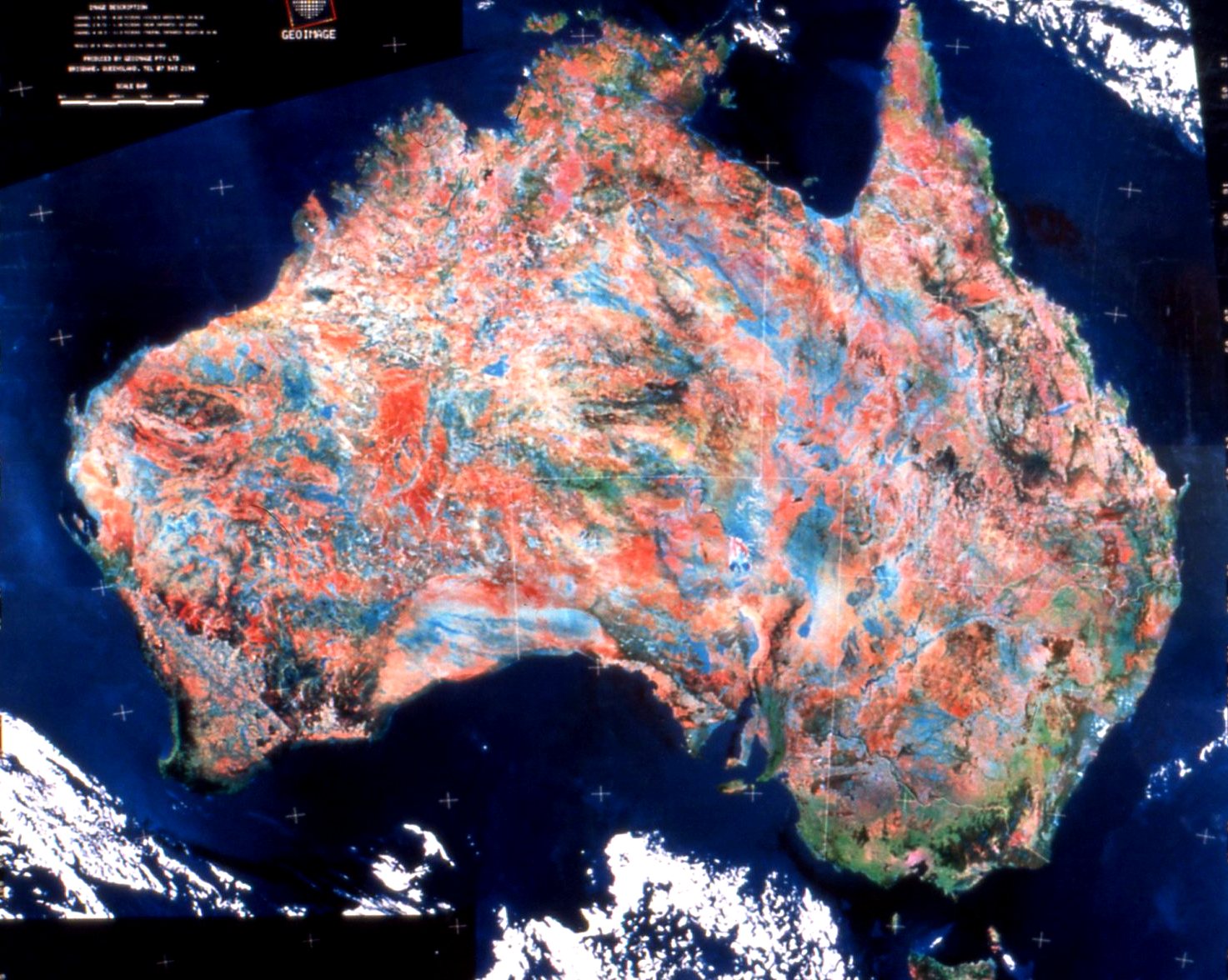
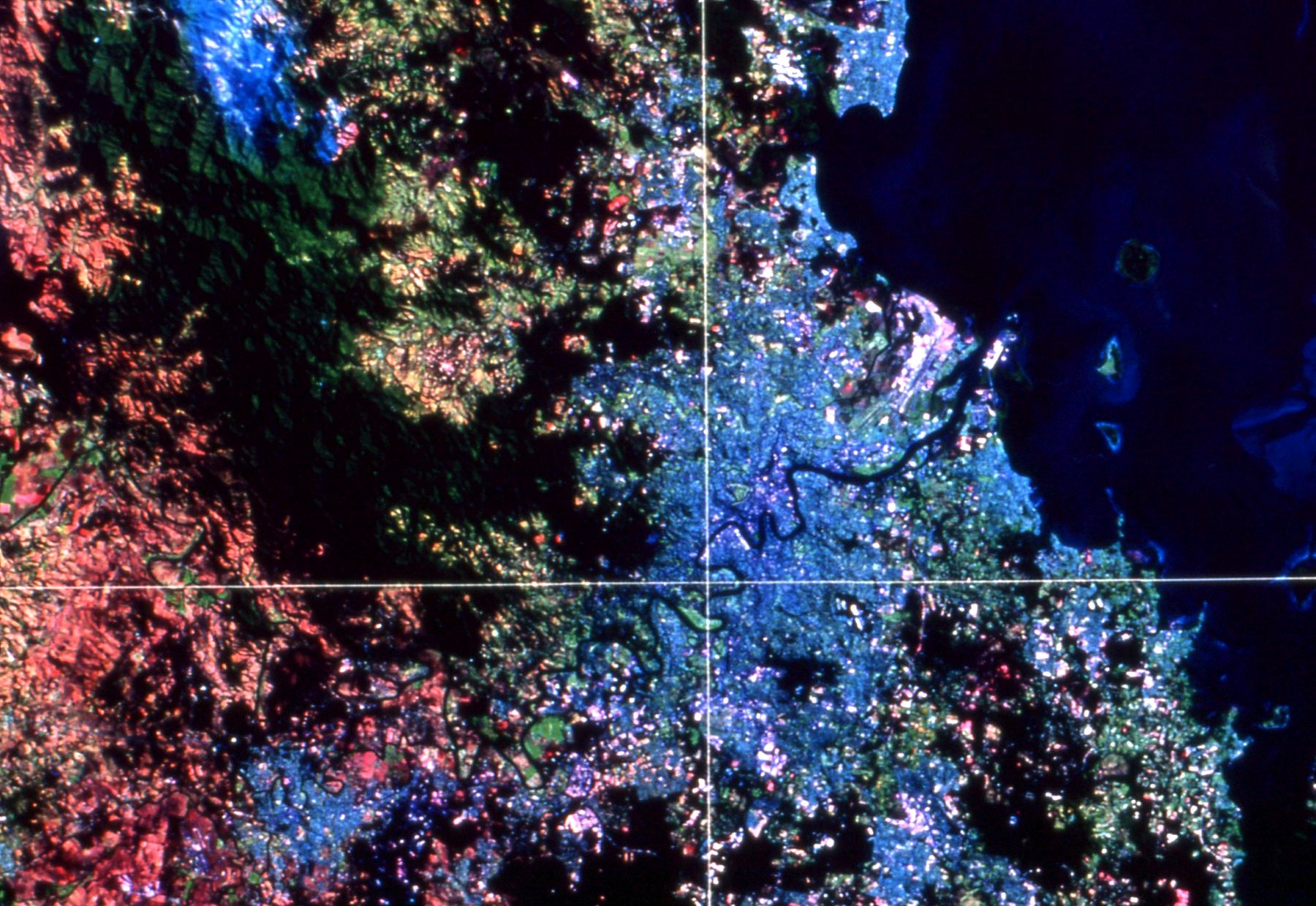
The 3D modelling mirrored how I was imagining and building the project in my mind… a kind of virtual reality modelling of the city that allowed me to navigate the logistics in the search for sites and activation.
the culture of experimentation & collaboration …
Bjelke Peterson had shut down the streets, with his particular brand of grievance politics in the late 70s, but seemingly forgot to lock away the keys to the built environment in the early 80s.
Jumping ship from the QCA (Queensland College of Art) in late 1981 and claiming space in the city in January 1992 was remarkably and unexpectedly easy… All we had to do was ask and strategically stay one step ahead of the demolition derby.
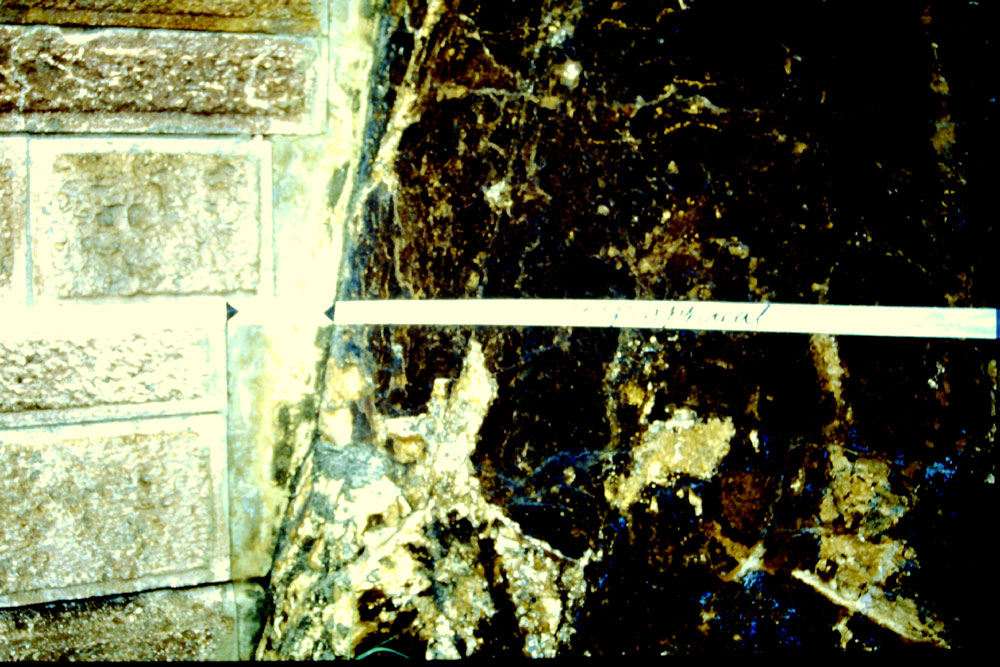
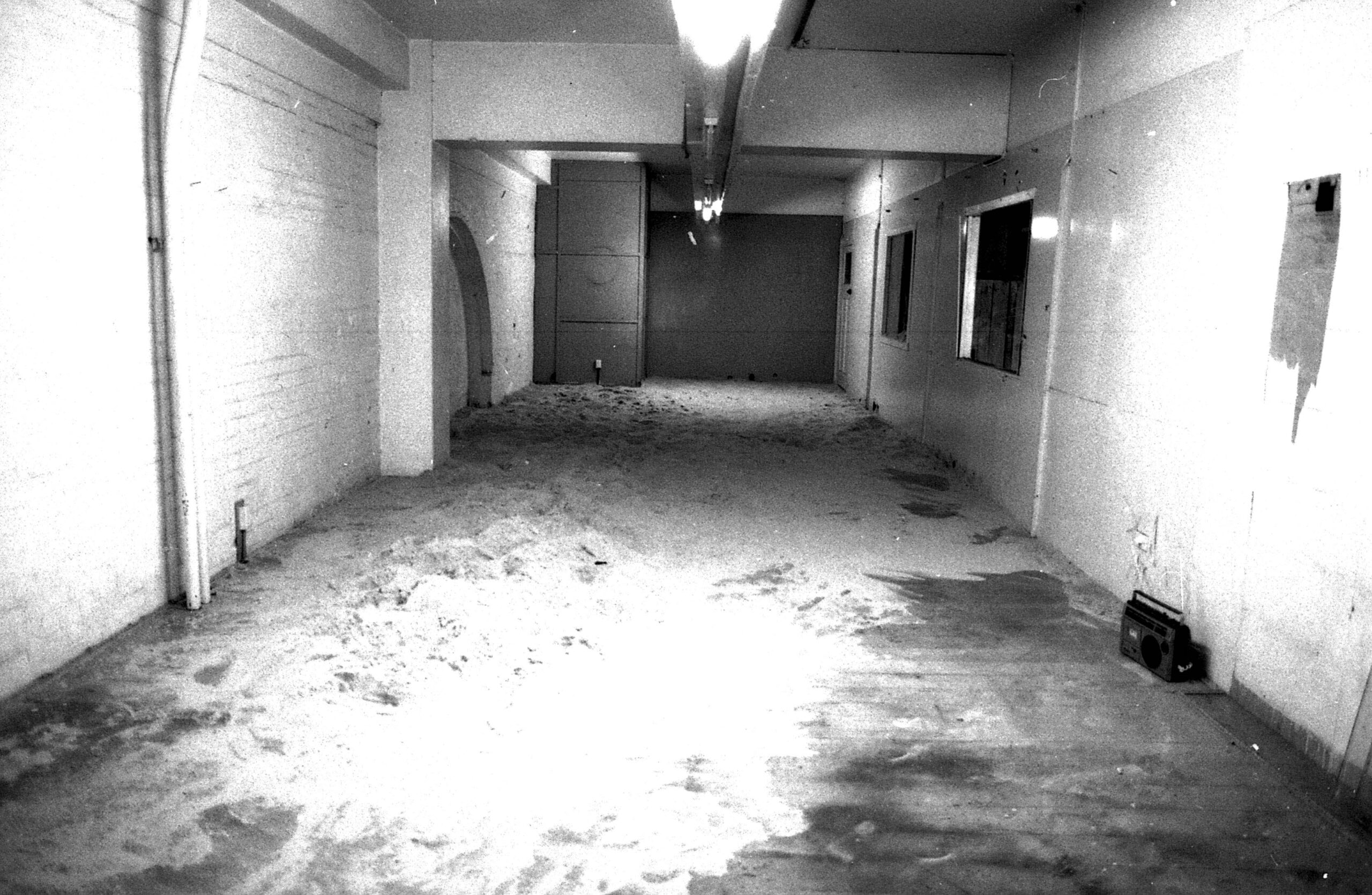
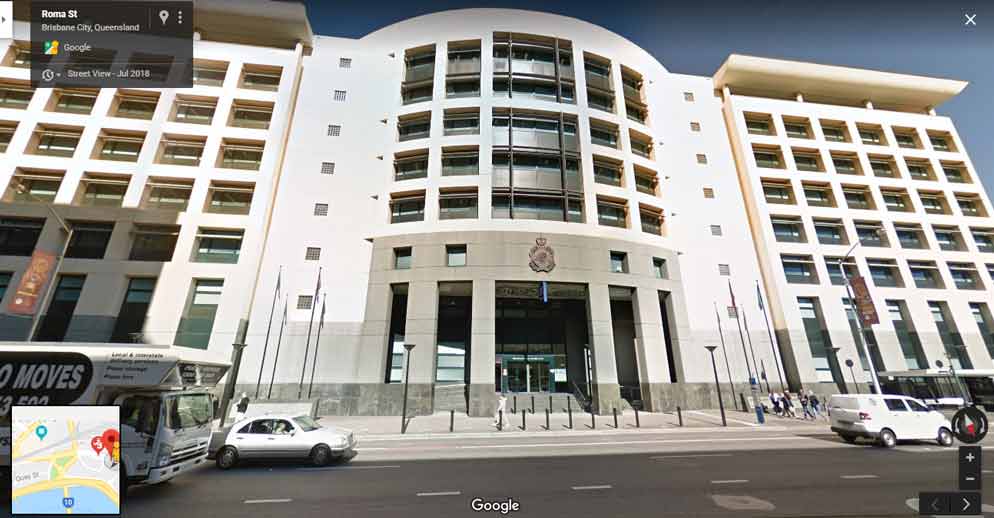
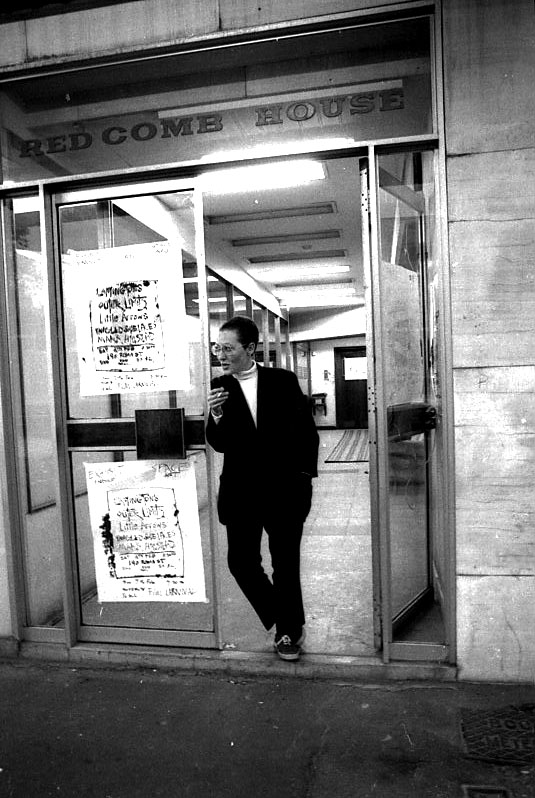
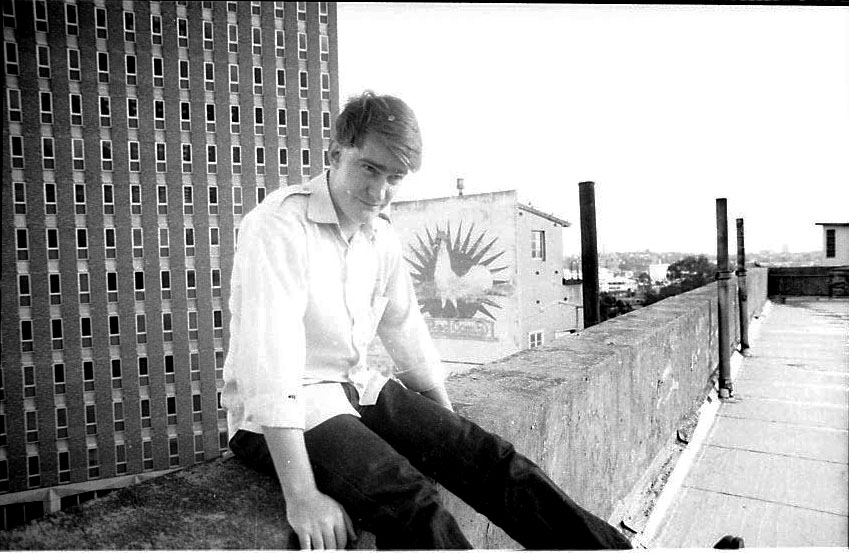
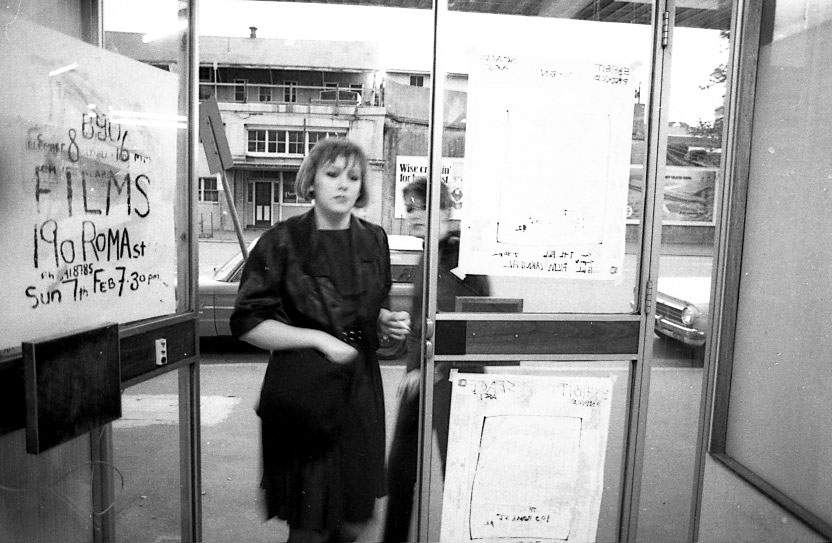
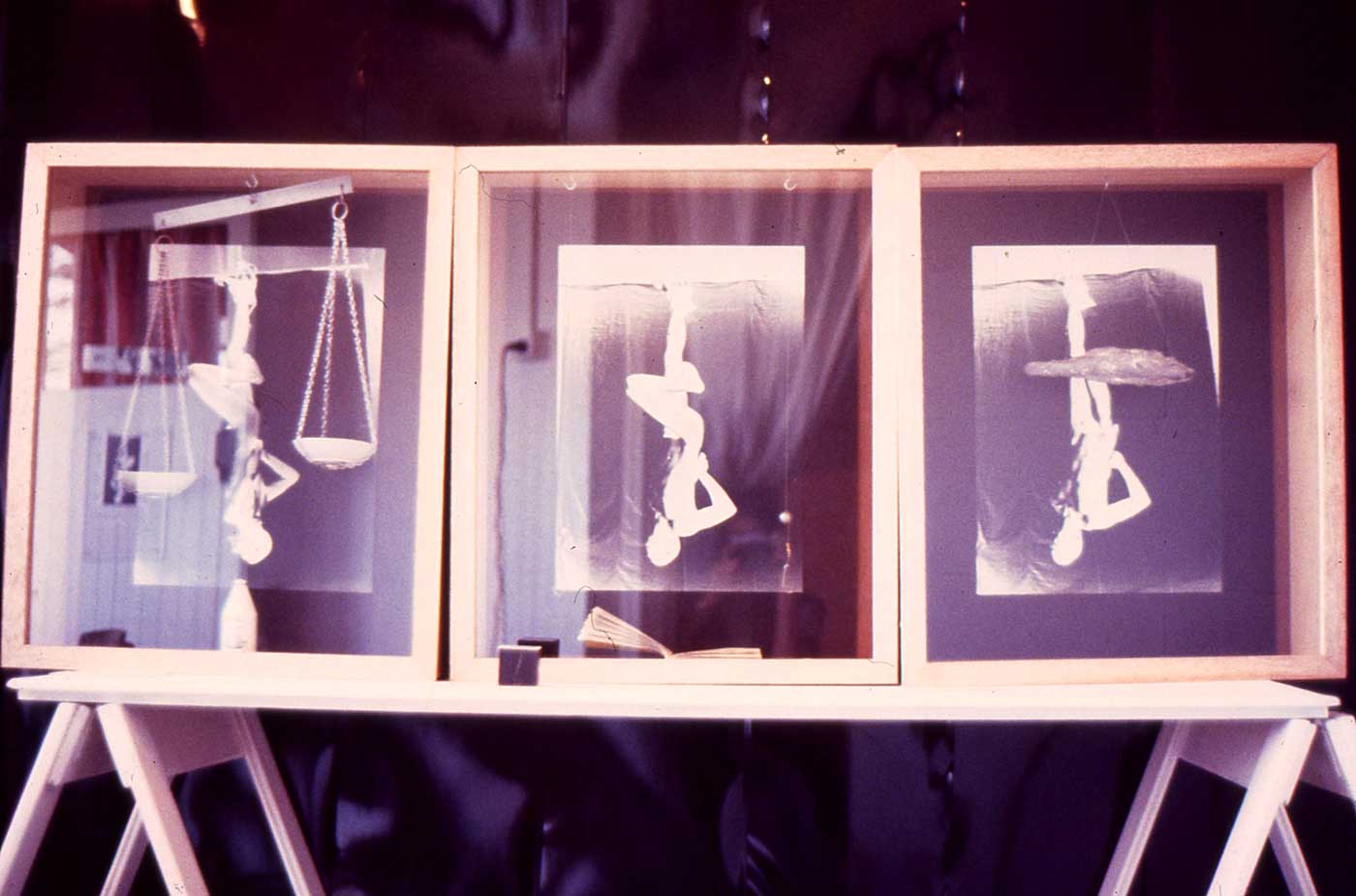
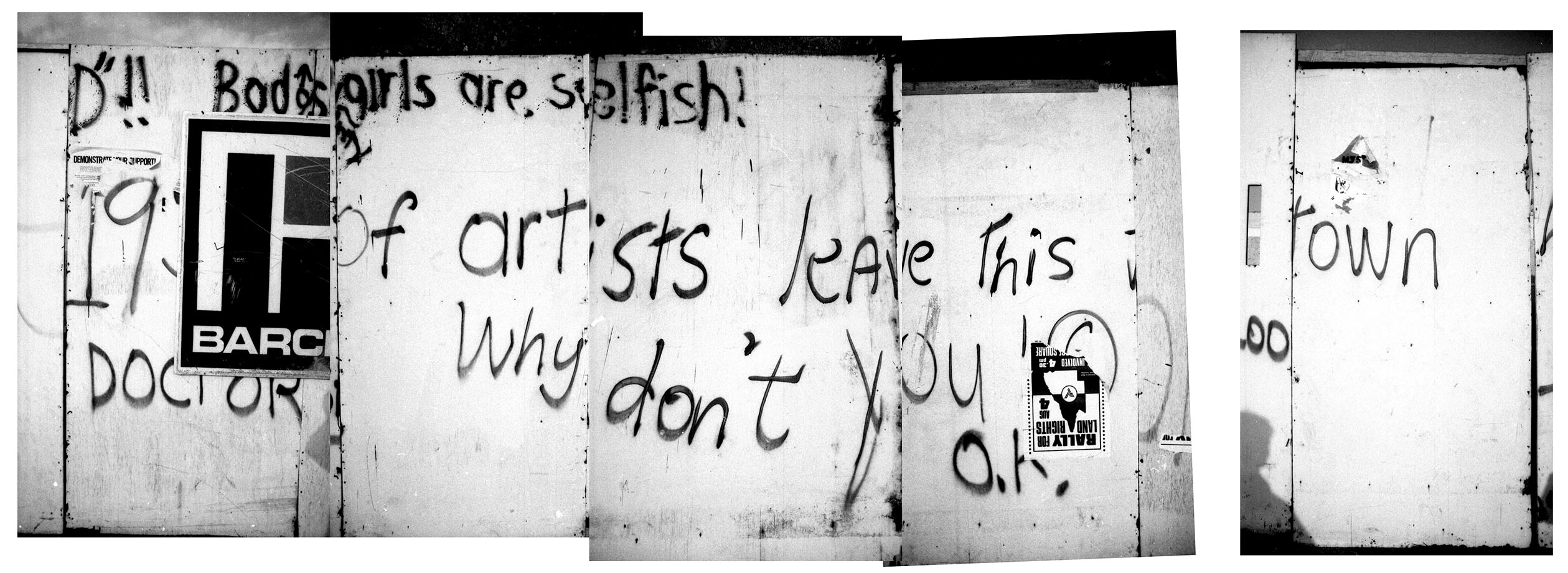
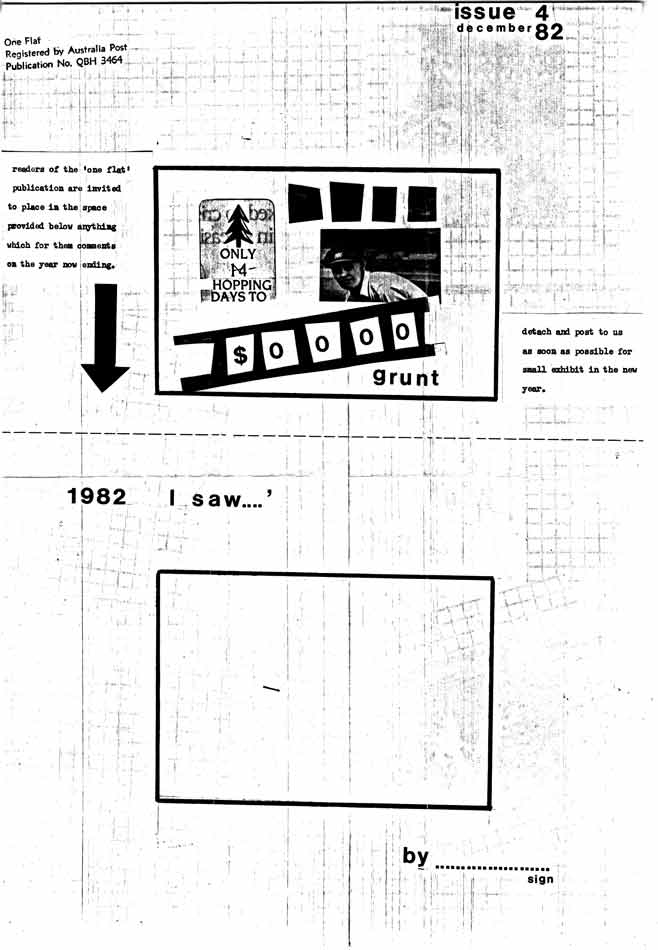
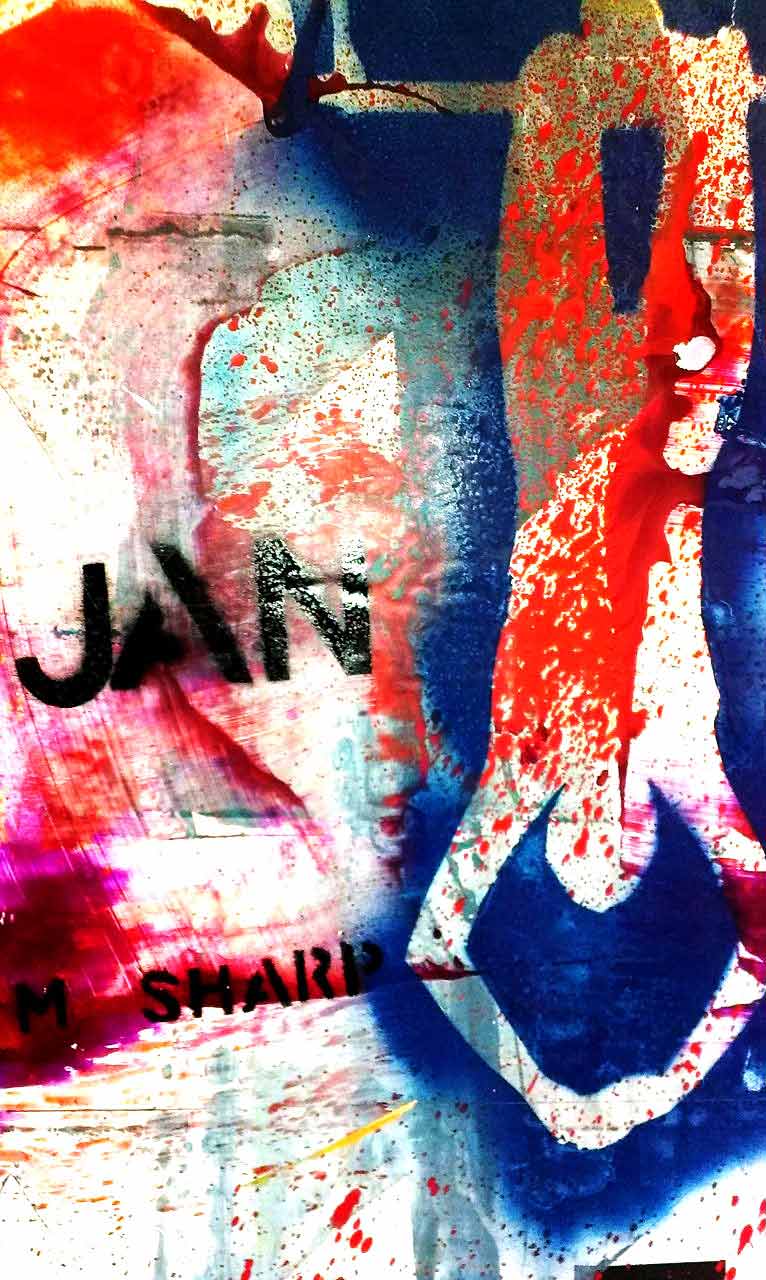
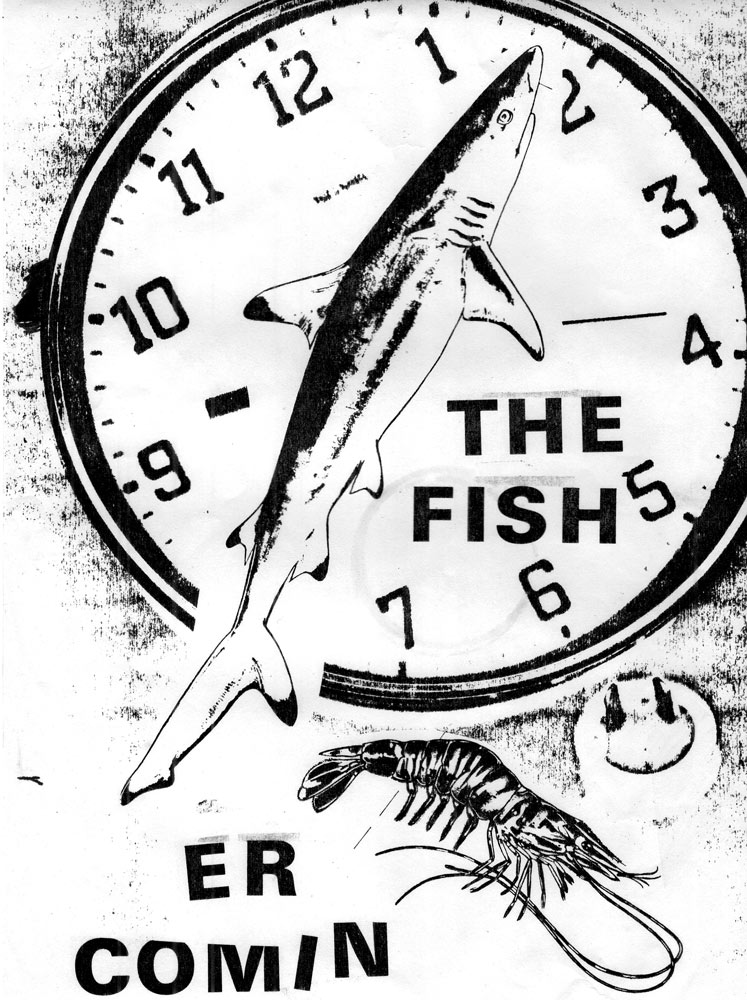
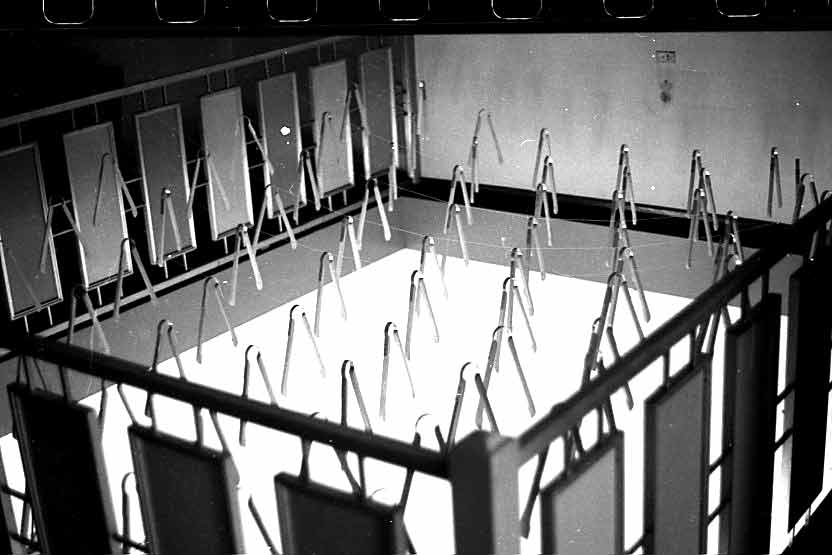
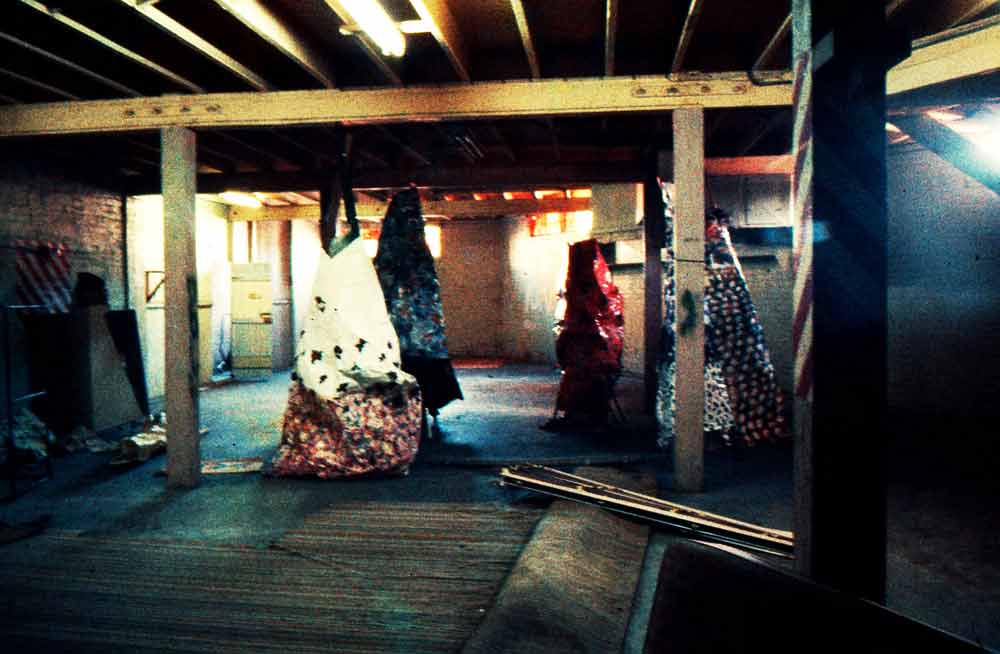
From 1982 to 1986 I was involved with five epicenters of creative action (Artist Run Spaces) in Brisbane: Red Comb House was an industrial-grade, five-story grain distribution center in Roma Street close to the center of the city, demolished in 1984 to make way for the new Police Headquarters; One Flat, a two-bedroom flat in South Brisbane overlooked Musgrave Park which housed the tent city for the Indigenous Land Rights protests of 82; One Flat George Street Branch, a disused bank building with an underground vault; O’Flate Studios in a warehouse space in Fortitude Valley; and the O’Flate Art Safari across Australia.
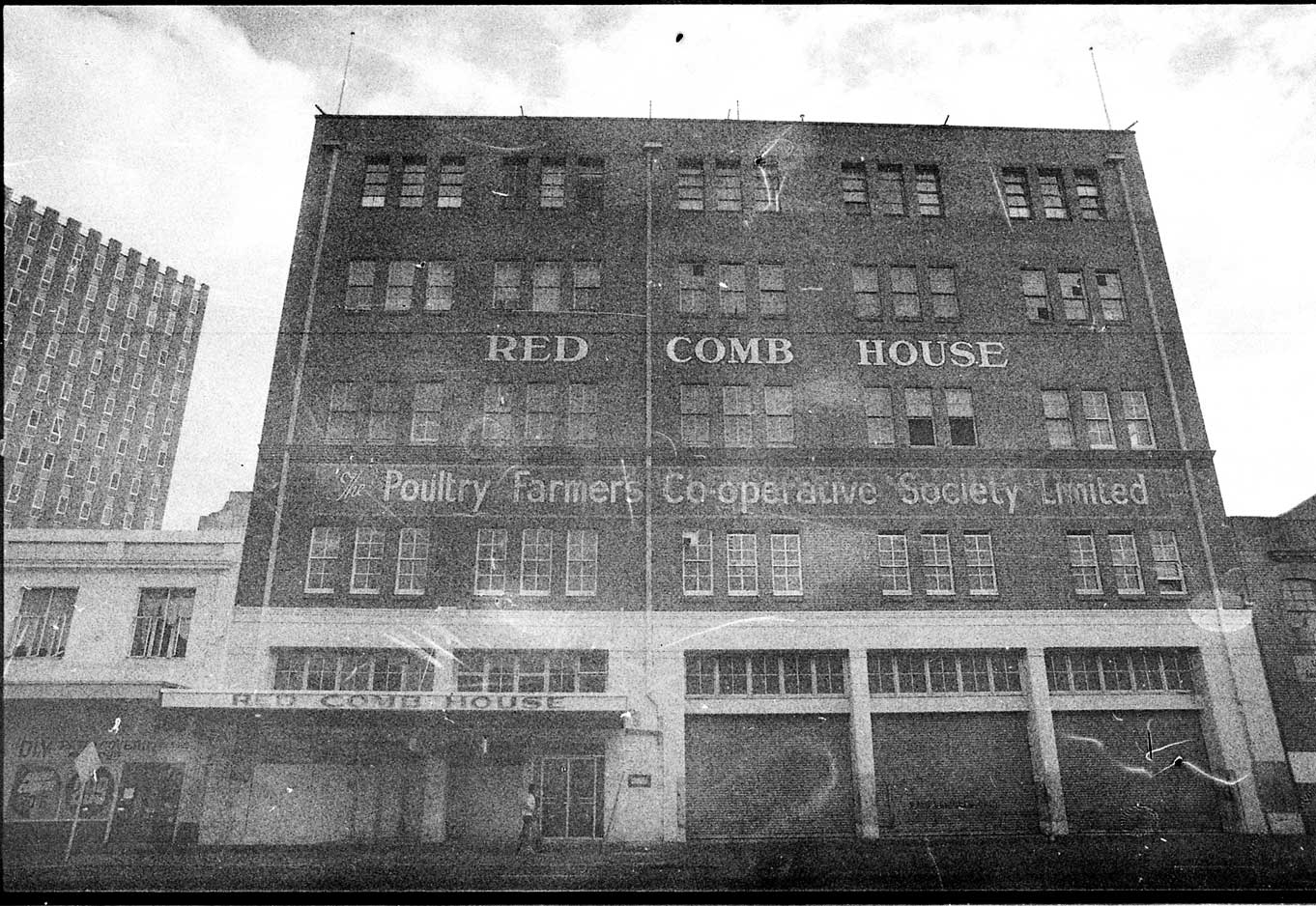
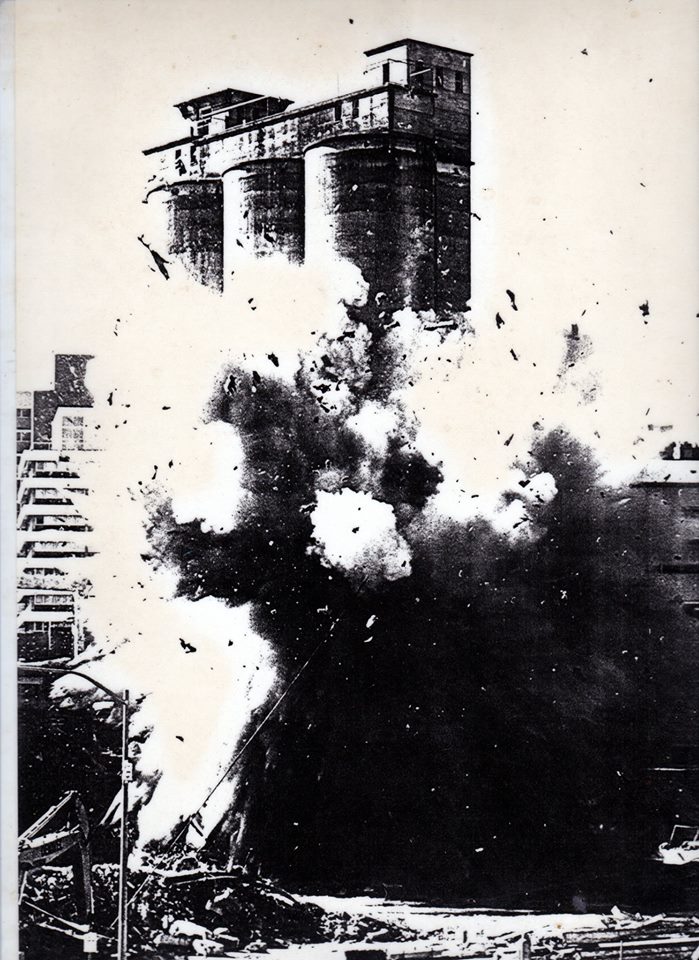
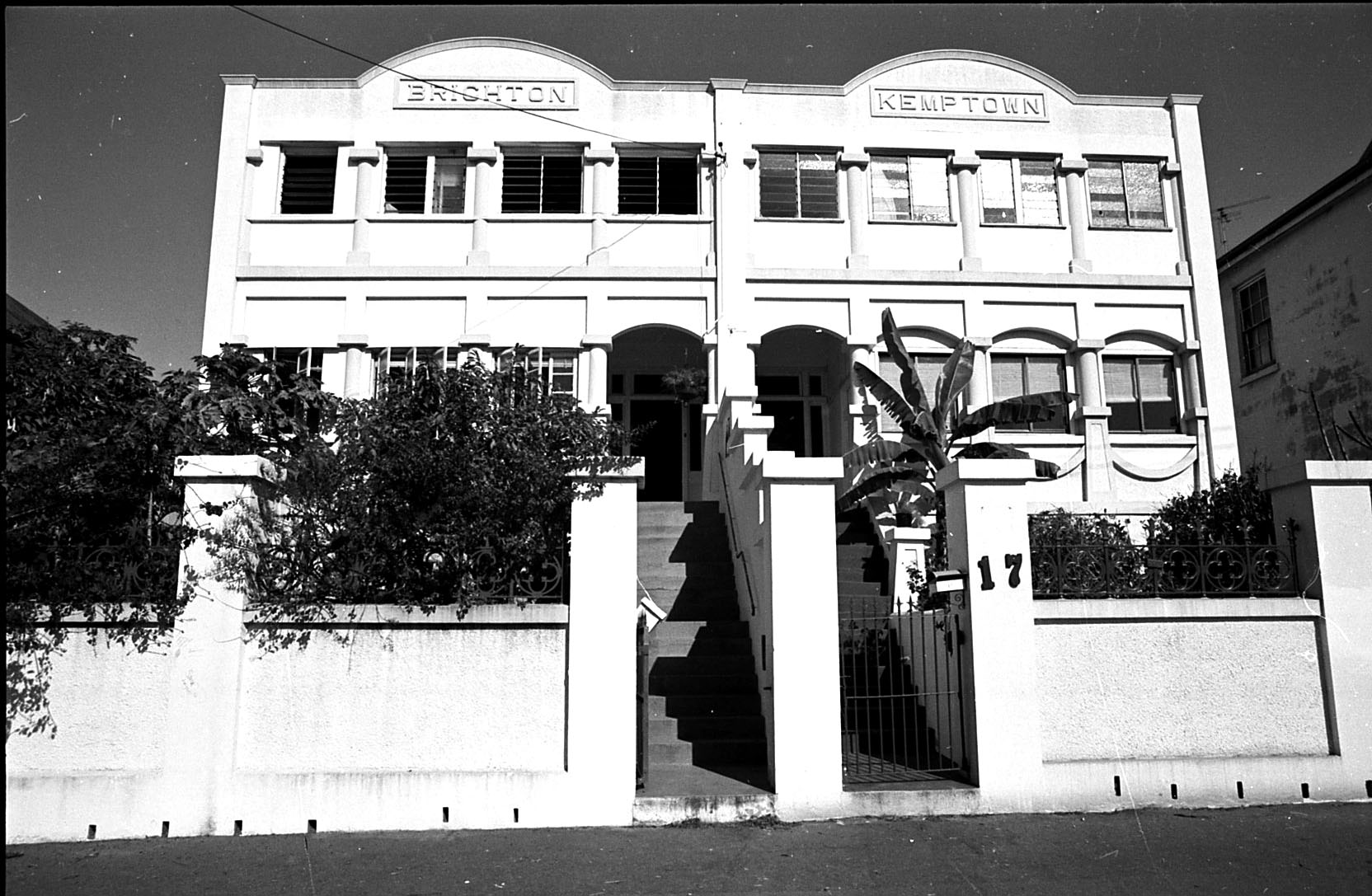
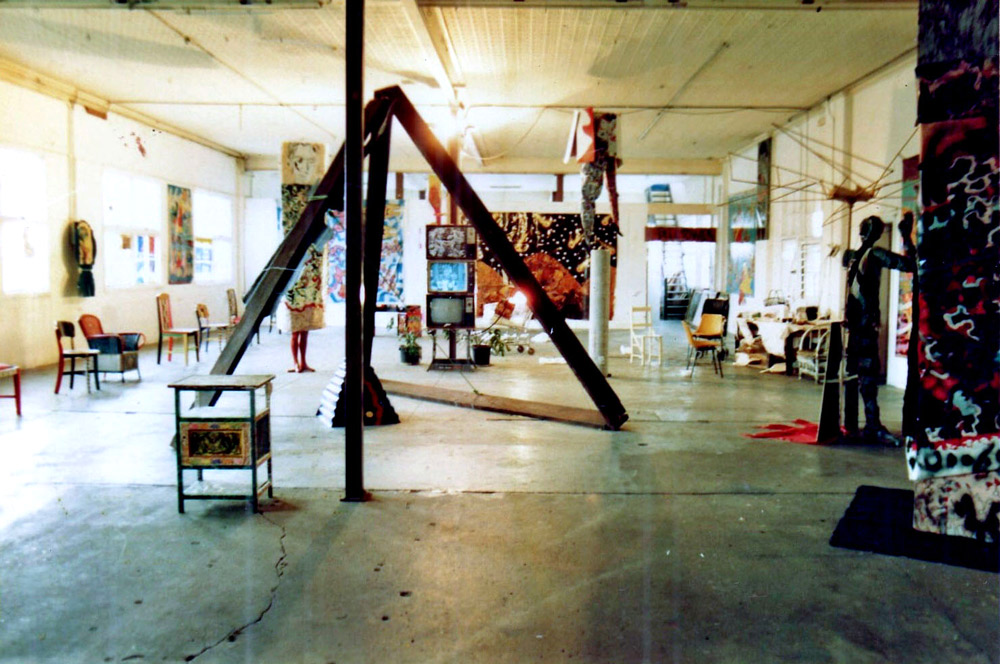
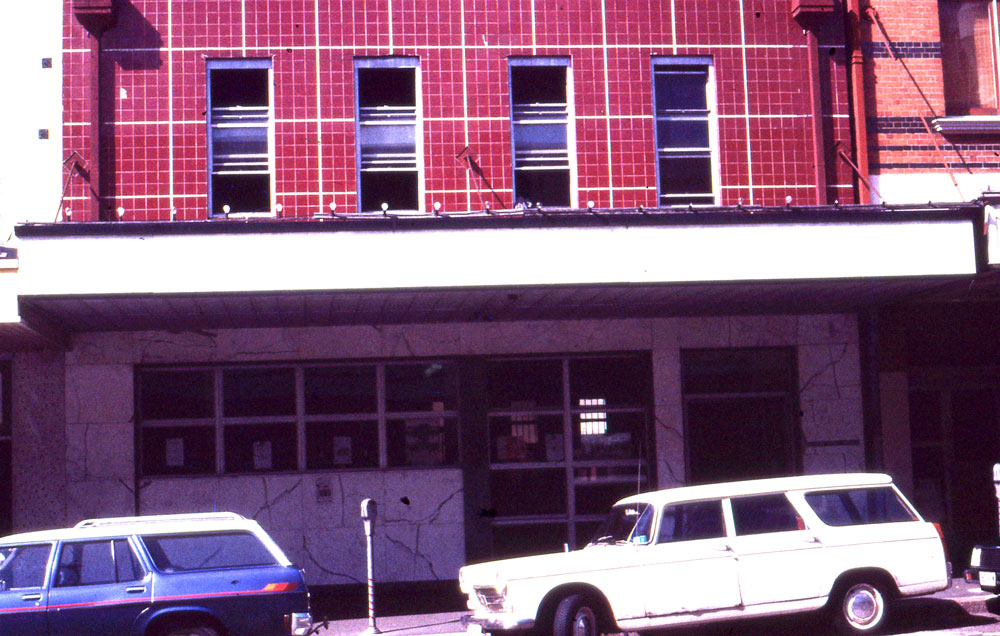
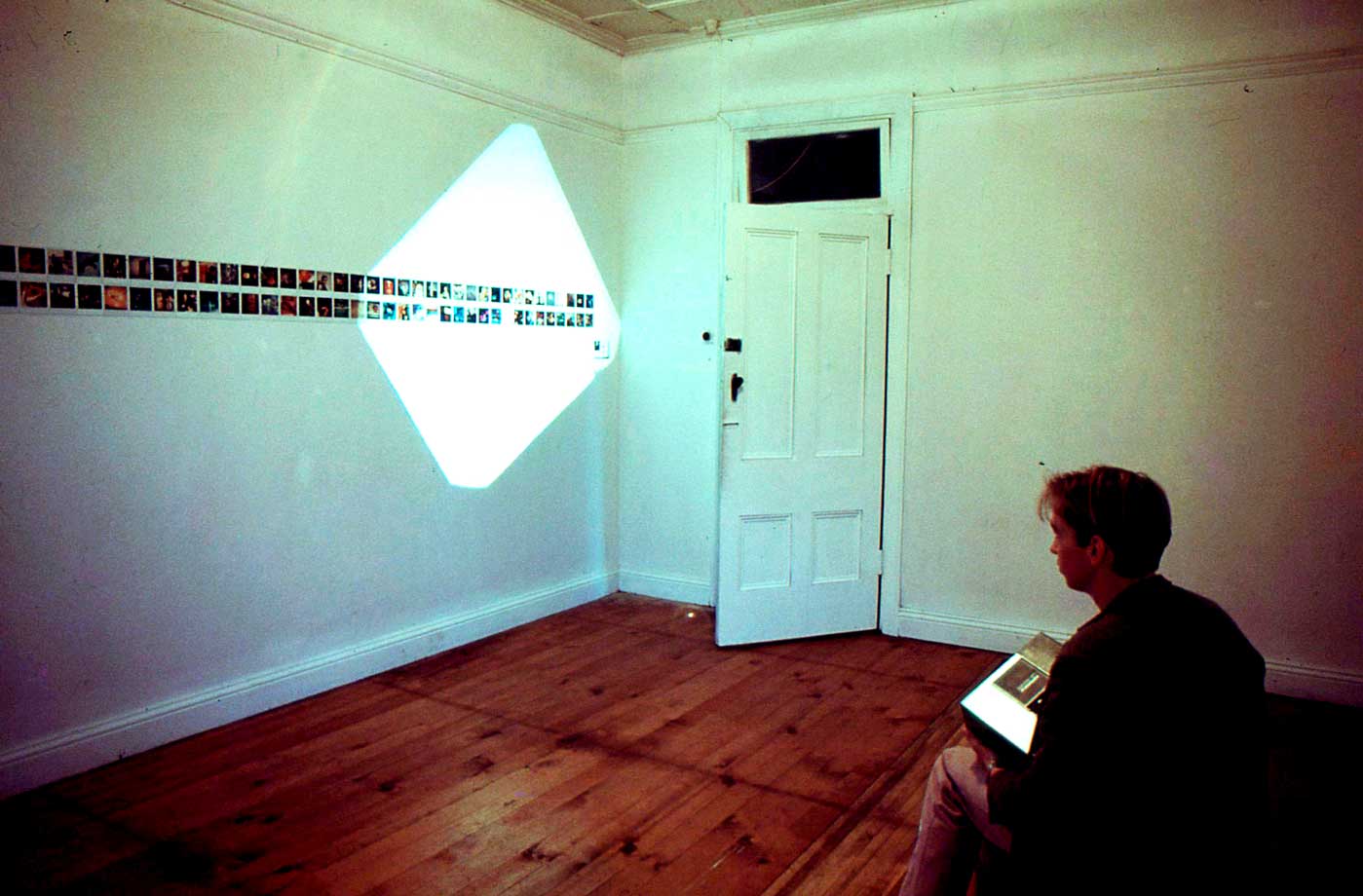
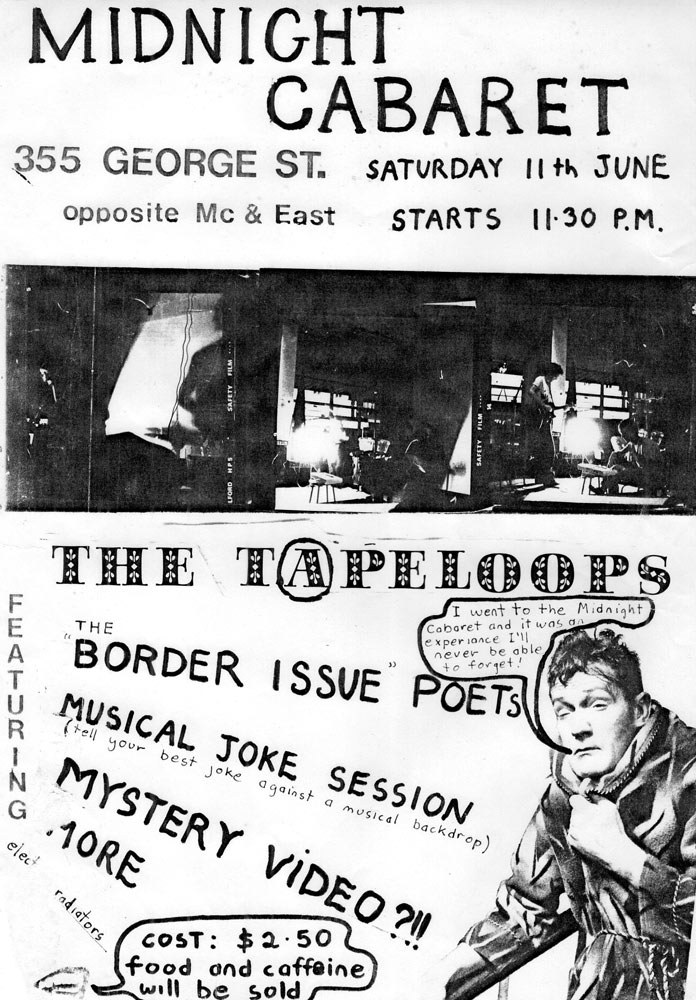
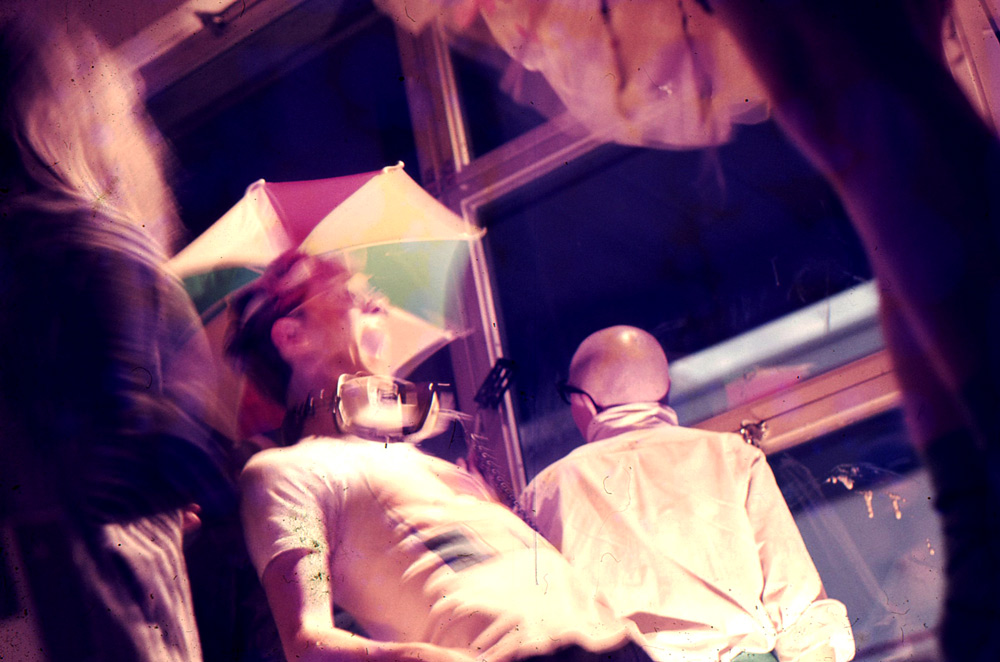
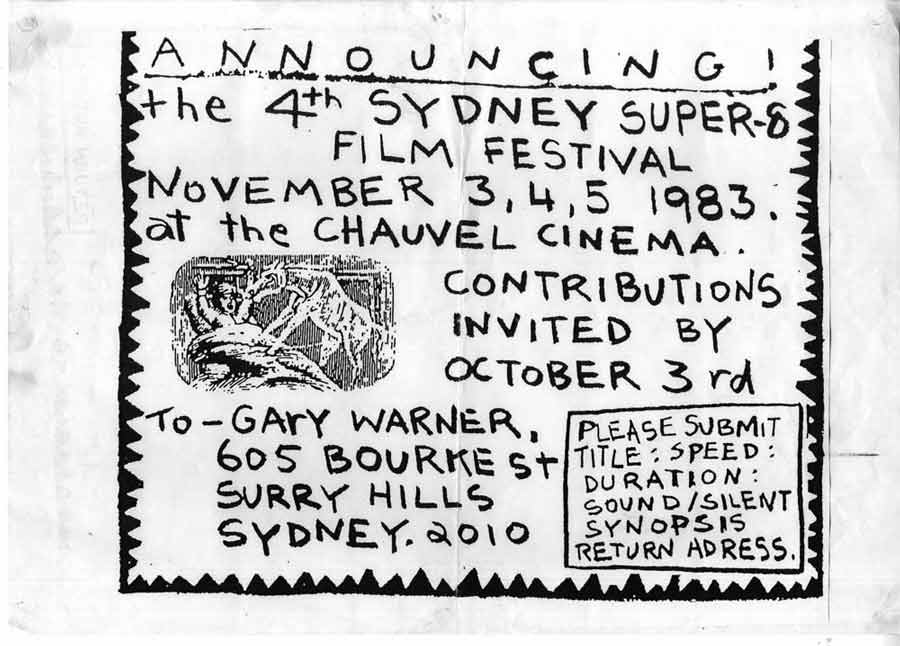
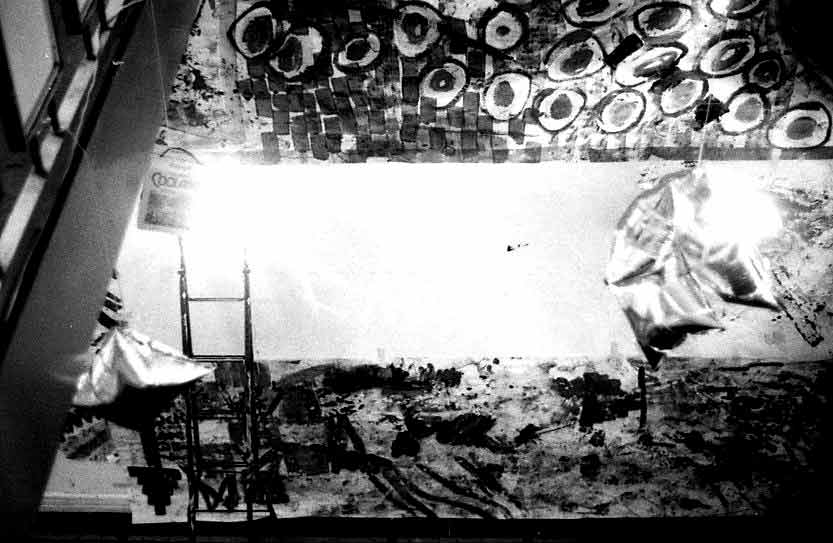
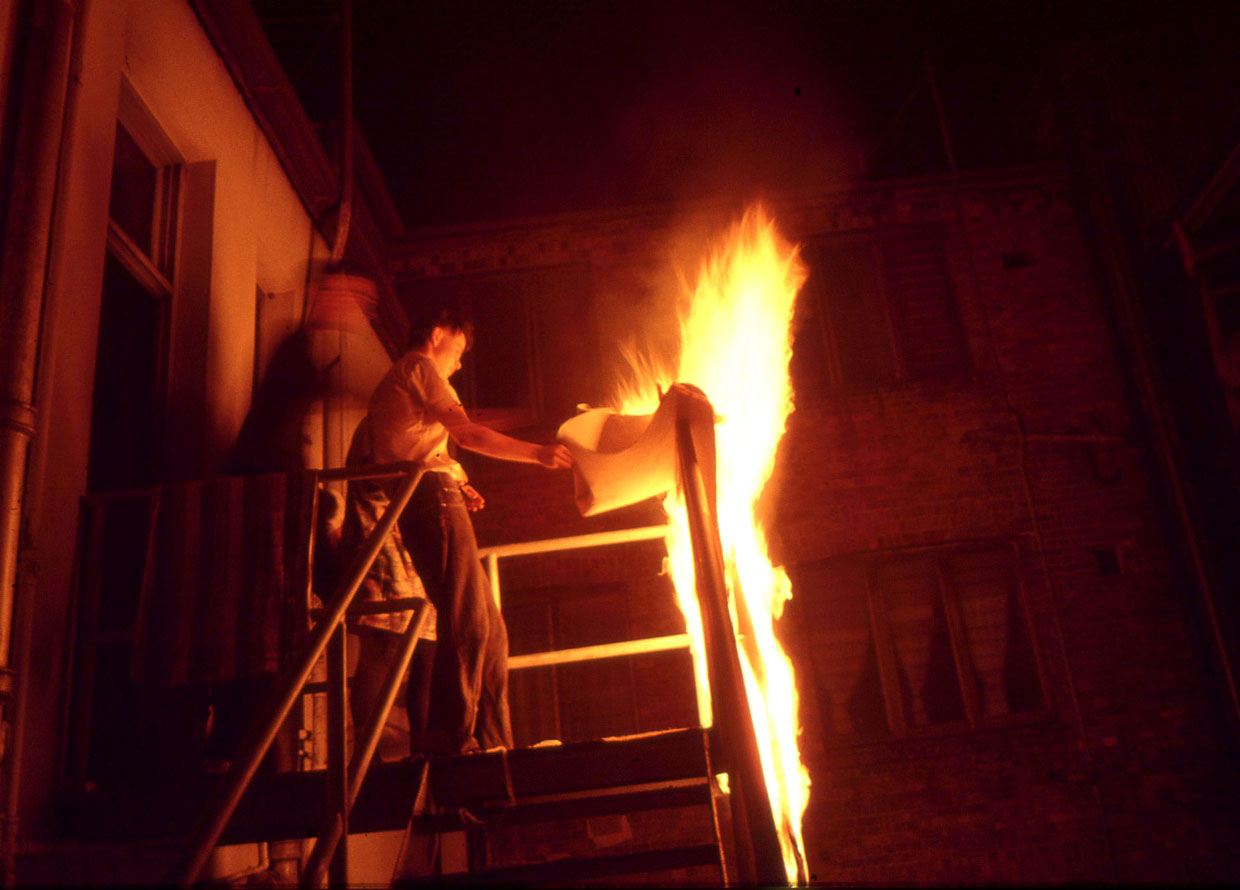
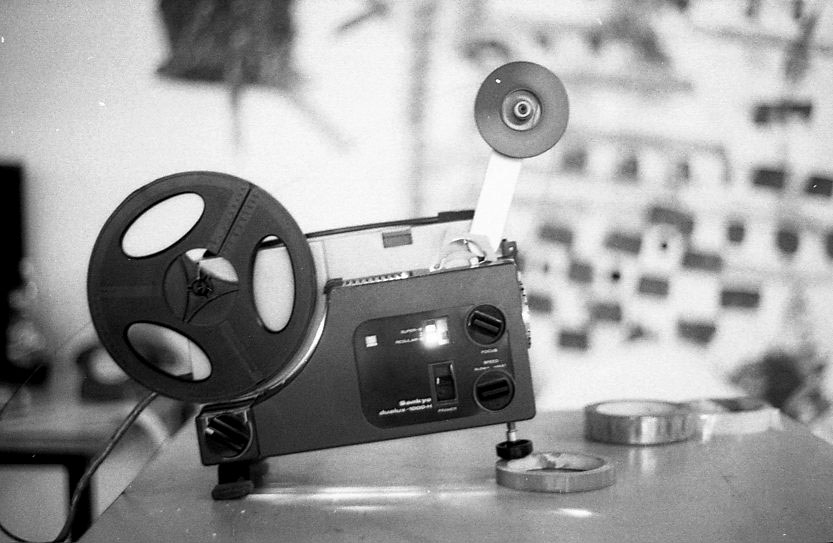
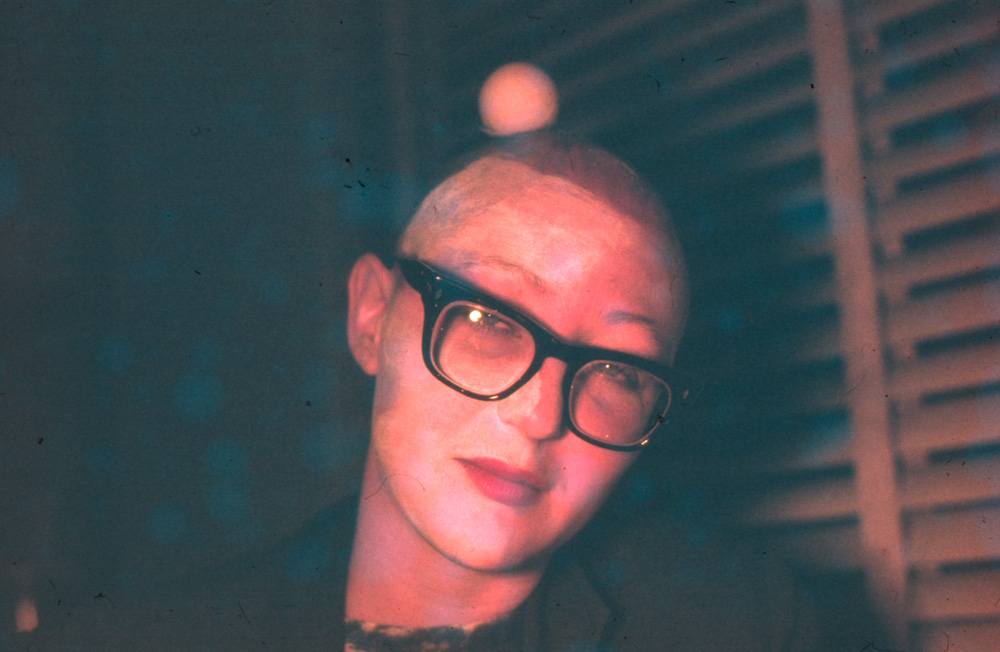
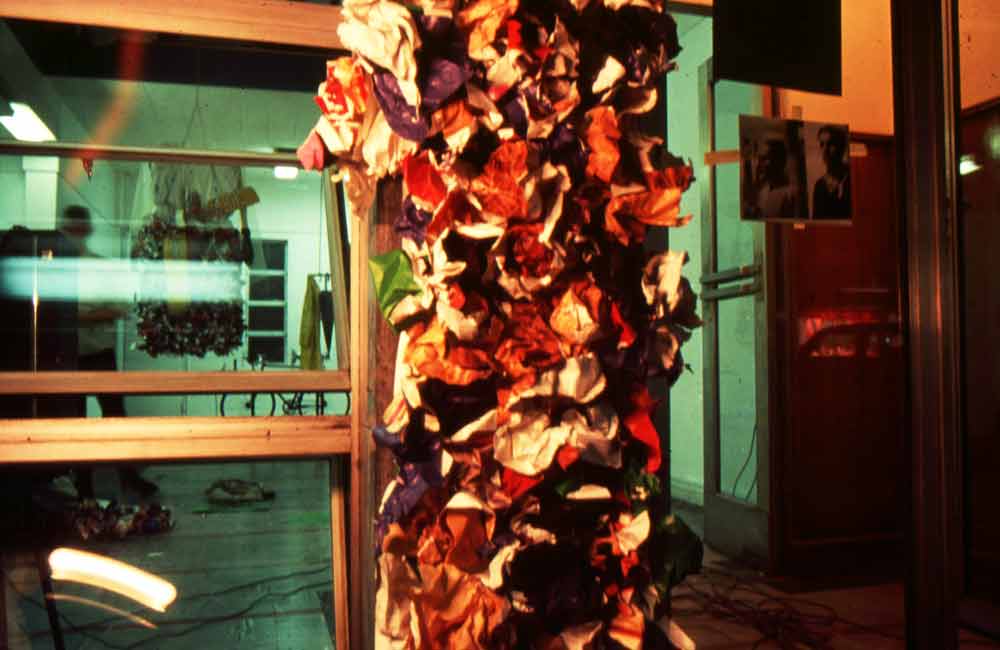
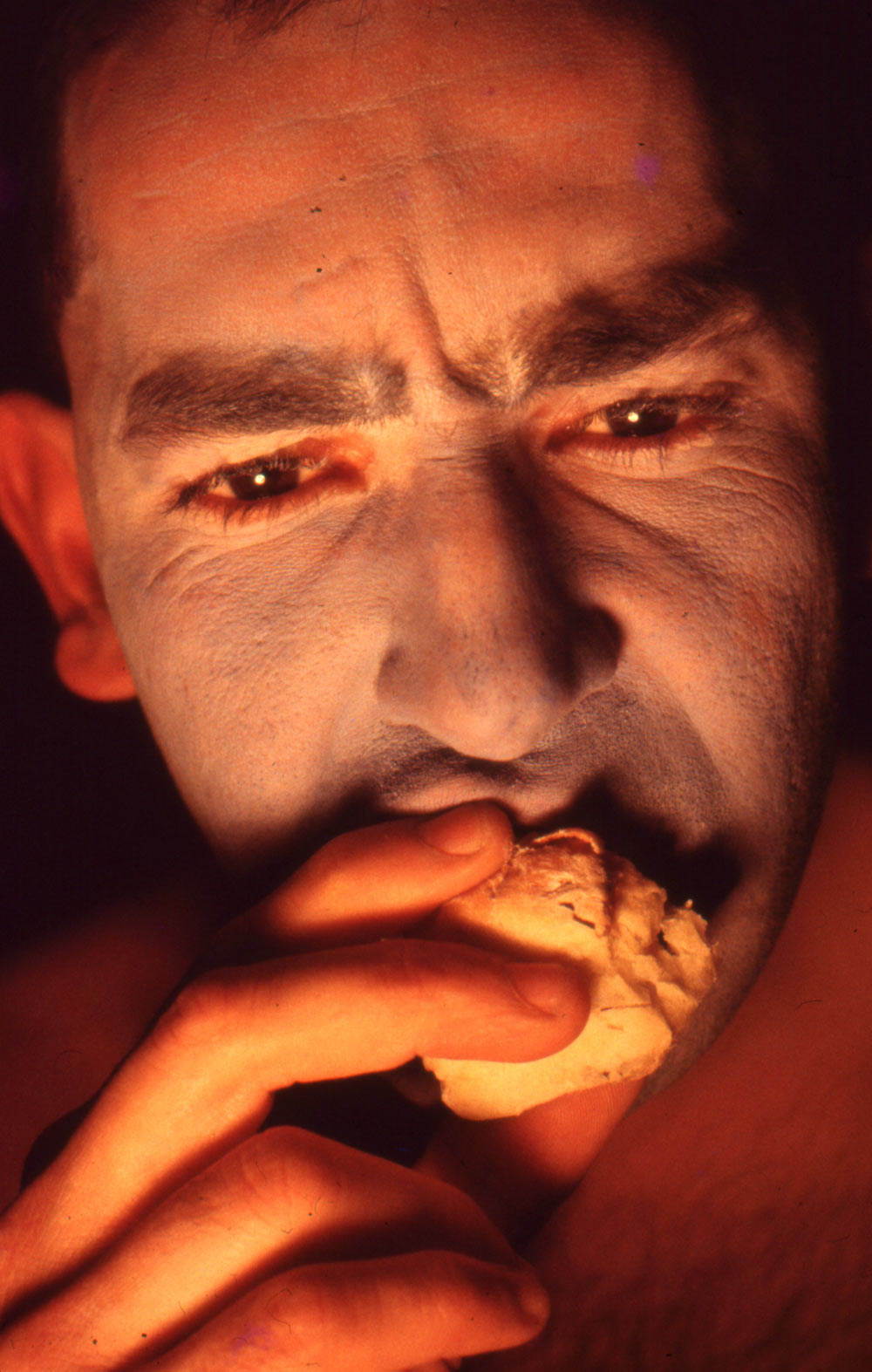
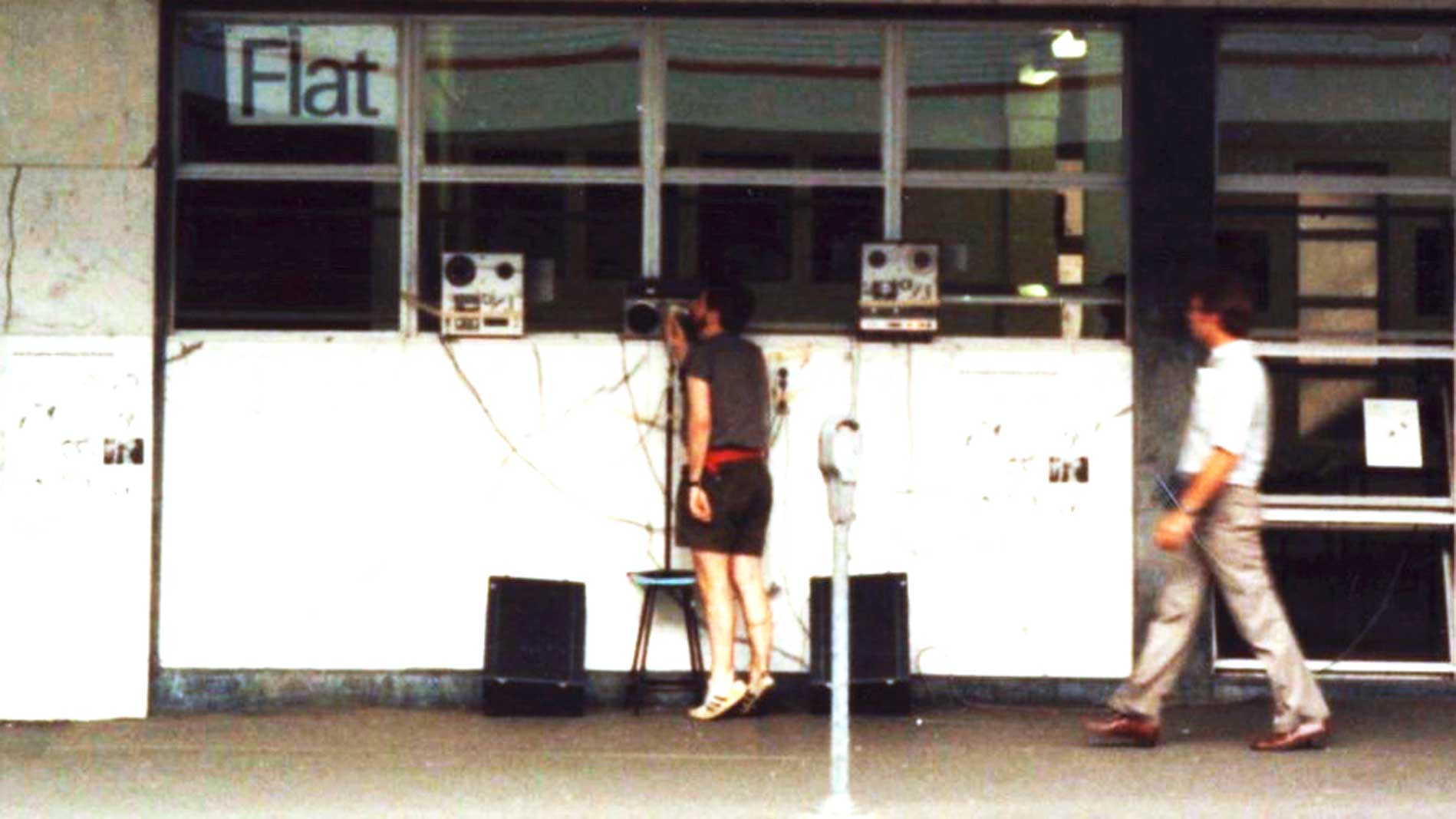
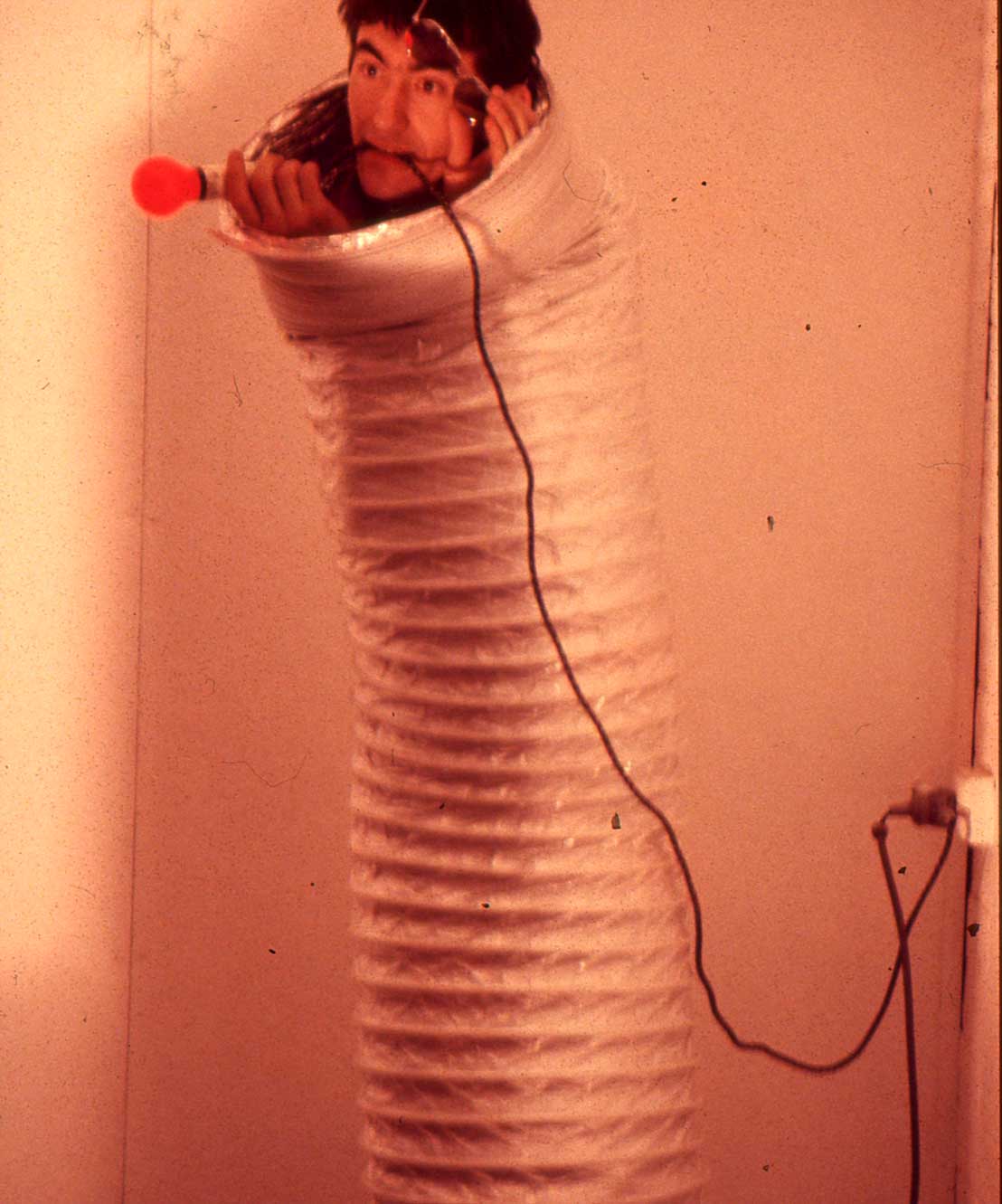
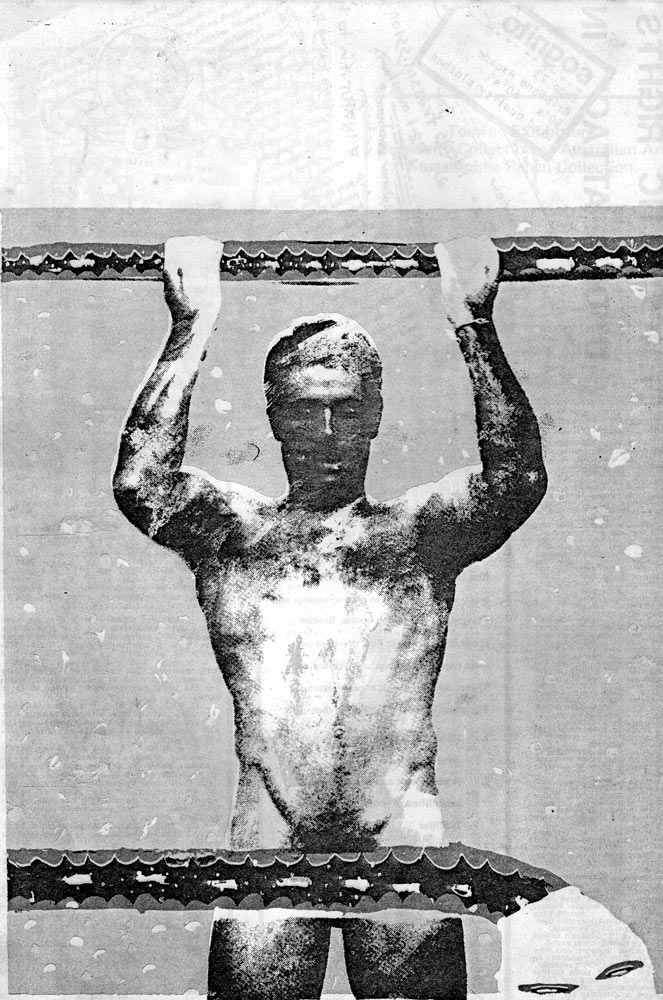
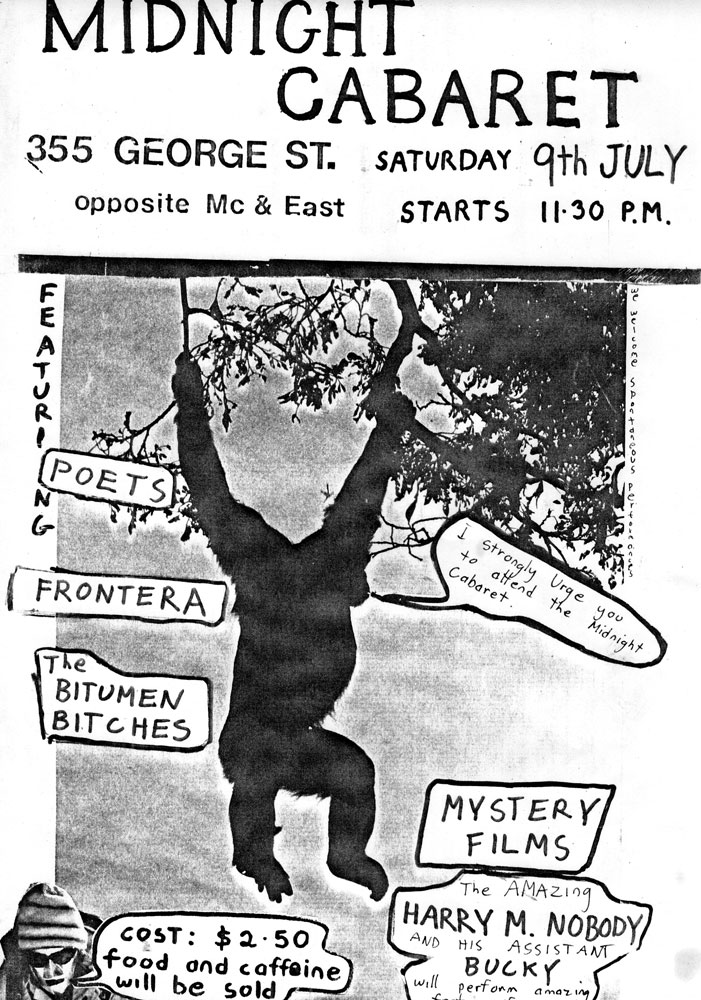
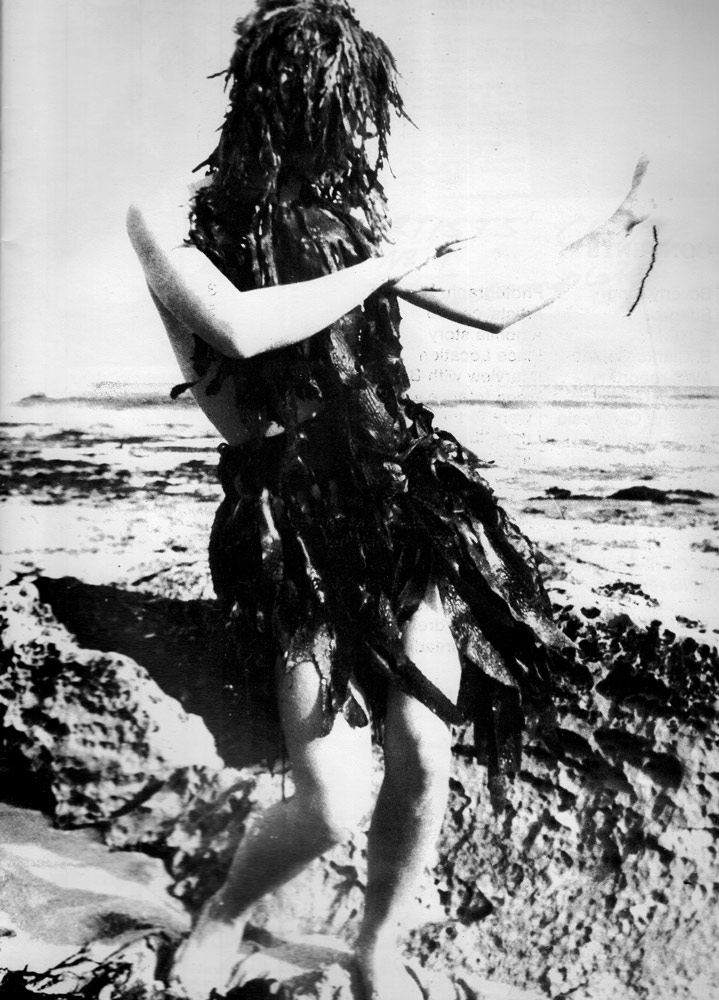
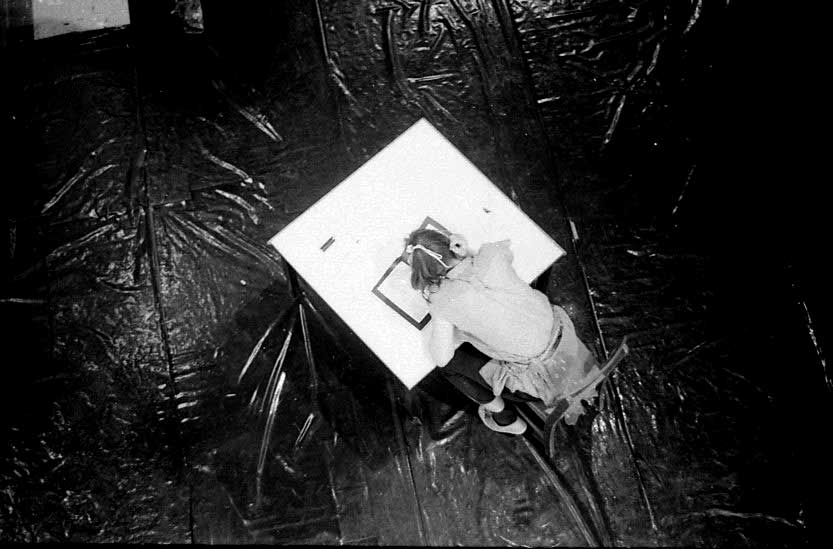
These sites + off-site locations hosted dozens of exhibitions, multiple pop-up performances, installations, music, mixed media events, film screenings, and midnight cabarets.
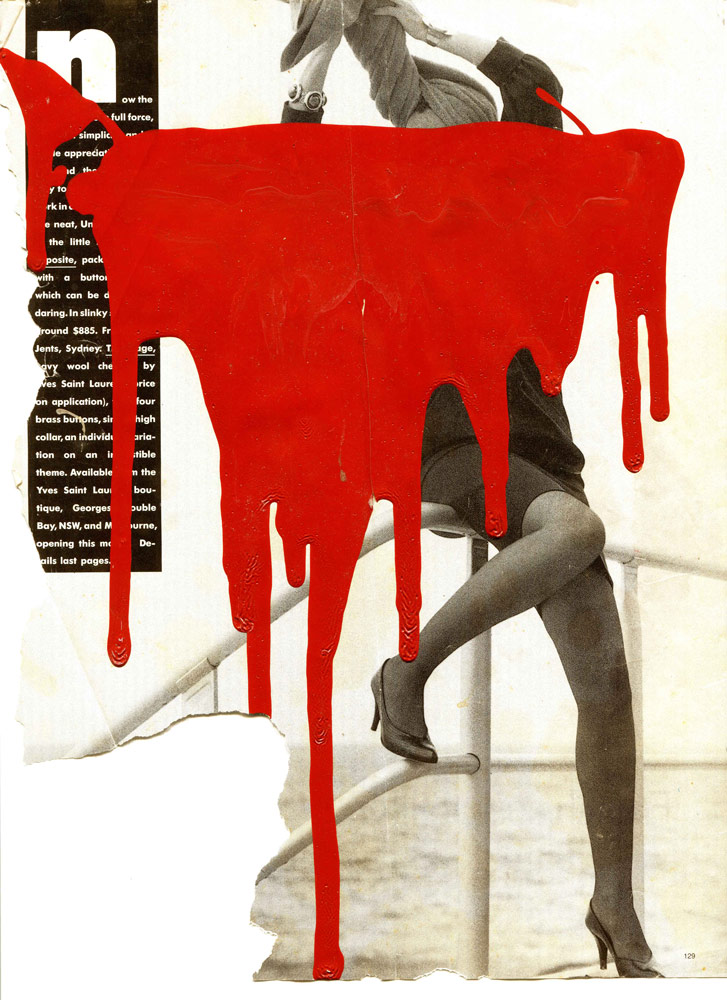
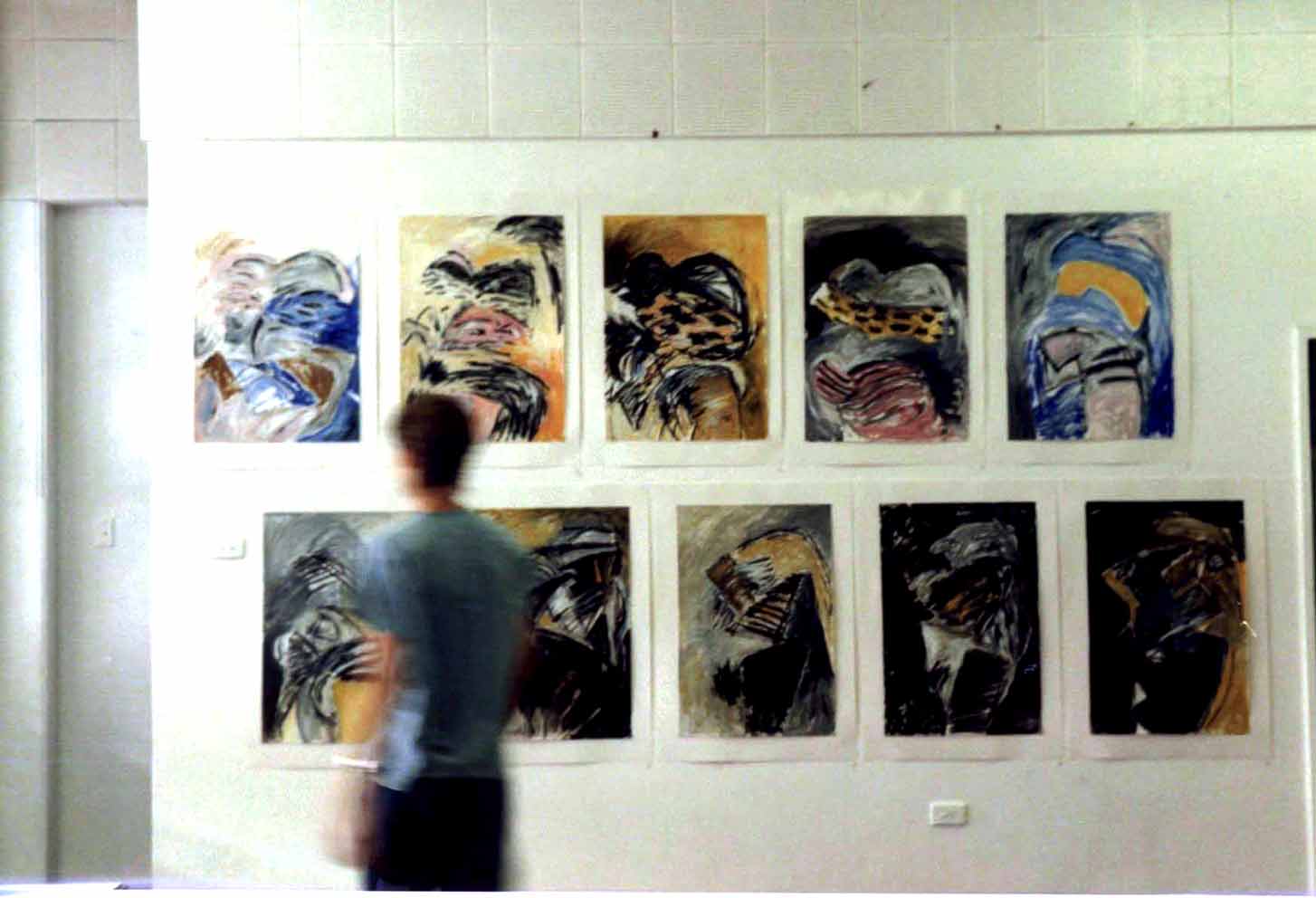
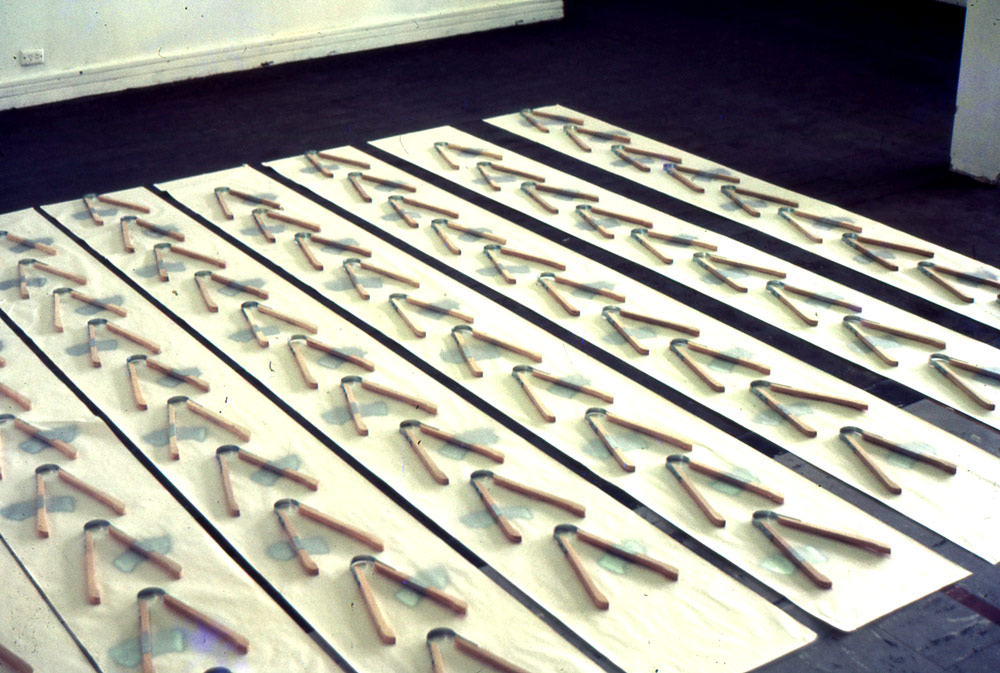
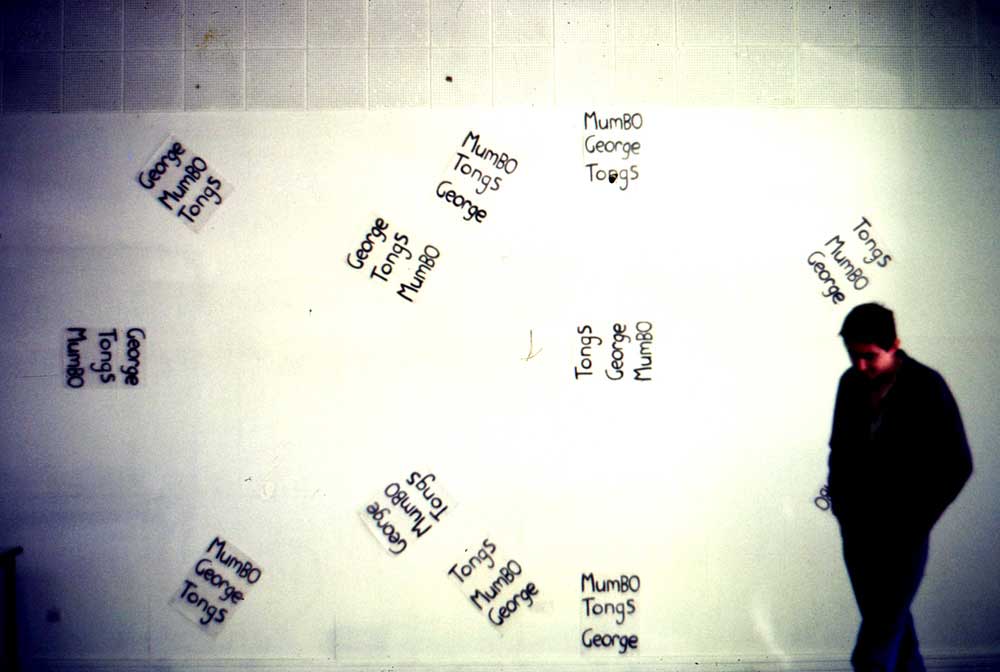
Media – painting, sculpture, drawing, film, video, performance, installation, poster, photocopy art, mail art, (mag)zines – was hoyed into the blender of experimentation and open-ended engagement, morphing into mixed media eruptions of artistic actions and reactions.
What were mixed media eruptions then would now be described as intermedial interventions.
Key collaborators through this period were: Gary Warner, Russell Lake, Adam Boyd, Peter Pitt, Zeliko Maric & Adam Wolter. Key Zine collaborators were Brian Doherty & Bronwyn Clark-Coolee.
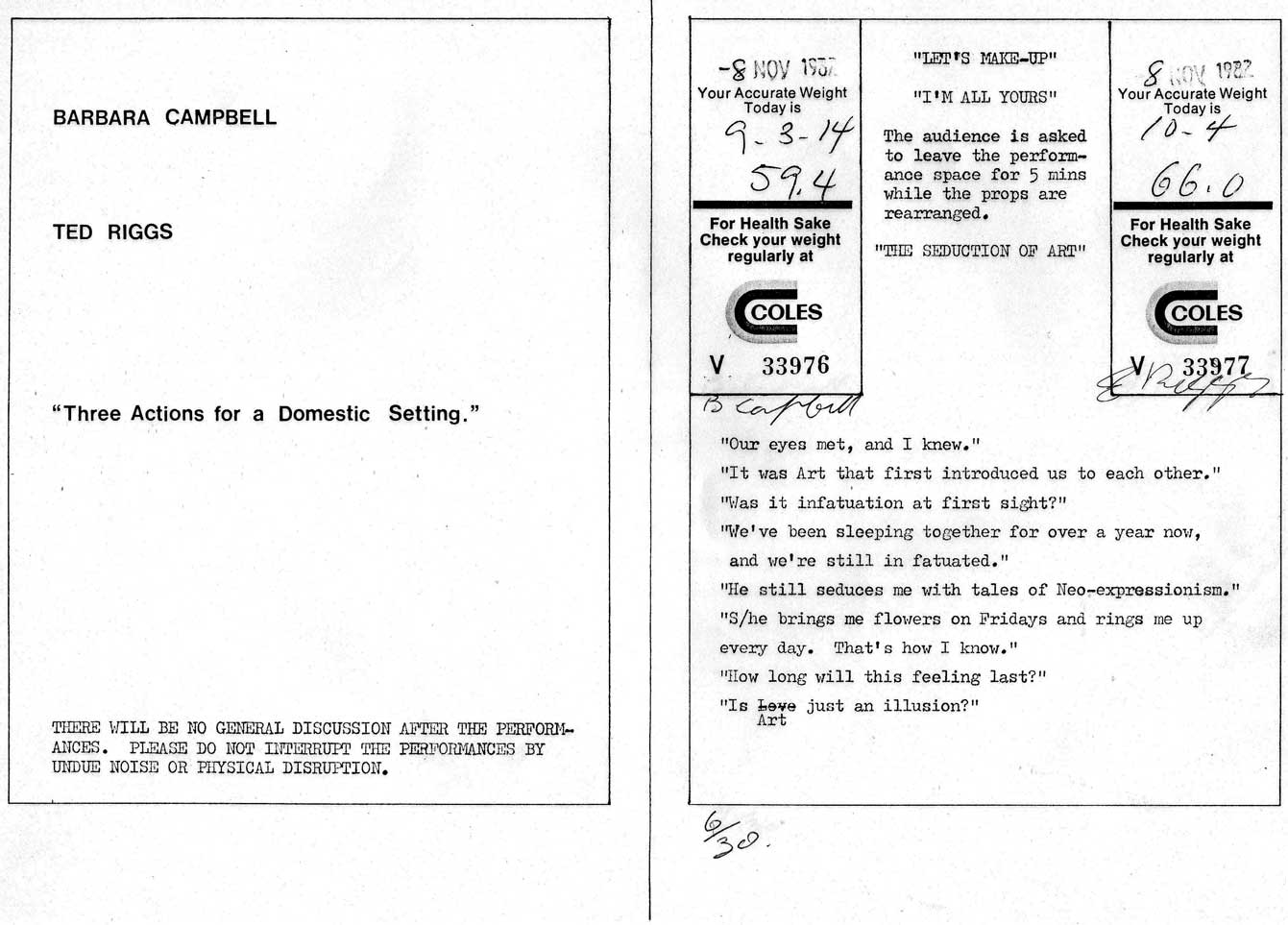
Participating artists were: Harley West, Chris Anderson, Ruth Propsting, Hollie, Barbara Campbell, Ted Riggs, Eugene Carchesio, Ian Macintosh, Anthony Becker, Lucy Lippard, Kevin Boyce, Ruth Bukholtz, M Squared, Anne Raven Mckenzie, DGRASKNE; Shane Kneippe, Ellen Zweig, Ross Doonan, Craig Patterson, Beverley King, Nick Zurbrugg, Mark Titmarsh, Thomas Vale-Slattery, Ziggy, Frank Murray, Fleur Macdonald, Zip Start, Matt Mawson, Tim Gruchy, Terry Murphy, Michelle Andringa, Linda Wallace, Pork, Tape Loops, Crass Art, Moth Gods, Judy Dunne, Lyndal Milani, George Pavlu, Richard De Souza, James Creagh, Katie White, Malcolm Enwright, and others…
Red Comb House …
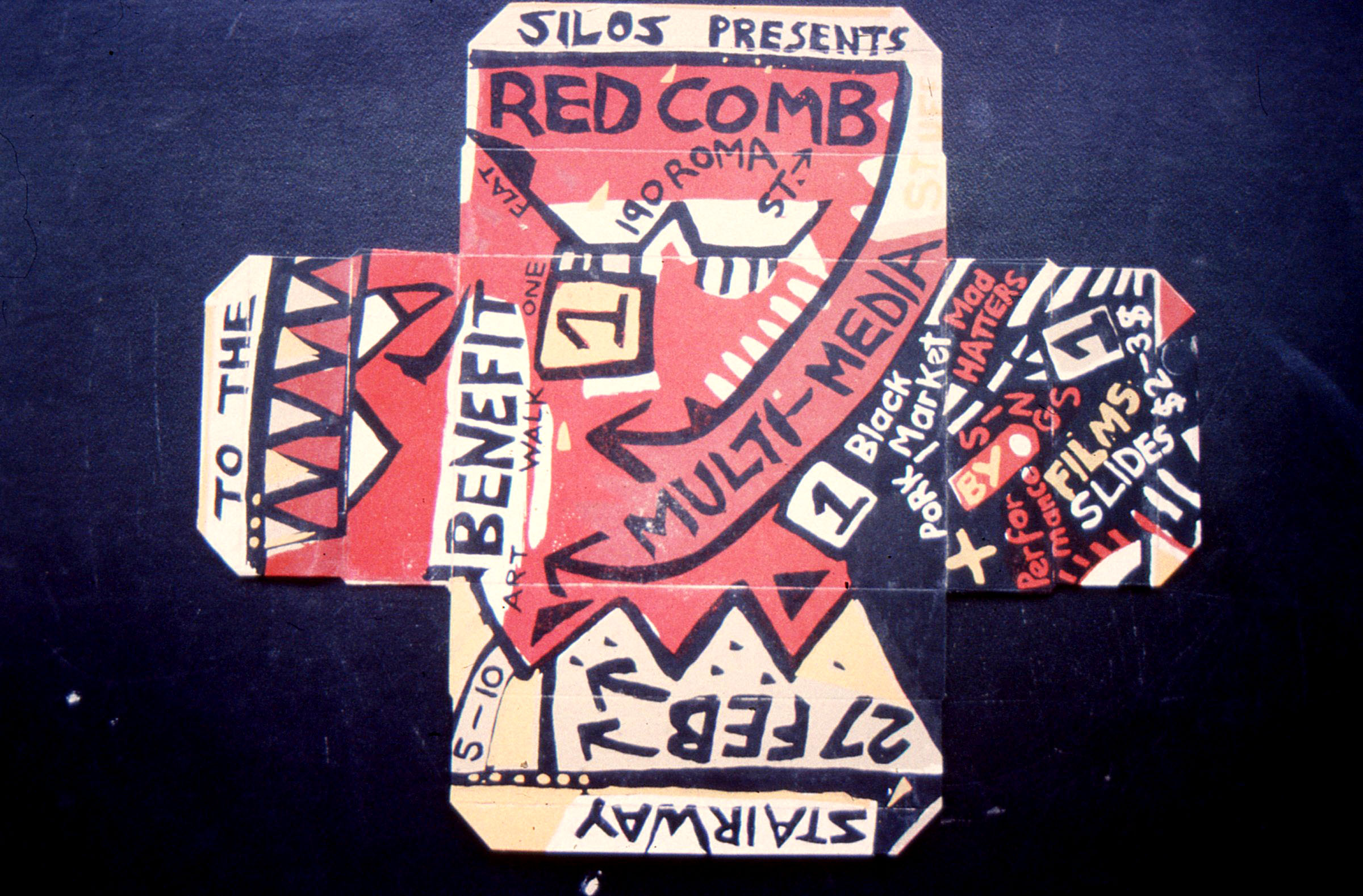
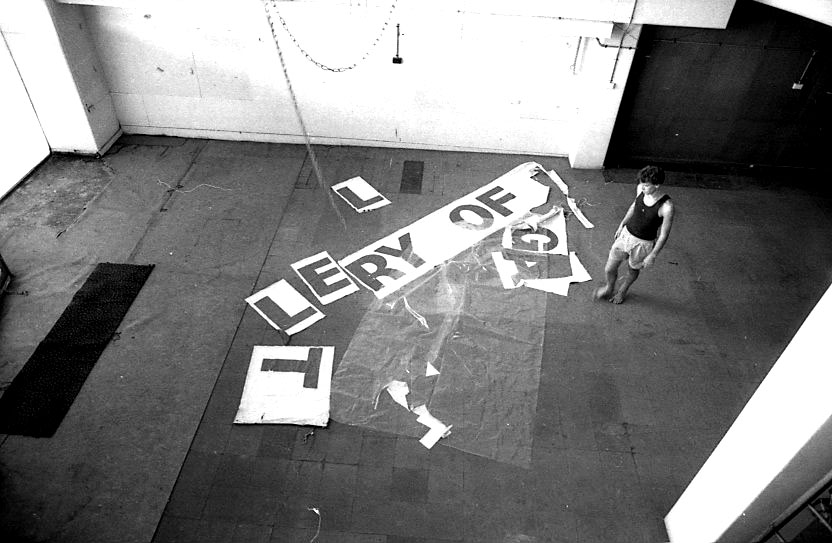
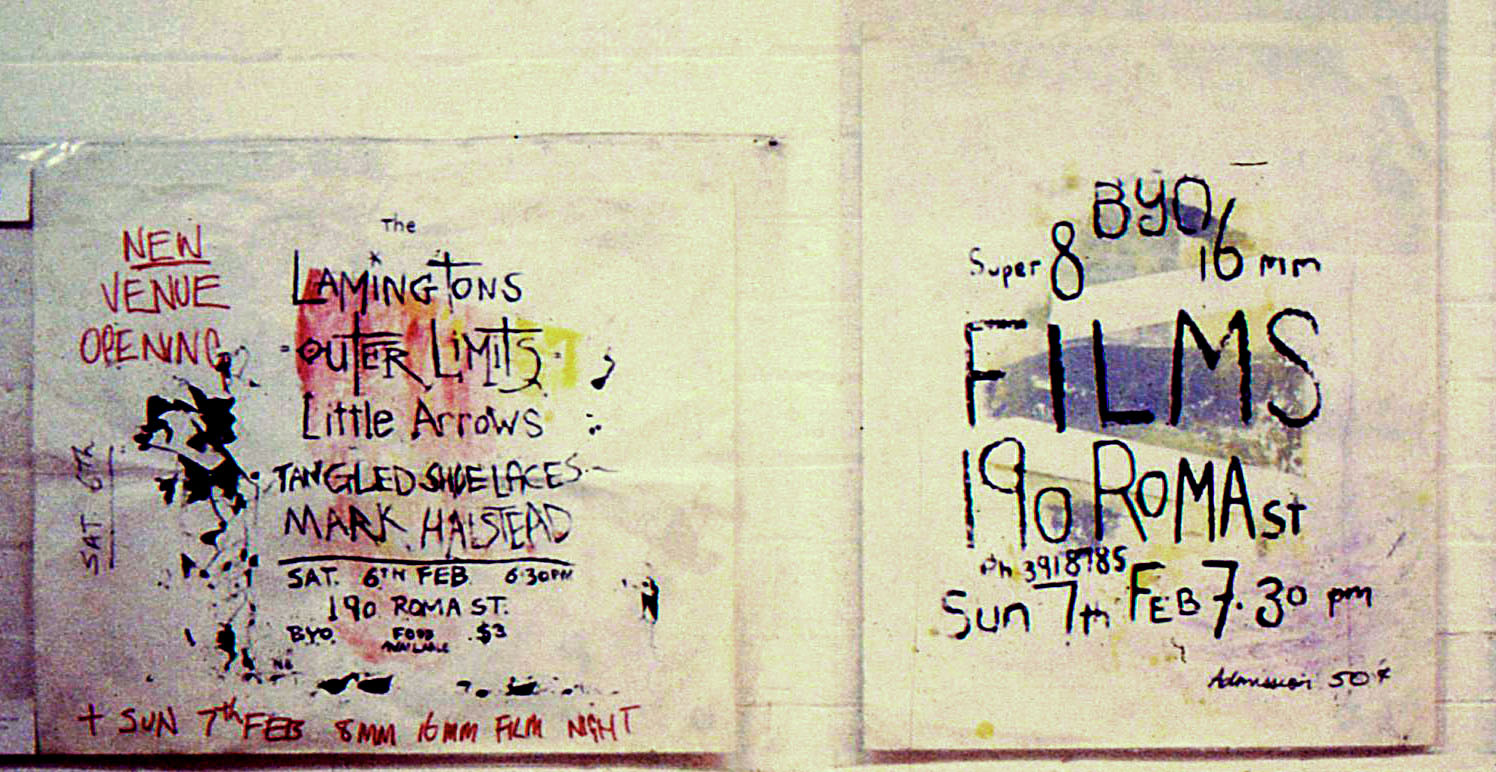
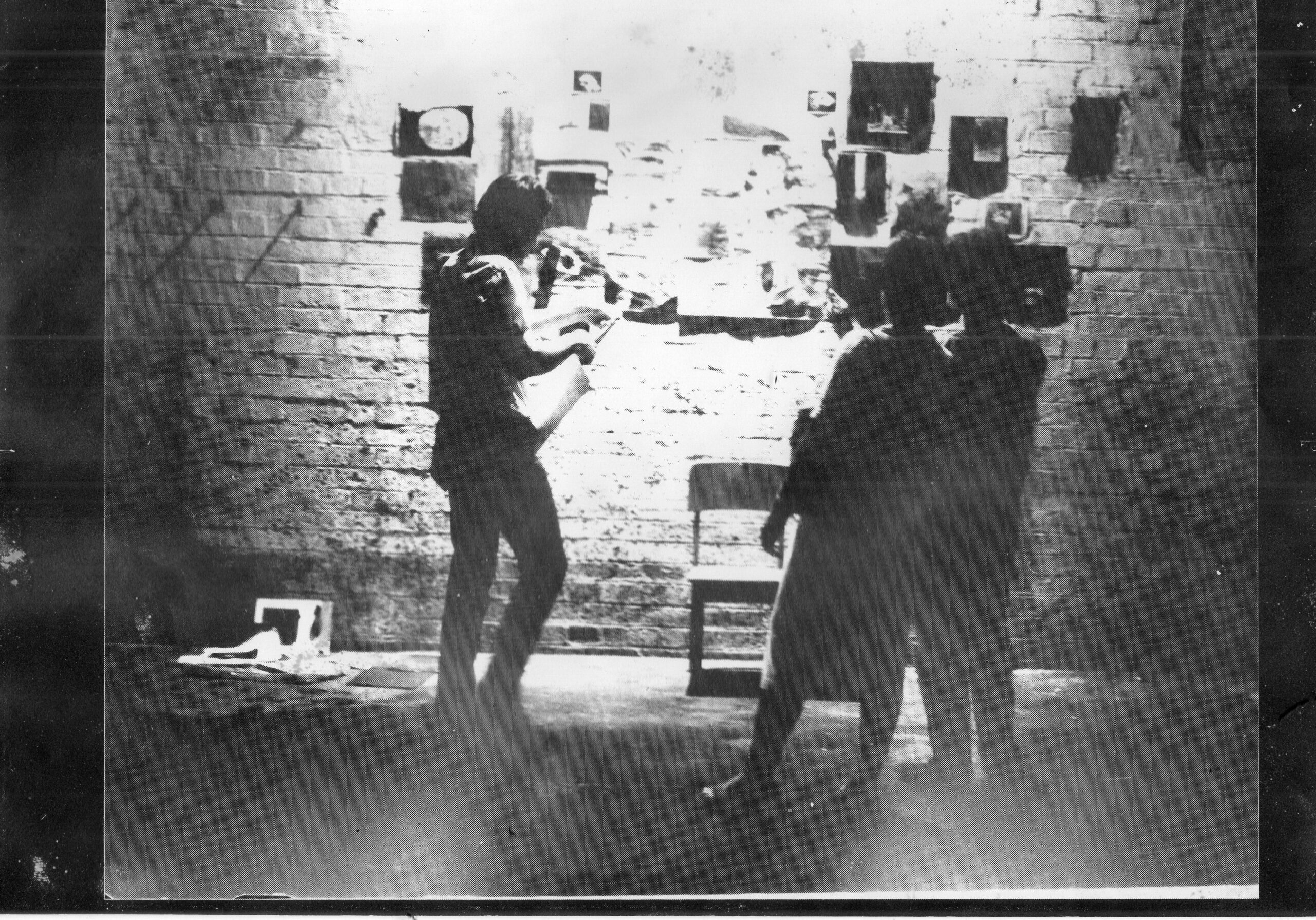
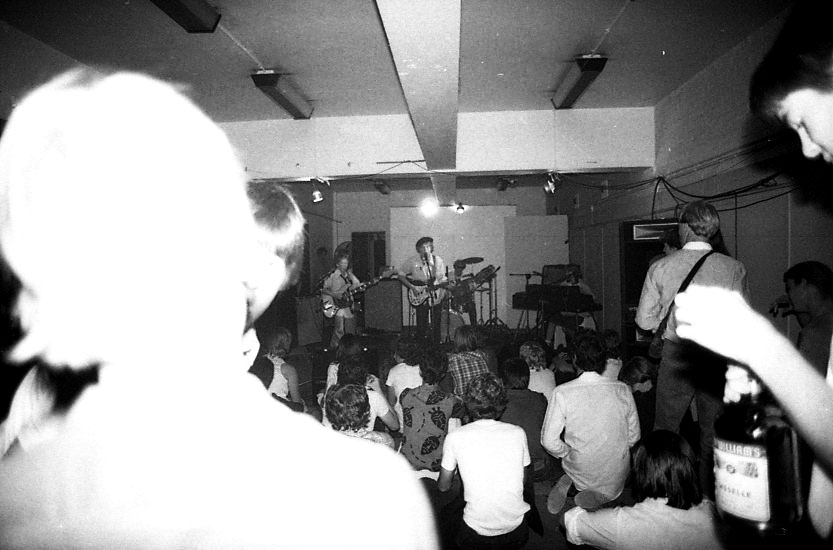
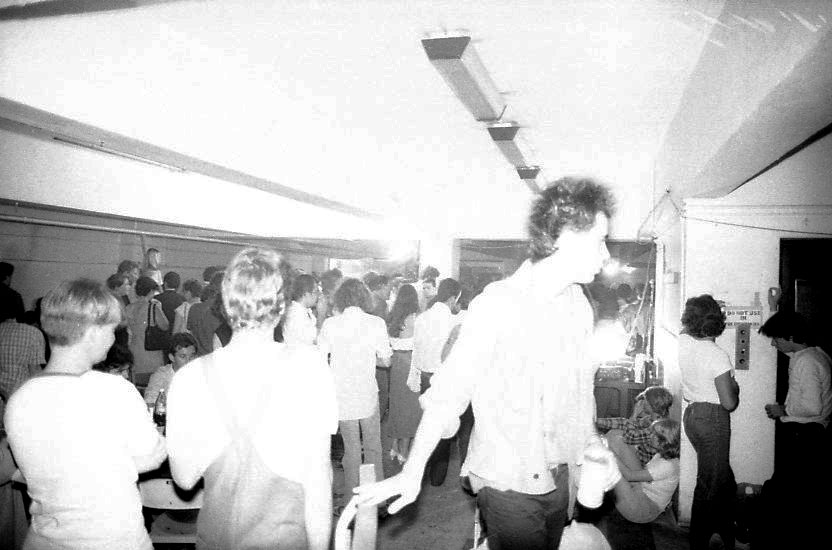
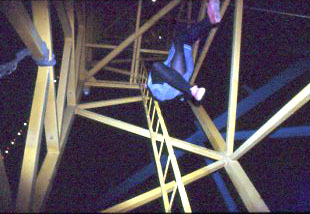
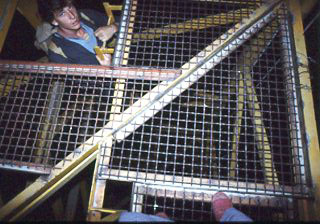
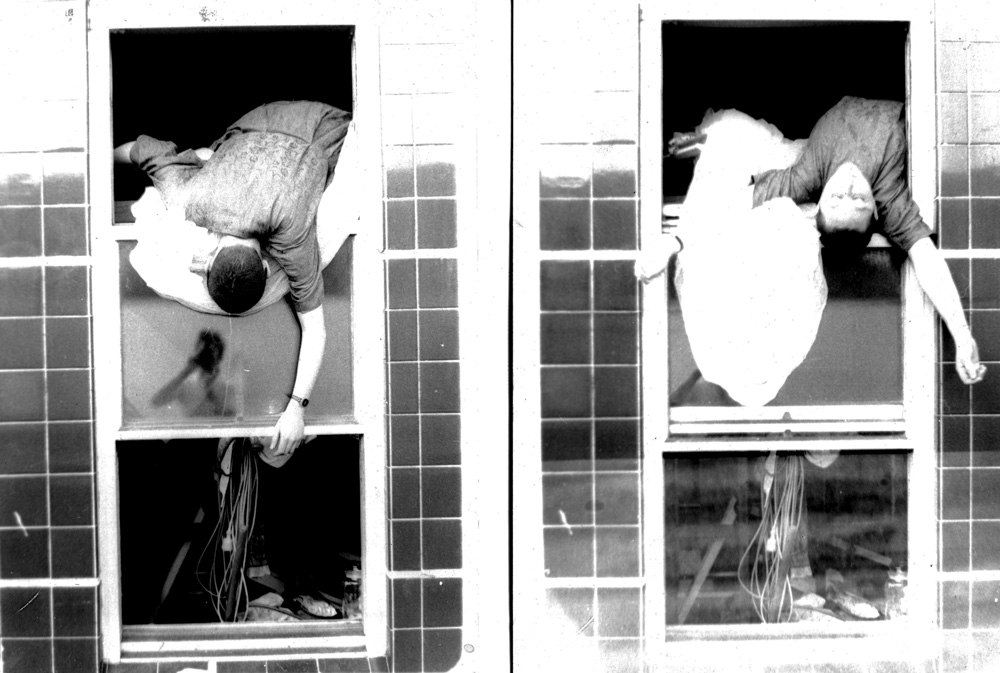
In early 1982, Red Comb House initiated a culture of experimentation and collaboration by inviting artists, performers, and musicians to participate in the Produce Art Exhibition, the Stairway to the Silos event, film and live music nights, and to play in the sandpit on the Mezzanine floor.
Following a live music event where musicgoers jumped out of the mezzanine windows and were surveilled dancing on the awning over the street opposite Roma St Railway Station, we received an eviction notice.
The lessees, Adam Boyd, Harley West, Chris Anderson, and Jeanelle Hurst, fought the notice with the support of University academics, and we were allowed to stay with limitations on the use of the building. Red Comb House continued as a studio space until its demolition in late 1984.
Post demolition, the Queensland Police Headquarters building was constructed on the site.
One Flat South Brisbane …
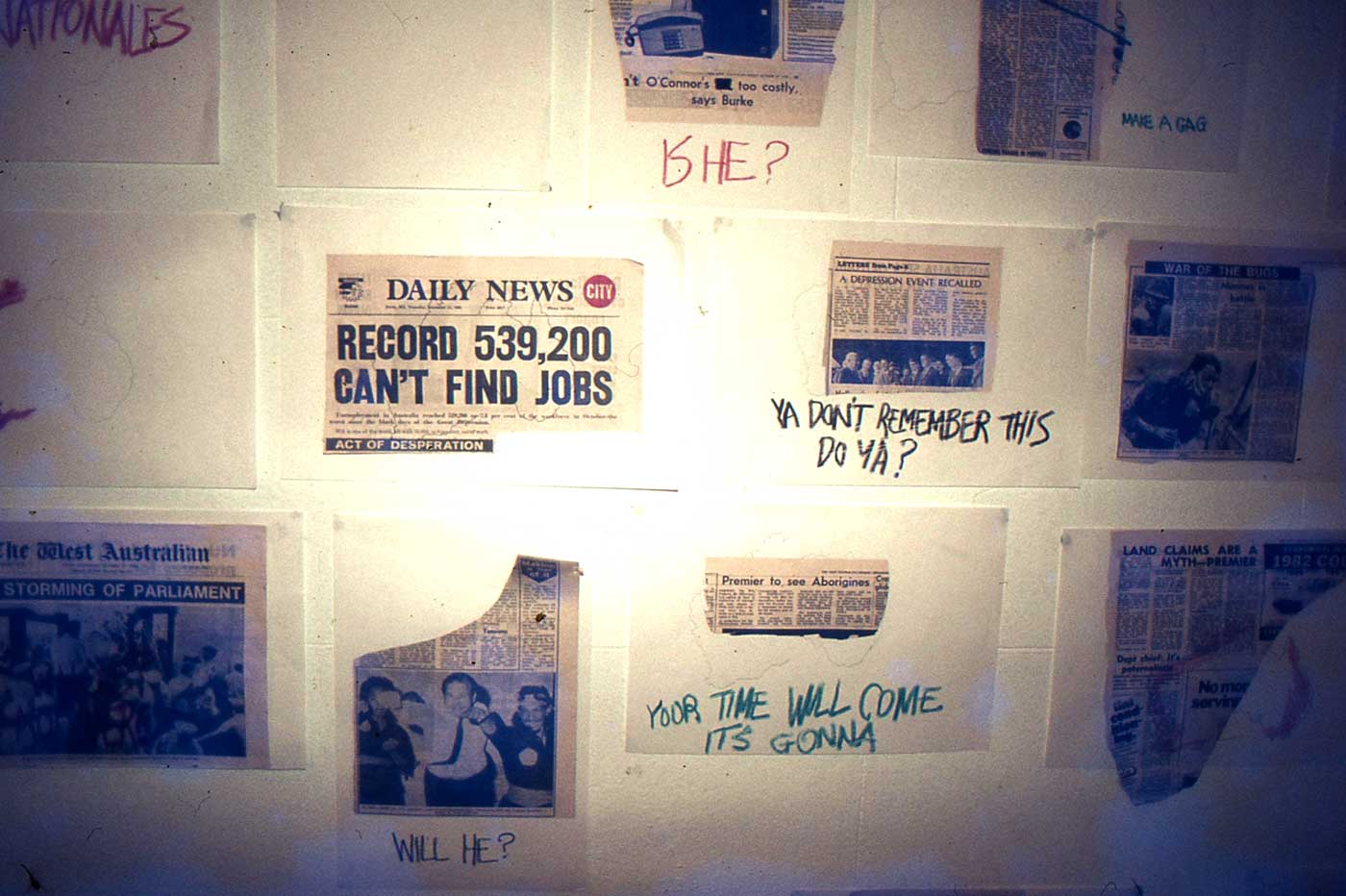
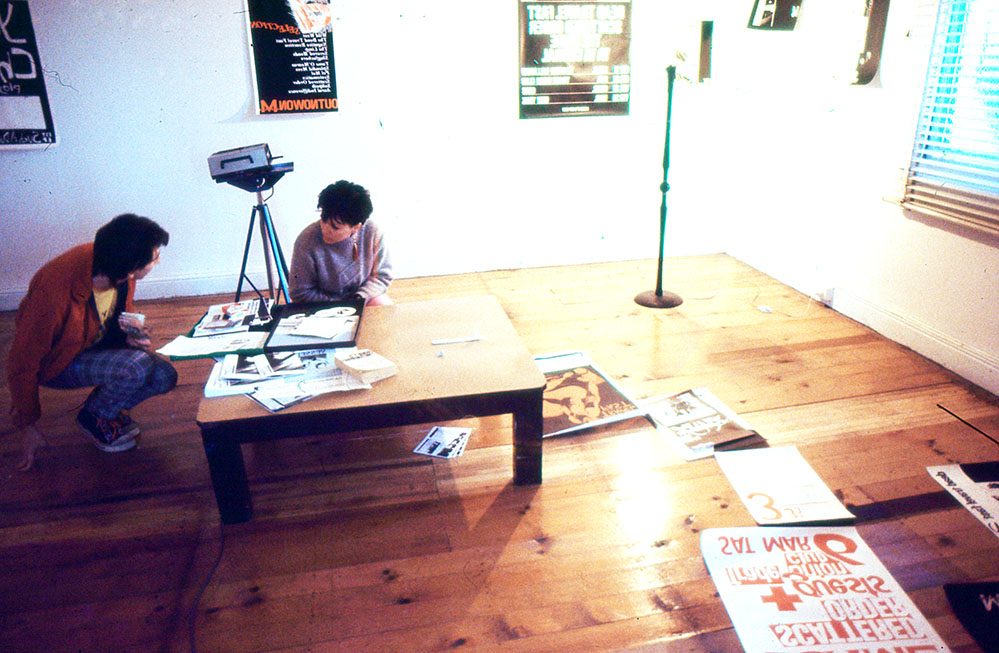
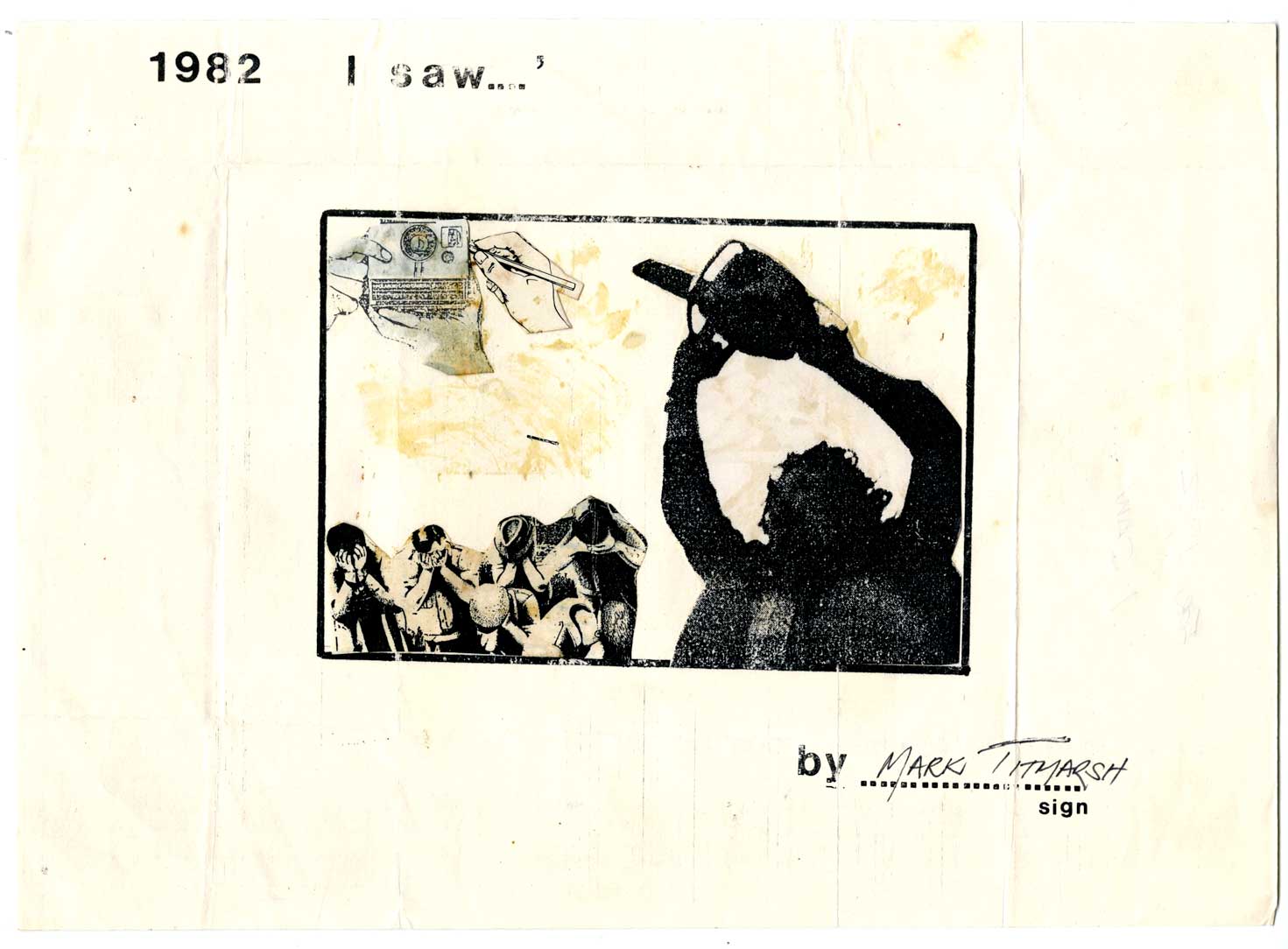
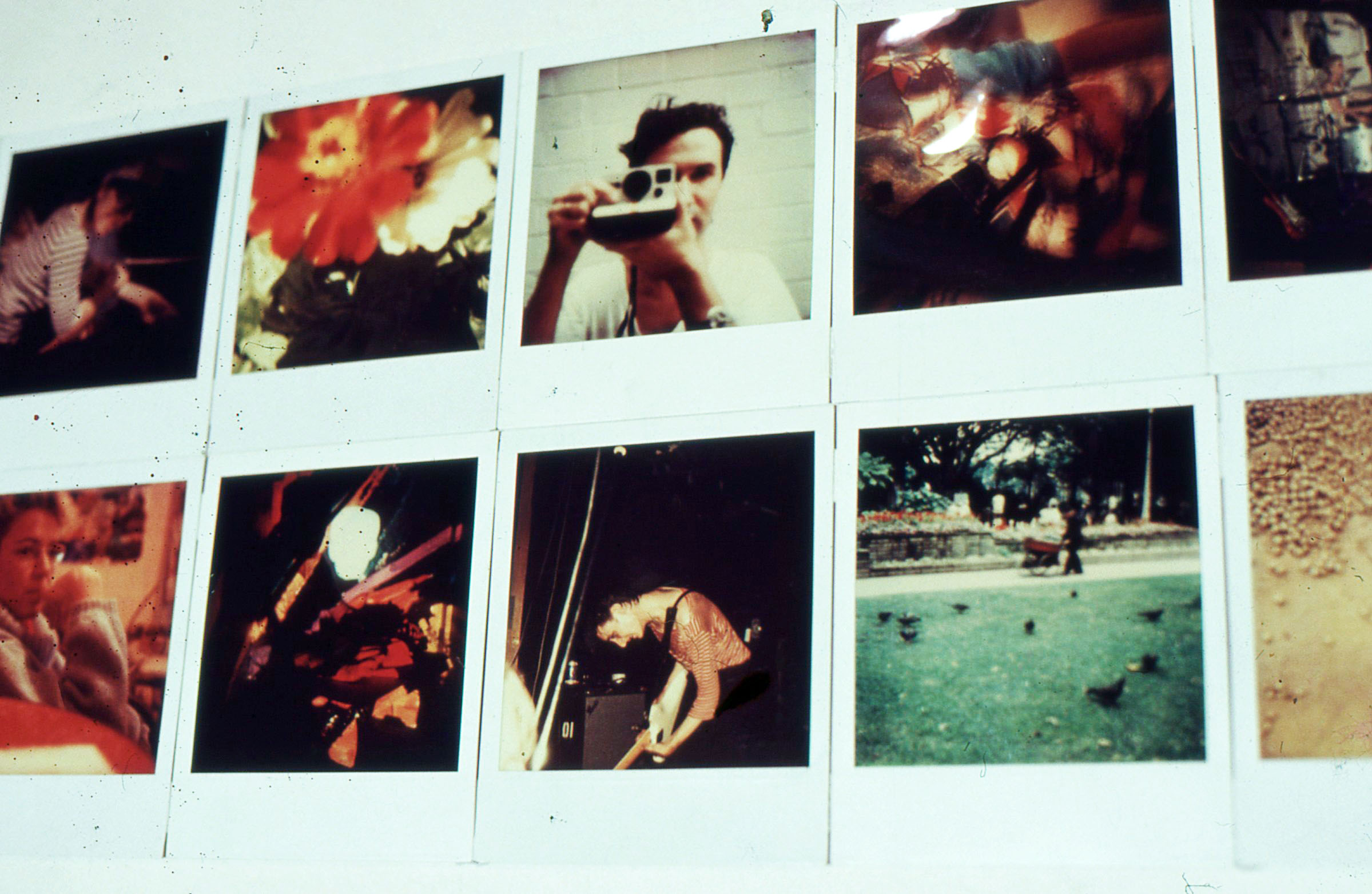
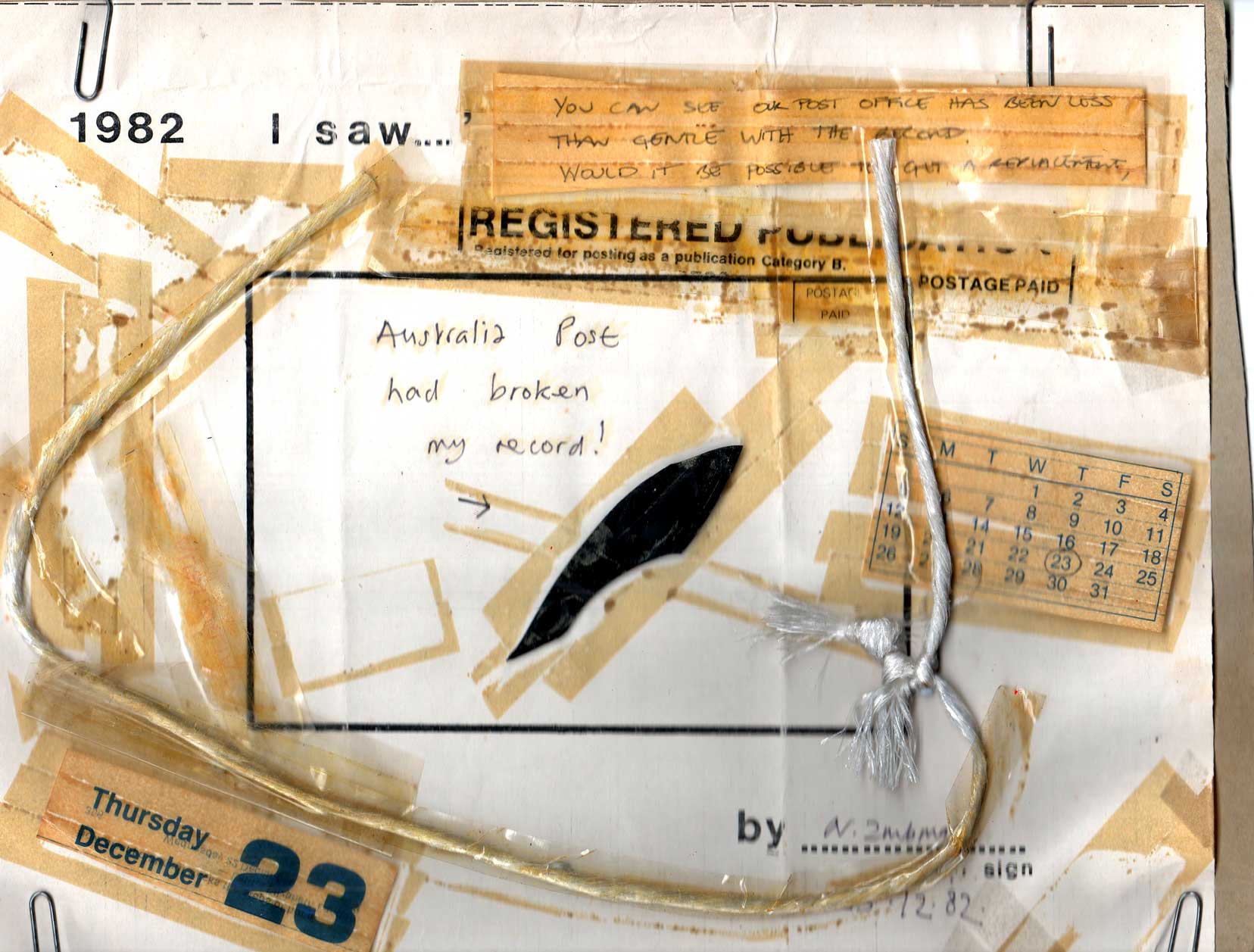
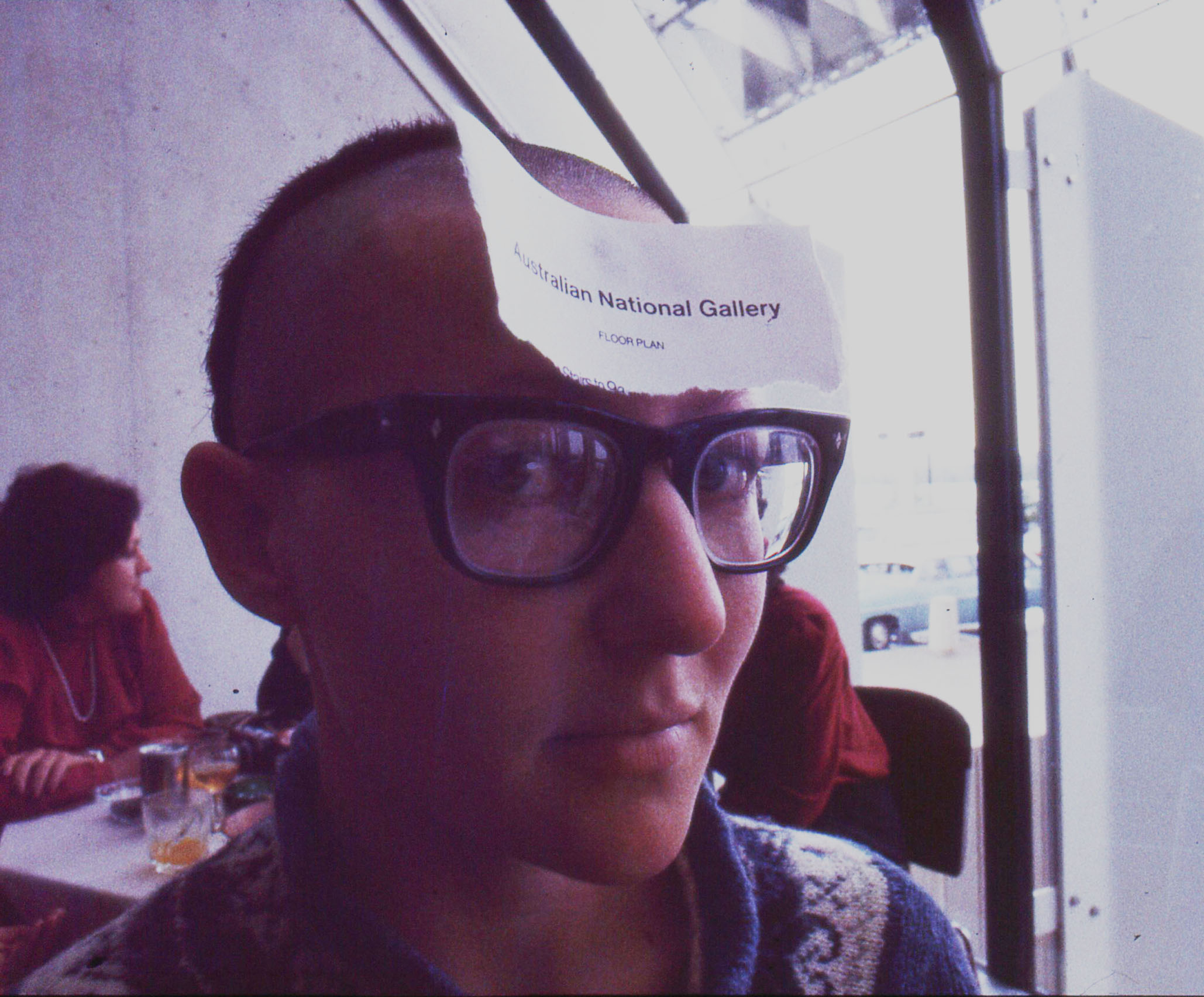
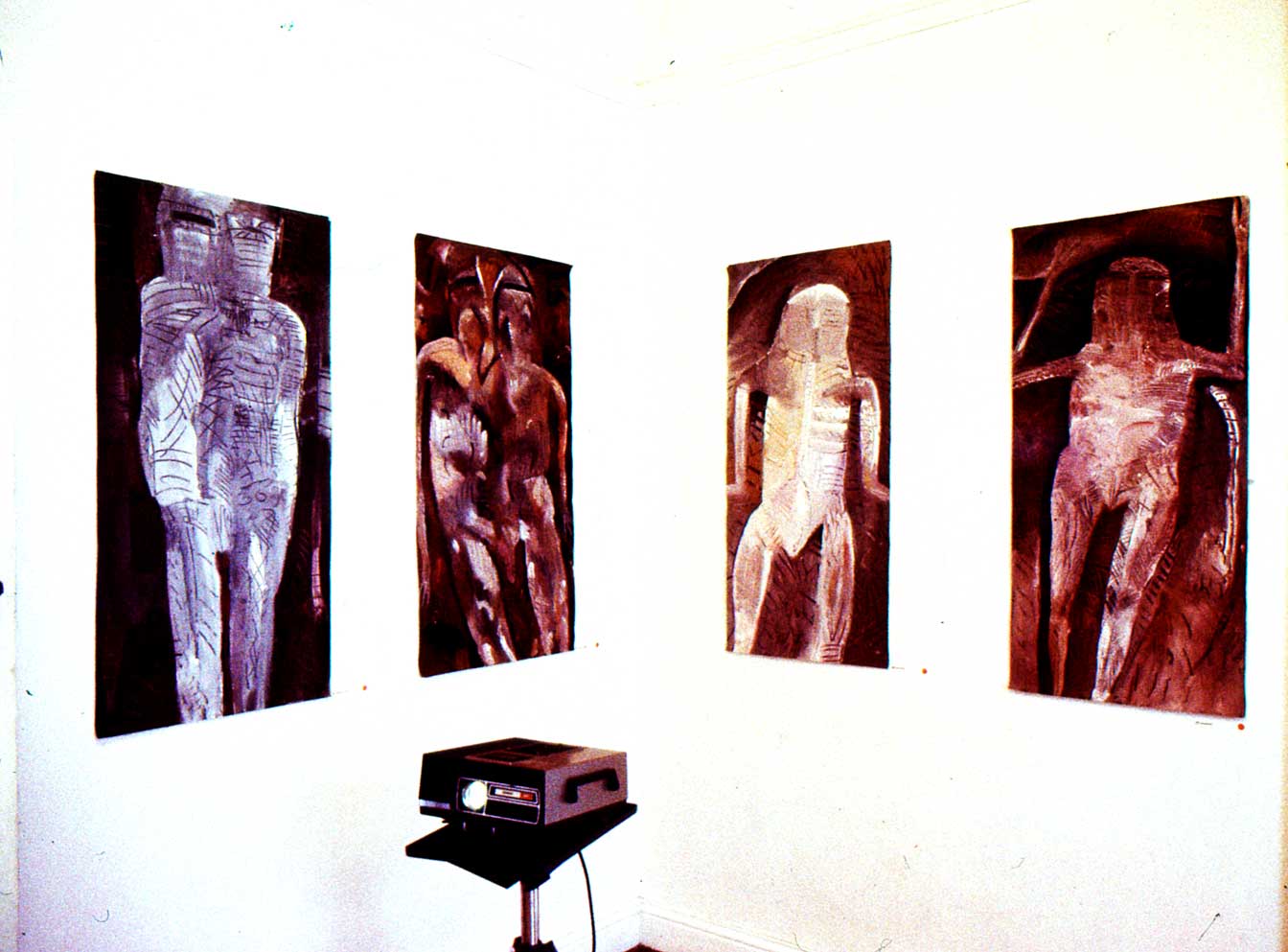
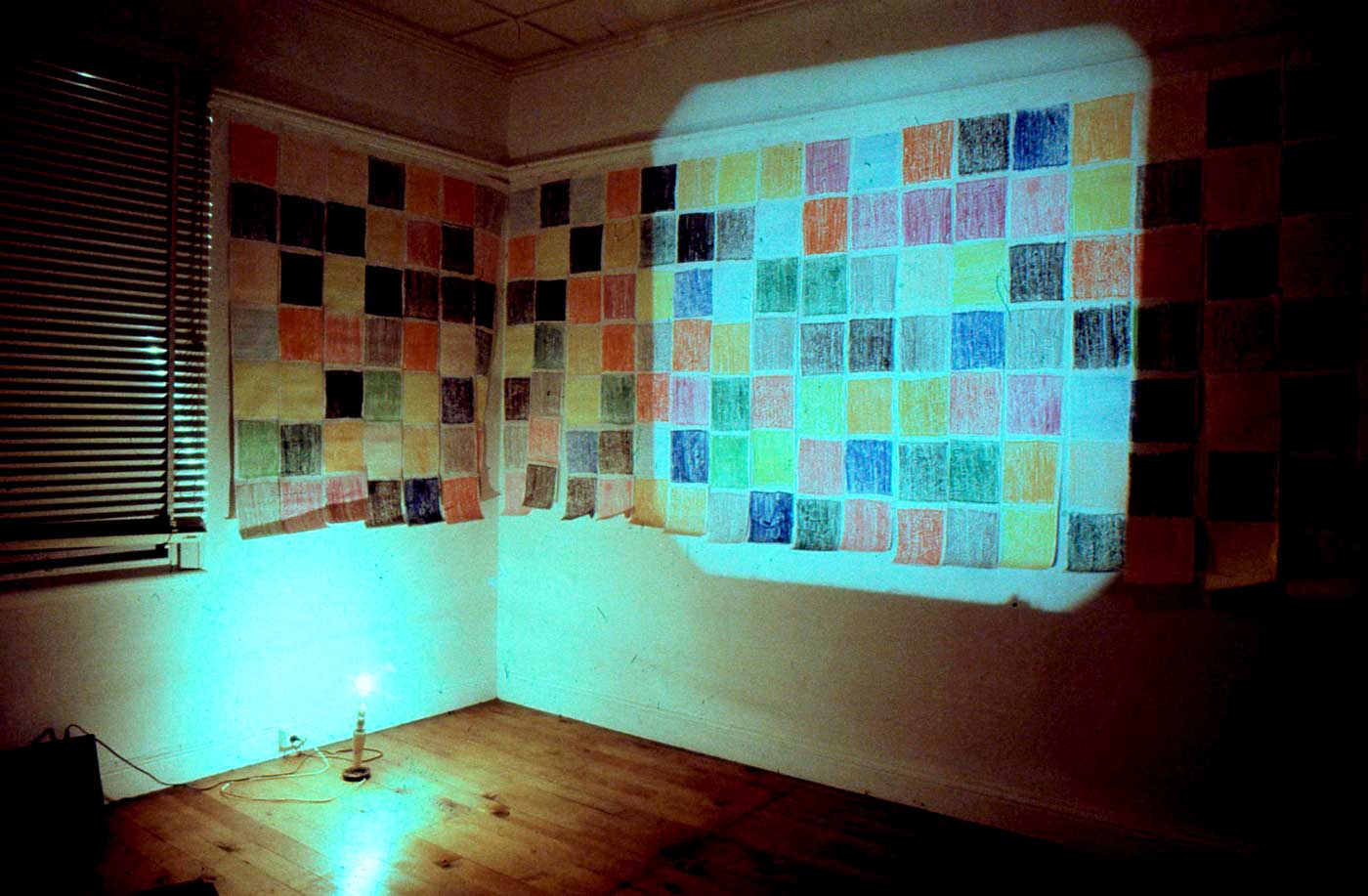
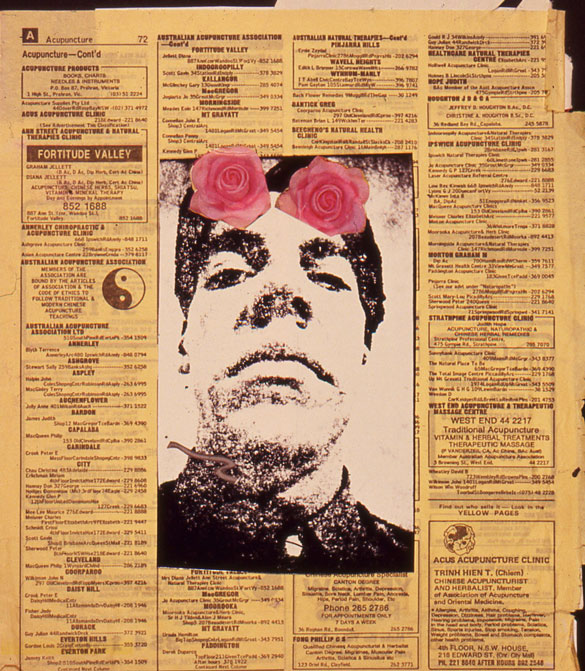
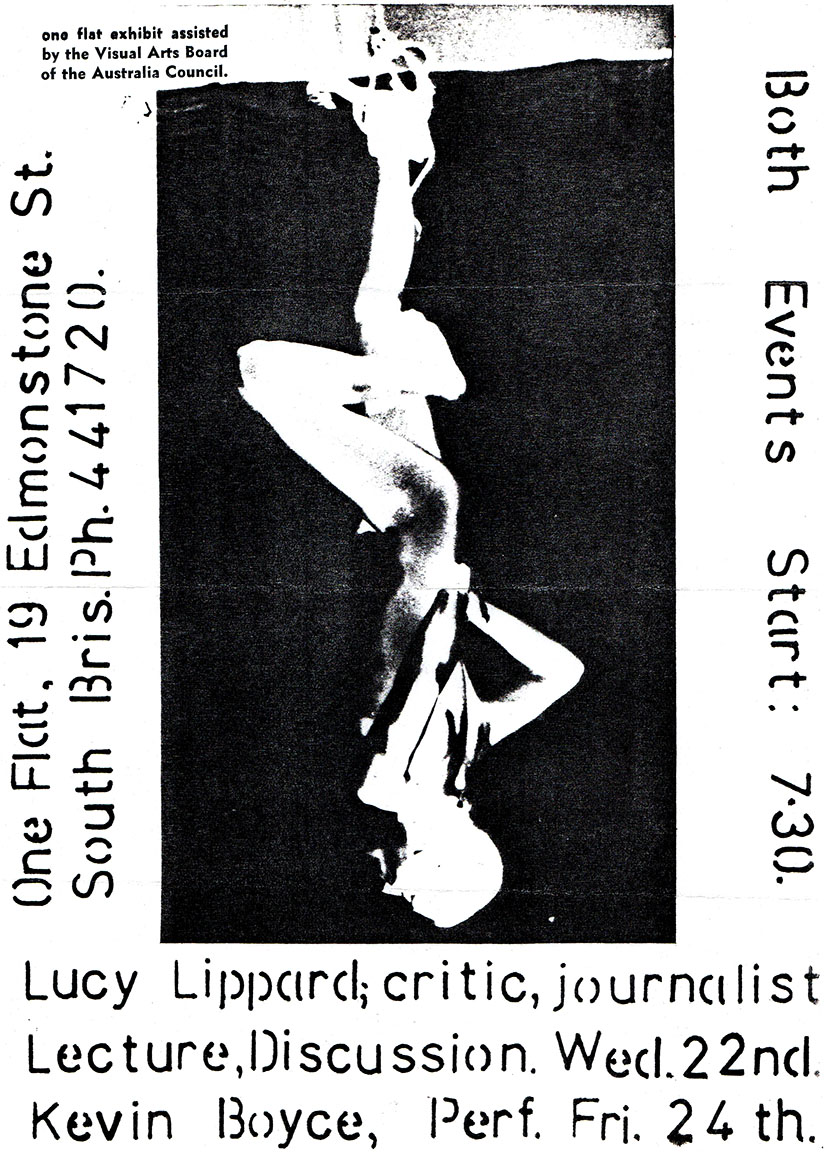
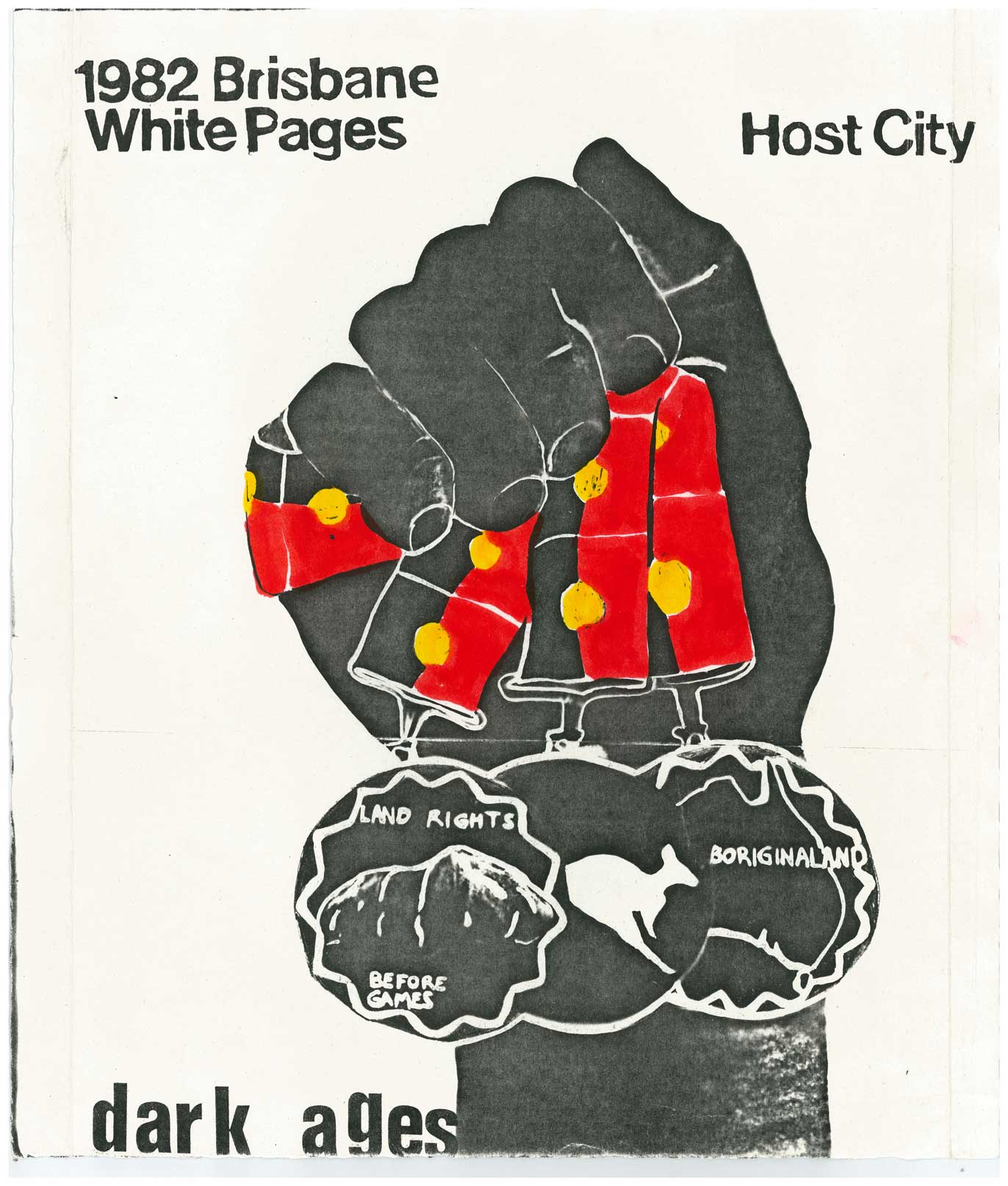
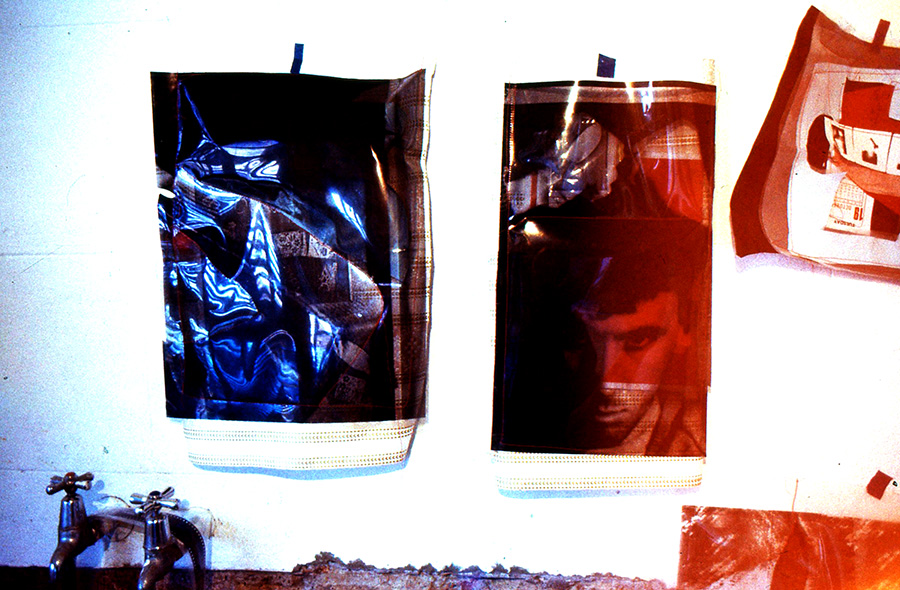
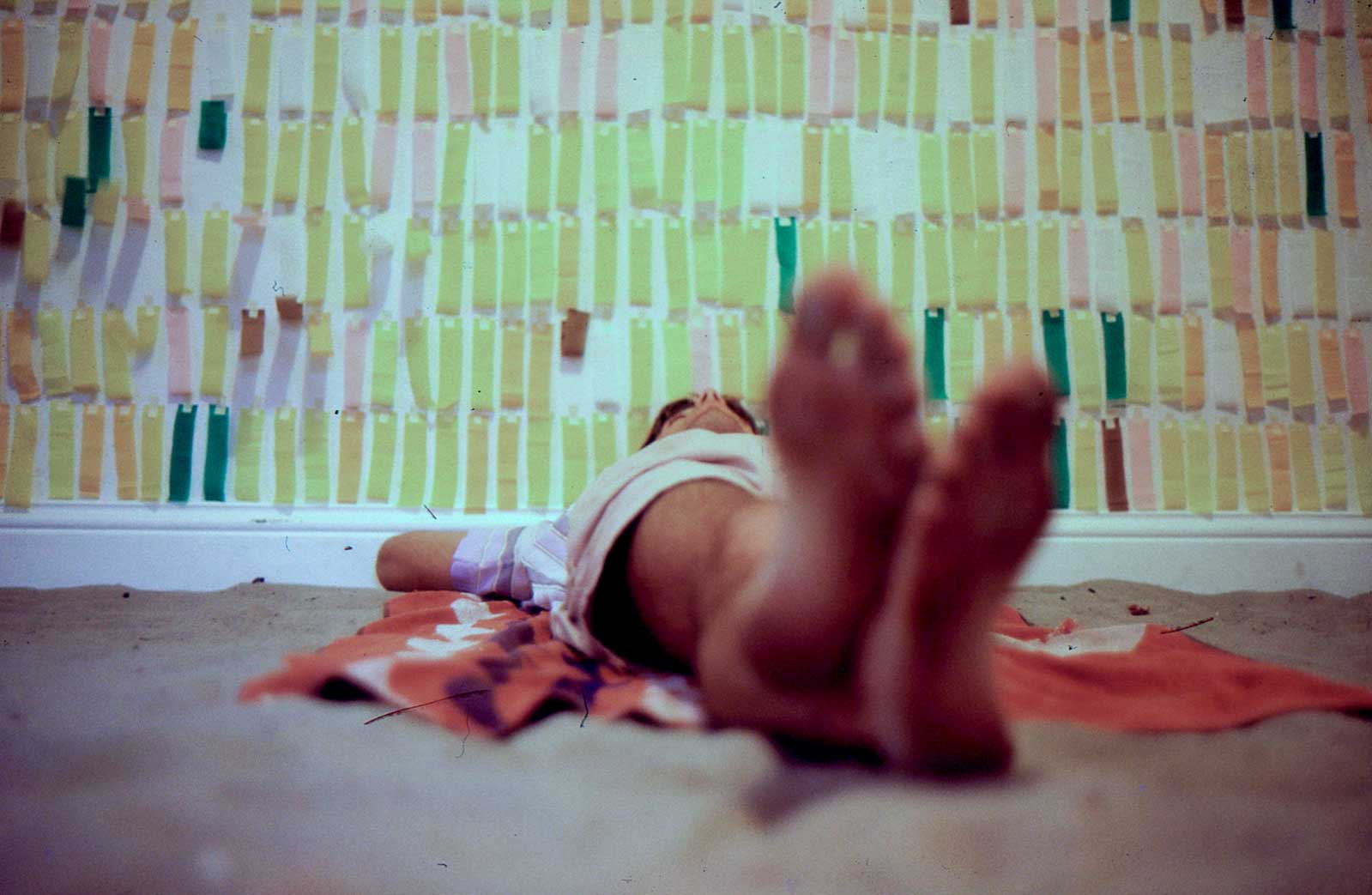
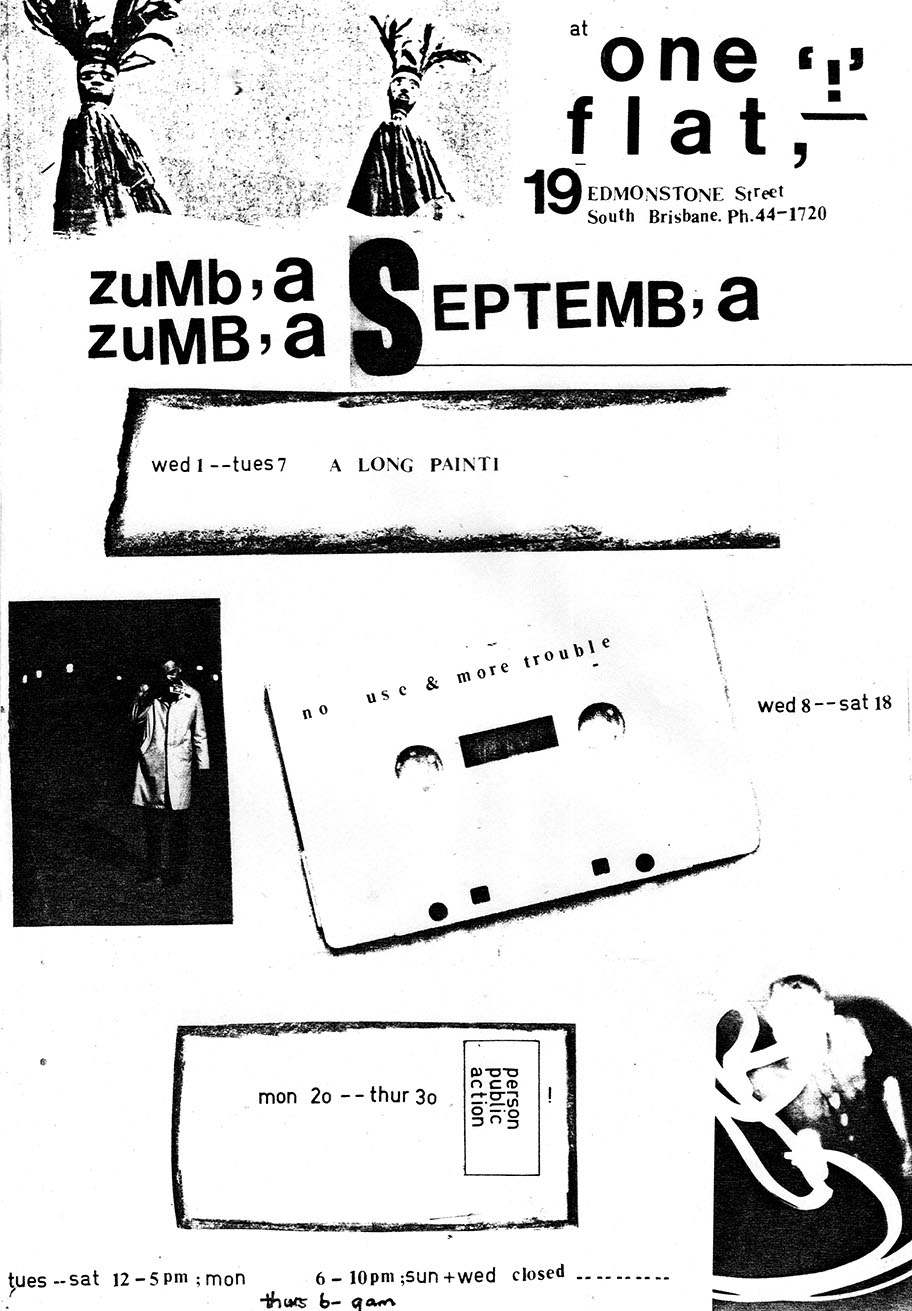
One Flat South Brisbane was launched in May 1992 in the front room of Jeanelle Hurst’s flat in Edmondstone St, South Brisbane, following the restrictions placed on Red Comb House.
One Flat South Brisbane was coordinated by Russell Lake, Gary Warner and Jeanelle Hurst. Gary Warner had relocated to Sydney in April but maintained a strong curatorial and participatory presence, sending shows up from Sydney.
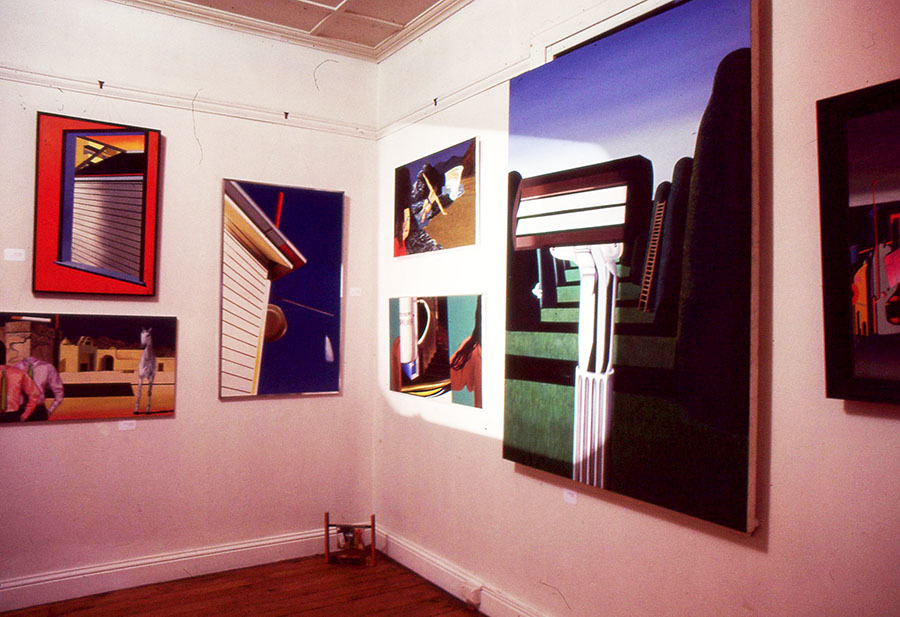
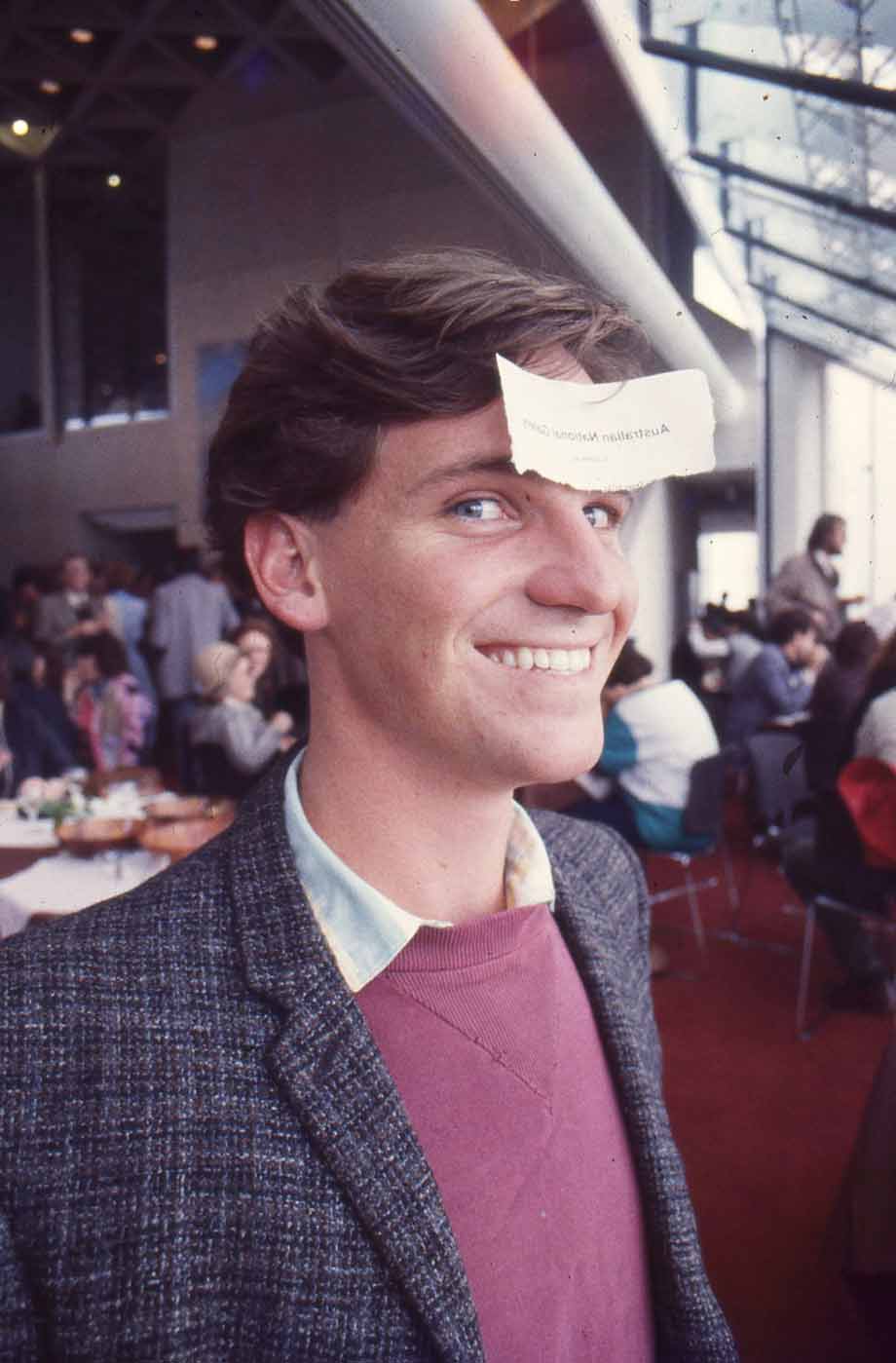
23 Exhibitions, performances and events were staged in and out of One Flat South Brisbane up until December 1992. In January 1983, One Flat relocated to the vacant bank building at 355 George St, Brisbane.
Jeanelle Hurst secured a $1,000.00 exhibition grant from the Australia Council by travelling overnight to Sydney and knocking on the Australia Council door.
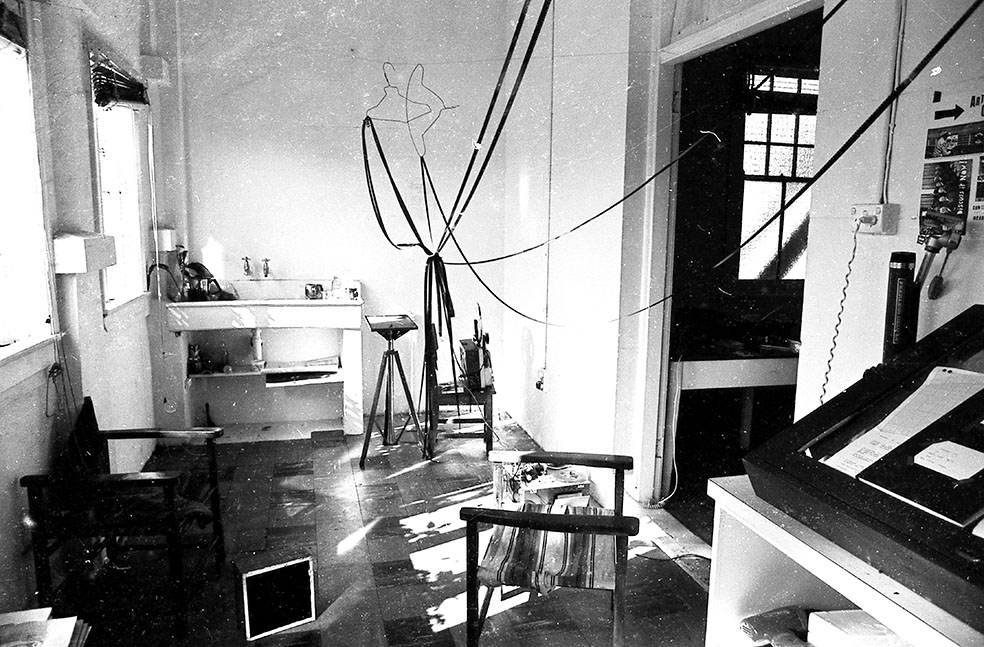
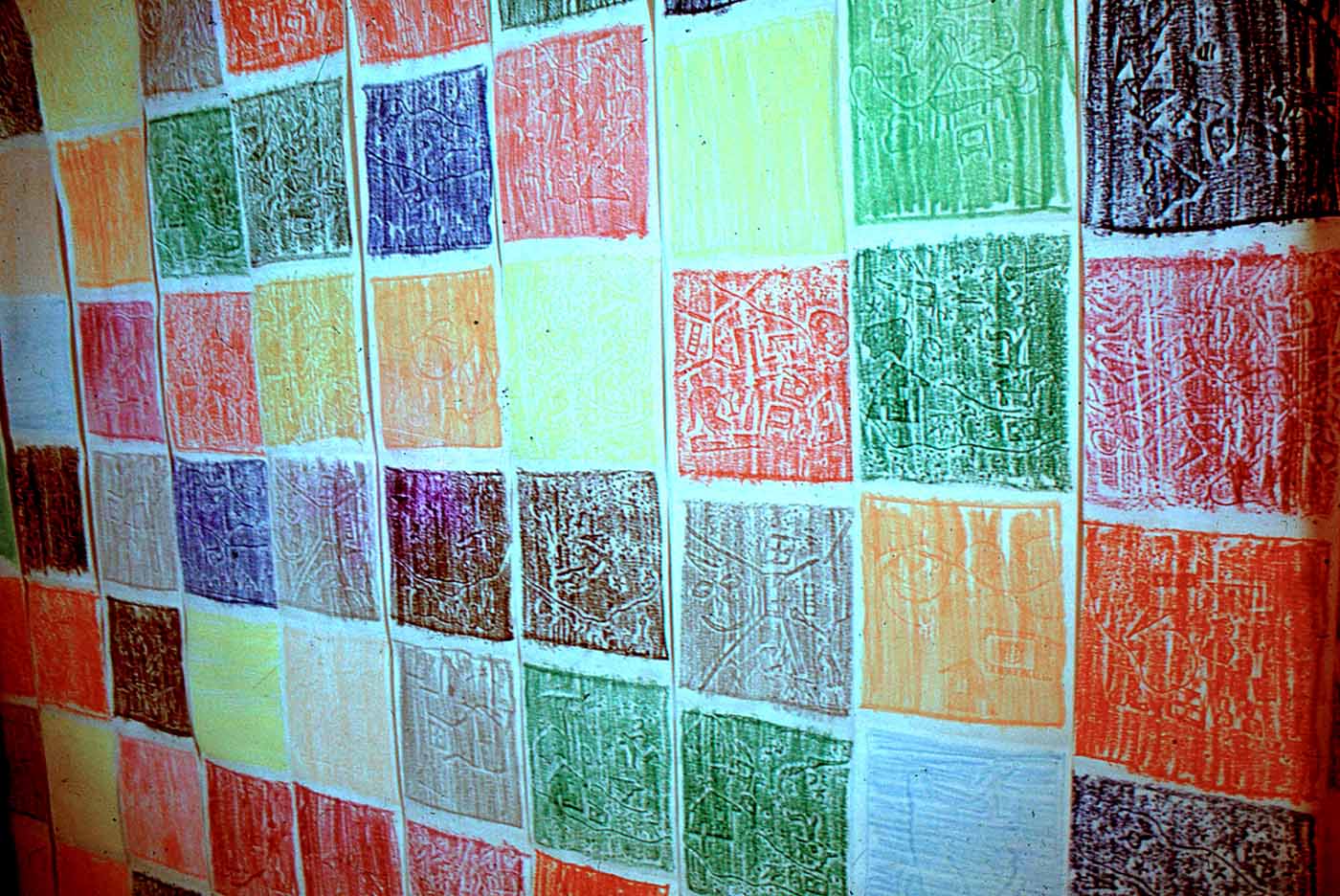
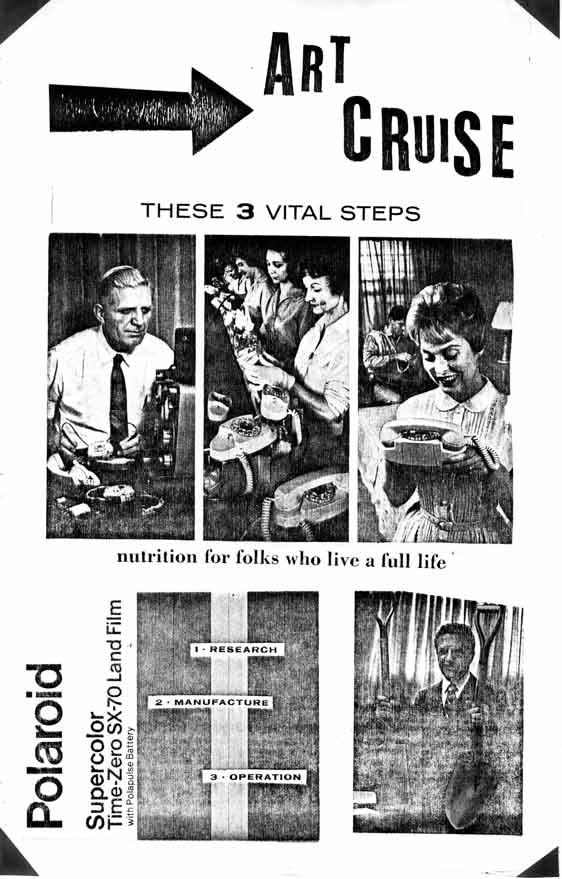
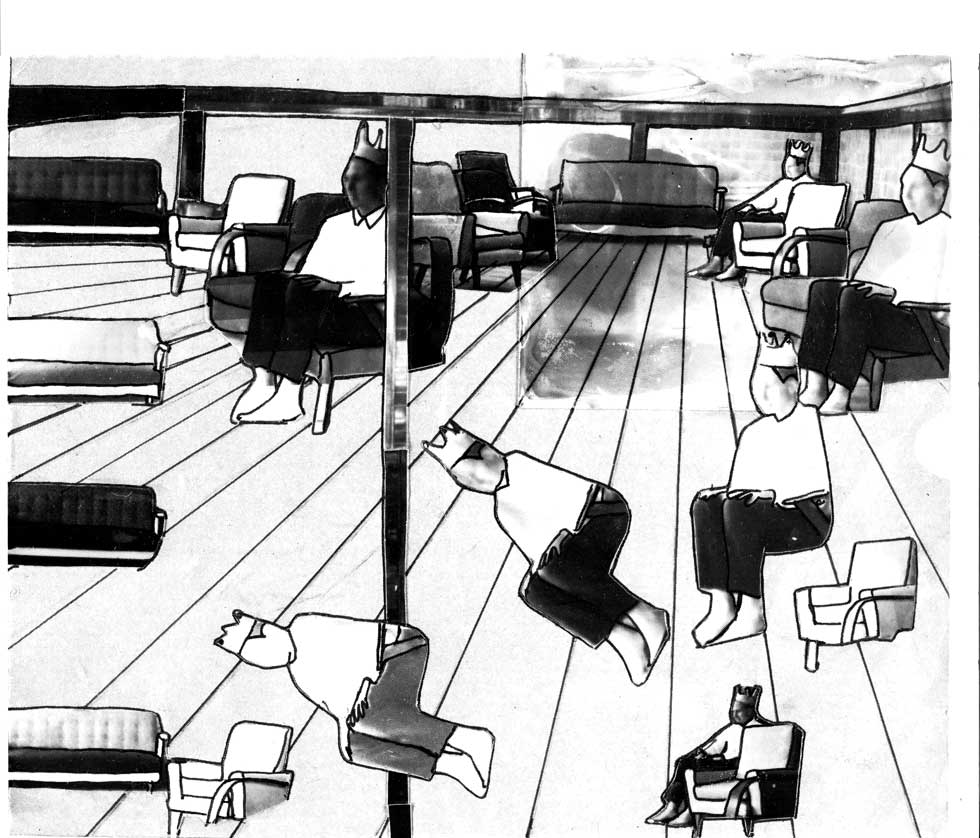
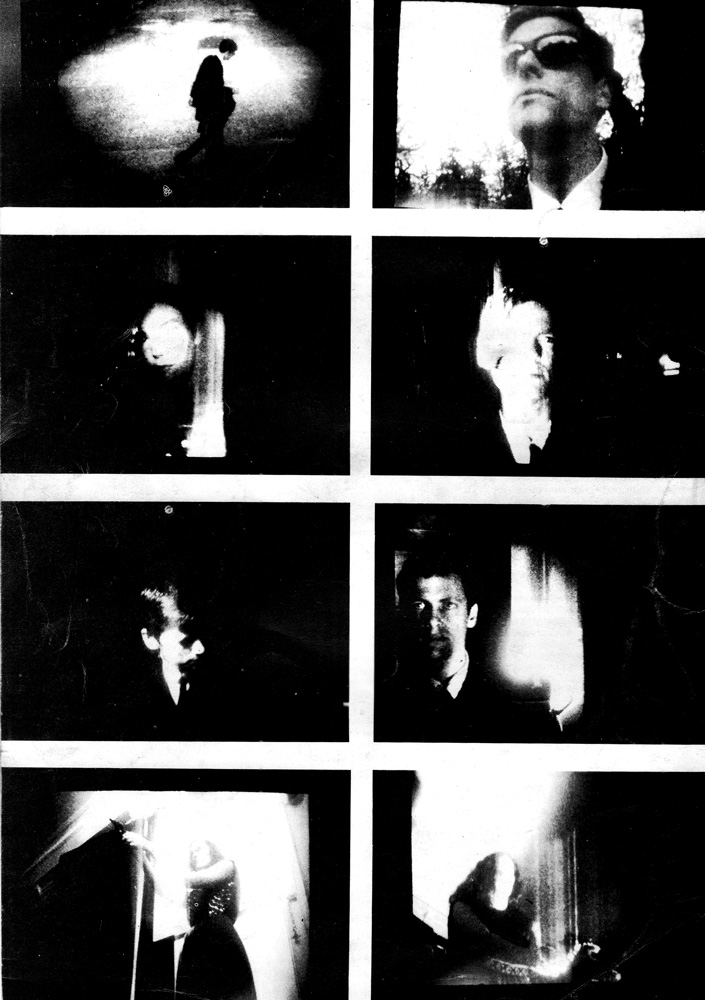
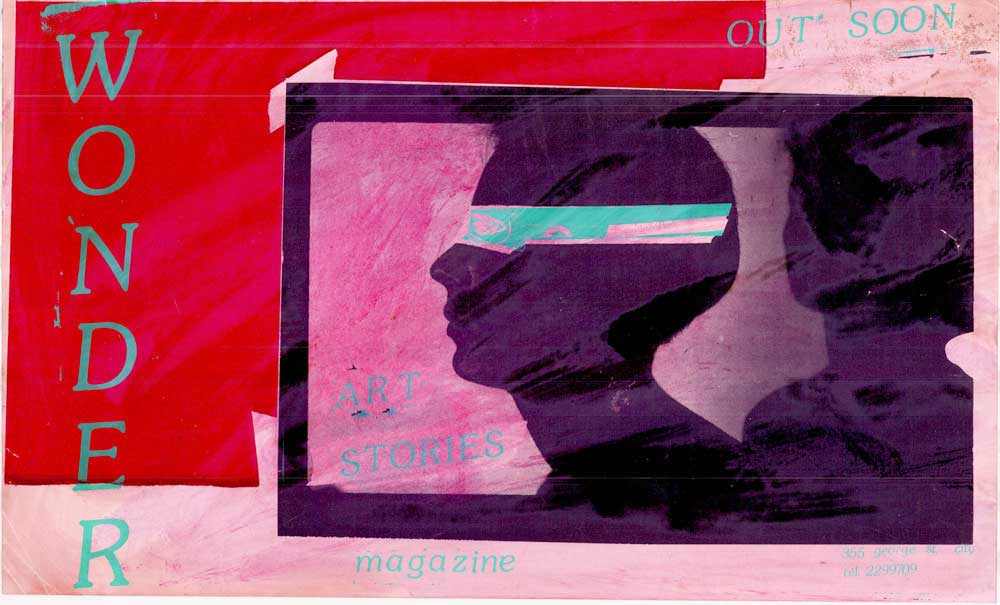
Art Walk 1 Maga(zine) was launched from One Flat South Brisbane in December 1992. This building still stands in Edmondstone opposite Musgrave Park.
One Flat George St Branch …
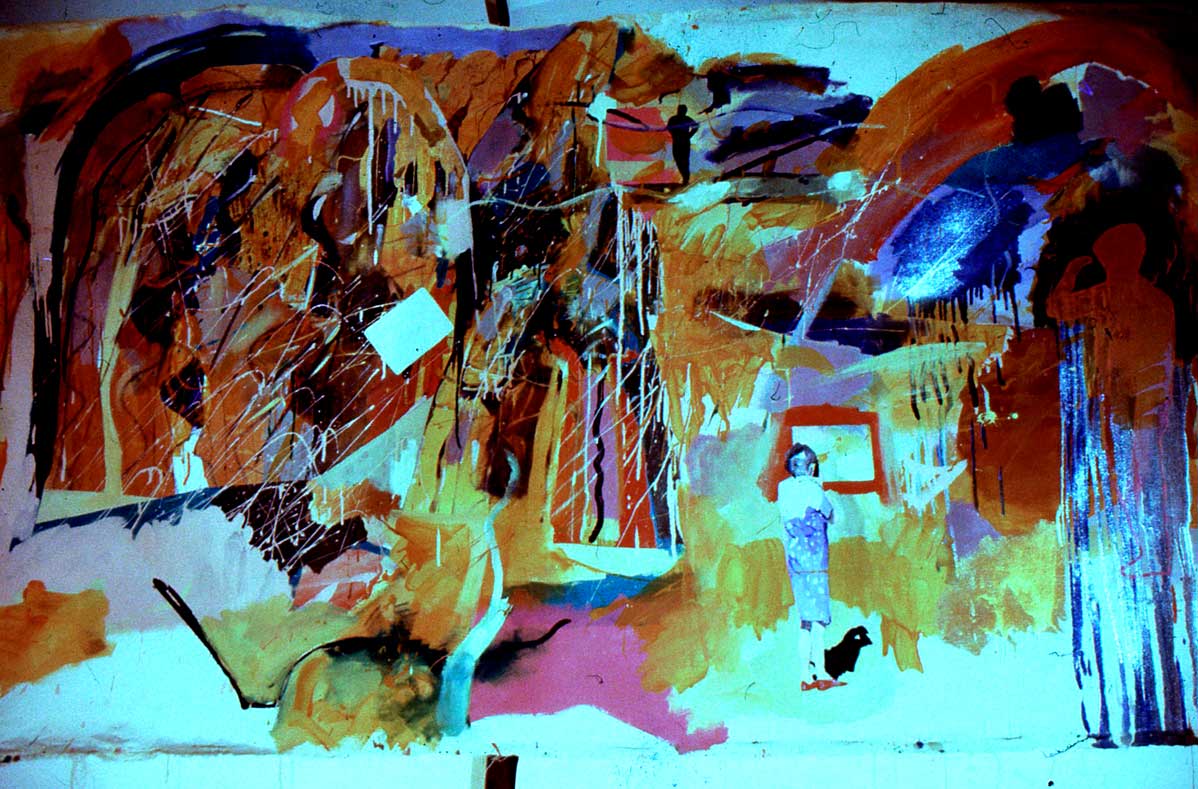
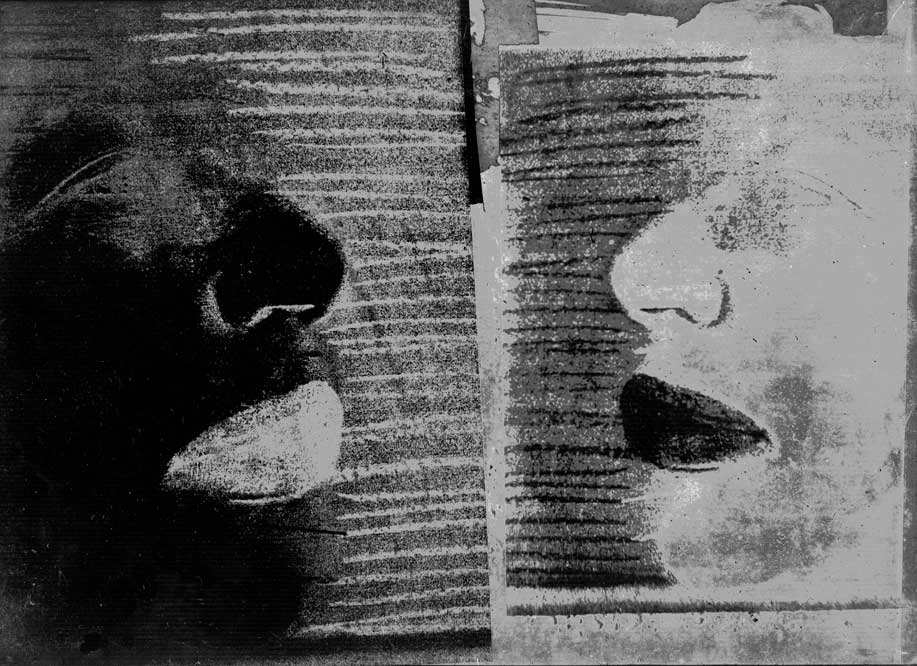
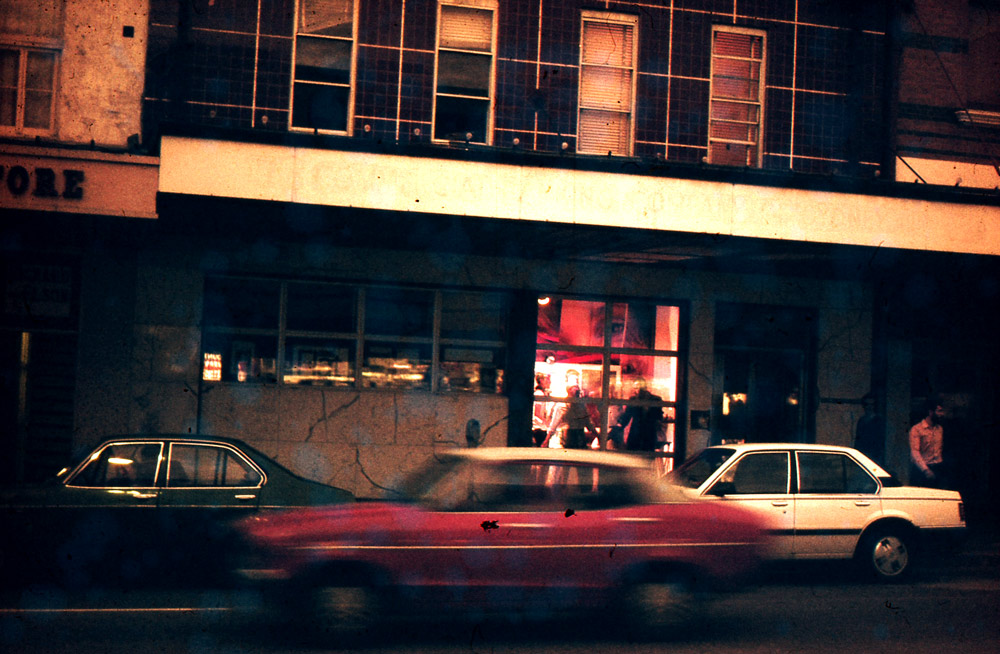
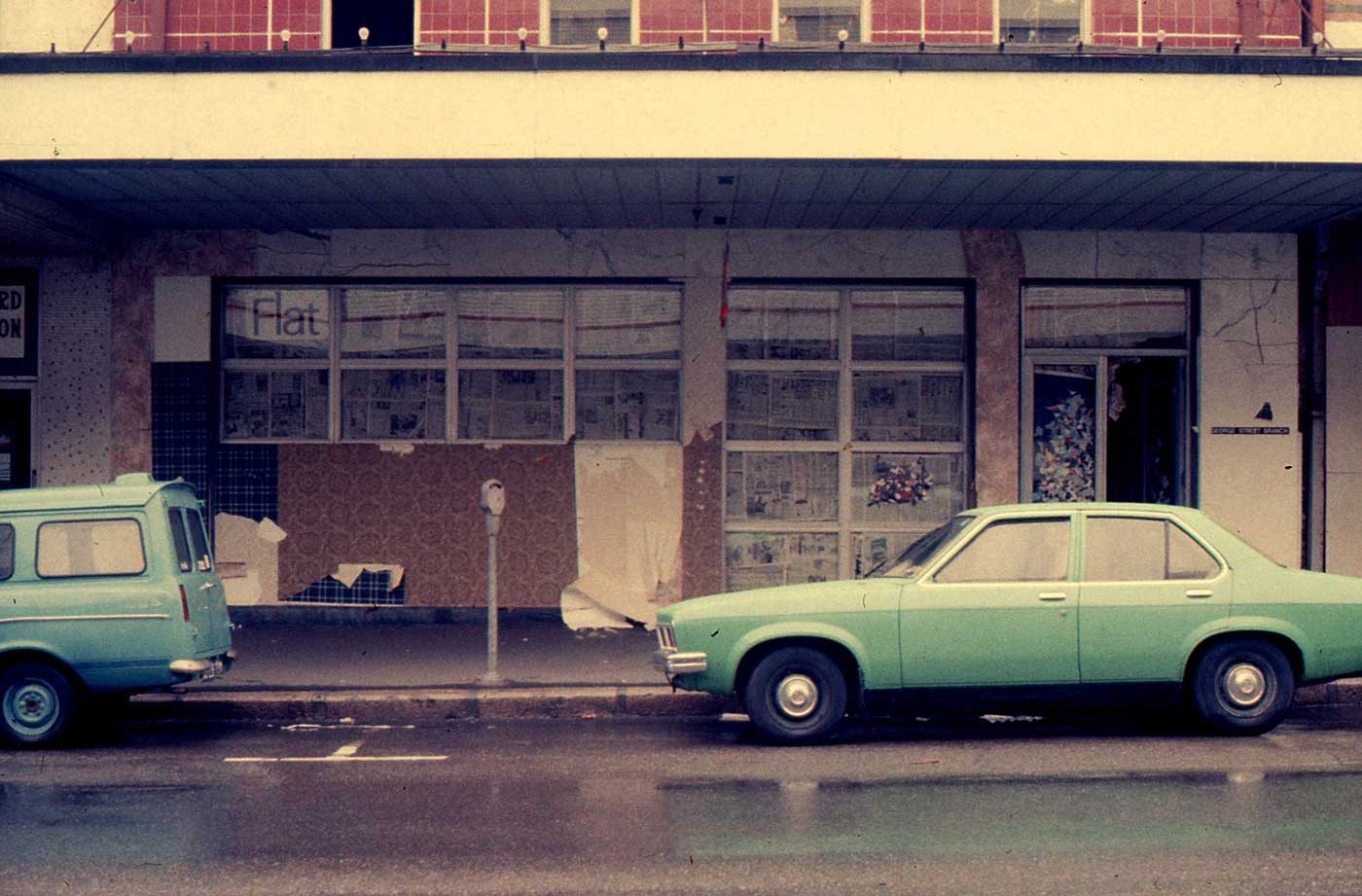
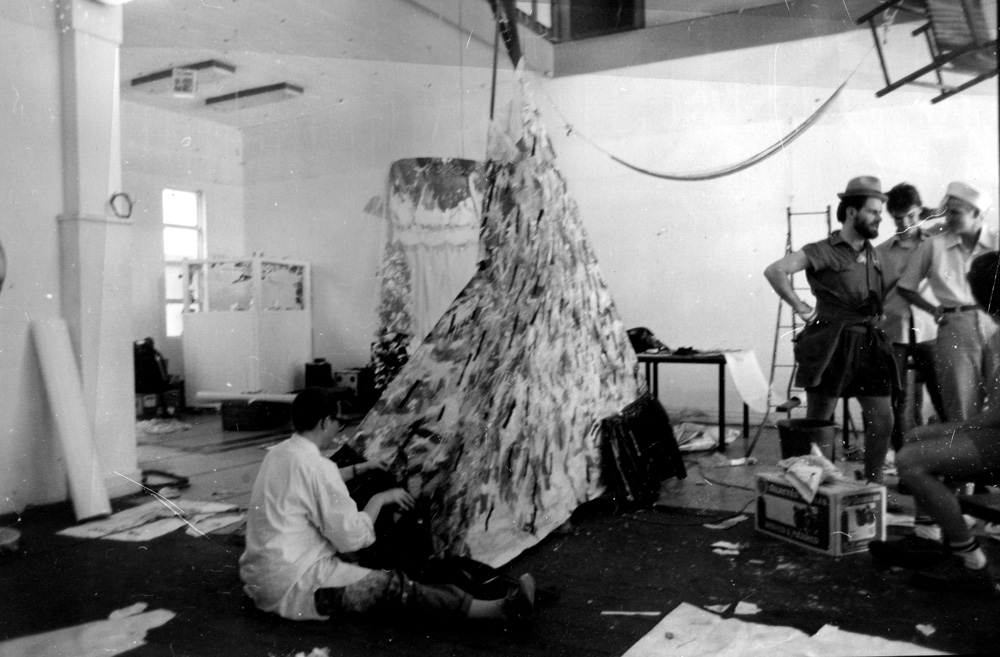
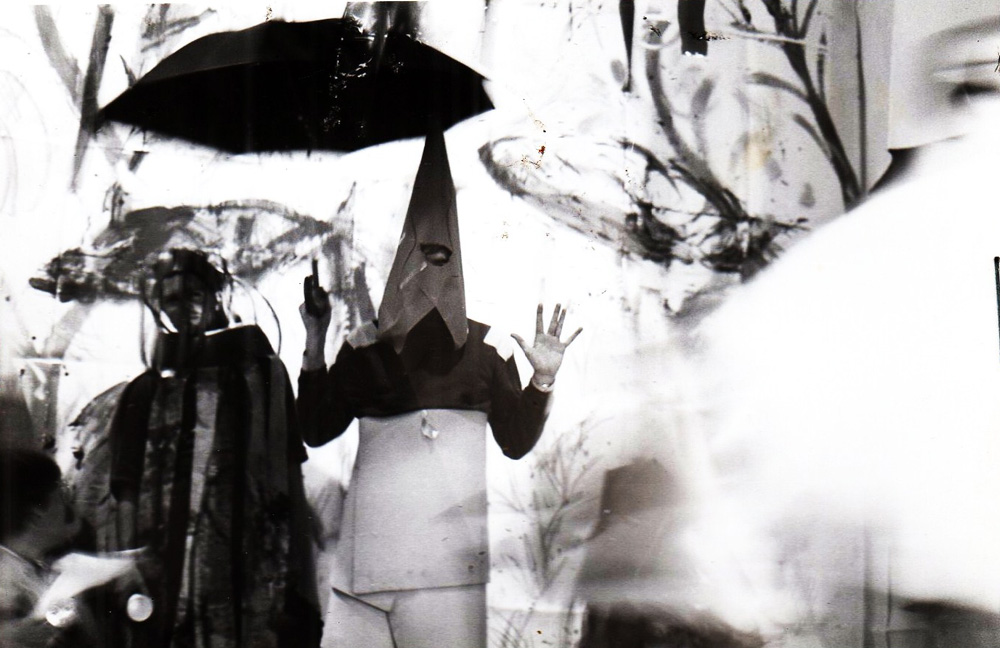
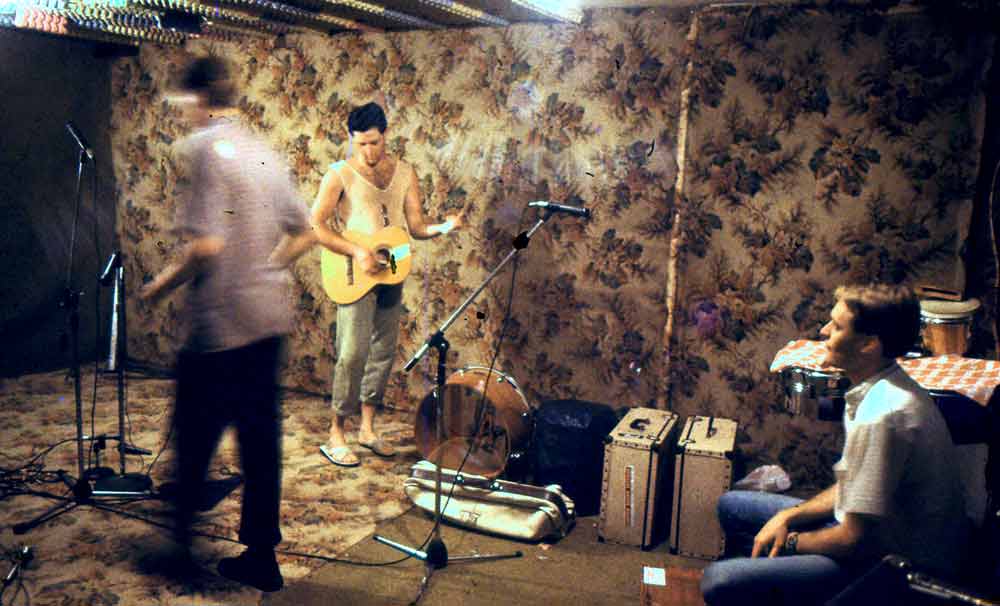
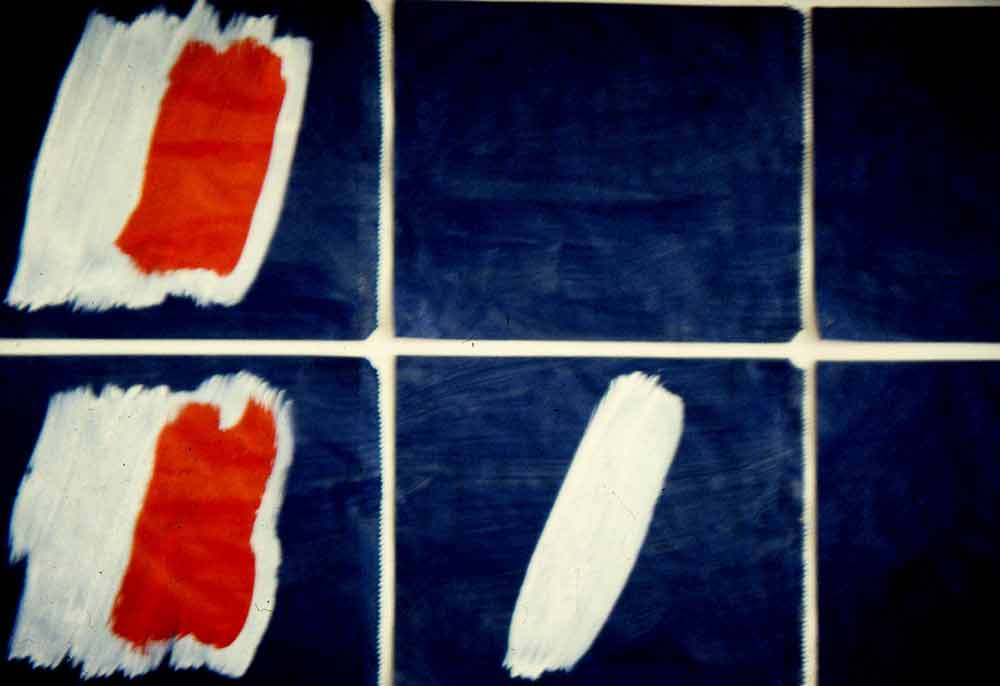
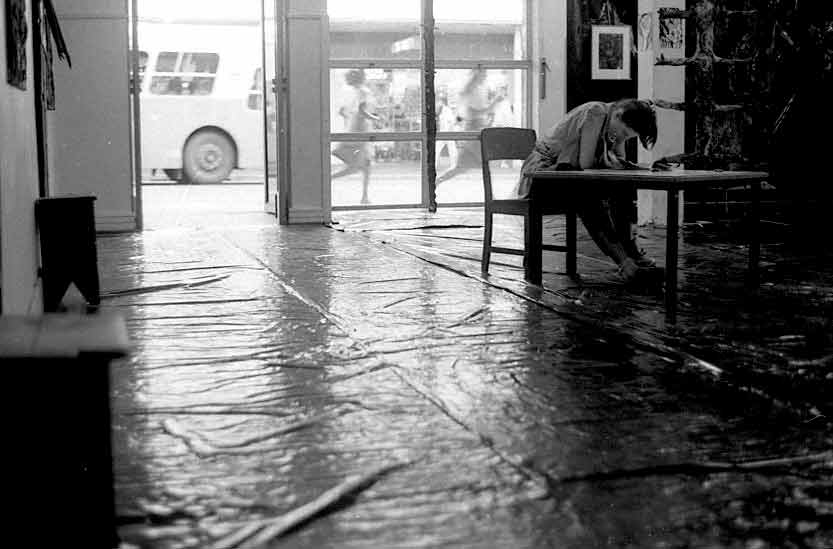
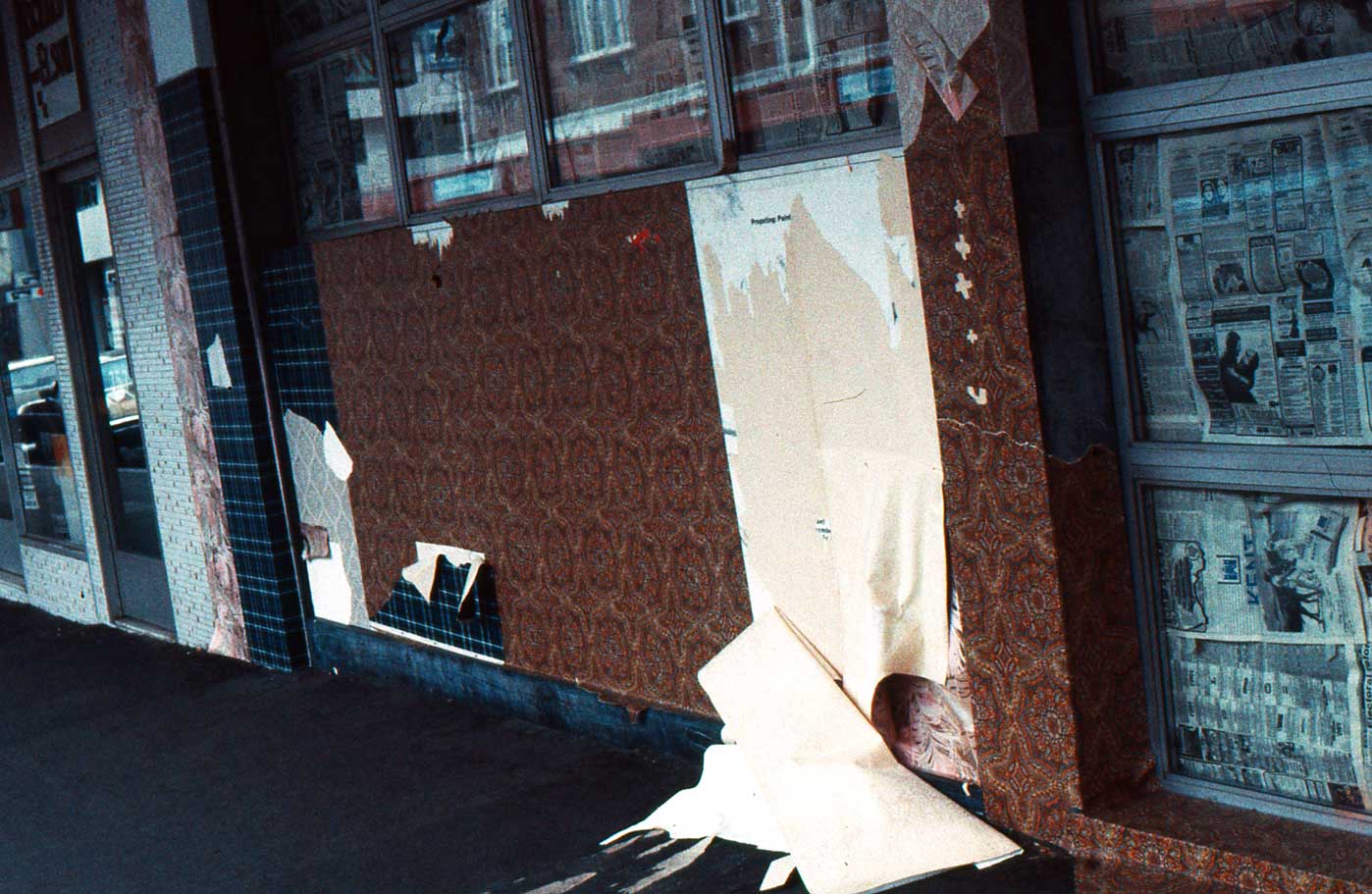
The push was on at the George St Branch – 355 George St, Brisbane – to embrace a more radical experimental strategy with open-ended mixed media and spontaneous street-level engagement. The musicians inhabited the basement bank vault; the exhibition space was located on the ground floor, opening onto George Street, and the artists roosted on the Mezzanine.
Artists came knocking on the door in search of a formal gallery space… their needs were rarely accommodated in our search to explore our ever-present irreverent-reverence-indifference to the fine arts.
Performances, installations, cabarets, film screenings and exhibitions were staged in the George St Branch from January 1983 to April 1984.
The collaborative Maga(zine) strategies Art Walk 2, 3 & 4 and Art Wonder Stories were generated from this space.
In early 1984, Russell Lake began the internal deconstruction of the bank building, harvesting building materials in anticipation of the coming demolition.
In late 1984, Jeanelle Hurst and Adam Wolter developed the digital map, Map of the World (revised edition), mapping the art spaces across the Brisbane CBD.
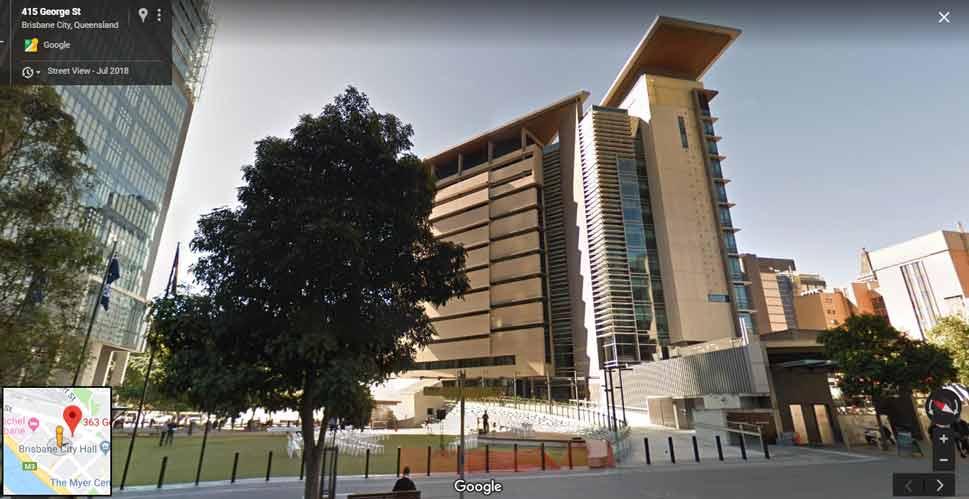
Post demolition, the Supreme and Districts Courts precinct was constructed on the site and across the area bordered by George, Turbot, and Roma Streets.
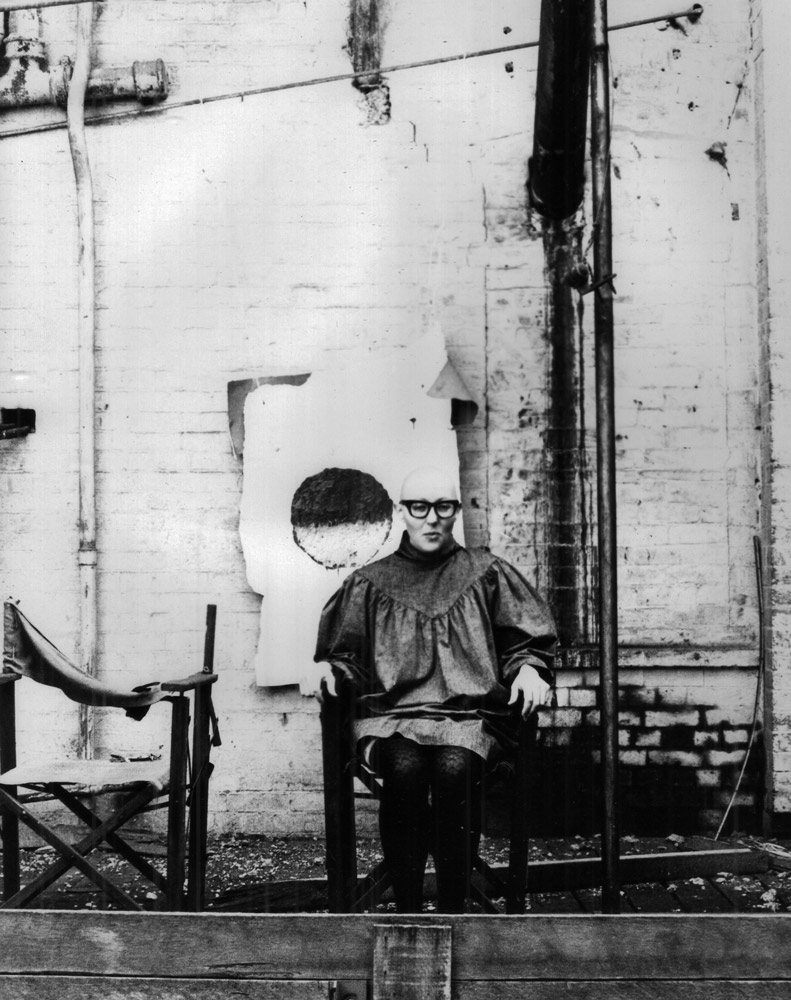
In late 1984, Russell Lake, Adam Boyd, Zeliko Maric and Jeanelle Hurst relocated to Fortitude Valley to a large open floor space in the Belltower Studios.
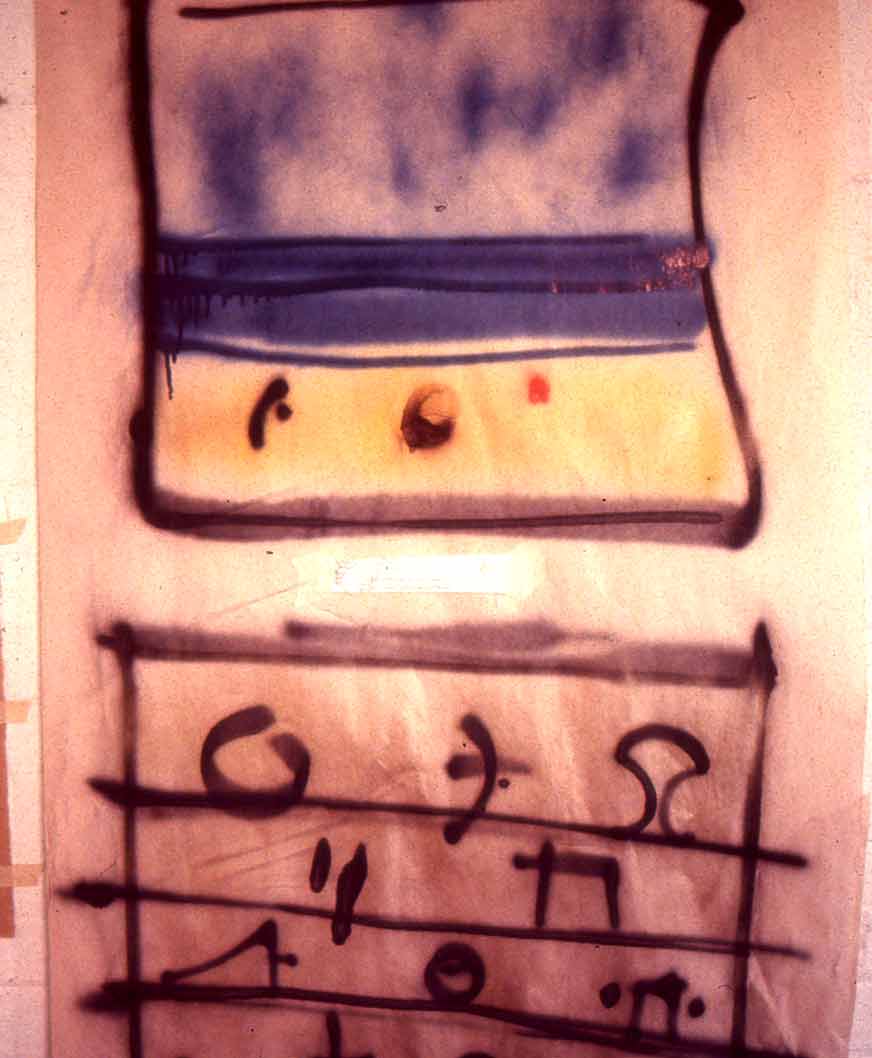
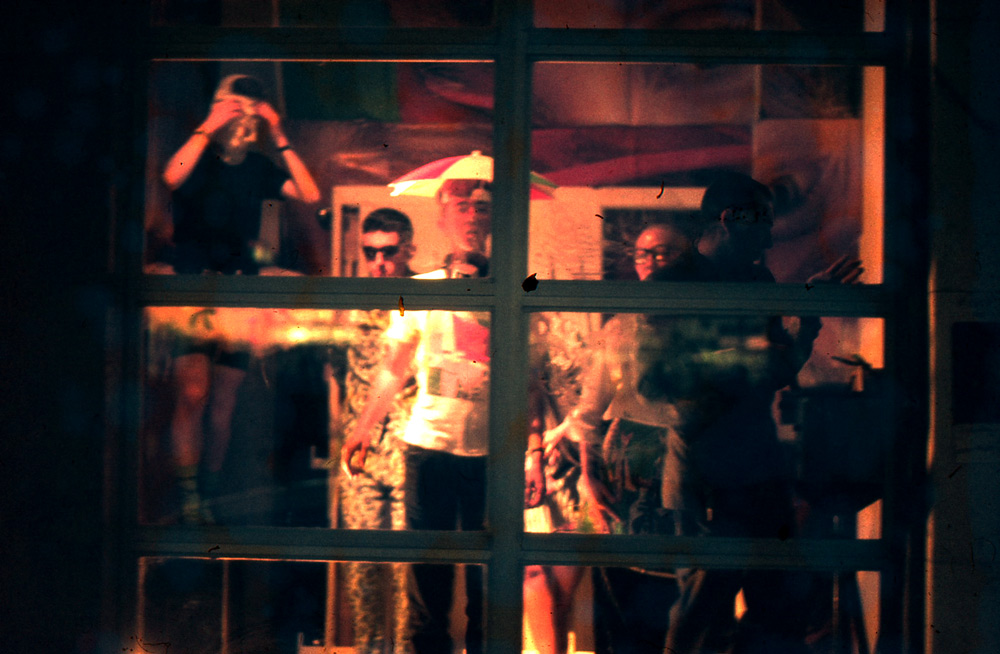
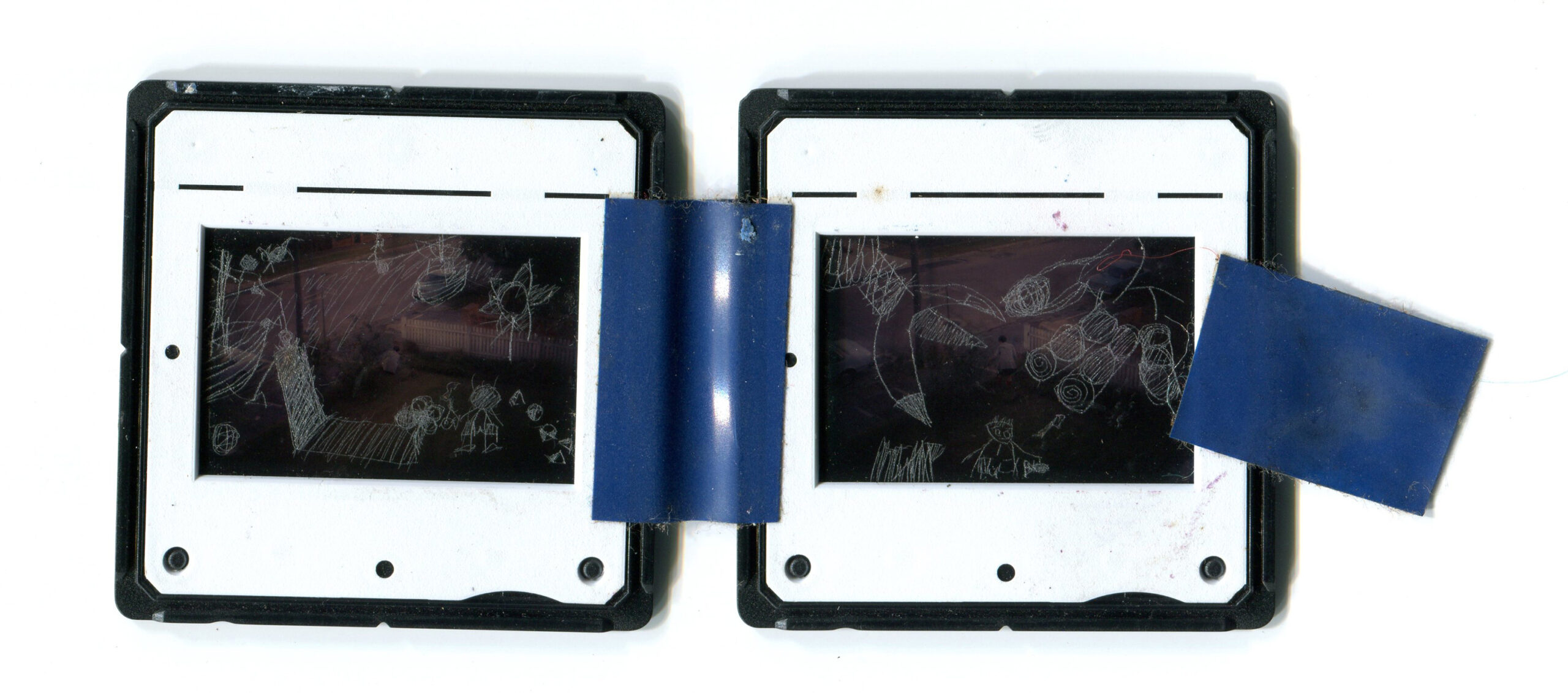
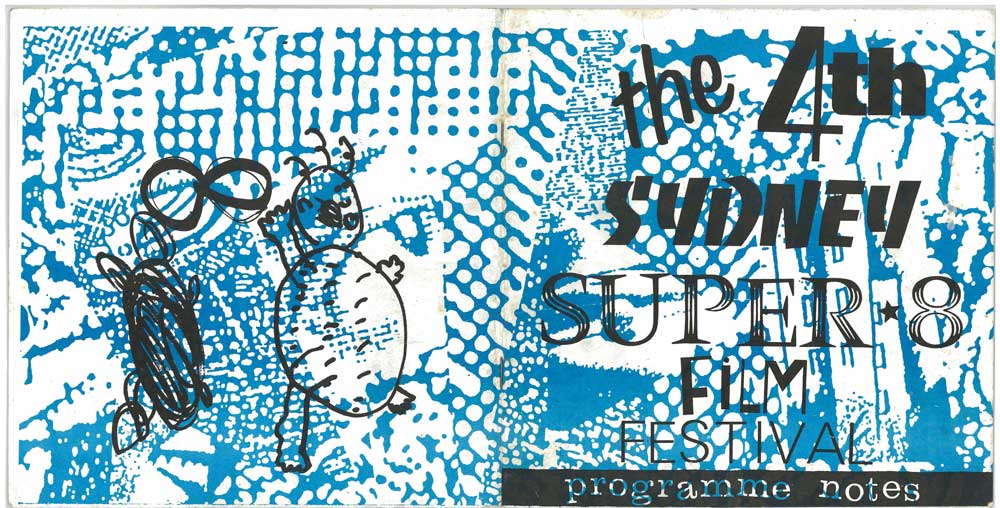
O’Flate Studios Fortitude Valley …
The One Flat open door strategy ended as THAT gallery opened its doors in 1985.
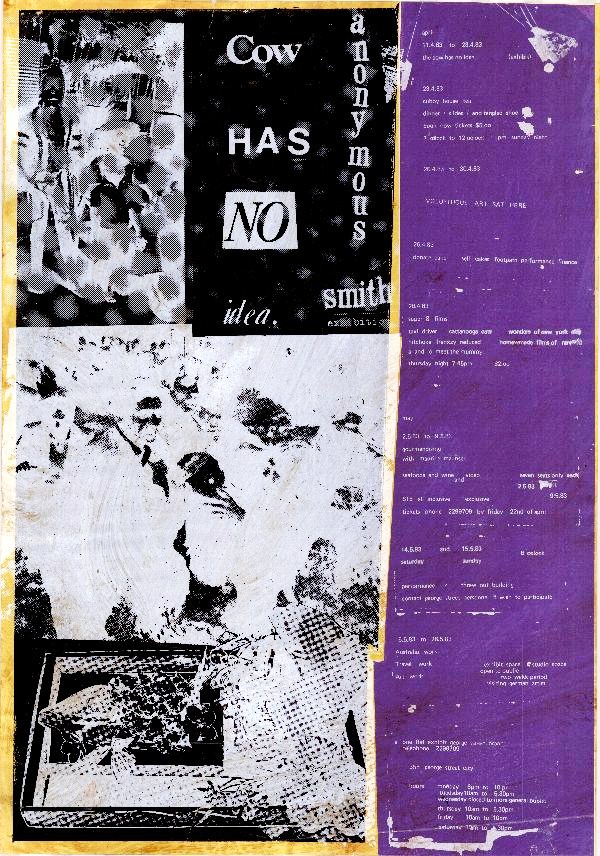
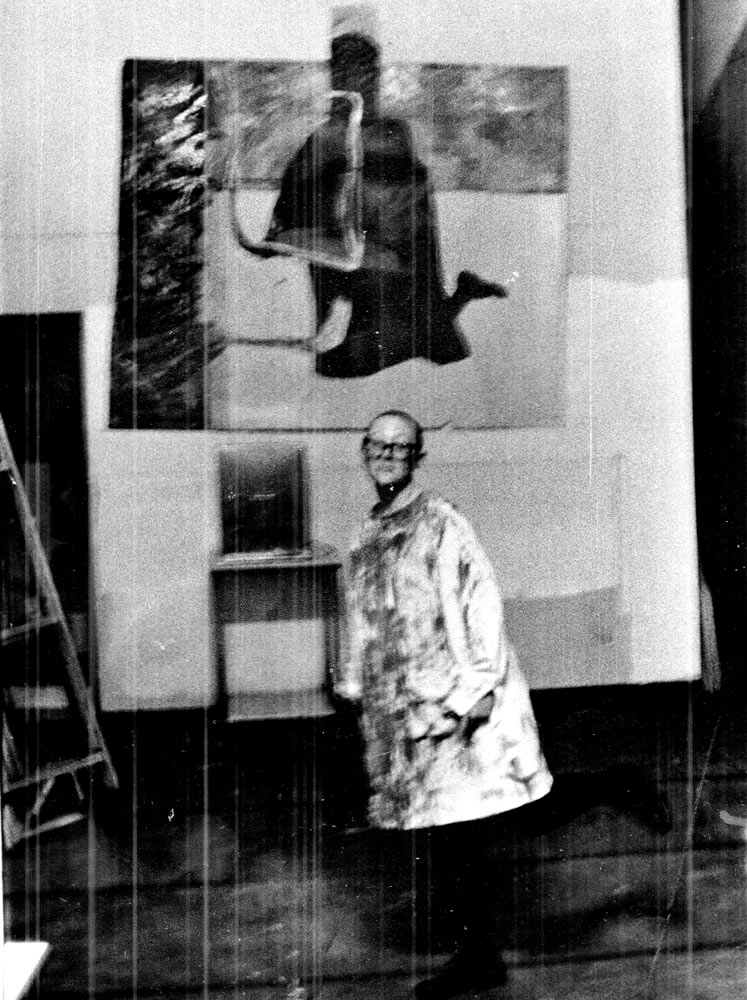
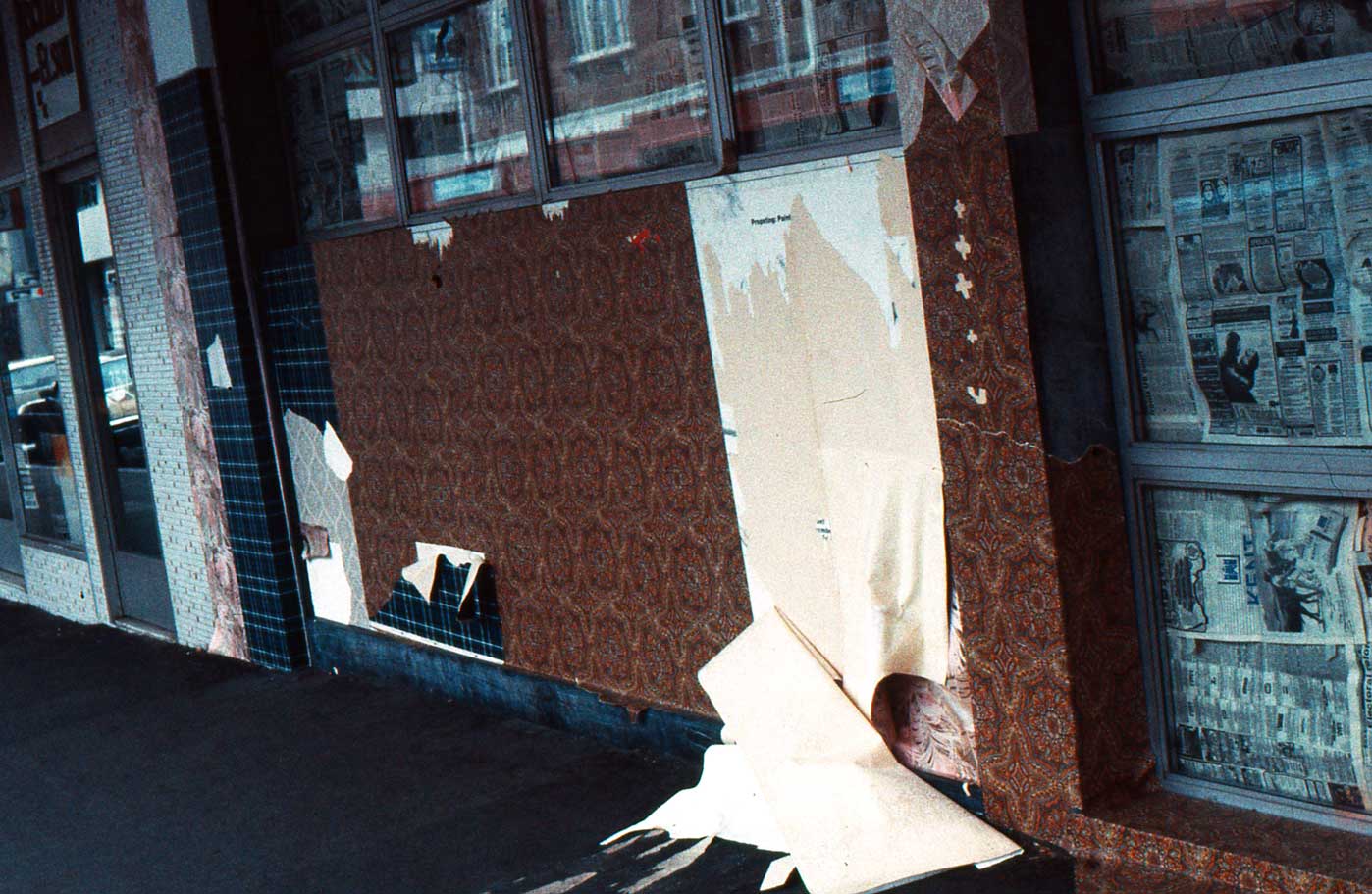
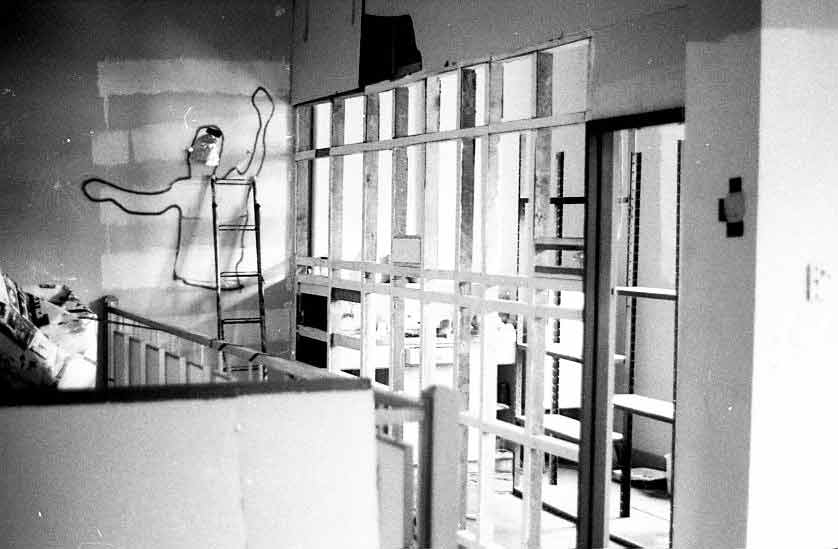
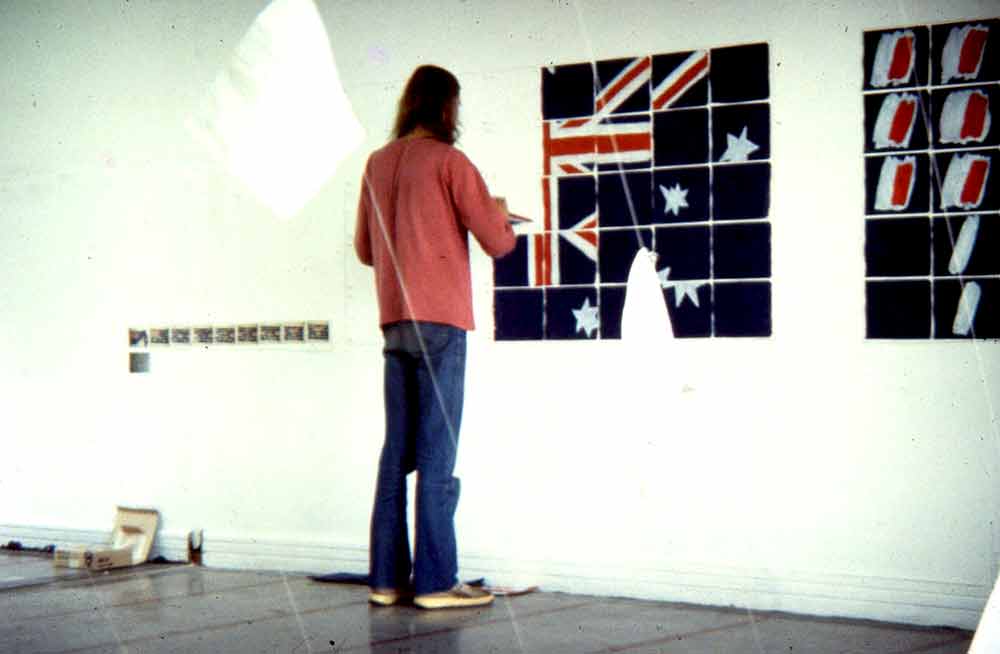
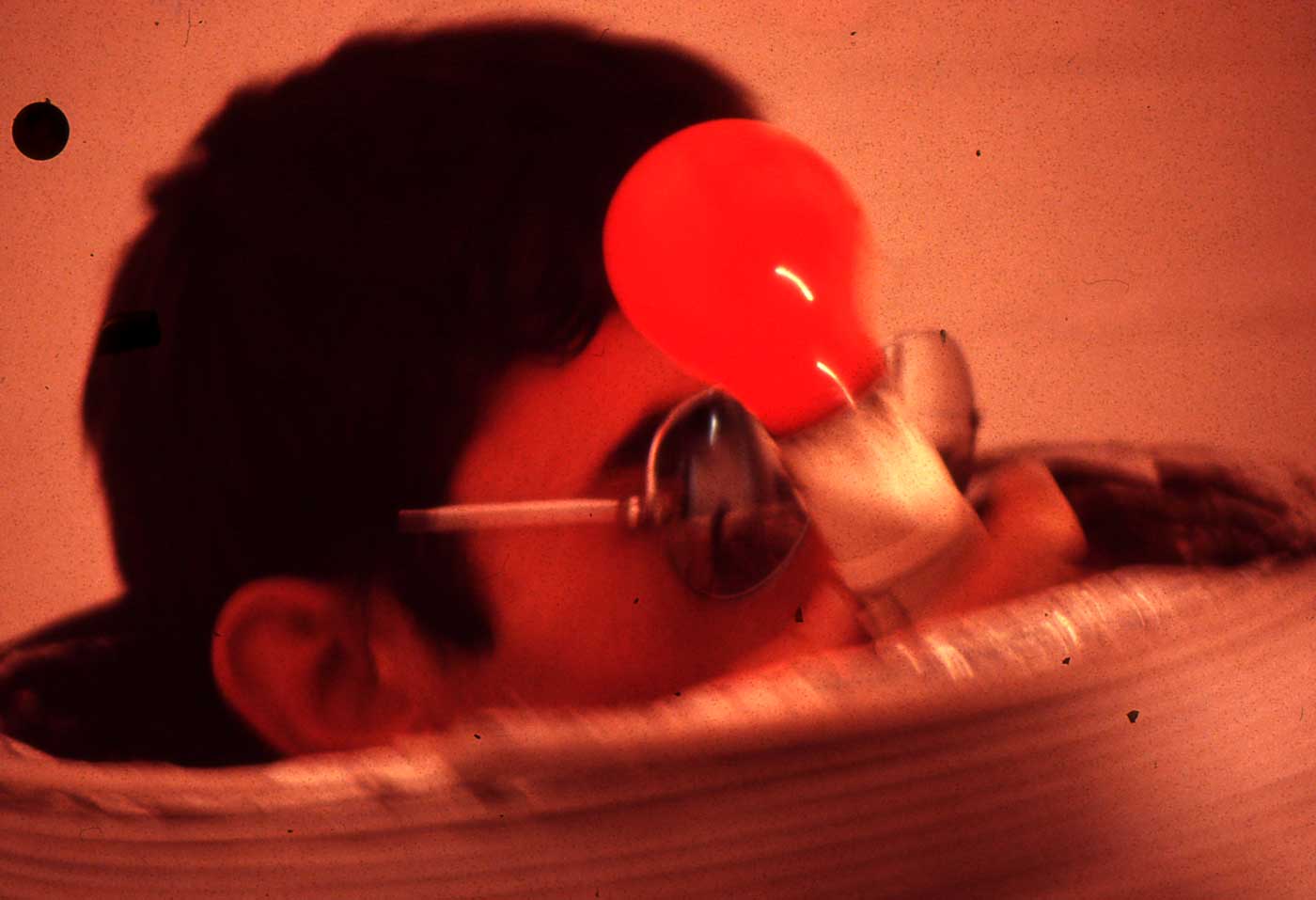
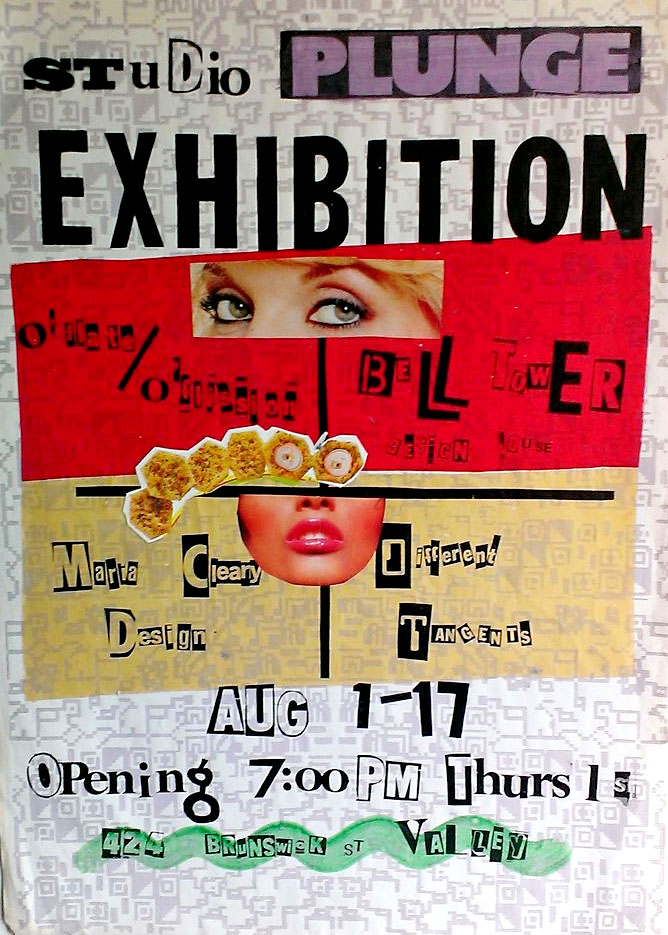
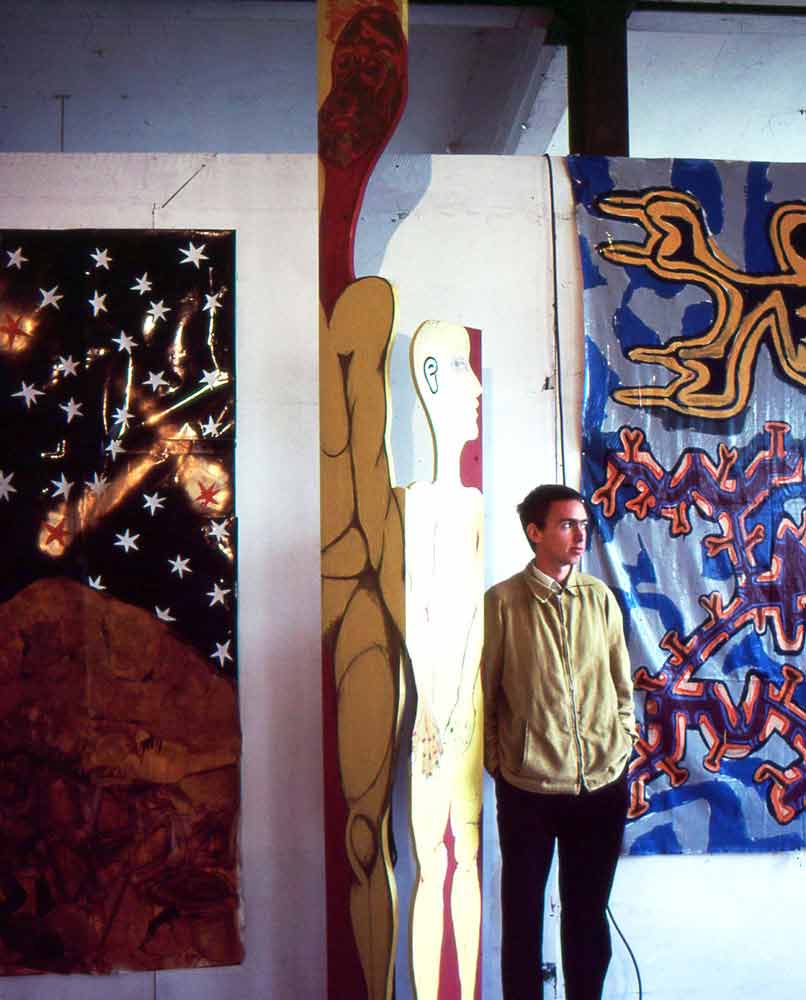
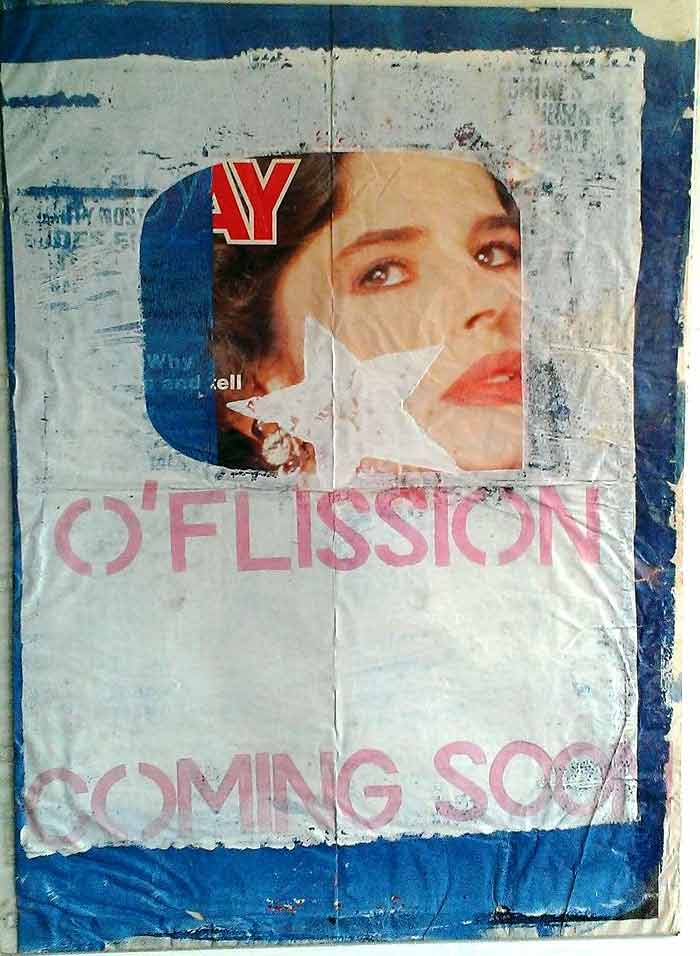
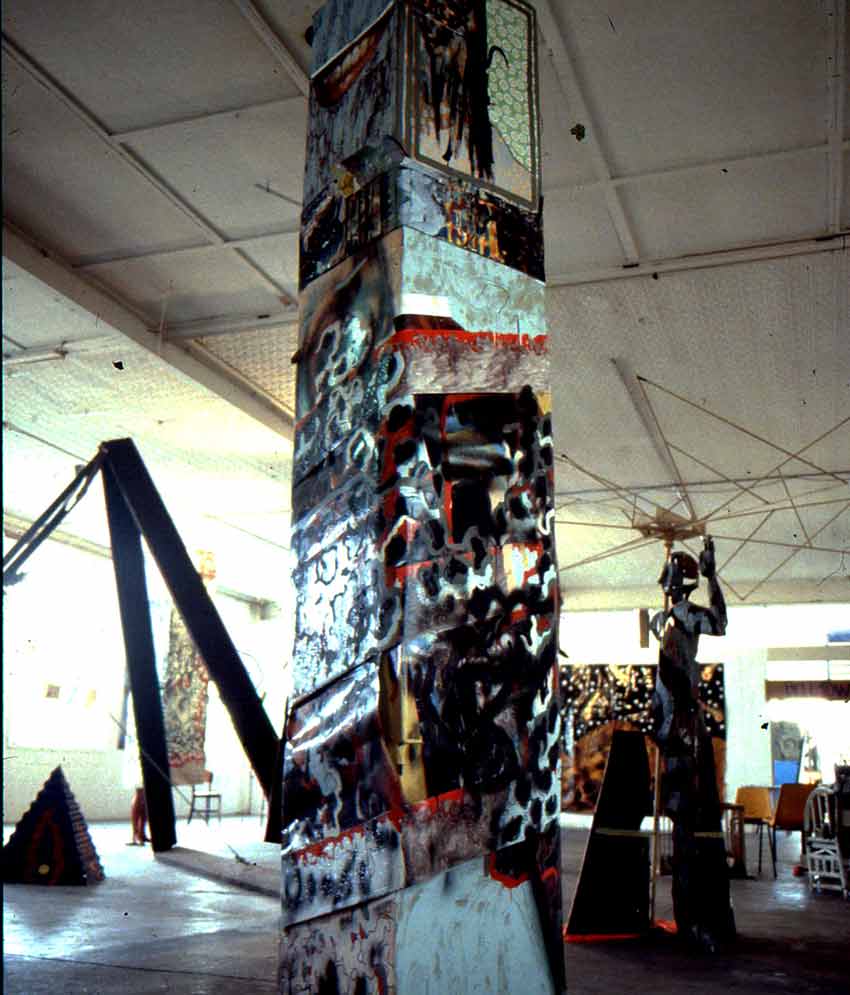
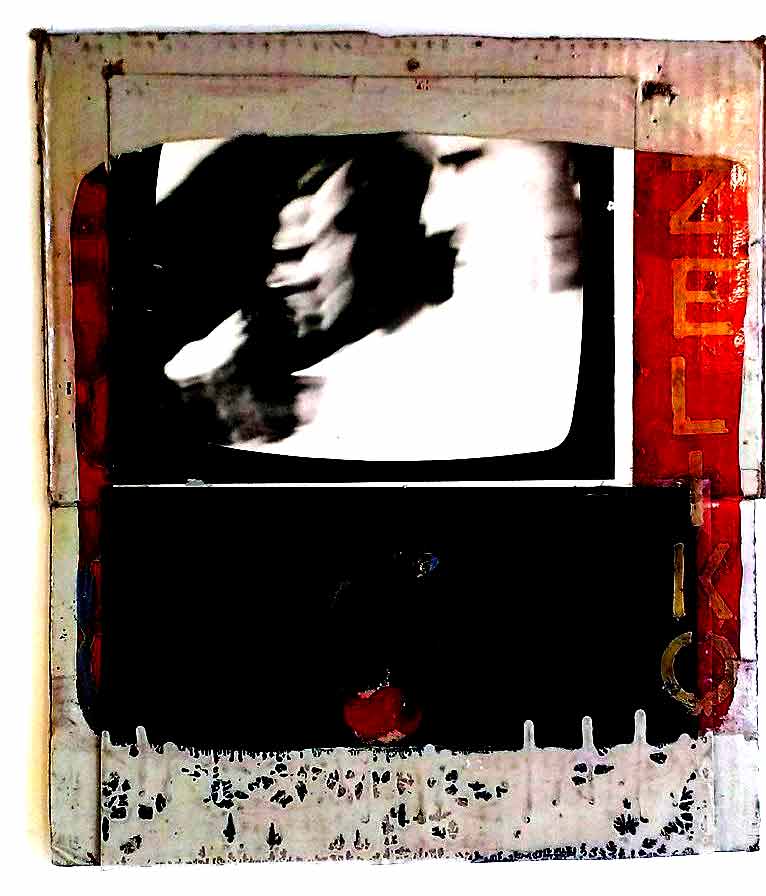
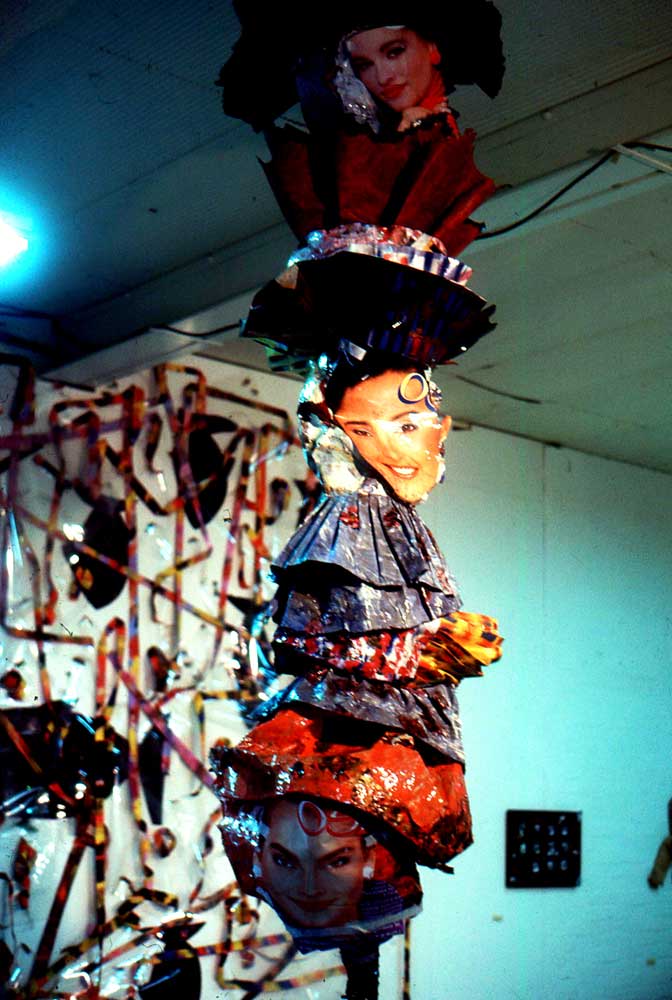
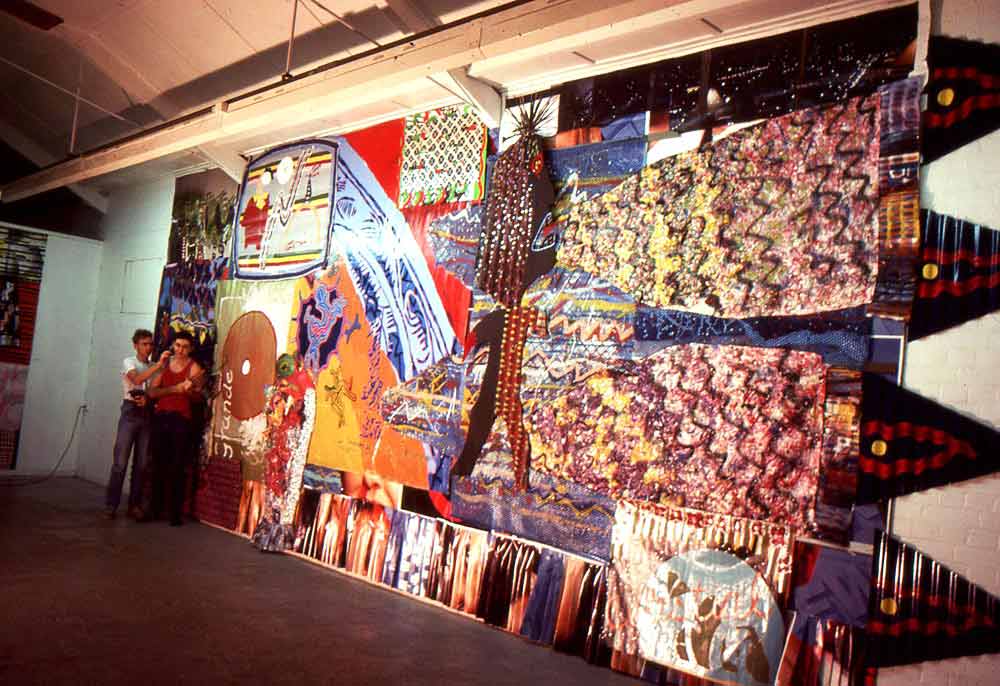
From 1985, the One Flat mob (Russell Lake, Adam Boyd, Zeliko Maric & Jeanelle Hurst) pursued both individual and collaborative strategies in what was now called O’flate Studios in the Belltower Studios building in Fortitude Valley.
This building now houses the Judith Wright Arts Centre.
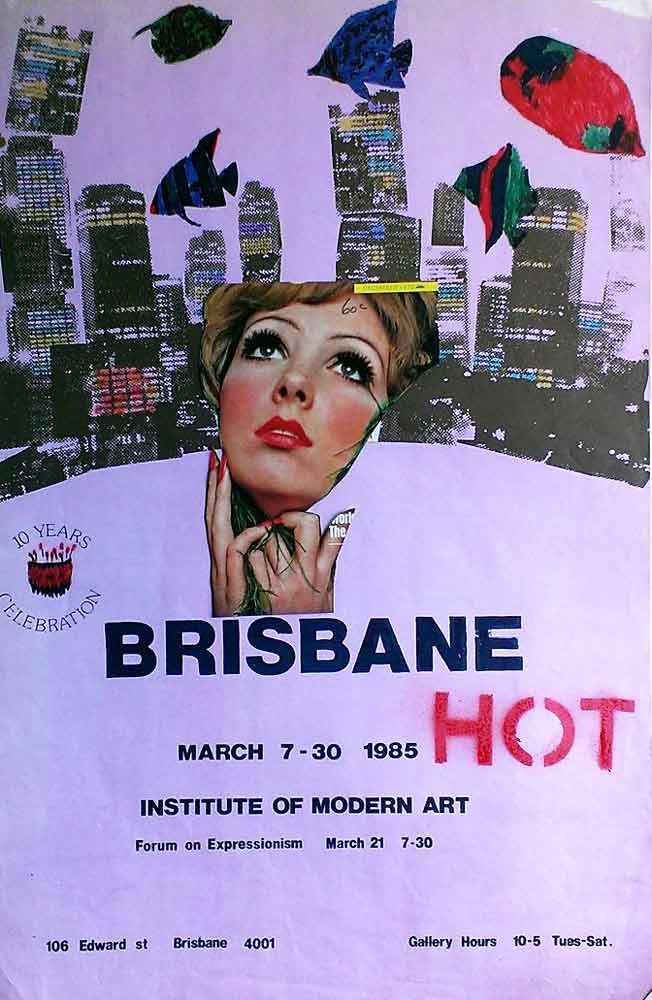
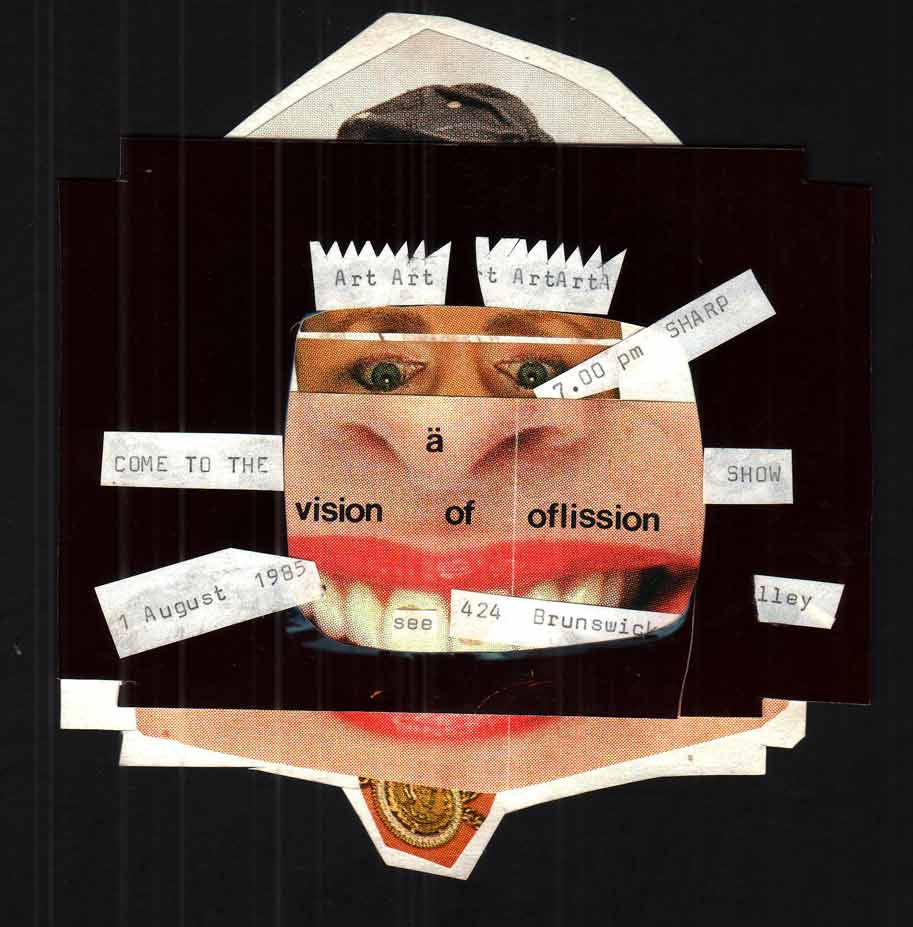
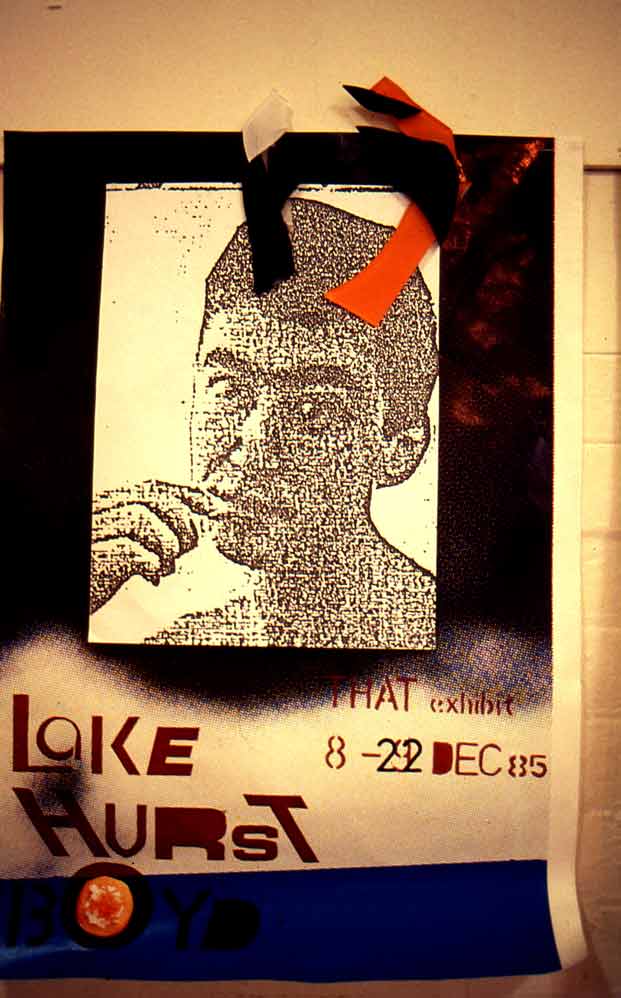
The O’flate group participated in the following shows throughout 1985: Brisbane Hot @ the Institute of Modern Art; Queensland Works 1950-1985 @ the University Art Museum; Studio Plunge @ O’flate Studios / The Belltower Studios; THAT Exhibition @ THAT Gallery; Hurst Lake Boyd Show @ THAT Gallery & This is That @ Gladstone Civic Art Gallery.
Jeanelle Hurst started researching telecommunications – bulletin boards and videotex services.
The One Flat mob, comprising Russell Lake, Adam Boyd and Jeanelle Hurst, secured funding for the O’flate National Art Safari in late 1985.
O’Flate National Art Safari …
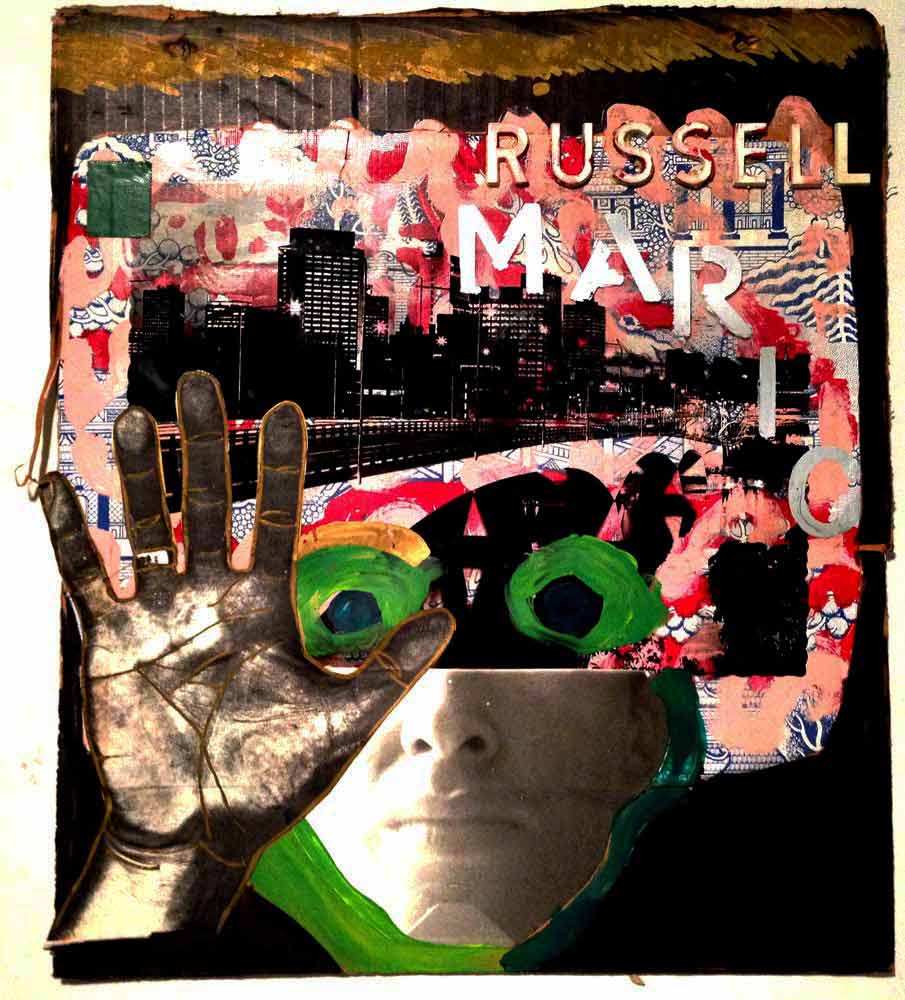
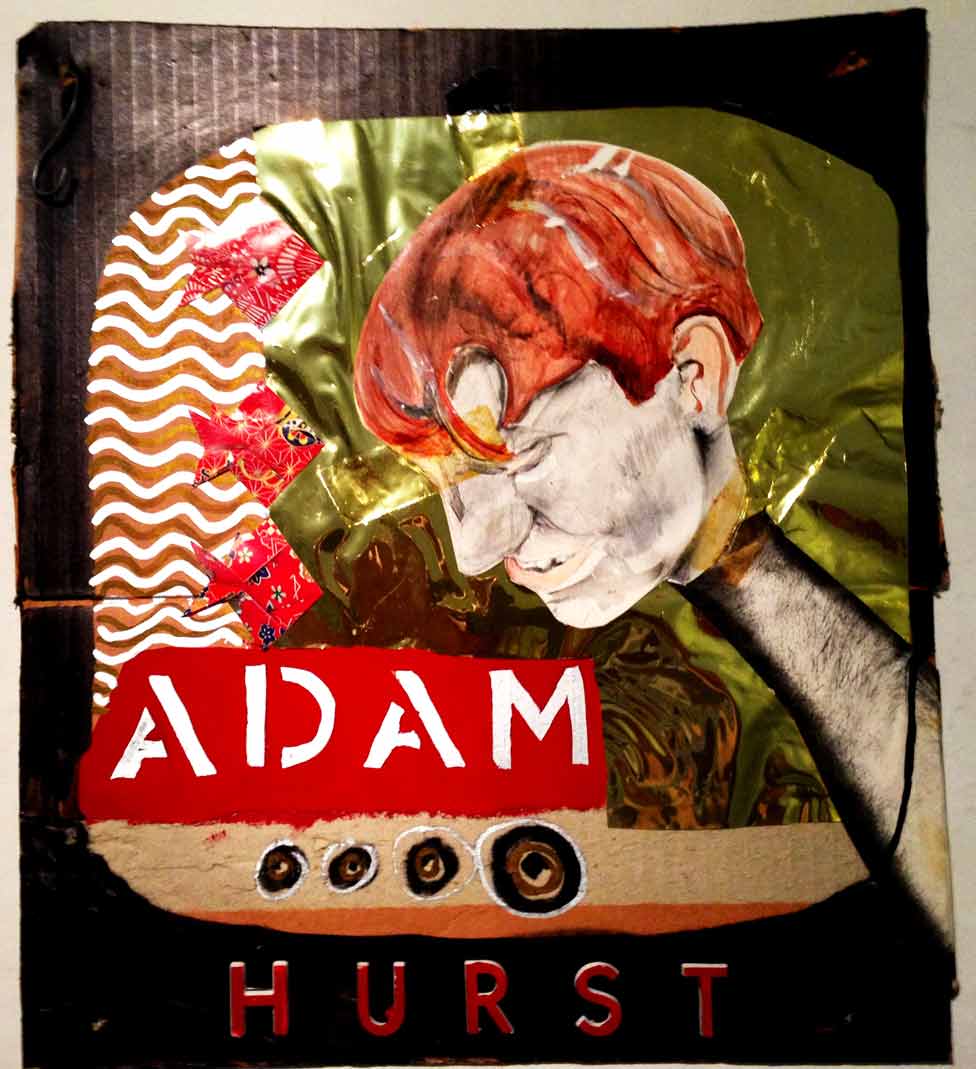
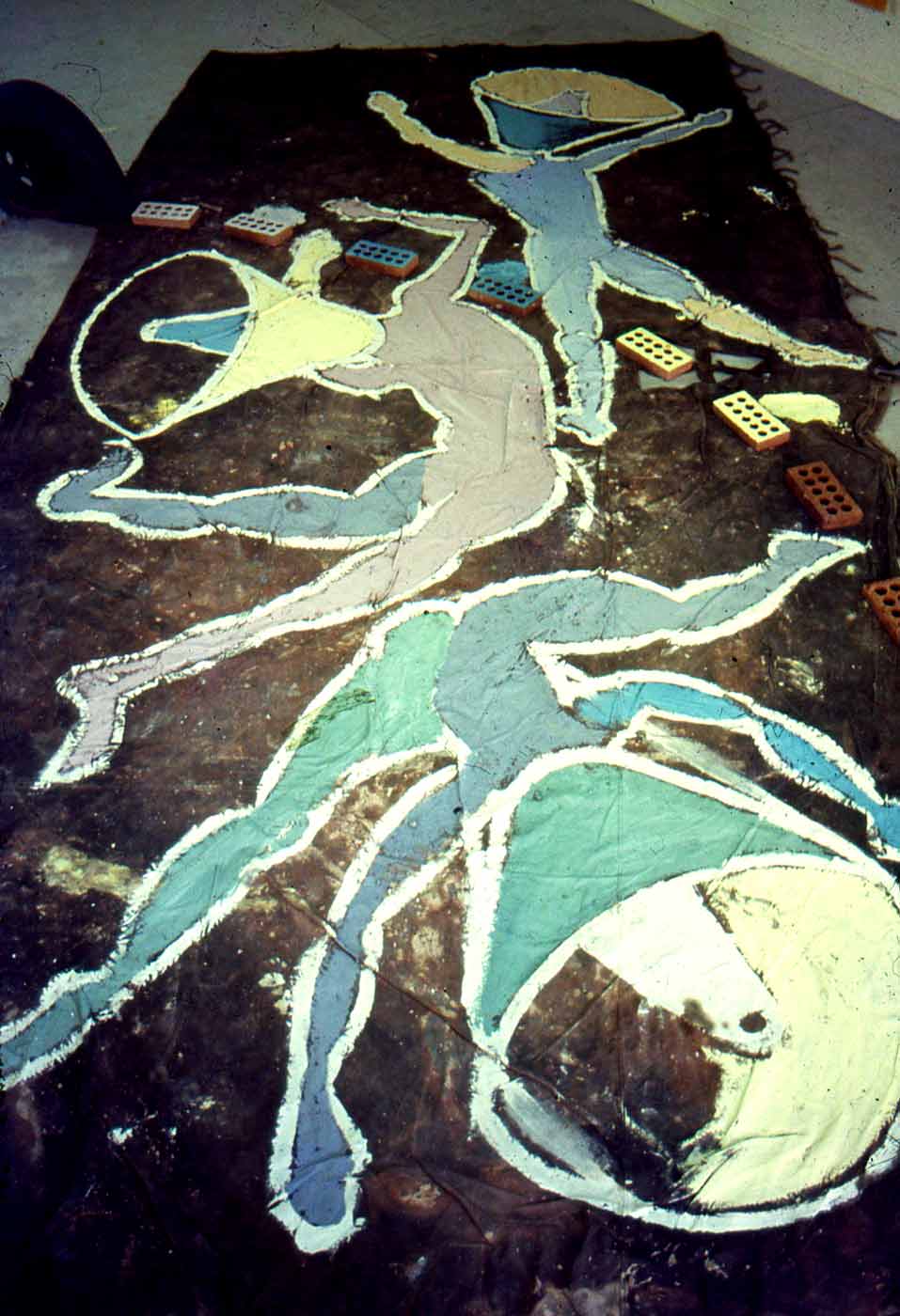
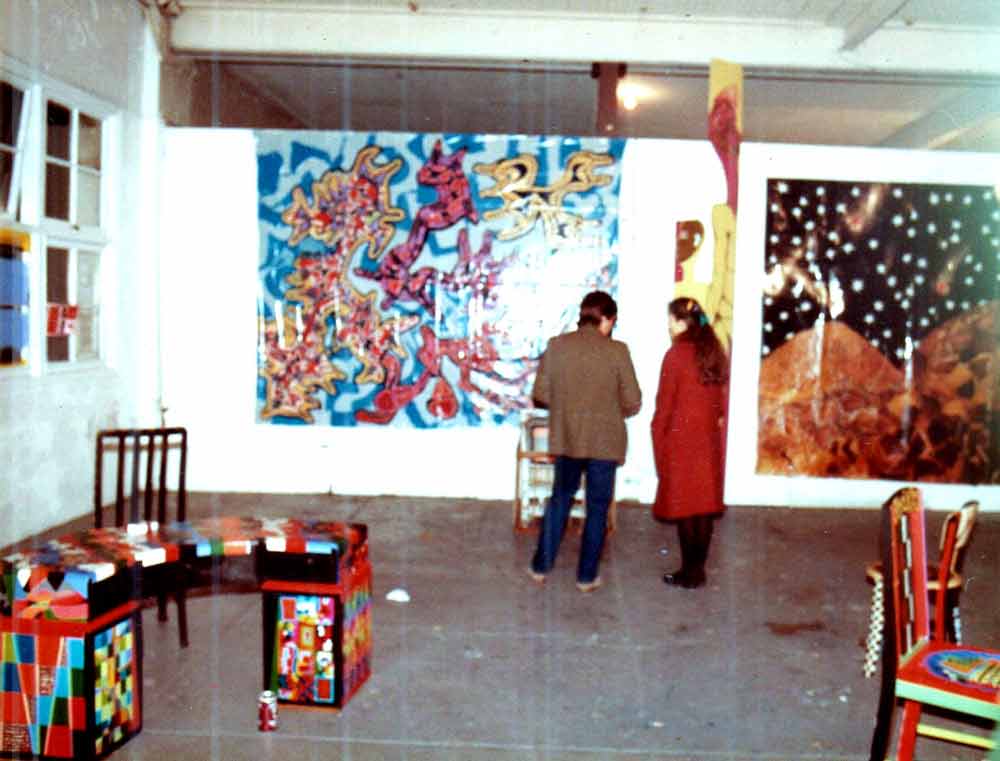
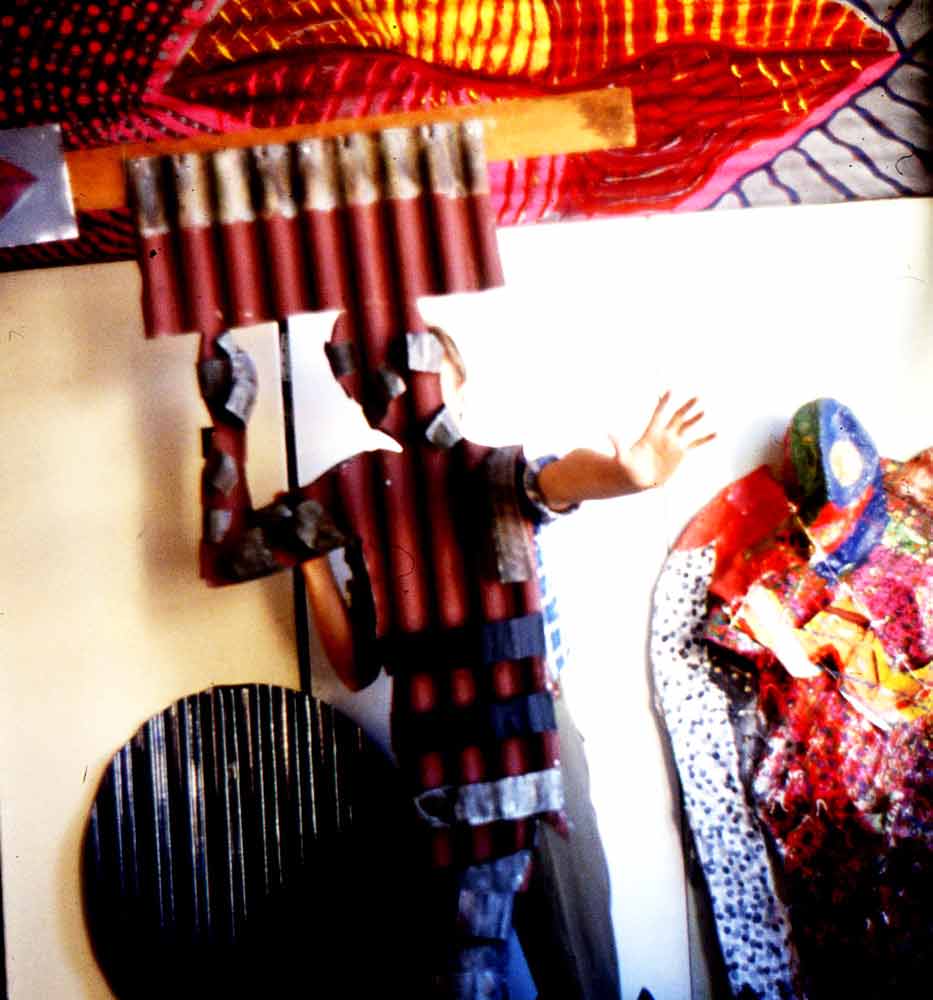
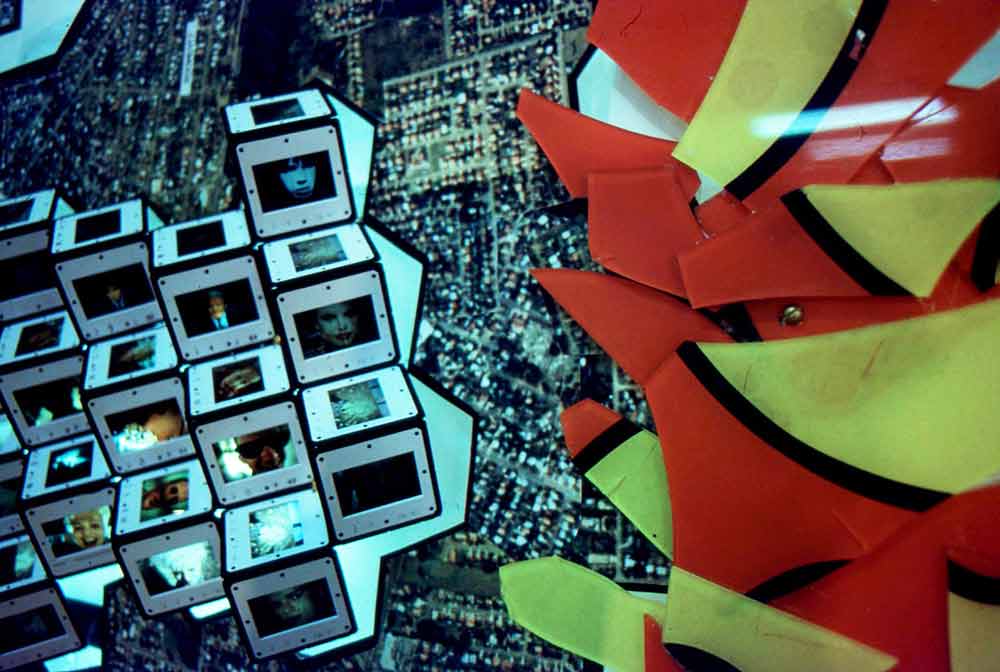
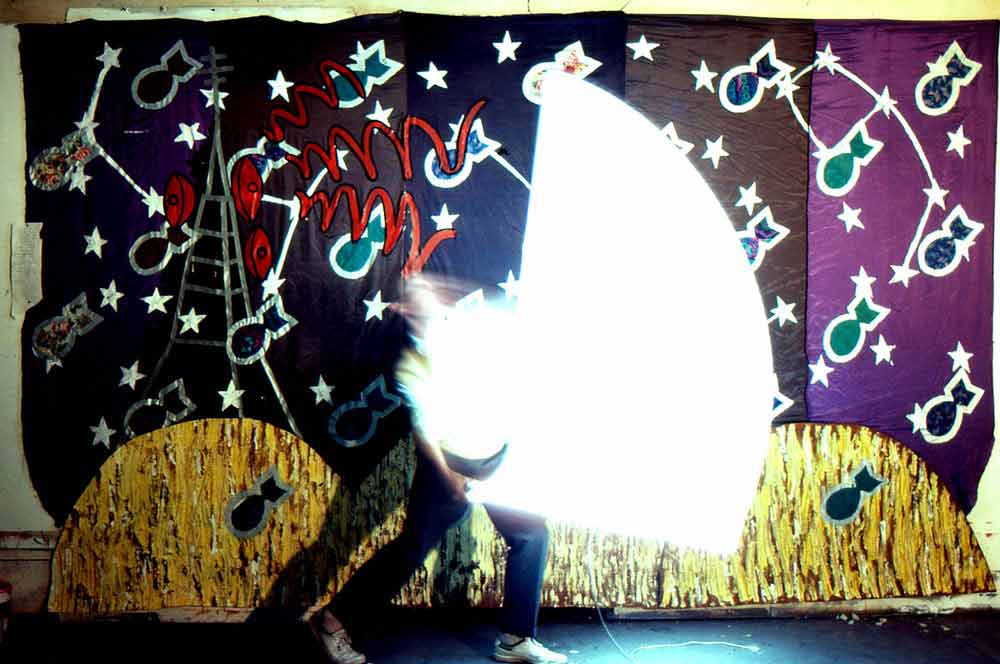
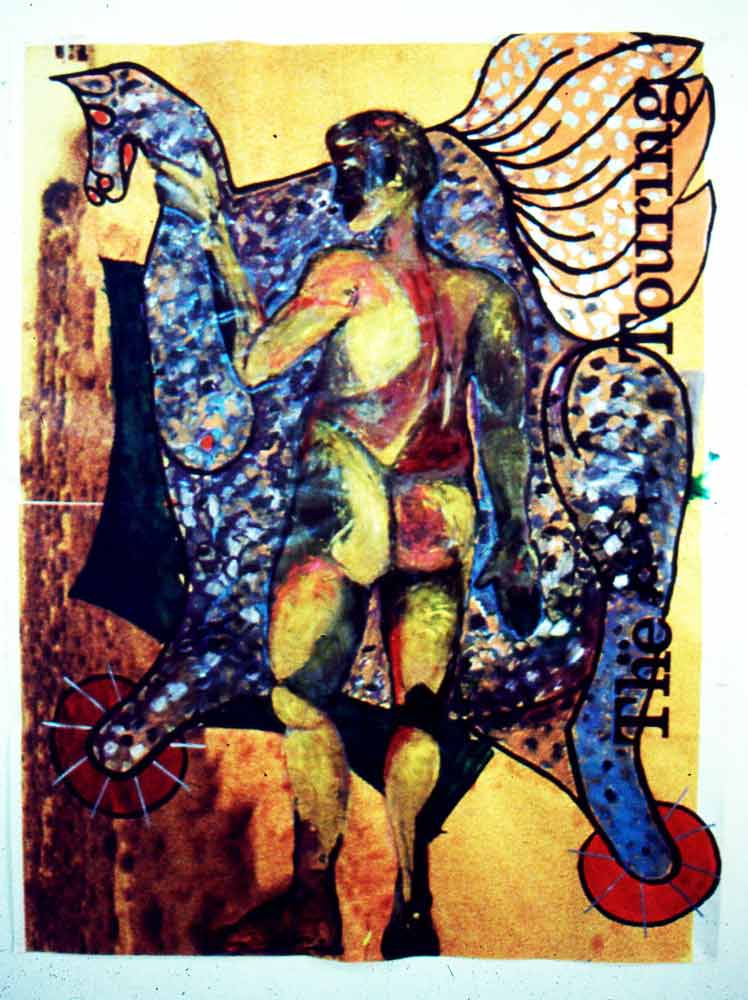
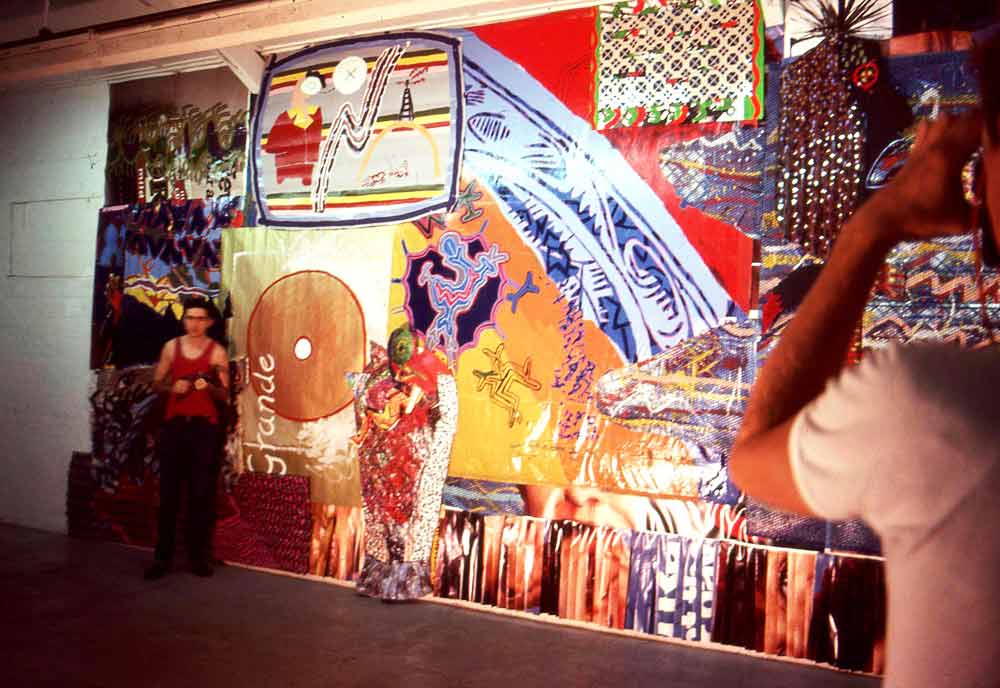
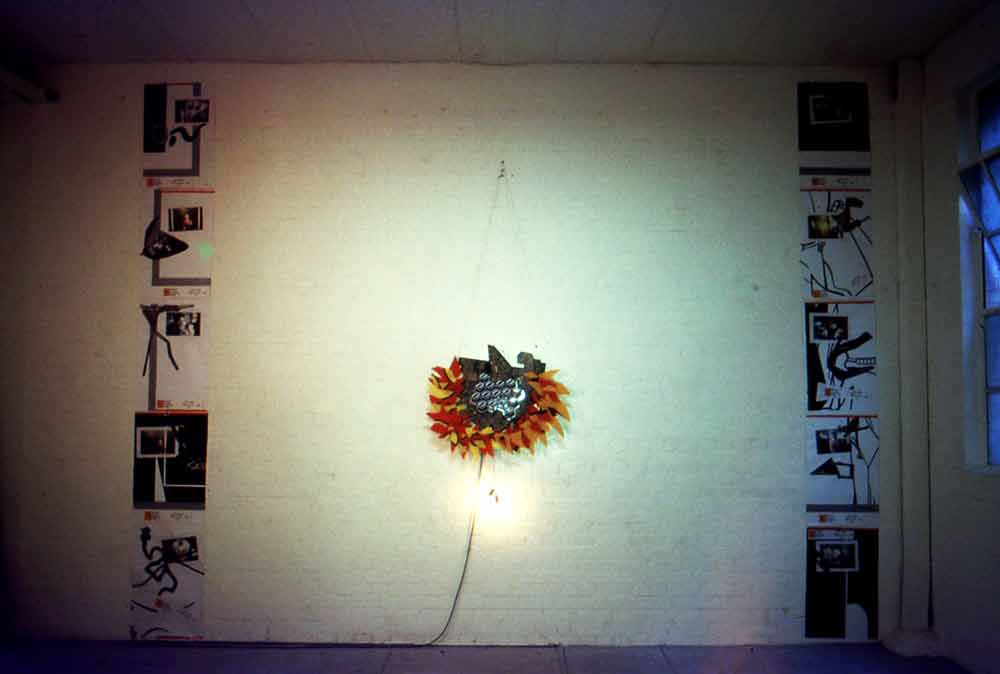
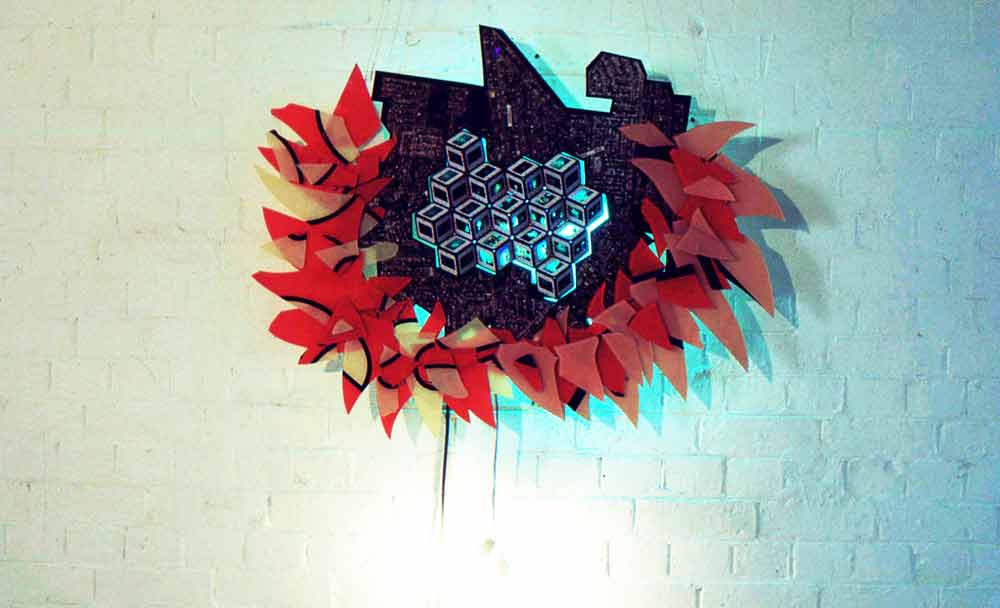
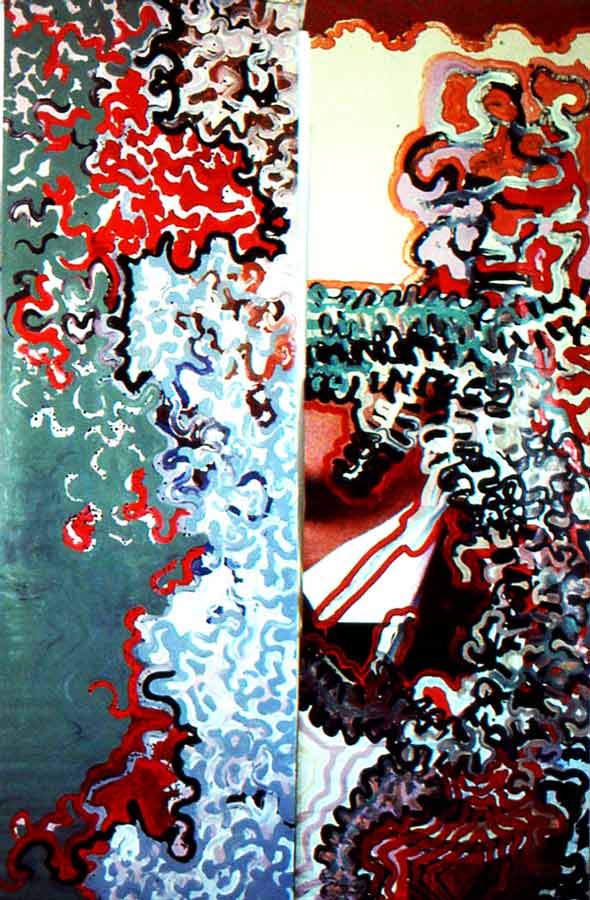
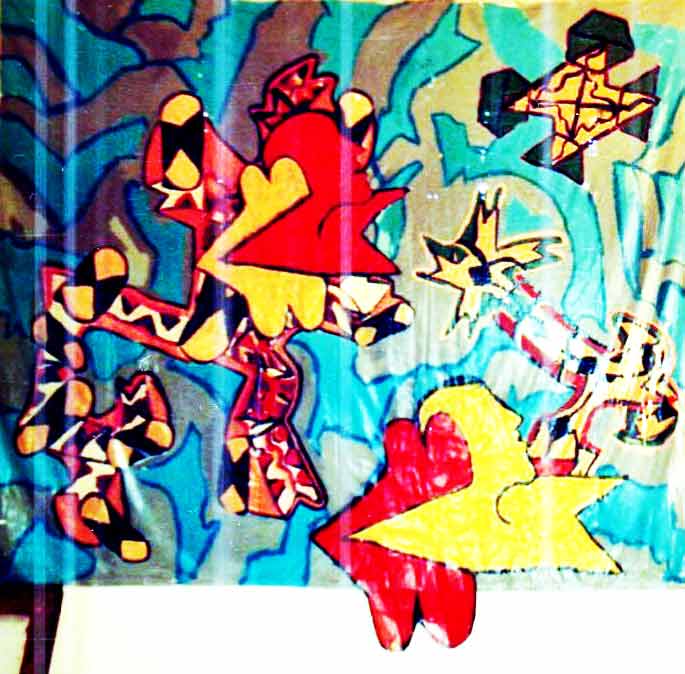
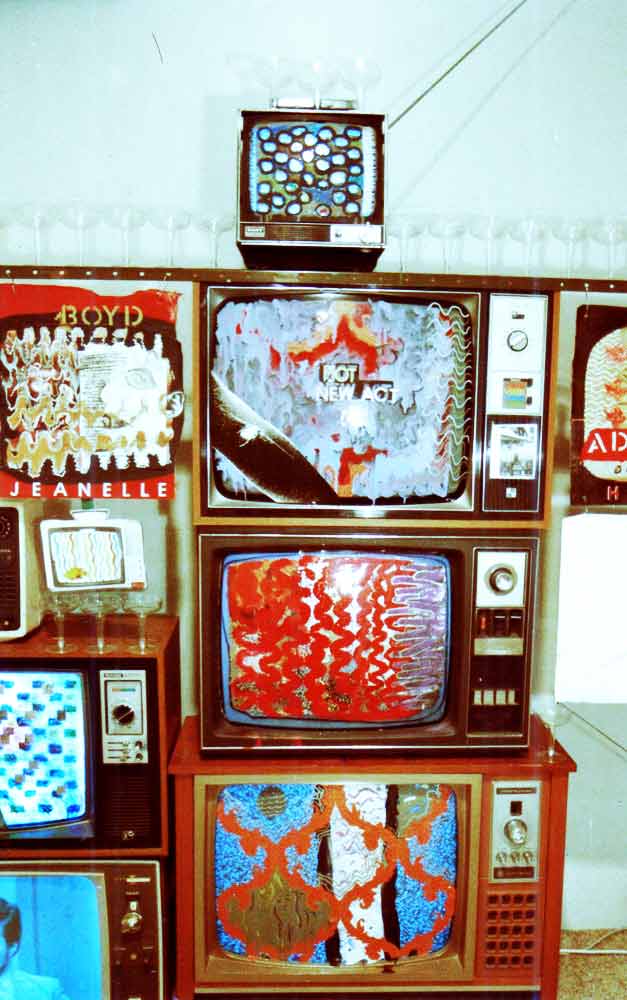
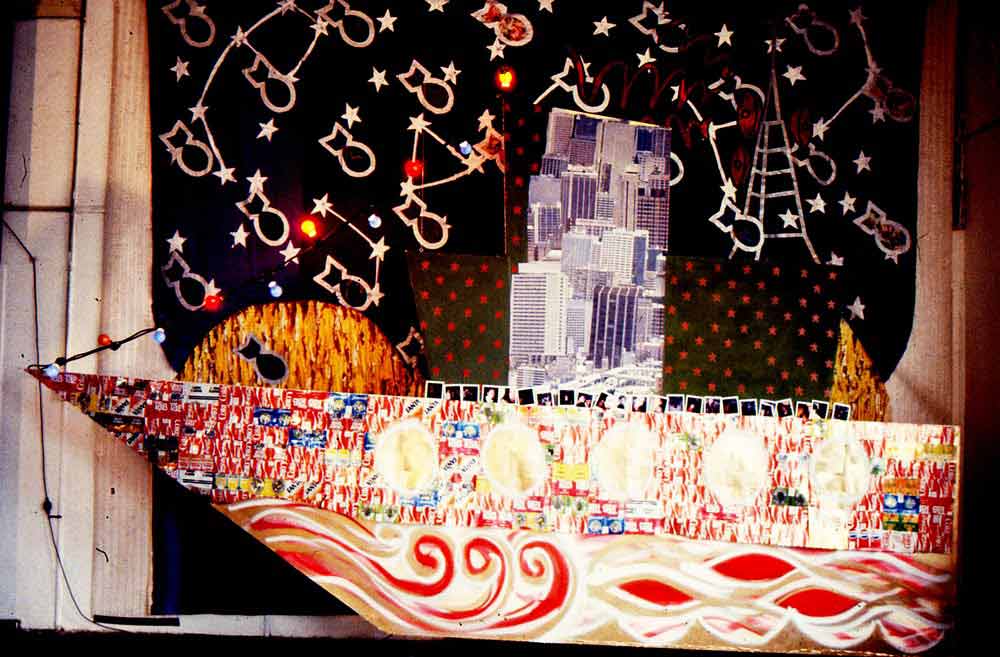
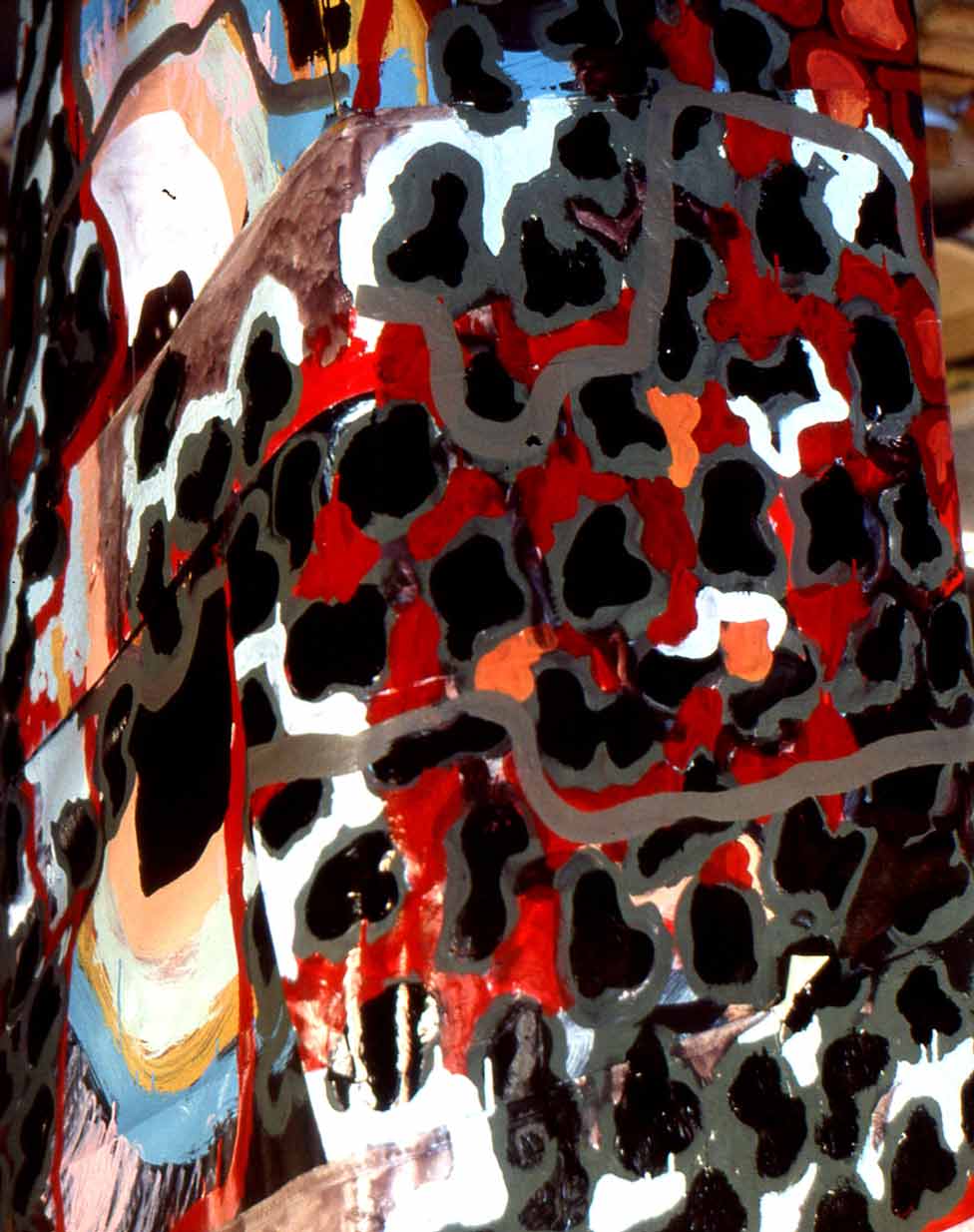
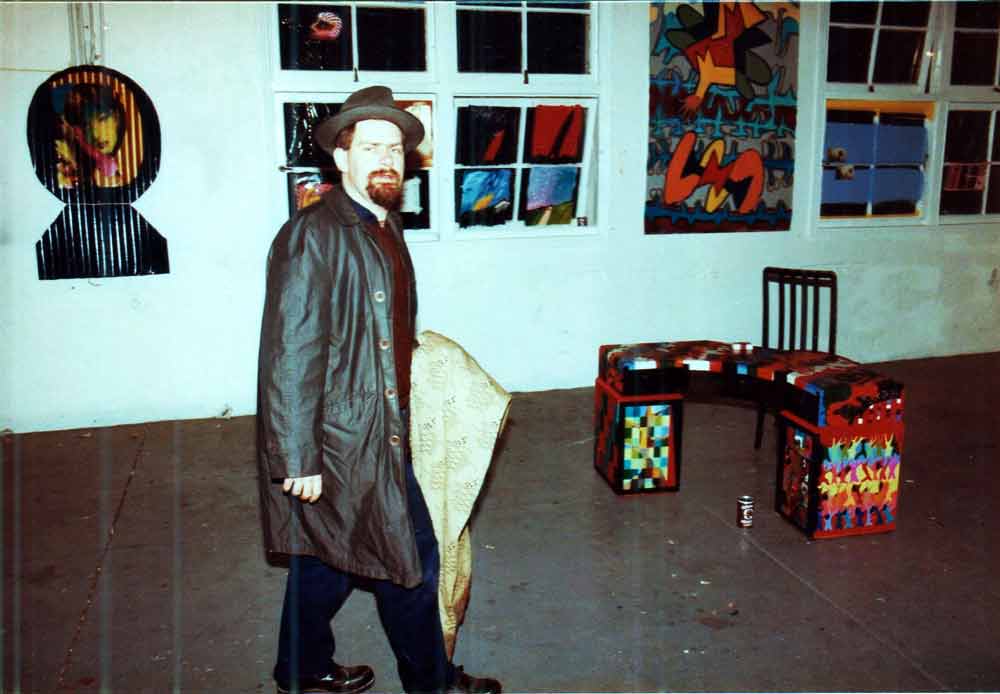
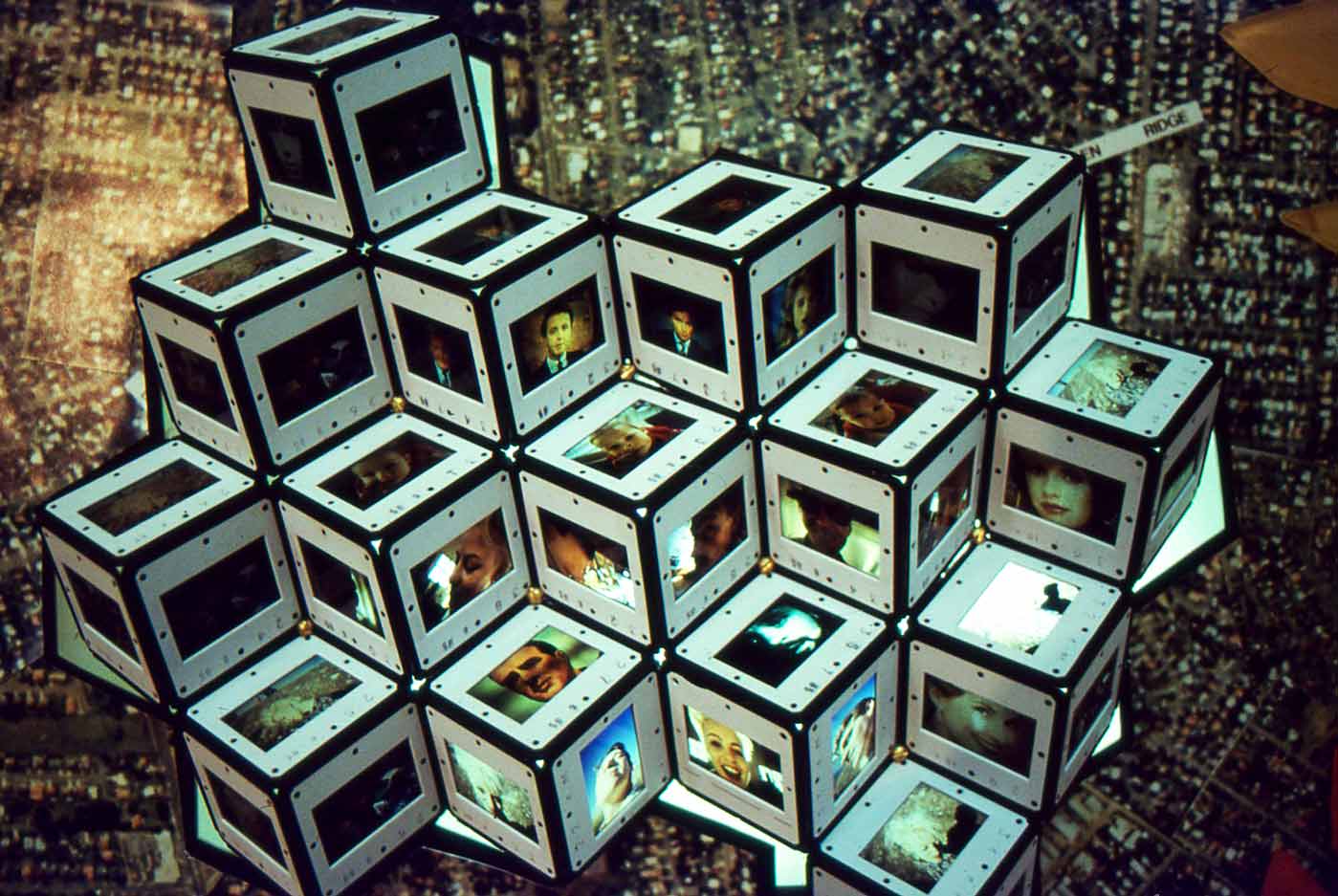
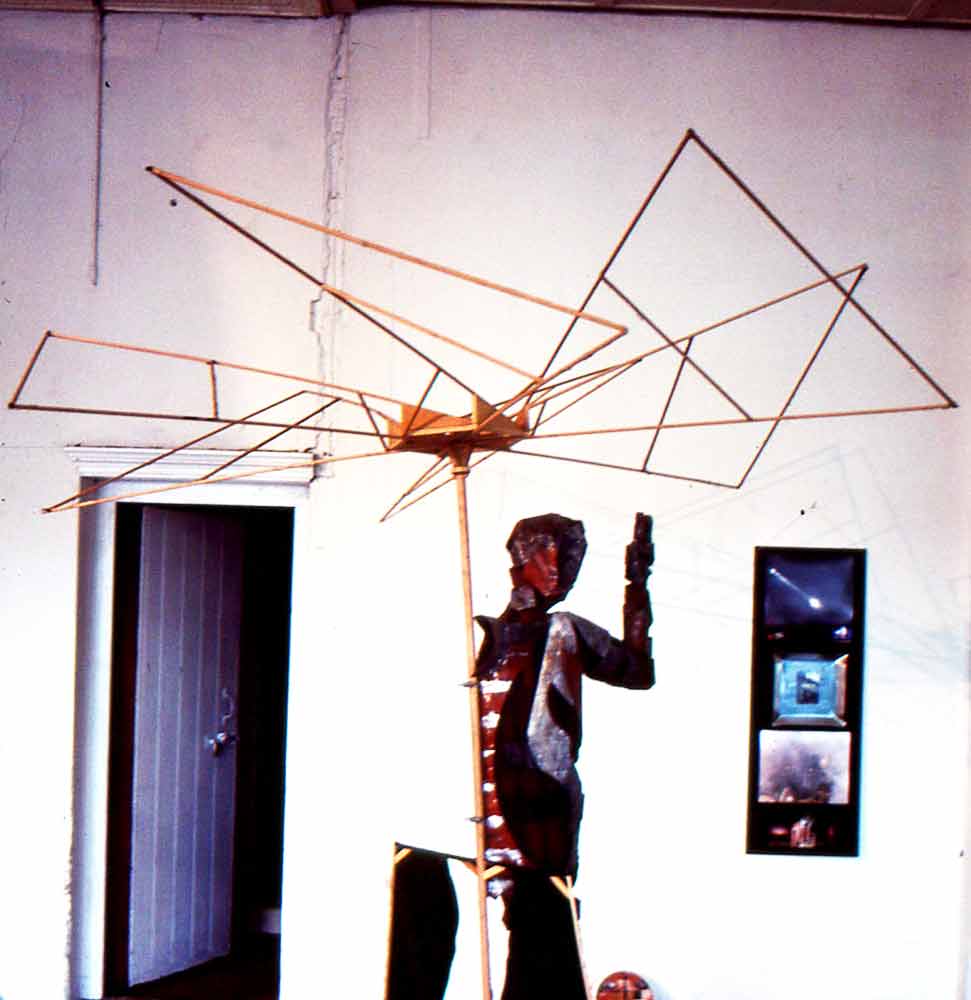
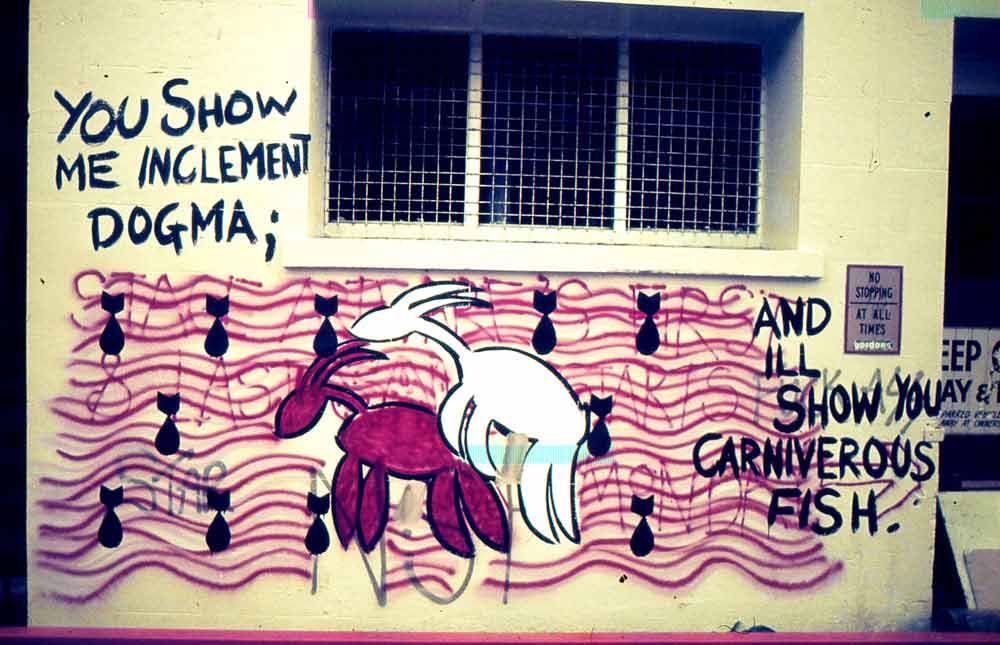
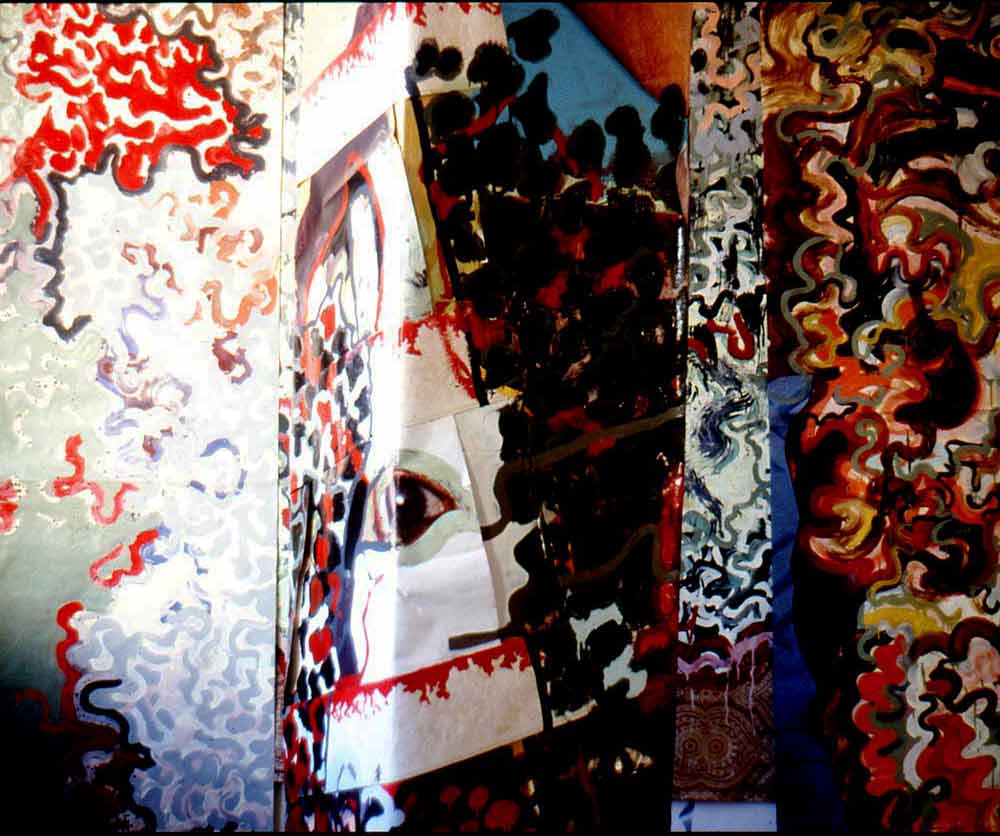
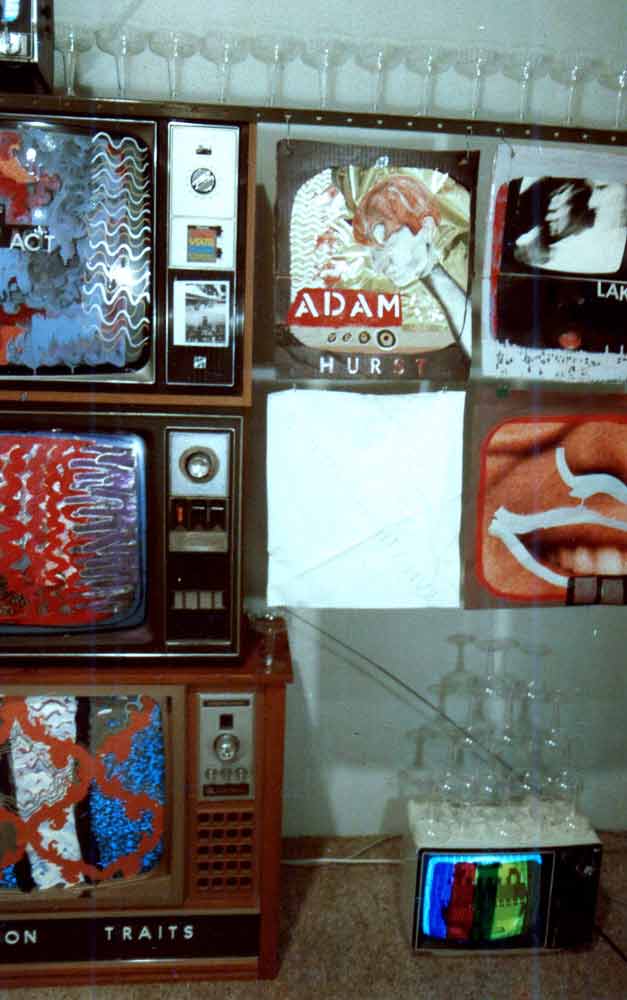
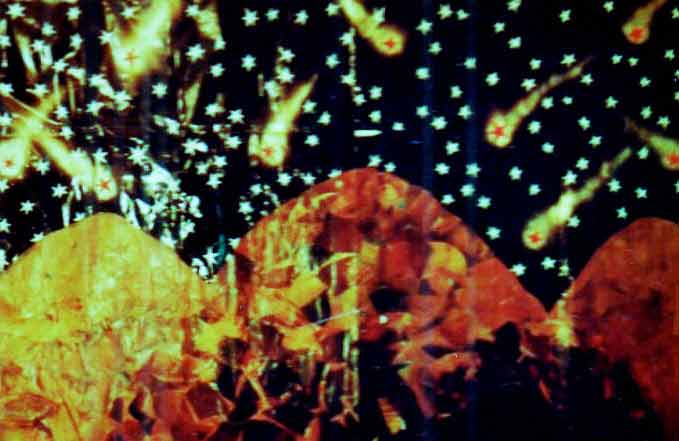
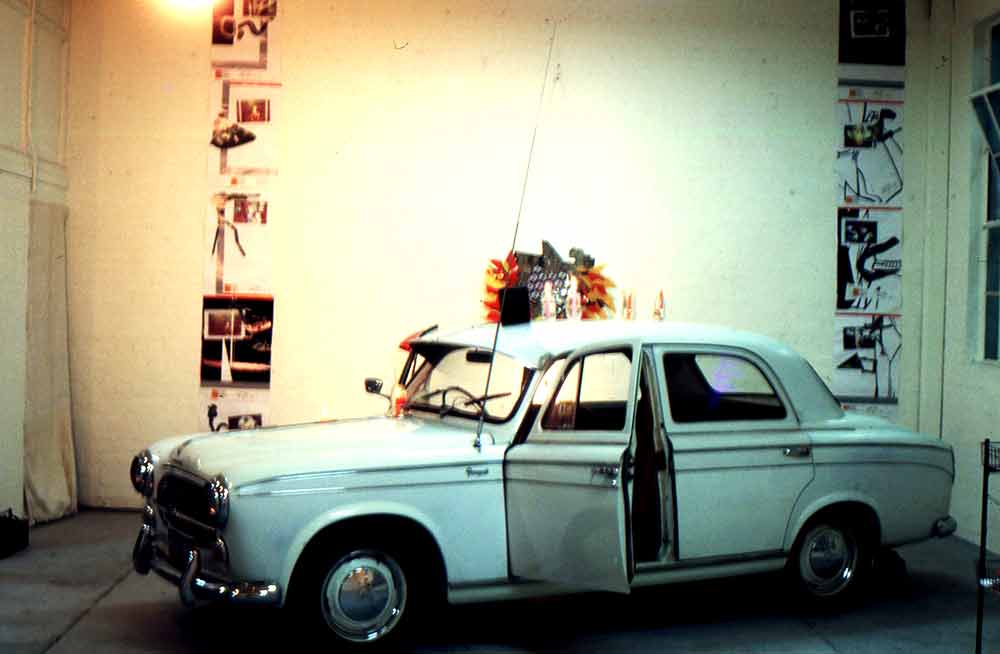
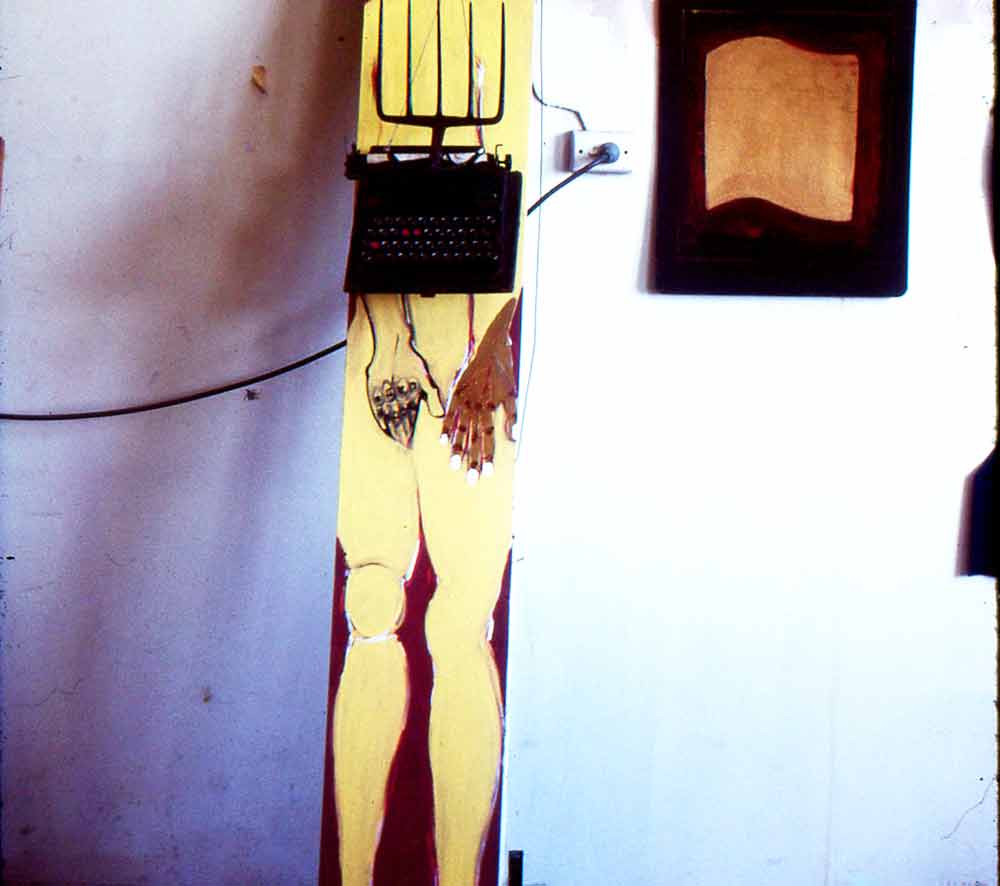
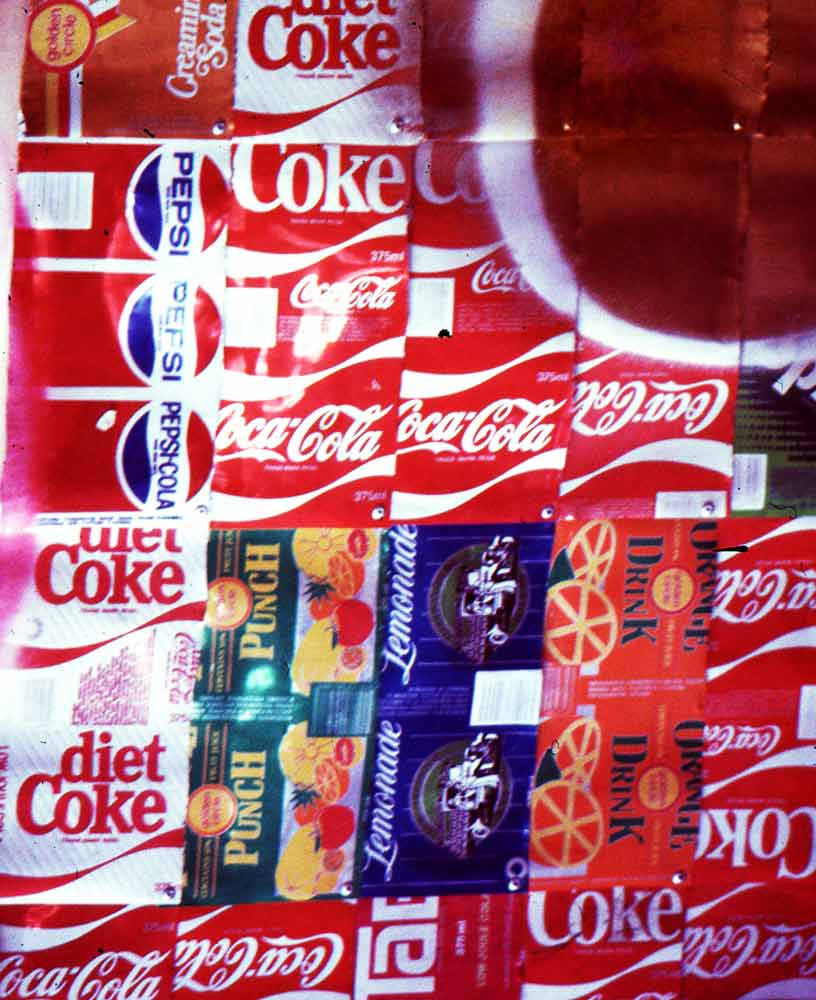
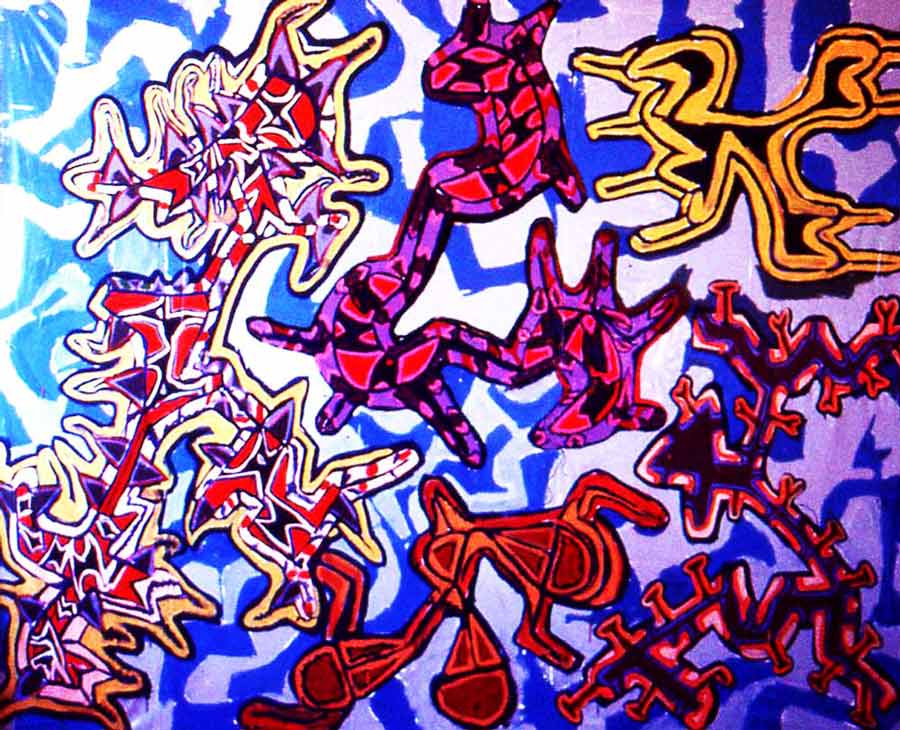
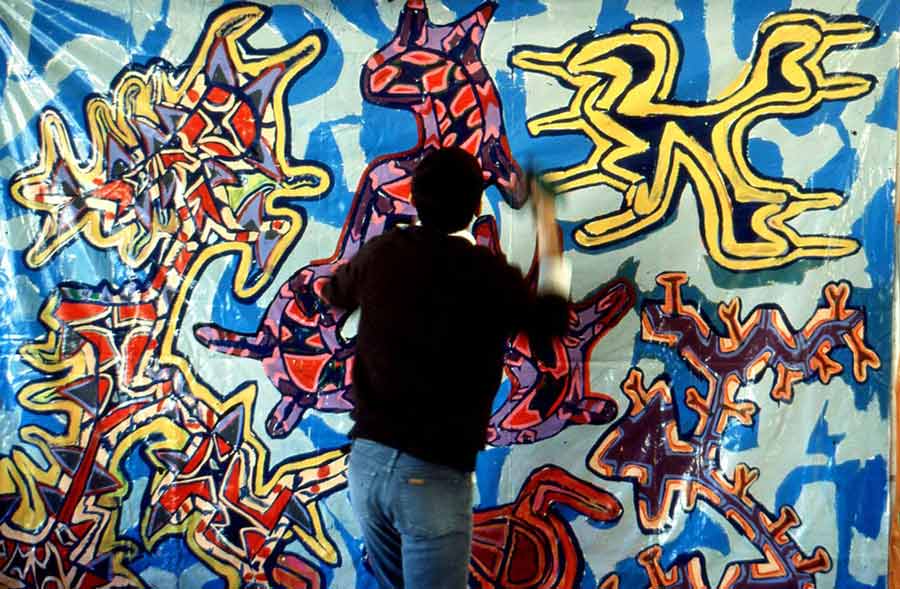
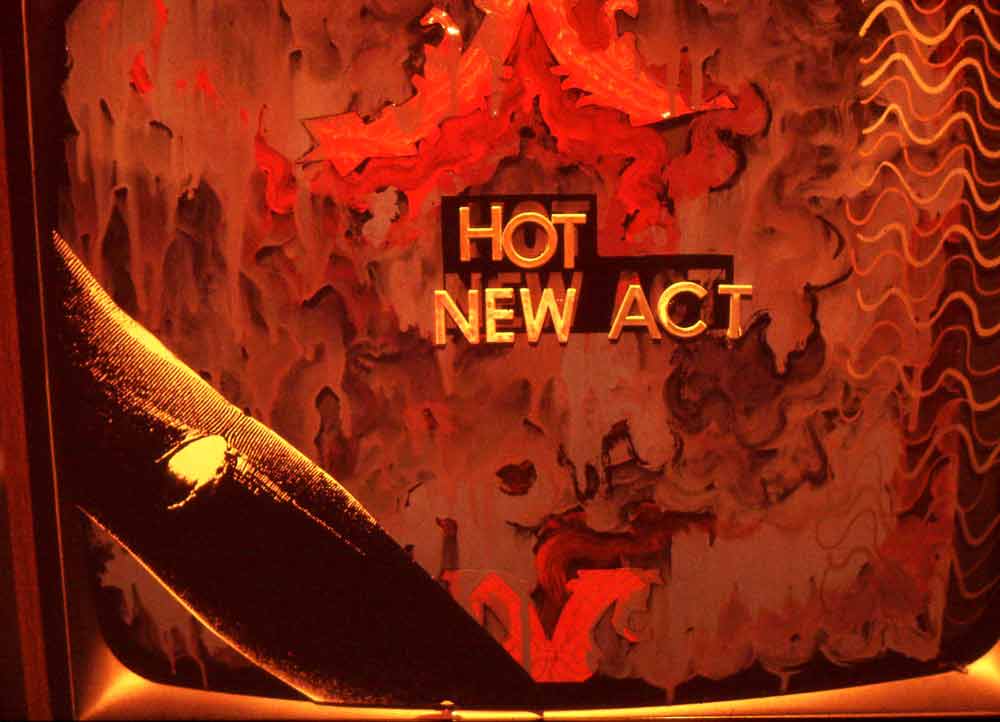
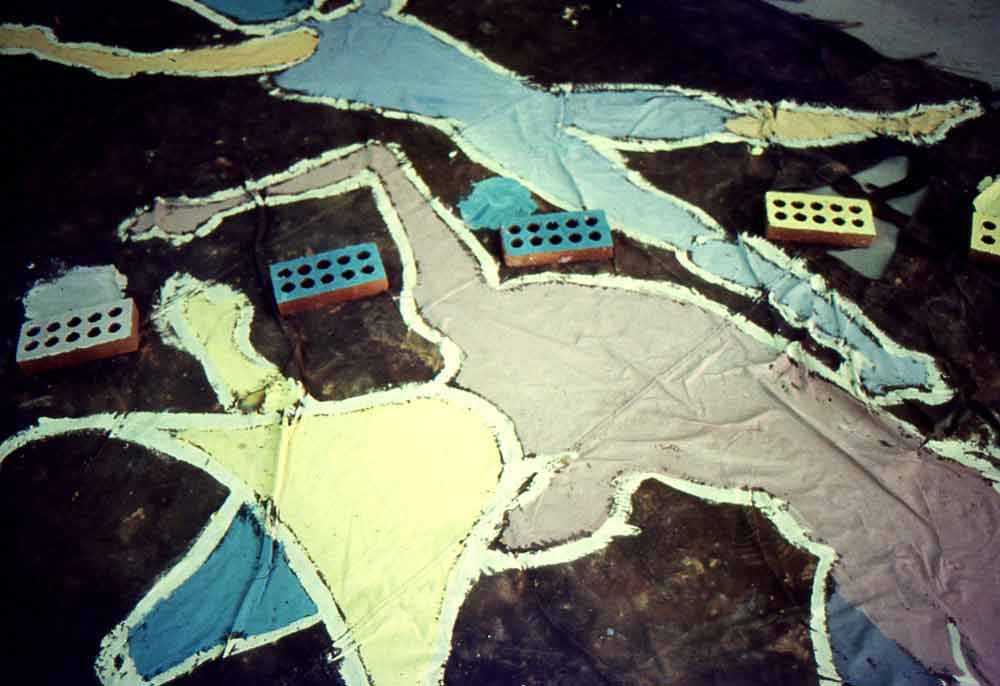
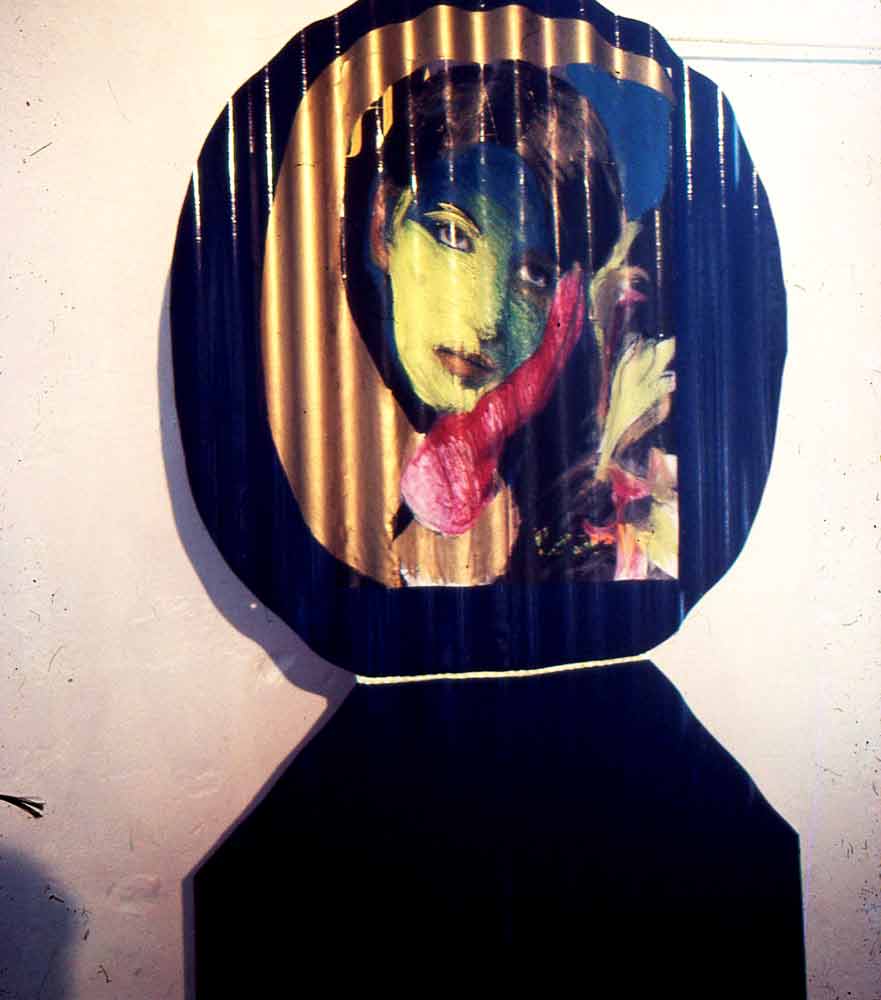
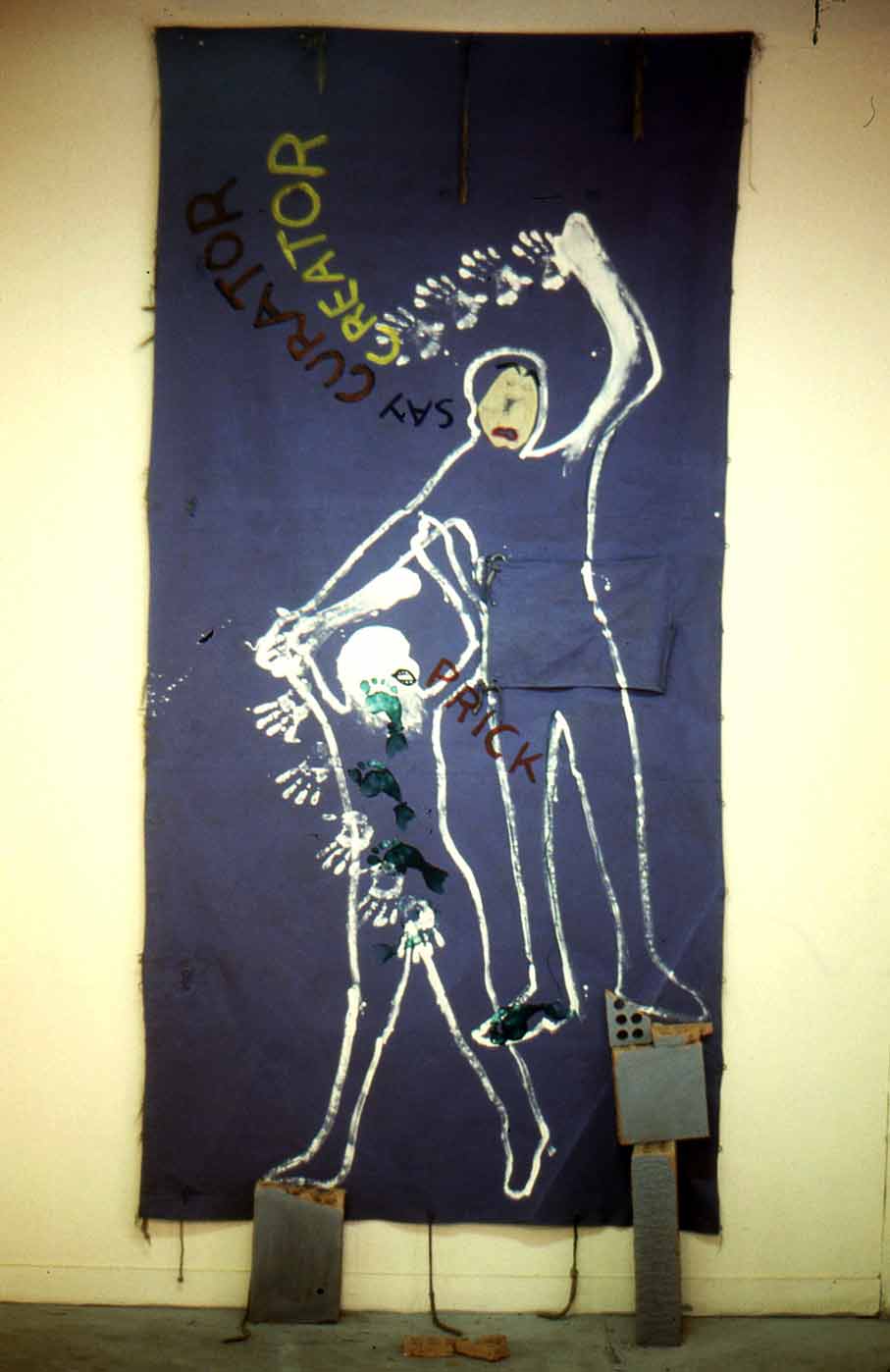
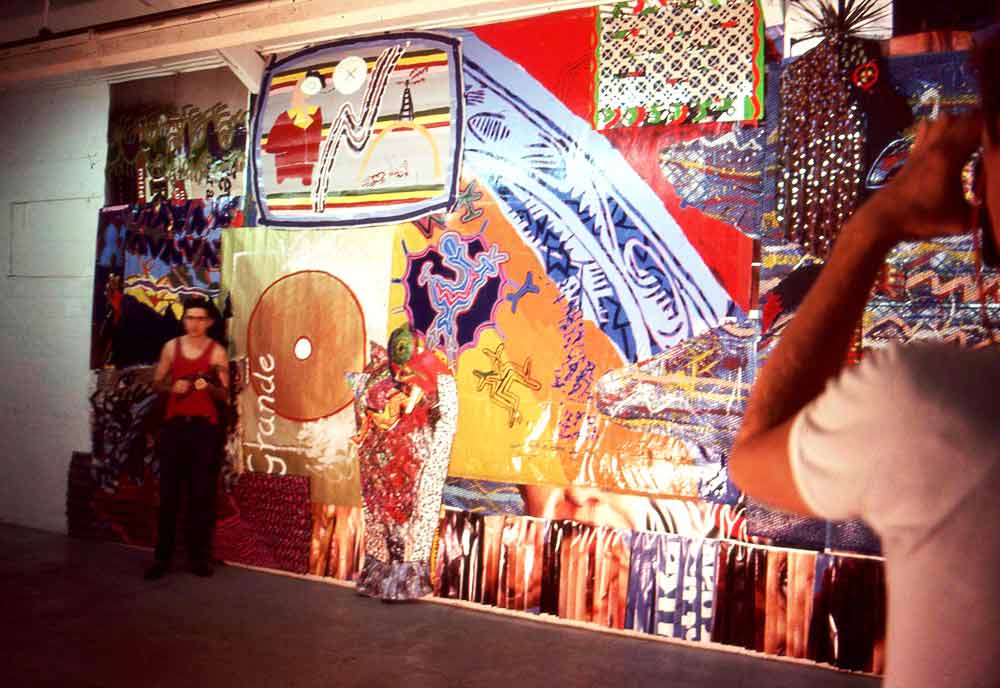
The O’Flate National Art Safari was conceived as an extension of the One Flat Mob work with experimental art spaces in Brisbane from ’82 – ’85.
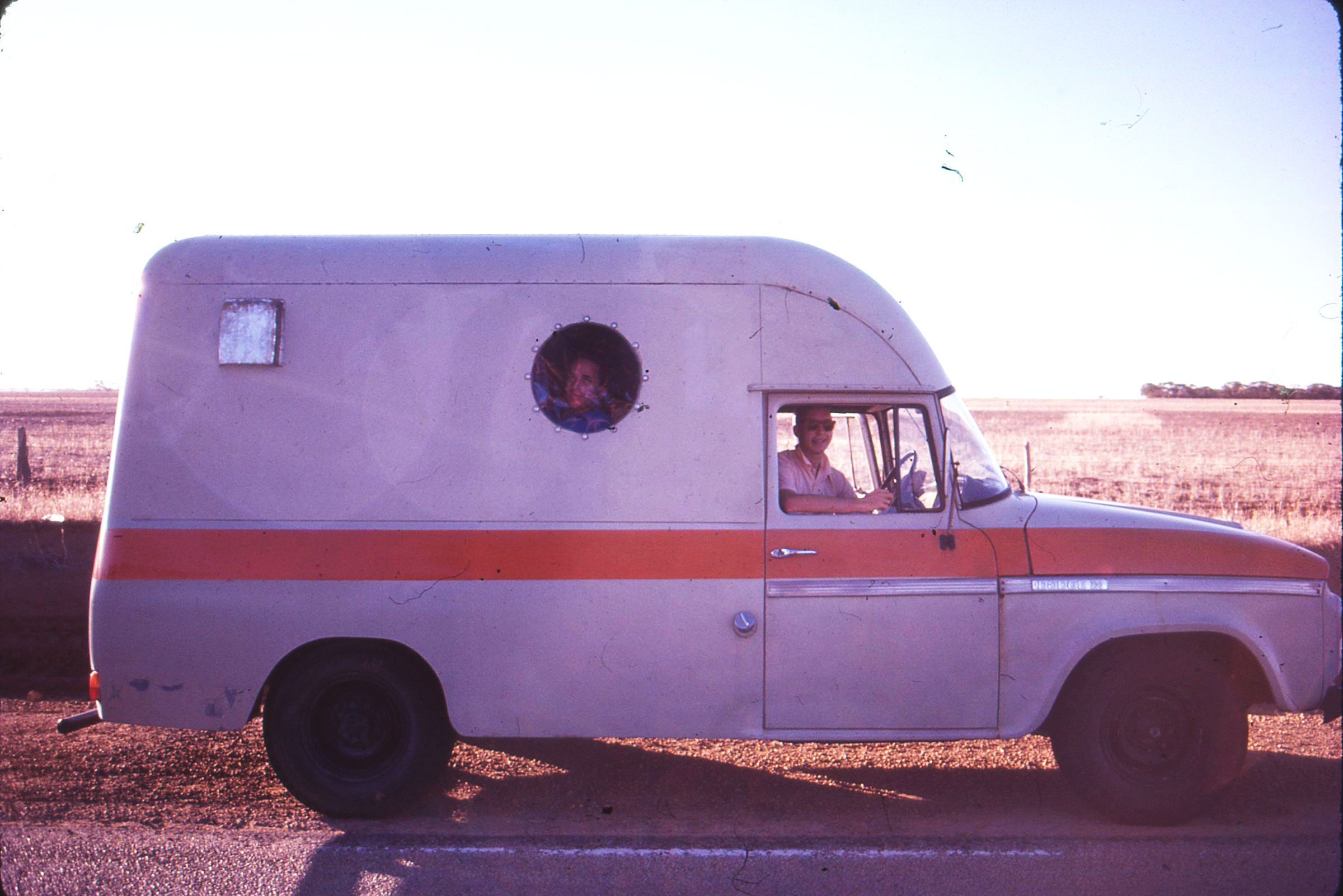
The objective was to travel across Australia with the clothes on their backs, video cameras, televisions and camping gear stacked in the back of the Dodge and explore the universe as they travelled west south west through Cobar, Wilcannia, Broken Hill, Ceduna, Eucla, Norseman, Esperance, Margaret River and on to Fremantle and back.
O’flate produced and performed works under the title of Tyrannosaurus Landscape / Artist Wrex at: Praxis Gallery (Fremantle); Experimental Art Foundation (Adelaide); Australian Centre of Contemporary Art (Melbourne); Chameleon Gallery (Hobart); The Performance Space (Sydney); and That Contemporary Art Space (Brisbane).
The ever-present irreverent-reverence-indifference to the fine arts – O’flates guiding star.
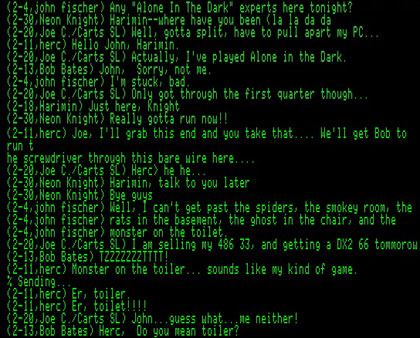
And as documented in the Outdoor Art Drive-in 86 dossier, Jeanelle Hurst road tested access to the Viatel Videotex system en route.


For reference…
Hurst,J., Willsteed,J., Interview for Intermedial Interventions in the City, Urban Matters Journal, Malmö University, Sweden 2024
https://urbanmattersjournal.com/fault-lines-fragments-punch-lines/
Further reading:
Hurst, J., Sometimes I wonder, Bjelke Blues – Stories of Repression and Resistance in Joh Bjelke-Petersen’s Queensland 1968-1987, And Also Books, 2019.
- All categories
- 1988 Billboards
- 1988 Electronic Display Boards
- 1988 Eyeline on Viatel-Videotex
- 1988 High-rise Projections
- 1988 High-rise Wallpaper
- 1988 Map of the World-Digital Map
- Artist Adam Wolter
- Artist Allen Furlong
- Artist Diena Georgetti
- Artist Jane Richens
- Artist Jay Younger
- Artist Jeanelle Hurst
- Artist Lucinda Elliott
- Artist Peter Callas
- Artist Tim Gruchy
- Artist Zeliko Maric
- InterFace 88
- InterFace Promotions
- Musicians Eugene Carchesio - Pat Ridgewell